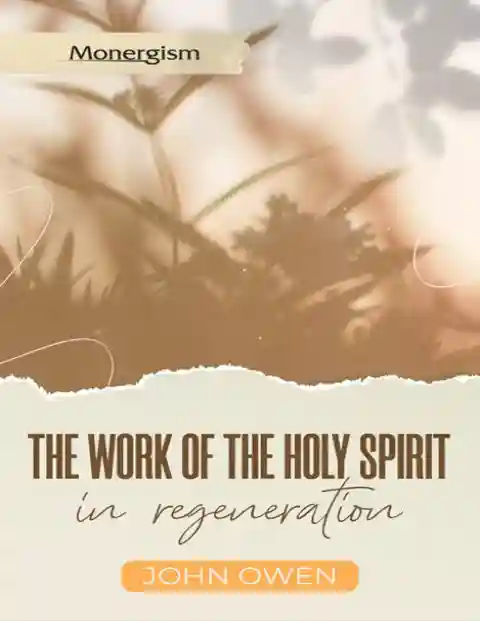

The Work Of The Holy Spirit In Regeneration Order Printed Copy
- Author: John Owen
- Size: 1.07MB | 200 pages
- |
Others like the work of the holy spirit in regeneration Features >>

The New You & The Holy Spirit
The Power Of The Communion Table

The Logic Of Penal Substitution
A Treatise On Justification And Regeneration
The Power Of The Blood

The Bookends Of The Christian Life
-160.webp)
Undefiled (Redemption From Sexual Sin, Restoration For Broken Relationships)
-160.webp)
God's Love For You! (A Revelation Of The Eternal Heart Of God)

Power Of The Blood - Healing For You Spirit, Soul, And Body

Hardness Of Heart
About the Book
In "The Work Of The Holy Spirit In Regeneration," John Owen explores the role of the Holy Spirit in the process of spiritual rebirth. He discusses the necessity of divine intervention in bringing about regeneration, the various aspects of this work, and how it relates to the believer's faith and sanctification. Owen offers a comprehensive and insightful explanation of this important aspect of Christian theology.
Darlene Deibler Rose
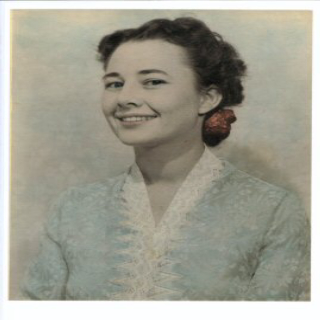 Darlene Diebler Rose: Unwavering Faith in God’s Promises
“Remember one thing, dear: God said he would never leave us nor forsake us.” Those words were spoken on March 13, 1942, and were the last words Darlene Diebler would ever hear from her husband, Russell, as they were permanently separated in Japanese prison camps during World War II. She was a missionary in her early twenties. She did not even have a chance to say goodbye. Consider her own reflection on that heartbreaking day:
Everything had happened so fast and without the slightest warning. Russell had said, “He will never leave us nor forsake us.” No? What about now, Lord? This was one of the times when I thought God had left me, that he had forsaken me. I was to discover, however, that when I took my eyes off the circumstances that were overwhelming me, over which I had no control, and looked up, my Lord was there, standing on the parapet of heaven looking down. Deep in my heart he whispered, “I’m here. Even when you don’t see me, I’m here. Never for a moment are you out of my sight” (Evidence Not Seen, 46).
Obedience to God’s Call in All Circumstances
Darlene Mae McIntosh was born on May 17, 1917. At age nine she put her trust in the Lord Jesus Christ as her light and salvation. One year later, during a revival service, she sensed God’s calling to give her life to missions. On that night she promised Jesus, “Lord, I will go anywhere with you, no matter what it costs” (46). How could that little girl know what the Savior had planned for her in the not too distant future?
“Through it all, Darlene was sustained by God, who never left her nor forsook her, just as he promised. He remained her light and salvation.”
Darlene married a pioneer missionary to Southeast Asia named Russell Deibler on August 18, 1937. She was only nineteen years old. He was twelve years her senior. The Deiblers eagerly returned to Russell’s pioneer missionary work in the interior of New Guinea. Darlene accompanied Russell into the jungle to establish a new mission station near a previously unevangelized, primitive tribe that had only been discovered just a few years earlier. Darlene, the first white woman any of them had ever seen, grew to deeply love the local people.
When World War II broke out in that part of the world, the Dieblers chose to stay. And when the Japanese soon took control of the area, the Deiblers were put under house arrest. Later, Japanese soldiers herded all foreigners into prisoner-of-war camps, separating the men from the women and children. During the next four years, Darlene endured separation from her husband and, eventually, widowhood.
The brutal conditions of a WWII Japanese internment camp included near-starvation, forced labor, inhumane conditions, false accusations of espionage, serious illnesses, solitary confinement, and torture. Through it all, Darlene was sustained by God, who never left her nor forsook her, just as he promised. He remained her light and salvation.
God Is Sufficient in All Circumstances
After receiving the news of her husband’s death, Darlene was falsely accused of being a spy and taken to a maximum-security prison where she was kept in solitary confinement. Written over the door of her cell were the words in Indonesian, “This person must die.” Frequently she was taken to an interrogation room and accused of spying. Upon her denial, her interrogators would strike her at the base of the neck or on her forehead above the nose.
There were times she thought they had broken her neck. She walked around often with two black eyes. “Bloodied but unbowed” (141), she never wept in front of her captors, but when she was back in her cell she would weep and pour out her heart to the Lord. When she finished, she would hear him whisper, “But my child, my grace is sufficient for thee. Not was or shall be, but it is sufficient” (141).
“When she finished, she would hear him whisper, ‘But my child, my grace is sufficient for thee. Not was or shall be, but it is sufficient.’”
Time and time again God showed himself to be powerful and faithful to Darlene. Once, within moments of being beheaded as a spy, she was unexpectedly taken from the maximum-security prison back to her original prison camp. The Lord again had heard her prayers, leading her to a level path against her enemies. Over and over again, Darlene could look back at her life and see how God had strengthened and sustained her
as a young bride at age nineteen.
when she headed to the jungles of New Guinea at twenty.
when placed under house arrest by the Japanese when she was twenty-five.
when she and her husband were separated into separate prison camps in 1942, never to see each other again in this life.
as she ate rats, tadpoles, dogs, runny oatmeal, and maggots, and other unimaginable foods.
through dengue fever, beriberi, malaria, cerebral malaria, dysentery, beatings, torture, attacks of rabid dogs, false charges of espionage, the promise of beheading, solitary confinement, Allied bombings, and many other inhumane abuses.
when told of the death of her beloved husband and his own tortures and sufferings.
when he brought her home to America but kept the fire of missions burning in her soul.
when he brought another missionary into her life, Gerald Rose, whom she married (1948) and returned with him to New Guinea in 1949.
as she labored on the mission field of Papua New Guinea and the Outback of Australia for over forty years, evangelizing, teaching, building landing strips, delivering babies, facing down headhunters, and loving them to Jesus.
On February 24, 2004, Darlene Diebler Rose quietly passed away and entered into the presence of the King she so deeply loved and faithfully served. She was eighty-seven years old. All throughout her life, when sharing her story, Darlene would say, “I would do it all again for my Savior.” No doubt many in New Guinea are grateful for her devotion. May we follow this great saint to the nations, for the sake of their souls and the glory of our great King Jesus.
Darlene Diebler Rose: Unwavering Faith in God’s Promises
“Remember one thing, dear: God said he would never leave us nor forsake us.” Those words were spoken on March 13, 1942, and were the last words Darlene Diebler would ever hear from her husband, Russell, as they were permanently separated in Japanese prison camps during World War II. She was a missionary in her early twenties. She did not even have a chance to say goodbye. Consider her own reflection on that heartbreaking day:
Everything had happened so fast and without the slightest warning. Russell had said, “He will never leave us nor forsake us.” No? What about now, Lord? This was one of the times when I thought God had left me, that he had forsaken me. I was to discover, however, that when I took my eyes off the circumstances that were overwhelming me, over which I had no control, and looked up, my Lord was there, standing on the parapet of heaven looking down. Deep in my heart he whispered, “I’m here. Even when you don’t see me, I’m here. Never for a moment are you out of my sight” (Evidence Not Seen, 46).
Obedience to God’s Call in All Circumstances
Darlene Mae McIntosh was born on May 17, 1917. At age nine she put her trust in the Lord Jesus Christ as her light and salvation. One year later, during a revival service, she sensed God’s calling to give her life to missions. On that night she promised Jesus, “Lord, I will go anywhere with you, no matter what it costs” (46). How could that little girl know what the Savior had planned for her in the not too distant future?
“Through it all, Darlene was sustained by God, who never left her nor forsook her, just as he promised. He remained her light and salvation.”
Darlene married a pioneer missionary to Southeast Asia named Russell Deibler on August 18, 1937. She was only nineteen years old. He was twelve years her senior. The Deiblers eagerly returned to Russell’s pioneer missionary work in the interior of New Guinea. Darlene accompanied Russell into the jungle to establish a new mission station near a previously unevangelized, primitive tribe that had only been discovered just a few years earlier. Darlene, the first white woman any of them had ever seen, grew to deeply love the local people.
When World War II broke out in that part of the world, the Dieblers chose to stay. And when the Japanese soon took control of the area, the Deiblers were put under house arrest. Later, Japanese soldiers herded all foreigners into prisoner-of-war camps, separating the men from the women and children. During the next four years, Darlene endured separation from her husband and, eventually, widowhood.
The brutal conditions of a WWII Japanese internment camp included near-starvation, forced labor, inhumane conditions, false accusations of espionage, serious illnesses, solitary confinement, and torture. Through it all, Darlene was sustained by God, who never left her nor forsook her, just as he promised. He remained her light and salvation.
God Is Sufficient in All Circumstances
After receiving the news of her husband’s death, Darlene was falsely accused of being a spy and taken to a maximum-security prison where she was kept in solitary confinement. Written over the door of her cell were the words in Indonesian, “This person must die.” Frequently she was taken to an interrogation room and accused of spying. Upon her denial, her interrogators would strike her at the base of the neck or on her forehead above the nose.
There were times she thought they had broken her neck. She walked around often with two black eyes. “Bloodied but unbowed” (141), she never wept in front of her captors, but when she was back in her cell she would weep and pour out her heart to the Lord. When she finished, she would hear him whisper, “But my child, my grace is sufficient for thee. Not was or shall be, but it is sufficient” (141).
“When she finished, she would hear him whisper, ‘But my child, my grace is sufficient for thee. Not was or shall be, but it is sufficient.’”
Time and time again God showed himself to be powerful and faithful to Darlene. Once, within moments of being beheaded as a spy, she was unexpectedly taken from the maximum-security prison back to her original prison camp. The Lord again had heard her prayers, leading her to a level path against her enemies. Over and over again, Darlene could look back at her life and see how God had strengthened and sustained her
as a young bride at age nineteen.
when she headed to the jungles of New Guinea at twenty.
when placed under house arrest by the Japanese when she was twenty-five.
when she and her husband were separated into separate prison camps in 1942, never to see each other again in this life.
as she ate rats, tadpoles, dogs, runny oatmeal, and maggots, and other unimaginable foods.
through dengue fever, beriberi, malaria, cerebral malaria, dysentery, beatings, torture, attacks of rabid dogs, false charges of espionage, the promise of beheading, solitary confinement, Allied bombings, and many other inhumane abuses.
when told of the death of her beloved husband and his own tortures and sufferings.
when he brought her home to America but kept the fire of missions burning in her soul.
when he brought another missionary into her life, Gerald Rose, whom she married (1948) and returned with him to New Guinea in 1949.
as she labored on the mission field of Papua New Guinea and the Outback of Australia for over forty years, evangelizing, teaching, building landing strips, delivering babies, facing down headhunters, and loving them to Jesus.
On February 24, 2004, Darlene Diebler Rose quietly passed away and entered into the presence of the King she so deeply loved and faithfully served. She was eighty-seven years old. All throughout her life, when sharing her story, Darlene would say, “I would do it all again for my Savior.” No doubt many in New Guinea are grateful for her devotion. May we follow this great saint to the nations, for the sake of their souls and the glory of our great King Jesus.
disowned for jesus - what i lost and found in christ
When I left Islam to follow Jesus, I didn’t know what it would cost me. I hadn’t realized what it would take to deny myself, lay my life down, and take up my cross (Matthew 16:24). I wasn’t aware that even the precious relationships of my family should not come between me and following Christ — that I should even hate my family compared to my love for Jesus (Luke 14:26). But God taught me that if I do take up my cross and lay down my life, then I’ll find my life. Over time, I have come to experience this truth. My life of following Jesus has not been the life I envisioned for myself, but it has become the life I want: a life used for the glory of God as I grow in the knowledge of Christ and make him known to others. That’s what I discovered when I was forced to choose between Jesus and my father. From Iran to Texas I was born in Houston and grew up in a devout Muslim home. My dad was very involved in the Iranian Muslim community. Growing up, I was taught the five pillars of Islam and that if I did them to the best of my ability, then maybe I’d get to heaven. When I was two years old, my family moved to Iran, where my parents are from. But at age six, the Islamic Revolution of the late ’70s hit that country. My father, who was a doctor, had the means to get us out of the country, so our family moved back to Houston. I spoke Farsi, not English, and so God, in his incredible plan, provided a Christian lady who tutored me, teaching me the English language every day by reading books to me. In the second grade, she said to me, “Afshin, I want to give you the most important book that you’ll ever read in life.” As she handed me a small New Testament, she told me that I would not completely understand it now, but asked me to promise to hold onto it until I was older. She gave me that Bible during the Iran hostage crisis, a time during which my family and other Iranians in America were ostracized and hated by many. This lady, however, earned the right to be heard by the way that she loved me, showed me the love of Christ, and poured her life into me. Because the Bible came from her, I believed it was important, and held onto that New Testament. She had planted a seed in my life in the second grade that wouldn’t come to fruition until ten years later. Leaving Islam As a senior in high school, I used the Lord’s name in vain while playing basketball. A guy on the court walked up to me and said, “Hey, that Jesus whose name you just said — he’s my God.” As a Muslim, I’d been taught that Jesus was a prophet, so I thought the guy was nuts. A few days later, while watching TV, I stumbled onto a historical documentary on the life of Jesus, where I heard, “Some worship Jesus as God, and they’re called Christians.” My mind went back to the words of the guy on the basketball court, and the Lord reminded me of the Bible that I’d received ten years earlier. That afternoon, I found that small New Testament at the bottom of my closet and began to read in Matthew. Every day, I’d read under the covers in my bed with a flashlight so that my parents wouldn’t walk in and see what I was doing. Meanwhile, at my high school, a Christian student sat across the table from me at lunch and told me about Jesus. I’d debate against him each day, and then at night I’d go home to read more about his Jesus. One day, I got to the book of Romans, and the third chapter completely changed my life. I read about a righteousness that comes apart from the law, apart from what I do for God. I read that this righteousness comes as a gift to be received by faith. I was struck by Romans 3:22, which says that this righteousness comes to all who believe. I thought I was born a Muslim and would always be a Muslim, but that verse said that this righteousness was for anyone who believes, of any ethnicity. A couple weeks later, a guy invited me to an evangelistic crusade (always an interesting word for a Muslim!), where I heard the gospel proclaimed and came to faith in Christ. As an aside: I’m often asked what form of evangelism I believe to be most effective. God used evangelism in a variety of forms in my life. He used a teacher loving and tutoring a kid, a guy sharing one-on-one in a cafeteria, a guy speaking up for the name of Christ on a basketball court, an invitation to an evangelistic event, and the preaching of the gospel in a corporate setting. I believe in each of these forms of evangelism because God used each one of them in my own life. Disowned I made my commitment to Christ public at that evangelistic crusade, but driving home from the event is when it hit me: “What am I going to tell my family? What am I going to tell my father?” My father had always been the most important person in my life, the guy I’d always looked up to. I’m ashamed to say that I decided to hide my newfound faith from him and the rest of my family. I would sneak out to go to church, intercept mail from the church I was attending, and hide my Bible. Finally, one day my dad found out. He’d seen my Bible, and he’d also seen other evidences in my life. He sat me down and said, “Son, what’s going on? There’s something different about you.” I said, “Dad, I’m a Christian.” He said, “No, you’re not, young man. you’re a Muslim and you’ll always be a Muslim.” I said, “Dad, the Bible says that if I trust in Christ alone for my salvation, then I’m a Christian — and I do.” My dad said, “Afshin, if you’re going to be a Christian, then you can no longer be my son.” Everything in my flesh wanted to say, “Forget it. I’ll be a Muslim.” I didn’t want to lose the relationship with my dad. So even I was surprised when I opened my mouth and said, “Dad, if I have to choose between you and Jesus, then I choose Jesus. And if I have to choose between my earthly father and my heavenly Father, then I choose my heavenly Father.” My father disowned me on the spot. Not Peace, but a Sword I went upstairs to my room, and in the defining moment of my life, said, “God, how could you do this to me? Jesus, if you’re real, how could you take my dad away from me?” The Lord led me to where Jesus says, “Everyone who acknowledges me before men, I also will acknowledge before my Father who is in heaven, but whoever denies me before men, I also will deny before my Father who is in heaven. Do not think that I have come to bring peace to the earth. I have not come to bring peace, but a sword. For I have come to set a man against his father.” (Matthew 10:32–35) I read this just moments after my dad disowned me, and thought, Whoa! This just happened for me! Jesus goes on to say, “I have come to set . . . a daughter against her mother, and a daughter-in-law against her mother-in-law. And a person’s enemies will be those of his own household. Whoever loves father or mother more than me is not worthy of me, and whoever loves son or daughter more than me is not worthy of me. And whoever does not take his cross and follow me is not worthy of me. Whoever finds his life will lose it, and whoever loses his life for my sake will find it.” (Matthew 10:35–39) That’s when I first understood what it means to be a follower of Christ. Life Lost and Found I had to lose my father to follow Christ. But I learned firsthand that when you lose your life, you find it. God gave me a roommate in college who was also a former Muslim and was also disowned by his father. After college, God led me to seminary. He provided a businessman in Dallas who paid for my entire seminary degree and a church internship, which eventually led to a position as a college pastor. God gave me a fifteen-year speaking ministry where I traveled all over the United States, preached the gospel, and saw Muslims come to faith in Christ. I have partnered with a ministry that reaches into Iran with the gospel, and have had the privilege of training and equipping Iranian pastors, helping to spread the gospel in the same nation from which my family came. I now pastor a church in Frisco, Texas, where I get to weekly remind our people to count the cost of following Christ. As a result, we have grown, planted three churches, and sent out several missionaries around the world. Finally, I am thrilled to say that my relationship with my dad has been restored, and I continue to pray for his salvation daily. What Has Jesus Cost You? I’m passionate for people to know that there’s a cost to following Jesus. What is it costing you to follow him? It might be that the thing you’re holding onto is the thing that’s keeping you from living for his glory. For me, it was my dad. For you, it might be something else. There is a huge difference between being a follower of Christ and merely giving mental assent to the truths about Jesus. The call of Christ isn’t simply “Believe the right things about me” but “Follow me.” And following Jesus is defined by losing your life. It is laying down your dreams, your pursuits, your idols to grab ahold of the greatest treasure in life: Jesus. When we lose our lives, God will leverage our lives for his glory and for others to know Jesus. There is no greater joy and fulfillment in life than this.