
The Temperament God Gave Your Spouse Order Printed Copy
- Author: Art Bennett
- Size: 1.15MB | 169 pages
- |
Others like the temperament god gave your spouse Features >>
The Covenant Connector

The Parent You Want To Be

Love — The Secret To Your Success
The Meaning Of Marriage
How To Really Love Your Child

The Purpose Of Love And Marriage
The Meaning Of Marriage: A Couple’s Devotional
52 Things Husbands Need From Their Wives
In-Law Relationships
God's Covenant With You For Your Family
About the Book
"The Temperament God Gave Your Spouse" by Art Bennett explores how understanding and appreciating your spouse's temperament can enrich your marriage and strengthen your relationship. The book provides practical advice and strategies for navigating differences in temperament, improving communication, and fostering harmony in marriage. Bennett emphasizes the importance of accepting and celebrating your spouse's unique temperament, ultimately leading to a deeper and more fulfilling connection.
John G. Lake
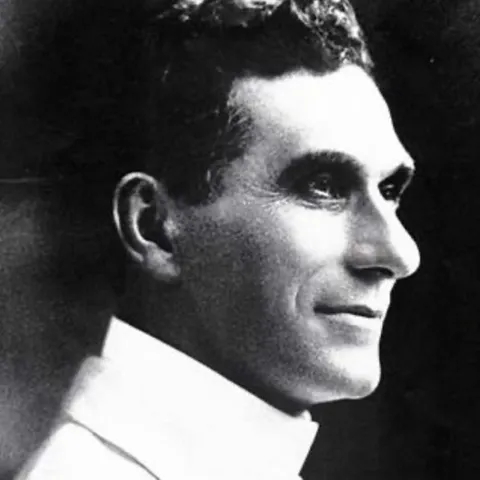 John G. Lake was born in Ontario, Canada on March 18th, 1870. He was a family man, person of integrity, honor, a savvy businessman and a good father. If you knew him you wouldn’t otherwise know that he would soon become one of the greatest men of God the world would ever know. He had a genuine love for the Lord Jesus and was known by his friends as a man who dedicated himself to intimacy with The Lord. It was out of this place that he loved his wife, was a man of integrity and built a very successful business career. To give you perspective, by 1905 John G Lake was making $50,000 per year this sum would be like upwards of 1.3 million dollars per year annually today. John grew up in a family environment which was plagued with sickness and death, it is said that his earliest memories were of sickness, death and funerals. Lake was from a large family, he had 16 siblings, 8 of which tragically died of various diseases. It is no coincidence that “the man of healing” was tormented from a young age with death and disease. The enemy will often oppose destinies with radical circumstances through a distortion of the very thing that we are called to walk in. Lake Was exposed to dramatic healing when he visited John Alexander Dowie’s ministry and was, in prayer, instantly healed of a rheumatism which had caused his legs to grow incorrectly. Just two short years into their marriage, Jennie Lake was diagnosed with tuberculosis and heart disease. Over the next couple of years, the condition worsened and the doctors resigned to the fact that it was only a matter of time before she would die. John allowed this situation to provoke him into faith, after being exposed to such death and disease from a young age he had a hatred for such things. When he would read the word of God he saw that his Christian experience was less than the promised “power of the Holy Spirit”. As Jennie was on her deathbed and perhaps taking her final breaths Lake was overcome with anger over sickness and threw his bible against the fireplace mantle! When he went to pick up his bible it was opened to Acts chapter 10:38 which says: "God anointed Jesus of Nazareth with the Holy Ghost and with power: who went about doing good, and healing all that were oppressed of the devil; for God was with him.” Lake had a surge of faith in that moment and sent a telegram to Dowie asking him to pray. Within an hour of Dowie praying she was fully healed! Not long after Jennie was healed, God began to speak to Lake about going into full time ministry. After some time of contemplation and seeking the Lord, God confirmed to John and Jennie separately that they were to move to South Africa to begin their life of ministry. John and Jennie then gave away all that they had, John forsook his mega-salary and they went on their way alongside some of their friends as ministry partners.
When they arrived in South Africa, they had no money. The problem was, that they needed at least $125 in order to clear customs. they nervously waited for their turn in line, rehearsing what they would say to the immigration officer They were in desperate need of a miracle, as the law read that they would be subject to deportation as quickly as they arrived in South Africa. Just as they were about the get to the front of the line, John felt a tap on his shoulder… A man was standing behind John and said “excuse me sir, can I have a word with you?” John nervously steps out of line at the man’s request and the man said “when I saw you and your family in line, the Lord told me to give you $200 cash”. The Lord provided just enough money for John and his family to enter the country. But their needs didn’t stop there. The Lakes and their crew had no ministry contact in Johannesburg. Soon after they cleared customs, a woman approached John’s friends and asked how many people are in their family, when they told her, she responded “no, not you” and went over to John and asked the same question. John replied “9” and she said “you’re the ones!” She went on to tell John that the Lord had spoken to her last night that she was to give her home to a family of 9 people who are coming from America to do God’s work. John, Jennie and their crew rejoiced in the dramatic provision of the Lord. Their time in South Africa was marked with waves of revival, there were multitudes saved, healed and delivered over the course of their 5 year ministry tour in South Africa.
By far my favorite story from this season of Revival takes place shortly after the Lake family and their team arrived in South Africa. A mighty plague was sweeping through the nation, the death count was climbing dramatically. So much so that there was a surplus of corpses who were victims of the plague and there was no one to bury the dead; if someone was to come in contact with a dead body they would most certainly become infected and their death sentence would immediately begin. John G. Lake astounded the medical officials because he, without any gloves or protective clothing began burying the dead. Physicians in a panic approached John and rebuked him for coming in contact with the dead, John boldly responded "when the disease comes in contact with my skin, you can watch it die". The doctors thought he was insane, so he challenged them to put a drop of the plague on his skin and watch it under a microscope. When they did so, John was right! The plague cells literally burned up the second they came in contact with his skin!
It is tough to understand what would happen towards the end of the Lake’s missionary journey in Africa. One day while John was away on a ministry trip, his wife Jennie suddenly passed away. The cause of her death was malnutrition and exhaustion. It wasn’t uncommon for the sick and broken to line the lawn of John G Lake’s home and Jennie, as an act of sacrifice, gave away all their food and any resources she could to the broken which frequented their house.
Although John and Jennie’s faith and sacrifice is commendable we must learn from this fatal mistake. John’s priorities clearly became altered as the demand for ministry raged on. He failed to guard and keep the very precious gift that God had given him, he allowed the demands of ministry to distract him from the needs of his family unto the tragic and preventable death of his wife. In the wake of Jennie’s death their children became bitter with John and subsequently God. Some of his children left the faith and the most recent accounts of them suggest that they died not following Christ. To this day some of John’s great grandchildren do not follow the Lord. John’s failure to obey the basic command of scripture for “husbands to love their wives as Christ loves the church” and his preoccupation with the demands of ministry opened up the door for the enemy to ravage his family. After Jennie’s death John moved back to the United States and remarried. He would then pioneer his famous healing ministry based out of Spokane Washington. Unfortunately John did not learn his lesson the first time, in the midst of more flames of revival he continued to be a poor father, emotionally disconnected from his children.
John G. Lake was born in Ontario, Canada on March 18th, 1870. He was a family man, person of integrity, honor, a savvy businessman and a good father. If you knew him you wouldn’t otherwise know that he would soon become one of the greatest men of God the world would ever know. He had a genuine love for the Lord Jesus and was known by his friends as a man who dedicated himself to intimacy with The Lord. It was out of this place that he loved his wife, was a man of integrity and built a very successful business career. To give you perspective, by 1905 John G Lake was making $50,000 per year this sum would be like upwards of 1.3 million dollars per year annually today. John grew up in a family environment which was plagued with sickness and death, it is said that his earliest memories were of sickness, death and funerals. Lake was from a large family, he had 16 siblings, 8 of which tragically died of various diseases. It is no coincidence that “the man of healing” was tormented from a young age with death and disease. The enemy will often oppose destinies with radical circumstances through a distortion of the very thing that we are called to walk in. Lake Was exposed to dramatic healing when he visited John Alexander Dowie’s ministry and was, in prayer, instantly healed of a rheumatism which had caused his legs to grow incorrectly. Just two short years into their marriage, Jennie Lake was diagnosed with tuberculosis and heart disease. Over the next couple of years, the condition worsened and the doctors resigned to the fact that it was only a matter of time before she would die. John allowed this situation to provoke him into faith, after being exposed to such death and disease from a young age he had a hatred for such things. When he would read the word of God he saw that his Christian experience was less than the promised “power of the Holy Spirit”. As Jennie was on her deathbed and perhaps taking her final breaths Lake was overcome with anger over sickness and threw his bible against the fireplace mantle! When he went to pick up his bible it was opened to Acts chapter 10:38 which says: "God anointed Jesus of Nazareth with the Holy Ghost and with power: who went about doing good, and healing all that were oppressed of the devil; for God was with him.” Lake had a surge of faith in that moment and sent a telegram to Dowie asking him to pray. Within an hour of Dowie praying she was fully healed! Not long after Jennie was healed, God began to speak to Lake about going into full time ministry. After some time of contemplation and seeking the Lord, God confirmed to John and Jennie separately that they were to move to South Africa to begin their life of ministry. John and Jennie then gave away all that they had, John forsook his mega-salary and they went on their way alongside some of their friends as ministry partners.
When they arrived in South Africa, they had no money. The problem was, that they needed at least $125 in order to clear customs. they nervously waited for their turn in line, rehearsing what they would say to the immigration officer They were in desperate need of a miracle, as the law read that they would be subject to deportation as quickly as they arrived in South Africa. Just as they were about the get to the front of the line, John felt a tap on his shoulder… A man was standing behind John and said “excuse me sir, can I have a word with you?” John nervously steps out of line at the man’s request and the man said “when I saw you and your family in line, the Lord told me to give you $200 cash”. The Lord provided just enough money for John and his family to enter the country. But their needs didn’t stop there. The Lakes and their crew had no ministry contact in Johannesburg. Soon after they cleared customs, a woman approached John’s friends and asked how many people are in their family, when they told her, she responded “no, not you” and went over to John and asked the same question. John replied “9” and she said “you’re the ones!” She went on to tell John that the Lord had spoken to her last night that she was to give her home to a family of 9 people who are coming from America to do God’s work. John, Jennie and their crew rejoiced in the dramatic provision of the Lord. Their time in South Africa was marked with waves of revival, there were multitudes saved, healed and delivered over the course of their 5 year ministry tour in South Africa.
By far my favorite story from this season of Revival takes place shortly after the Lake family and their team arrived in South Africa. A mighty plague was sweeping through the nation, the death count was climbing dramatically. So much so that there was a surplus of corpses who were victims of the plague and there was no one to bury the dead; if someone was to come in contact with a dead body they would most certainly become infected and their death sentence would immediately begin. John G. Lake astounded the medical officials because he, without any gloves or protective clothing began burying the dead. Physicians in a panic approached John and rebuked him for coming in contact with the dead, John boldly responded "when the disease comes in contact with my skin, you can watch it die". The doctors thought he was insane, so he challenged them to put a drop of the plague on his skin and watch it under a microscope. When they did so, John was right! The plague cells literally burned up the second they came in contact with his skin!
It is tough to understand what would happen towards the end of the Lake’s missionary journey in Africa. One day while John was away on a ministry trip, his wife Jennie suddenly passed away. The cause of her death was malnutrition and exhaustion. It wasn’t uncommon for the sick and broken to line the lawn of John G Lake’s home and Jennie, as an act of sacrifice, gave away all their food and any resources she could to the broken which frequented their house.
Although John and Jennie’s faith and sacrifice is commendable we must learn from this fatal mistake. John’s priorities clearly became altered as the demand for ministry raged on. He failed to guard and keep the very precious gift that God had given him, he allowed the demands of ministry to distract him from the needs of his family unto the tragic and preventable death of his wife. In the wake of Jennie’s death their children became bitter with John and subsequently God. Some of his children left the faith and the most recent accounts of them suggest that they died not following Christ. To this day some of John’s great grandchildren do not follow the Lord. John’s failure to obey the basic command of scripture for “husbands to love their wives as Christ loves the church” and his preoccupation with the demands of ministry opened up the door for the enemy to ravage his family. After Jennie’s death John moved back to the United States and remarried. He would then pioneer his famous healing ministry based out of Spokane Washington. Unfortunately John did not learn his lesson the first time, in the midst of more flames of revival he continued to be a poor father, emotionally disconnected from his children.
lean into the hill - a runner’s lesson for the christian life
Sometimes I wonder if the apostle Paul might have been a runner. Running is a curiously common theme in his sermons and letters. He refers to his own life and ministry as running (1 Corinthians 9:26; Galatians 2:2; Philippians 2:16) and describes the Galatians’ (past) faith in similar terms, “You were running well” (Galatians 5:7). He also asks the Thessalonians to pray for him, “that the word of the Lord may speed [run] ahead and be honored” (2 Thessalonians 3:1). He speaks of human effort and exertion (in contrast to divine mercy in election) as running (Romans 9:16 NASB). He preached in Antioch about John the Baptist “finishing his course” (Acts 13:25), expressed to the Ephesian elders his desire that “only I may finish my course” (Acts 20:24), and wrote in his final letter, “I have finished the race” (2 Timothy 4:7). While walking serves as his more common image of the Christian life (nearly thirty times in his letters), Paul’s theology had a place for speaking in more intense, even aggressive terms as well — of a kind of athletic capacity in the Christian life, as he wrote to the Corinthians, Do you not know that in a race all the runners run, but only one receives the prize? So run that you may obtain it. (1 Corinthians 9:24) Whether Paul was a runner or not, many Christians have testified (myself included) to finding the regular experience of pushing the body beyond comfort to be of value beyond just physical health. Paul, after all, asserts that “bodily training is of some value,” even as he emphasizes that “godliness is of value in every way” (1 Timothy 4:8). And bodily training is all the more valuable when it serves godliness — when lessons learned in pushing the body translate directly into the instincts of a healthy soul. Lean into the Hill We each face our own hills each day. It might begin with getting out of bed. It might be initiating a conversation we expect to be difficult. Or starting into work or schoolwork or yard work. We all encounter hills; some more, some less. And when we do, it takes more effort to keep putting one foot in front of the other. Again and again, we face challenges big and small. And when we do, what is our default? Will we keep stepping? Slow down? Stop all together? Or lean in? Fellow runners might know the feeling. You’re tired but continuing to strain toward the finish. You come upon a hill. Your natural response will be to slow down and slog through it. Stopping to walk can feel tempting. But another mentality is to lean in. Push yourself to get over it. Pummel your body for a purpose, as Paul did (1 Corinthians 9:27). Expend more energy first. Get over the hill sooner, then enjoy the down slope. Once a runner has learned what rewards lie on the other side of a hill, “leaning in” can become the new default, and become an instinct to develop in the rest of life — learning to press through resistance, rather than backing off as a reflex. Develop the Instinct It is human and modern to take the path of least resistance and avoid the hills in life we know we should be climbing each day. This is one reason we can be so easily distracted. It’s not just our latest devices and the savvy attention merchants tricking us into distraction. Deep down we want to be distracted. Humans have craved and found distractions for centuries; the digital avenues for it have simply made distraction even easier. We typically want to avoid what we know we really should be doing because the hills that matter most are the hardest ones to climb. “The hills that matter most are the hardest ones to climb.” Here’s where “bodily training” and exercise helps not only the body but the will. Physical exertion can help us develop the mentality to lean into tasks we resist instead of avoiding them and procrastinating — to “take resistance as a spur to action instead of avoidance” (Mark Forster, Get Everything Done , 152). Instead of automatically slowing down, or turning around, when we come to a hill, we can learn to lean in . Learn to see the right hills as opportunities for fruitfulness, for what really matters — for genuine “productivity” on God’s terms. Today we are surrounded by a wealth of technologies that condition our souls and bodies to expect comfort, and encourage our minds to go to work calculating easiest means rather than best outcomes . Without intentionality, we will be shaped by our flesh’s path of least resistance rather than the Spirit’s call to bear fruit. If we don’t take deliberate steps to rise above the increasingly low bars of discomfort in our society, we will be pulled down into the pit of lethargy around us. We will become (or remain) modern, soft, increasingly lazy, sedentary, and unproductive. But in Christ, we have cause to move in another direction — to “not be conformed to this world, but be transformed by the renewal of [our minds]” (Romans 12:2), and bodies. To present them as living sacrifices (Romans 12:1). When in doubt, we don’t want to default to what’s easiest. We want to pursue what’s most important, knowing that such things are typically the most mentally, emotionally, and physically demanding. Look Through the Hill One way to learn to “lean into the hill” is to learn to look to the reward. For the runner, it is “the eyes of faith” that fuel us to press harder, when part of us would rather slow down, because we’re looking beyond the hill in front of us. Just a few more minutes, and the hill will be behind me, and I will be happier for having leaned in rather than having given in. The more we learn to look to the reward on the other side of the hill, the more — strange as it may seem at first — we learn to taste joy even on the upside. Even now. The eyes of faith begin to realize , or taste , in seed form, in the moment of hardship, the joy that is to come. Faith is a tasting now, in the present and its discomforts, of the full reward to come. Whether Paul made a habit of running or not, he had learned how to lean in. When he met conflict in Philippi, he leaned in, and bade the church do so with him. “It has been granted to you that for the sake of Christ you should not only believe in him but also suffer for his sake, engaged in the same conflict that you saw I had and now hear that I still have” (Philippians 1:29–30). Resistance to the gospel challenged the apostle. But he didn’t back down. He engaged. He leaned in. He continued to run, and invited others to join him. So too in Thessalonica. Conflict came, and Paul leaned in. “Though we had already suffered and been shamefully treated at Philippi, as you know, we had boldness in our God to declare to you the gospel of God in the midst of much conflict” (1 Thessalonians 2:2). And yet, example though he is, Paul is not the supreme leaner, but his Lord. Jesus Leaned In Jesus “set his face to go to Jerusalem” (Luke 9:51). Why? “For it cannot be that a prophet should perish away from Jerusalem” (Luke 13:33). This was emphatically not the easiest path but the hardest. The greatest of hills. He would perish , he said, and in the worst possible way: on a cross. “Even as shame was set immediately before Jesus’s face, he looked to the joy on the far side, and leaned into the Hill.” When Hebrews exhorts us to “run with endurance the race that is set before us” (Hebrews 12:1), he also shows us how: “ looking to Jesus , the founder and perfecter of our faith,” who leaned in, himself looking to the reward — “who for the joy that was set before him endured the cross, despising the shame, and is seated at the right hand of the throne of God” (Hebrews 12:2). The resistance mentioned is not the one we might expect: shame. We cringe at even the thought of the physical anguish of the cross. And we should; it was literally excruciating. And yet what Hebrews highlights here is not the physical pain, horrible as it was, but the shame. It was a public, prolonged, naked execution at a crossroads. The unspeakable bodily pain of the cross would have been equaled, if not surpassed, by the shame. Yet such pain and shame didn’t send Jesus retreating. Rather, he saw the reward on the other side of the shame. Even as such barriers were set immediately before his face, he looked to the joy on the far side, and leaned into the Hill.