
Others like the school of the seers Features >>
-160.webp)
Renovation Of The Heart: Putting On The Character Of Christ
The Holy Spirit And His Gifts

No Handle On The Cross - An Asian Meditation On The Crucified Mind

What Is The Fear Of The Lord
-160.webp)
School Of The Presence: Walking In Power, Intimacy, And Authority On Earth As It Is In Heaven
The Code Of The Holy Spirit
The Art Of War For Spiritual Battle

The Sins Of The Mouth
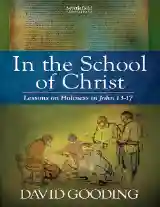
In The School Of Christ - Lessons On Holiness In John 13–17

The Release Of The Spirit
About the Book
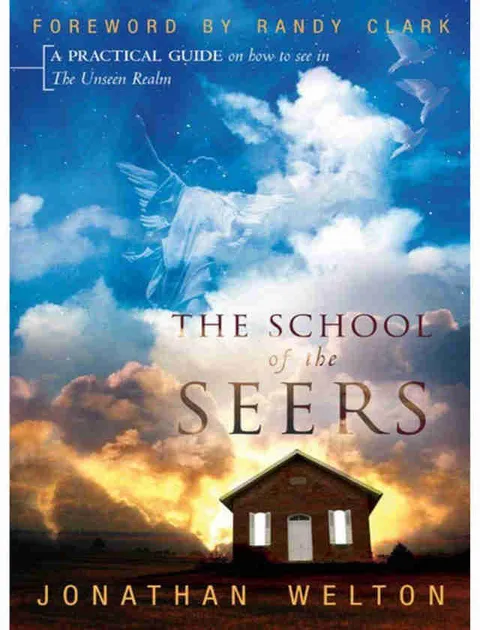
"The School of the Seers" by Jonathan Welton is a guide to understanding and developing the prophetic gift of seeing in the spirit. The book explores the biblical basis for the gift of prophecy and offers practical steps for increasing spiritual discernment and vision. It covers topics such as spiritual sight, dreams, and visions, and provides tools for interpreting and applying revelation from the Lord. Overall, it encourages readers to deepen their relationship with God and grow in their ability to hear and see His voice.
John Murray

who is the fairest in the land - lessons for young men on attraction
Some single men miss wonderful women because they’re fixated on all the wrong things. Whether suffering from worldly ideals or an inflated sense of self, somehow all of the Christian women they meet are never quite their “type.” This is not all men, to be sure, but it is some men. I was once one of them. I wrote before on the possibility that the woman some men hold out for does not actually exist. Some responded, wanting to lay aside their search for the full-time Christian, part-time model — who is nothing less than exotic, enchanting, ethereal — and come to appreciate the imperishable beauty of the existent, born-again daughters of God around them. These men wanted to know how . How do you begin to change the eye’s definition of beauty or shape the heart’s attractions? They wanted to break free from the pit of unrealistic expectations. They no longer desired to keep as many doors open as possible, and wanted to lay aside their fear of “forsaking all others.” They desired deliverance from that subtly dangerous question: “Who is the fairest in the land?” The following counsel, by no means exhaustive, may offer helpful steps in the right direction. 1. Live for Something Higher Than Her Men should not spend more energy looking for the perfect spouse than they do on becoming a godly future husband. If they have no garden to tend, why would they need a helper? If a man has no vision for his life, why would he invite a woman to sit idly next to him on a bus traveling nowhere? At different seasons of my life I lived as though marriage was my mission. With nothing higher to put my hands to, I could sculpt many romantic fantasies. Godly men, however, invite women into a mission bigger than the relationship itself; they seek a helpmate to adventure with in service of Christ. This need not mean a clean and tidy ten-year plan, but it is nothing less than knowing the Lord Jesus Christ, following him, and desiring to win souls and advance his glory in our spheres of influence. And living for Christ always entails putting to death our lust (Colossians 3:5). A man who consistently indulges in pornography and gives himself to sexual fantasy endangers his soul and anyone close to him. He also inevitably develops expectations shaped not by God and his word, but by the collage of digitally-enhanced images swimming around in his head. His “type” will gravitate more and more towards lust than beauty, more toward the physically distorted than the spiritually attractive. His “love” will devour for its own gratification rather than sacrifice for a bride and children in the name of Christ. If you want to be attracted to the true and imperishable beauty in godly women, live for the glory of Christ and give up the fleshly drug that fills the mind with prostitutes (Psalm 101:3). God places emphasis on a woman’s godliness far above her physical appearance. He cherishes the beauty that does not fade or wrinkle. And so can you, if you are his son. Instead of only inquiring about a woman’s spiritual character after we are attracted physically, intentionally search out the inner beauty in the Christian women around you, ask God for help to love what he loves, and then see if they do not become more and more attractive to you. 2. Anticipate the Loveliness in Possession Men who sit in the restaurant looking meticulously through the menu, for hours and hours, drinking the free water but never ordering, do not know the pleasure of God’s covenant meal. They do not eat from the table of marital love. Perpetual daters have never savored the rare sweetness of these words: “I am my beloved’s and my beloved is mine” (Song of Solomon 6:3). They pass, like I once did, on the three-course meal of possessing, belonging, and enjoying a creature fit for them within the safety of commitment. Solomon addresses his bride saying, “O most beautiful among women” (Song of Solomon 1:8). As a single man, I often wondered if I would ever be able to truthfully say that to my wife. Surely, I will eventually meet another more physically beautiful. Time catches up to us all, even the most beautiful faces. Surely he flirted with flattery , I thought, when he said, “You are altogether beautiful, my love; there is no flaw in you” (Song of Solomon 4:7). No flaw? Of course there was. She herself bid him not to gaze at her imperfections from the very beginning (Song of Solomon 1:6). I was ignorant of how covenant enhances the beauty of the beautiful, how her being his made her fairer than any other, how covenant changes the lover himself, even as his beloved ages. He spoke to her, “ My dove, my perfect one, is the only one” (Song of Solomon 6:9). She wasn’t someone else’s; she was his and he was hers (Song of Solomon 1:8; 1 Corinthians 7:4). What did he care for flowers on other hillsides, flowers he could not hold or enjoy, while this one, unlike any other flower God ever made or gave, now grew on his hill? “Who is this who looks down like the dawn, beautiful as the moon, bright as the sun, awesome as an army with banners?” (Song of Solomon 6:10). His wife. His wife, as should be the case with all men, was the most beautiful woman in the world to him , for she was his. And he was hers. If God gives us a wife, she is our one lily among the brambles (Song of Solomon 2:2). She is the one we walk with, talk with, laugh with, cry with, make memories with. She is our lover, our companion, our crown. There is no other. And this love ages well. Even when we can no longer walk, we can still rejoice in the wife of our youth, “a lovely deer, a graceful doe” (Proverbs 5:19). Others may not look at her weathered skin, grey hair, and changed body as the fairest in the land, but we still do. We have changed with her. After years of setting our hearts on her, our one, our ideals conform to who she is, to the woman God’s grace has made her. And on that day, I am credibly told, we delight in a beauty whose physical allure is merely a petal. 3. Ask Instead “Can I Love Her?” A paradigm-shifting question for young men to ask is not whether they already love the girl they see, but can they love her — until death do you part. Tim Keller writes, “Wedding vows are not a declaration of present love but a mutually binding promise of future love” ( Meaning of Marriage , 79). I admit this is baffling to today’s conceptions of dating and romance. It is old advice given by many others, including the Puritans. Puritan love . . . was not so much the cause as it was the product of marriage. It was the chief duty of husband and wife toward each other, but it did not necessarily form a sufficient reason for marriage. . . . The advice was not that couples should not marry unless they love each other but that they should not marry unless they can love each other. (Edmund Morgan, The Puritan Family , 54) Love can be the product of marriage, not just the cause of it. I knew enough about my wife to know that I could love her (largely, because I knew God did). We did not have years of history together. We married after only knowing each other for nine months, half of which was spent continents apart, but I knew the quality of woman she was and everyone in her life corroborated that beauty. After following Christ, it was the best decision of my life. Once you and your wife have answered the question of can with “I do,” the question for husbands becomes: “Will you continue to love her?” And by God’s grace, our answer will most certainly be, “Yes, with all my heart.” This is something you can resolve and pledge. That’s what wedding vows are. In Love with a Shadow In the Lord of the Rings, The Return of the King , the warrior-king Aragorn says of a girl who fell in love with him, or rather the ideal picture of him as king, In me she loves only a shadow and a thought: a hope of glory and great deeds, and lands far. . . . Men, do not fall in love with thoughts and shadows, of great romance, mighty deeds, and lands far away, all while unthinkingly passing over future queens of heaven and earth. Retain standards that God calls you to have, and question the rest. Make war on rebel lusts. Consider the beauty a covenant bestows. Begin asking, “ Can I love her?” And above all, get serious about living for Christ.