

Others like the release of power Features >>


-160.webp)

About the Book
"The Release of Power" by David Oyedepo is a spiritual guide that teaches readers how to tap into their inner potential and unleash the power within them to achieve success and fulfillment in life. Oyedepo offers practical advice, Biblical teachings, and personal anecdotes to inspire and empower readers to live up to their full potential. Through faith, perseverance, and belief in oneself, Oyedepo shows how anyone can unlock the power within them to lead a life of purpose and abundance.
Keith Green
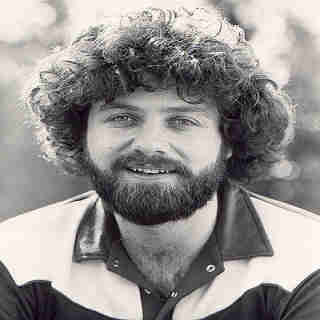 Born on October 21, 1953, in Sheepshead Bay, NY; died on July 28, 1982, in Lindale, TX; married Melody Steiner, 1973; children: Josiah (deceased), Keith, Bethany (deceased), Rebekah. Addresses: Record company--Sparrow Records, P.O. Box 5085, Brentwood, TN 37024. Website--Keith Green Official Website: http://www.lastdaysministries.org.
Known for his uncompromising approach to both his faith and his music, Keith Green has become a legendary figure in Contemporary Christian music since his death in 1982. Taking on the role of a modern-day prophet, he earned a fervent following thanks to his explicit evangelical message and buoyant brand of pop-rock. Green was a critic both of secular society and of commercial tendencies within the Christian community. Since his passing, he has been the subject of several tribute albums and was inducted into the Gospel Music Hall of Fame in 2001.
From early childhood onward, it seemed certain that Green would become a musician. Born in New York, he relocated to the San Fernando Valley area of California with his family not long after. At age eight, he began to perform in stage musicals, appearing in such notable roles as Kurt Von Trapp in a local production of The Sound of Music. In 1965 he published his first song, "The Way I Used to Be," and became the youngest member of the American Society of Composers, Authors, and Publishers. That same year he signed a five-year recording contract with Decca Records and released his first single, "Cheese and Crackers."
Though Green was groomed to be a teenage idol, he never quite achieved success. The late 1960s found him experimenting with drugs and dabbling in various Eastern religions. His life began to turn around after he met (and eventually married) songwriter Melody Steiner in the early 1970s. Under Steiner's guidance, Green began to explore fundamentalist Christianity. Before fully embracing the faith, he began keeping company with singer/songwriters Larry Norman and Randy Stonehill, two of Southern California's best-known Christian rock artists. His skills as a singer and composer began to develop as he edged closer to religious conversion. Finally, in 1975 he became a committed Christian after becoming involved with the Vineyard, a well-known San Fernando Valley church. With a convert's fervor, Green became involved in a series of Christian music projects, including the band Good News and the stage musical Firewind. He also began writing spiritually themed songs, among them "Your Love Broke Through," which went on to become a Christian pop standard recorded by Randy Stonehill, Phil Keaggy, and others.
Dedicating his reawakened creativity to glorifying God, Green founded Last Days Ministries in 1977. He and his followers evangelized to young rock music fans, street people, and others not being reached by conventional churches. At the same time, he made his debut as a Christian recording artist, signing with Sparrow Records and releasing the album For Him Who Has Ears to Hear. This song collection displays the essentials of Green's musical style: exuberant singing, piano-based melodies, and well-crafted pop/rock production. Among the best-known tracks on Green's first album are "You Put This Love in My Heart," "No One Believes Me Anymore," and "Your Love Broke Through." Balancing the warm-hearted testimony of these tunes are some humorous moments, including "No One Believes Me Anymore," a mock lament sung from the Devil's point of view. Overall, For Him Who Has Ears to Hear introduced Green to the Christian music market as a gifted musical evangelist of enormous potential.
As his audience grew, Green made clear that his focus was on spreading Christian teaching rather than providing entertainment. He sought to challenge the assumptions of his fellow believers, criticizing Christians who took their faith for granted. Some compared him with the Old Testament prophet Ezekiel, who decried the loose morals and weak faith of his generation. A number of the songs on Green's 1978 album No Compromise were addressed to the spiritually lazy. Most important among these is "Asleep at the Light," a ringing call for Christian activism sung by Green with palpable emotion. Less intense but still effective is the playful "Dear John (Letter to the Devil)" and the country-tinged "Soften Your Heart." All three of these songs received considerable airplay on Christian music stations.
Green was uneasy in his role as an emerging celebrity. He spoke out against the Christian music industry's increasing tendency to imitate secular show business ways. "Why do we idolize Christian singers and speakers?," he asked in a statement issued through Last Days Ministries. "We go from glorifying musicians in the world, to glorifying Christian musicians. It's all idolatry! ... It's true that there are many men and women of God who are greatly anointed to call down the Spirit of God on His people and the unsaved. But Satan is getting a great victory as we seem to worship these ministers on tapes and records...."
Turning away from the California Christian music scene, Green relocated to Lindale, a small east Texas community, in 1978. In addition to maintaining Last Days Ministries, he decided to launch his own record company, Pretty Good Records. Through this label, he released his next album, So You Wanna Go Back to Egypt, in 1980. This eclectic effort pokes fun at weak-spirited believers in its title track and offers a personal confession of need in "I Want to Be More Like Jesus." The most enduringly popular track proved to be "Oh Lord You're Beautiful," a powerful hymn that became a favorite at Christian worship services. In a bold move, Green announced that So You Wanna Go Back to Egypt would be sold for a variable price, even given away for free to those unable to pay. This decision sent shock waves through the Christian music industry, causing other artists to reconsider their album and concert pricing policies. An estimated 200,000 copies of the album were eventually distributed on a "pay what you can afford" basis.
Unlike some of his Christian music peers, Green showed little desire to dilute his message in hopes of reaching a wider audience. His 1982 album Songs to the Shepherd concentrates on worshipful material, praising the Lord in musical settings ranging from uplifting pop ("You Are the One") to blues-seasoned rock ("O God Our Lord") to old-fashioned country ("Draw Me"). While these songs were little-heard outside the Christian community, they helped fire Green's already-committed audience to a greater level of devotion. Fusing his work as a performer and evangelist, he toured actively during the early 1980s, mixing personal testimonials and heartfelt exhortations in between his musical numbers.
Green's life was cut short just as he began to hit his stride as a musician and minister. On July 28, 1982, he boarded a small Cessna aircraft for a brief sightseeing flight around his property in Lindale. Also on board were his son Josiah and daughter Bethany, along with the pilot and eight other passengers. Overloaded, the plane crashed shortly after takeoff, killing everyone on board. Recovering from her loss, Melody Green decided to carry on with Last Days Ministries and Pretty Good Records. Recordings of her husband's music were released posthumously, beginning with Prodigal Son and Jesus Commands Us to Go in 1983. Though lacking the cohesiveness of the albums released during his lifetime, both these song collections capture Green in strong creative moments. Prodigal Son's dramatic title track is a particular highpoint.
Melody Green continued to guide Last Days Ministries through the coming years and, in 1985, also took on the directorship of Americans against Abortion. Green's musical legacy remained vital as well, with many of his best-known recordings repackaged in compilation albums by Sparrow during the 1980s and 1990s. Multi-artist tribute albums also began to appear, starting with 1992's No Compromise: Remembering the Music of Keith Green. 2001 saw the release of Start Right Here: Remembering the Life of Keith Green, featuring spirited interpretations of his songs by such notable Christian rock acts as MxPx, Joy Electric, and Starflyer 59. Your Love Broke Through: The Worship Songs of Keith Greencontains covers of Green tunes by Michael W. Smith, Twila Paris, Rebecca St. James, and other top-rank Christian pop/rock talents.
On November 27, 2001, Green was inducted into the Gospel Music Hall of Fame. The honor served as an acknowledgment of his continuing influence in Contemporary Christian music some 20 years after his death. Green's intensity and dedication have continued to make him a role model for younger Christian performers, such as Rebecca St. James, who paid tribute to him in a Sparrow Records press biography. "I think what touches me most about him was that he was so committed to loving God and living for Him," she said of Green. "I know he was very strong-willed and people were sometimes offended at what he did and said, but it all came out of a pure motive of trying to be committed to Him in every part of his life. He wasn't going to back down just because of what people thought of him. That, to me, says that he was more focused on pleasing God than on pleasing man, something I think we should all try to focus on."
Keith Green's Career
Began career as child stage actor and composer, early 1960s; signed with Decca, released debut single, "Cheese and Crackers," 1965; began writing Christian songs, mid-1970s; founded Last Days Ministries, released first album, For Him Who Has Ears to Hear, 1977; founded Pretty Good Records, released album So You Wanna Go Back to Egypt, 1980.
Keith Green's Awards
Induction (posthumous), Gospel Music Hall of Fame, 2001.
Famous Works
For Him Who Has Ears To Hear , Sparrow, 1977.
No Compromise , Sparrow, 1978.
So You Wanna Go Back to Egypt , Pretty Good, 1980.
The Keith Green Collection , Sparrow, 1981.
Songs for the Shepherd , Pretty Good, 1982.
The Prodigal Son , Pretty Good, 1983.
Jesus Commands Us to Go , Pretty Good, 1984.
Because of You--Songs of Testimony , Sparrow, 1998.
Here I Am, Send Me--Songs of Evangelism , Sparrow, 1998.
Oh Lord, You're Beautiful--Songs of Worship , Sparrow, 1998.
Make My Life a Prayer to You--Songs of Devotion , Sparrow, 1998.
Born on October 21, 1953, in Sheepshead Bay, NY; died on July 28, 1982, in Lindale, TX; married Melody Steiner, 1973; children: Josiah (deceased), Keith, Bethany (deceased), Rebekah. Addresses: Record company--Sparrow Records, P.O. Box 5085, Brentwood, TN 37024. Website--Keith Green Official Website: http://www.lastdaysministries.org.
Known for his uncompromising approach to both his faith and his music, Keith Green has become a legendary figure in Contemporary Christian music since his death in 1982. Taking on the role of a modern-day prophet, he earned a fervent following thanks to his explicit evangelical message and buoyant brand of pop-rock. Green was a critic both of secular society and of commercial tendencies within the Christian community. Since his passing, he has been the subject of several tribute albums and was inducted into the Gospel Music Hall of Fame in 2001.
From early childhood onward, it seemed certain that Green would become a musician. Born in New York, he relocated to the San Fernando Valley area of California with his family not long after. At age eight, he began to perform in stage musicals, appearing in such notable roles as Kurt Von Trapp in a local production of The Sound of Music. In 1965 he published his first song, "The Way I Used to Be," and became the youngest member of the American Society of Composers, Authors, and Publishers. That same year he signed a five-year recording contract with Decca Records and released his first single, "Cheese and Crackers."
Though Green was groomed to be a teenage idol, he never quite achieved success. The late 1960s found him experimenting with drugs and dabbling in various Eastern religions. His life began to turn around after he met (and eventually married) songwriter Melody Steiner in the early 1970s. Under Steiner's guidance, Green began to explore fundamentalist Christianity. Before fully embracing the faith, he began keeping company with singer/songwriters Larry Norman and Randy Stonehill, two of Southern California's best-known Christian rock artists. His skills as a singer and composer began to develop as he edged closer to religious conversion. Finally, in 1975 he became a committed Christian after becoming involved with the Vineyard, a well-known San Fernando Valley church. With a convert's fervor, Green became involved in a series of Christian music projects, including the band Good News and the stage musical Firewind. He also began writing spiritually themed songs, among them "Your Love Broke Through," which went on to become a Christian pop standard recorded by Randy Stonehill, Phil Keaggy, and others.
Dedicating his reawakened creativity to glorifying God, Green founded Last Days Ministries in 1977. He and his followers evangelized to young rock music fans, street people, and others not being reached by conventional churches. At the same time, he made his debut as a Christian recording artist, signing with Sparrow Records and releasing the album For Him Who Has Ears to Hear. This song collection displays the essentials of Green's musical style: exuberant singing, piano-based melodies, and well-crafted pop/rock production. Among the best-known tracks on Green's first album are "You Put This Love in My Heart," "No One Believes Me Anymore," and "Your Love Broke Through." Balancing the warm-hearted testimony of these tunes are some humorous moments, including "No One Believes Me Anymore," a mock lament sung from the Devil's point of view. Overall, For Him Who Has Ears to Hear introduced Green to the Christian music market as a gifted musical evangelist of enormous potential.
As his audience grew, Green made clear that his focus was on spreading Christian teaching rather than providing entertainment. He sought to challenge the assumptions of his fellow believers, criticizing Christians who took their faith for granted. Some compared him with the Old Testament prophet Ezekiel, who decried the loose morals and weak faith of his generation. A number of the songs on Green's 1978 album No Compromise were addressed to the spiritually lazy. Most important among these is "Asleep at the Light," a ringing call for Christian activism sung by Green with palpable emotion. Less intense but still effective is the playful "Dear John (Letter to the Devil)" and the country-tinged "Soften Your Heart." All three of these songs received considerable airplay on Christian music stations.
Green was uneasy in his role as an emerging celebrity. He spoke out against the Christian music industry's increasing tendency to imitate secular show business ways. "Why do we idolize Christian singers and speakers?," he asked in a statement issued through Last Days Ministries. "We go from glorifying musicians in the world, to glorifying Christian musicians. It's all idolatry! ... It's true that there are many men and women of God who are greatly anointed to call down the Spirit of God on His people and the unsaved. But Satan is getting a great victory as we seem to worship these ministers on tapes and records...."
Turning away from the California Christian music scene, Green relocated to Lindale, a small east Texas community, in 1978. In addition to maintaining Last Days Ministries, he decided to launch his own record company, Pretty Good Records. Through this label, he released his next album, So You Wanna Go Back to Egypt, in 1980. This eclectic effort pokes fun at weak-spirited believers in its title track and offers a personal confession of need in "I Want to Be More Like Jesus." The most enduringly popular track proved to be "Oh Lord You're Beautiful," a powerful hymn that became a favorite at Christian worship services. In a bold move, Green announced that So You Wanna Go Back to Egypt would be sold for a variable price, even given away for free to those unable to pay. This decision sent shock waves through the Christian music industry, causing other artists to reconsider their album and concert pricing policies. An estimated 200,000 copies of the album were eventually distributed on a "pay what you can afford" basis.
Unlike some of his Christian music peers, Green showed little desire to dilute his message in hopes of reaching a wider audience. His 1982 album Songs to the Shepherd concentrates on worshipful material, praising the Lord in musical settings ranging from uplifting pop ("You Are the One") to blues-seasoned rock ("O God Our Lord") to old-fashioned country ("Draw Me"). While these songs were little-heard outside the Christian community, they helped fire Green's already-committed audience to a greater level of devotion. Fusing his work as a performer and evangelist, he toured actively during the early 1980s, mixing personal testimonials and heartfelt exhortations in between his musical numbers.
Green's life was cut short just as he began to hit his stride as a musician and minister. On July 28, 1982, he boarded a small Cessna aircraft for a brief sightseeing flight around his property in Lindale. Also on board were his son Josiah and daughter Bethany, along with the pilot and eight other passengers. Overloaded, the plane crashed shortly after takeoff, killing everyone on board. Recovering from her loss, Melody Green decided to carry on with Last Days Ministries and Pretty Good Records. Recordings of her husband's music were released posthumously, beginning with Prodigal Son and Jesus Commands Us to Go in 1983. Though lacking the cohesiveness of the albums released during his lifetime, both these song collections capture Green in strong creative moments. Prodigal Son's dramatic title track is a particular highpoint.
Melody Green continued to guide Last Days Ministries through the coming years and, in 1985, also took on the directorship of Americans against Abortion. Green's musical legacy remained vital as well, with many of his best-known recordings repackaged in compilation albums by Sparrow during the 1980s and 1990s. Multi-artist tribute albums also began to appear, starting with 1992's No Compromise: Remembering the Music of Keith Green. 2001 saw the release of Start Right Here: Remembering the Life of Keith Green, featuring spirited interpretations of his songs by such notable Christian rock acts as MxPx, Joy Electric, and Starflyer 59. Your Love Broke Through: The Worship Songs of Keith Greencontains covers of Green tunes by Michael W. Smith, Twila Paris, Rebecca St. James, and other top-rank Christian pop/rock talents.
On November 27, 2001, Green was inducted into the Gospel Music Hall of Fame. The honor served as an acknowledgment of his continuing influence in Contemporary Christian music some 20 years after his death. Green's intensity and dedication have continued to make him a role model for younger Christian performers, such as Rebecca St. James, who paid tribute to him in a Sparrow Records press biography. "I think what touches me most about him was that he was so committed to loving God and living for Him," she said of Green. "I know he was very strong-willed and people were sometimes offended at what he did and said, but it all came out of a pure motive of trying to be committed to Him in every part of his life. He wasn't going to back down just because of what people thought of him. That, to me, says that he was more focused on pleasing God than on pleasing man, something I think we should all try to focus on."
Keith Green's Career
Began career as child stage actor and composer, early 1960s; signed with Decca, released debut single, "Cheese and Crackers," 1965; began writing Christian songs, mid-1970s; founded Last Days Ministries, released first album, For Him Who Has Ears to Hear, 1977; founded Pretty Good Records, released album So You Wanna Go Back to Egypt, 1980.
Keith Green's Awards
Induction (posthumous), Gospel Music Hall of Fame, 2001.
Famous Works
For Him Who Has Ears To Hear , Sparrow, 1977.
No Compromise , Sparrow, 1978.
So You Wanna Go Back to Egypt , Pretty Good, 1980.
The Keith Green Collection , Sparrow, 1981.
Songs for the Shepherd , Pretty Good, 1982.
The Prodigal Son , Pretty Good, 1983.
Jesus Commands Us to Go , Pretty Good, 1984.
Because of You--Songs of Testimony , Sparrow, 1998.
Here I Am, Send Me--Songs of Evangelism , Sparrow, 1998.
Oh Lord, You're Beautiful--Songs of Worship , Sparrow, 1998.
Make My Life a Prayer to You--Songs of Devotion , Sparrow, 1998.
the progressive pilgrim: allegory for an easy age
Jesus said, “The gate is narrow and the way is hard that leads to life, and those who find it are few” (Matthew 7:13–14). In the twenty-first century, does his statement seem true to you? Have you found an easier way? Abraham may have wandered in tents, Paul may have been hunted like a deer, the disciples may have met brutal ends to their earthly careers, and many in the early church may have been slandered, reviled, plundered, fed to lions, burned to light the streets of Rome — “killed all the day long . . . regarded as sheep to be slaughtered” (Romans 8:36) — but that was then . We have smartphones now. Modernity seems to have done wonders to smooth the way. The narrow path lying between the City of Destruction and the Celestial City seems paved. Nathaniel Hawthorne (1804–1864) made a similar observation in his day. Though no friend of the Puritans, his short story “The Celestial Railroad” imitates and engages with John Bunyan’s The Pilgrim’s Progress . In it, he critiques the pillow-soft spirituality of his day (including Unitarianism and Transcendentalism), firing a critique that could have been written yesterday to describe the rampant easy-believism of today. Celestial Railroad Wandering through the gate of dreams, Mr. Hawthorne arrives at the famous City of Destruction. Having read Mr. Bunyan on the place, he is rather taken aback, and pleasantly surprised, to find that hostilities between this city and the Celestial City have all but vanished. Former foes shake hands. A pact built on “mutual compromise” has made allies from enemies. Enmity between the two lands is water under the bridge — or rather, a shining railroad over it. The Wicket Gate, that narrow and impossibly awkward entryway, as Bunyan’s readers will recall, has been replaced by the railroad station itself. Mr. Smooth-it-away — a distinguished gentleman in the enterprise who guides Mr. Hawthorne on his journey — ensures us all that this large building is much better suited to include the broadminded travelers of modernity. And the effect cannot be overstated, as Mr. Hawthorne relays: It would have done Bunyan’s heart good to see it. Instead of a lonely and ragged man, with a huge burden on his back, plodding along sorrowfully on foot, while the whole city hooted after him, here were parties of the first gentry and most respectable people in the neighborhood, setting forth towards the Celestial City, as cheerfully as if the pilgrimage were merely a summer tour. (199) The Celestial Railroad now transports would-be travelers — comfortably and safely — to the renowned City of Light. Individuals from Christian’s birthplace saw to it that no good-hearted pilgrim would ever again leave the city in derision or vulnerable to unsavory conditions and smiling foes. Nor would any carry that dreadful burden upon his back for miles on end — no, as Hawthorne gladly reports, One great convenience of the new method of going on pilgrimage, I must not forget to mention. Our enormous burdens, instead of being carried on our shoulders, as had been the custom of old, were all snugly deposited in the baggage-car, and, as I was assured, would be delivered to their respective owners at the journey’s end. (200) The travelers are sent off with their backpacks snugly tucked away, “to be delivered to their respective owners at the journey’s end.” Genius. But this, dear reader, is but the start to the innovations of the Celestial Railroad. Let me relay but a few more to you. Old Sites, New Conveniences Lengthy scrolls and books are not needed as tiresome maps along this journey; only a ticket is required. Such is very reasonable and expedient. To begin the journey, the dreadful Slough of Despond — that bog full of past sins and lusts and fears and temptations and doubts, in which Christian sank and at which Pliable flustered, only to return home — has a new sparkling bridge erected overhead. While wholesome teaching could not fill Bunyan’s slough, Hawthorne tells us, books of morality, German rationalism, modern sermons, and extracts of Plato, combined with a few innovative commentaries on Scripture, sufficed to lay the sturdy foundations to erect the bridge upon (198). Traveling farther, one discovers that the Interpreter’s House, while still receiving the occasional pilgrim of the old method, was no stop of the Celestial Railroad. Regretfully, Mr. Smooth-it-away remarks, that grand Interpreter grew rather sour, prudish, and prejudiced in his old age (a similar theme for the likes of Evangelist and Great-heart, the latter even “perpetually at blows” with his new collaborators). He could not keep with the times and got left behind. Hurried Cross Yes, dear reader, I can hear your question: What has become of the cross where the burden fell from Christian’s back? Let me cite the firsthand account: We were rushing by the place where Christian’s burden fell from his shoulders, [the] sight of the Cross. This served as a theme for Mr. Smooth-it-away, Mr. Live-for-the-world, Mr. Hide-sin-in-the-heart, Mr. Scaly-conscience, and a knot of gentlemen from the town of Shun-repentance, to descant upon the inestimable advantages resulting from the safety of our baggage. (203) “Crosses must be carried in every age, and the costs must be considered.” Rushing past the cross, the passengers revel in their good fortune at finding a way to travel to the Celestial City without leaving behind their precious habits and secret delights. It would be a shame, after all, to lose such desirable pastimes if they could help it. Yet there are still more improvements upon the old way to display. A tunnel now conveniently travels through Hill Difficult — the excavated ground then used to fill in the Valley of Humiliation. That dreary and gloomy Valley of the Shadow of Death now glows with gas lamps. And should you, with Mr. Hawthorne, regret missing the chance to visit Palace Beautiful — where live the young and fair Piety, Prudence, and Charity — ease your disappointed mind by overhearing, “Young ladies!” cried Mr. Smooth-it-away, as soon as he could speak for laughing. “And charming young ladies! Why, my dear fellow, they are old maids, every soul of them — prim, starched, dry, and angular — and not one of them, I will venture to say, has altered so much as the fashion of her gown, since the days of Christian’s pilgrimage.” (203–204) These fair maidens of yesterday, again, resisted the hard-won improvements, cherishing ancient, rough, and inefficient paths. Vanity Fair What can be said of Vanity Fair? Hear it from Mr. Hawthorne: this wonder of a place has the power to make anyone feel at home. The “great capital of human business and pleasure” stands as the epitome of everything “fascinating beneath the sun.” The people, Hawthorne finds, are most interesting and agreeable. Concerning the hostility that once led to the unfortunate execution of Faithful, Christian’s beloved companion, they’ve come to see the misstep. These noble and charming and wise people now enter into great camaraderie and trade with the passengers of the Celestial Railroad; indeed, many of them have taken to the railway themselves. But of all the wonders of the metropolis, Hawthorne relates one that might outshine them all: The Christian reader, if he had no accounts of the city later than Bunyan’s time, will be surprised to hear that almost every street has its church, and that the reverend clergy are nowhere held in higher respect than at Vanity Fair. (209) Indeed, few places could boast so much religiosity. Hawthorne continues, In justification of this high praise, I need only mention the names of the Rev. Mr. Shallow-deep; the Rev. Mr. Stumble-at-Truth; that fine old clerical character, the Rev. Mr. This-to-day, who expects shortly to resign his pulpit to the Rev. Mr. That-to-morrow; together with the Rev. Mr. Bewilderment; the Rev. Mr. Clog-the-spirit; and, last and greatest, the Rev. Dr. Wind-of-doctrine. (209) Filled with fine-dressing, stimulating people, and endless pleasures to buy, sell, and enjoy — mind you, in such a fine Christian place — the only curiosity was that people would just disappear. So common was the occurrence, Hawthorne relates, that the citizens learned to continue on as if nothing had happened. Today’s Celestial Railroad Now, Nathaniel Hawthorne was no Christian, and he wrote antagonistically about the Puritans in other stories (in part due to an infamous family history). But here, he casts stones — almost in sympathy with Bunyan — against the modern religiosity he viewed as shallow, smooth, and deceptive. Any reader of the story sees parallels today. They had Mr. Smooth-it-away; so have we. They had trains leaving every day to what is thought the Celestial City; so have we. They had people tucking their sins under the caboose, deploring the hard way, wanting merely a ticket to heaven; so have we. They hurried past the cross of Christ; so do many who claim to be his followers today. How many sermons, small groups, Christian ministries escape this description? There was much pleasant conversation about the news of the day, topics of business, politics, or the lighter matters of amusement while religion, though indubitably the main thing at heart, was thrown tastefully into the background. Even an infidel would have heard little or nothing to shock his sensibility. (200) “False paths, sliding downward, are smoothest.” Teachers and preachers, once found in the Interpreter’s house, wooing pilgrims with golden crowns and warning them against smooth paths, now create them. Done with the cautions and commands, they converse among friends. His name is not Pastor; it is Jake — just Jake. He does not tell you what God has said; he is there to listen, just another broken sheep like everyone else. He gives comforting homilies and entertaining stories, but the utterance “Thus says the Lord” is far from his lips. And I fear that, just as in the end of Hawthorne’s dream before he awakes, so in our world, Mr. Smooth-it-away leaves many on steam ferryboats traveling to Tophet (hell). False paths, sliding downward, are smoothest. The true path is not easy or broad — even for societies without much physical intimidation. Our Christ, who carried his own cross, leaves his church crosses to be carried in every age, and costs to be considered. This earth will pass away, but Jesus’s word shall not: “The gate is narrow and the way is hard that leads to life, and those who find it are few” (Matthew 7:13–14).