
Others like the priestly bride Features >>

The Christian Parenting Handbook

The Bride Makes Herself Ready

The Parent You Want To Be
-160.webp)
Love Language - Minute For Couples (100 Days To A Closer Relationship)

101 Ways To Have 100% Success In Marriage

Single, Married, Separated And Life After Divorce

Dads And Daughters

500 Handy Hints For Every Husband
-160.webp)
Couple Skills: Making Your Relationship Work

10 Things Every Minister's Wife Needs To Know
About the Book
"The Priestly Bride" by Anna Rountree is a spiritual book that delves into the intimate relationship between the believer and Jesus Christ. Through allegorical tales and Biblical references, the book explores the concept of the church as the bride of Christ and the importance of intimacy, submission, and love in the believer's relationship with God. It encourages readers to deepen their faith and draw closer to God through prayer, worship, and obedience.
John G. Lake
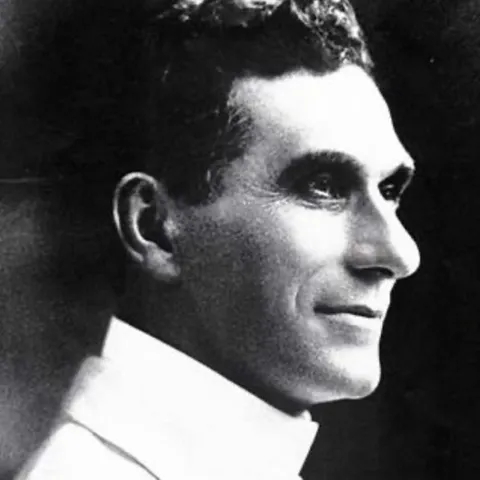 John G. Lake was born in Ontario, Canada on March 18th, 1870. He was a family man, person of integrity, honor, a savvy businessman and a good father. If you knew him you wouldn’t otherwise know that he would soon become one of the greatest men of God the world would ever know. He had a genuine love for the Lord Jesus and was known by his friends as a man who dedicated himself to intimacy with The Lord. It was out of this place that he loved his wife, was a man of integrity and built a very successful business career. To give you perspective, by 1905 John G Lake was making $50,000 per year this sum would be like upwards of 1.3 million dollars per year annually today. John grew up in a family environment which was plagued with sickness and death, it is said that his earliest memories were of sickness, death and funerals. Lake was from a large family, he had 16 siblings, 8 of which tragically died of various diseases. It is no coincidence that “the man of healing” was tormented from a young age with death and disease. The enemy will often oppose destinies with radical circumstances through a distortion of the very thing that we are called to walk in. Lake Was exposed to dramatic healing when he visited John Alexander Dowie’s ministry and was, in prayer, instantly healed of a rheumatism which had caused his legs to grow incorrectly. Just two short years into their marriage, Jennie Lake was diagnosed with tuberculosis and heart disease. Over the next couple of years, the condition worsened and the doctors resigned to the fact that it was only a matter of time before she would die. John allowed this situation to provoke him into faith, after being exposed to such death and disease from a young age he had a hatred for such things. When he would read the word of God he saw that his Christian experience was less than the promised “power of the Holy Spirit”. As Jennie was on her deathbed and perhaps taking her final breaths Lake was overcome with anger over sickness and threw his bible against the fireplace mantle! When he went to pick up his bible it was opened to Acts chapter 10:38 which says: "God anointed Jesus of Nazareth with the Holy Ghost and with power: who went about doing good, and healing all that were oppressed of the devil; for God was with him.” Lake had a surge of faith in that moment and sent a telegram to Dowie asking him to pray. Within an hour of Dowie praying she was fully healed! Not long after Jennie was healed, God began to speak to Lake about going into full time ministry. After some time of contemplation and seeking the Lord, God confirmed to John and Jennie separately that they were to move to South Africa to begin their life of ministry. John and Jennie then gave away all that they had, John forsook his mega-salary and they went on their way alongside some of their friends as ministry partners.
When they arrived in South Africa, they had no money. The problem was, that they needed at least $125 in order to clear customs. they nervously waited for their turn in line, rehearsing what they would say to the immigration officer They were in desperate need of a miracle, as the law read that they would be subject to deportation as quickly as they arrived in South Africa. Just as they were about the get to the front of the line, John felt a tap on his shoulder… A man was standing behind John and said “excuse me sir, can I have a word with you?” John nervously steps out of line at the man’s request and the man said “when I saw you and your family in line, the Lord told me to give you $200 cash”. The Lord provided just enough money for John and his family to enter the country. But their needs didn’t stop there. The Lakes and their crew had no ministry contact in Johannesburg. Soon after they cleared customs, a woman approached John’s friends and asked how many people are in their family, when they told her, she responded “no, not you” and went over to John and asked the same question. John replied “9” and she said “you’re the ones!” She went on to tell John that the Lord had spoken to her last night that she was to give her home to a family of 9 people who are coming from America to do God’s work. John, Jennie and their crew rejoiced in the dramatic provision of the Lord. Their time in South Africa was marked with waves of revival, there were multitudes saved, healed and delivered over the course of their 5 year ministry tour in South Africa.
By far my favorite story from this season of Revival takes place shortly after the Lake family and their team arrived in South Africa. A mighty plague was sweeping through the nation, the death count was climbing dramatically. So much so that there was a surplus of corpses who were victims of the plague and there was no one to bury the dead; if someone was to come in contact with a dead body they would most certainly become infected and their death sentence would immediately begin. John G. Lake astounded the medical officials because he, without any gloves or protective clothing began burying the dead. Physicians in a panic approached John and rebuked him for coming in contact with the dead, John boldly responded "when the disease comes in contact with my skin, you can watch it die". The doctors thought he was insane, so he challenged them to put a drop of the plague on his skin and watch it under a microscope. When they did so, John was right! The plague cells literally burned up the second they came in contact with his skin!
It is tough to understand what would happen towards the end of the Lake’s missionary journey in Africa. One day while John was away on a ministry trip, his wife Jennie suddenly passed away. The cause of her death was malnutrition and exhaustion. It wasn’t uncommon for the sick and broken to line the lawn of John G Lake’s home and Jennie, as an act of sacrifice, gave away all their food and any resources she could to the broken which frequented their house.
Although John and Jennie’s faith and sacrifice is commendable we must learn from this fatal mistake. John’s priorities clearly became altered as the demand for ministry raged on. He failed to guard and keep the very precious gift that God had given him, he allowed the demands of ministry to distract him from the needs of his family unto the tragic and preventable death of his wife. In the wake of Jennie’s death their children became bitter with John and subsequently God. Some of his children left the faith and the most recent accounts of them suggest that they died not following Christ. To this day some of John’s great grandchildren do not follow the Lord. John’s failure to obey the basic command of scripture for “husbands to love their wives as Christ loves the church” and his preoccupation with the demands of ministry opened up the door for the enemy to ravage his family. After Jennie’s death John moved back to the United States and remarried. He would then pioneer his famous healing ministry based out of Spokane Washington. Unfortunately John did not learn his lesson the first time, in the midst of more flames of revival he continued to be a poor father, emotionally disconnected from his children.
John G. Lake was born in Ontario, Canada on March 18th, 1870. He was a family man, person of integrity, honor, a savvy businessman and a good father. If you knew him you wouldn’t otherwise know that he would soon become one of the greatest men of God the world would ever know. He had a genuine love for the Lord Jesus and was known by his friends as a man who dedicated himself to intimacy with The Lord. It was out of this place that he loved his wife, was a man of integrity and built a very successful business career. To give you perspective, by 1905 John G Lake was making $50,000 per year this sum would be like upwards of 1.3 million dollars per year annually today. John grew up in a family environment which was plagued with sickness and death, it is said that his earliest memories were of sickness, death and funerals. Lake was from a large family, he had 16 siblings, 8 of which tragically died of various diseases. It is no coincidence that “the man of healing” was tormented from a young age with death and disease. The enemy will often oppose destinies with radical circumstances through a distortion of the very thing that we are called to walk in. Lake Was exposed to dramatic healing when he visited John Alexander Dowie’s ministry and was, in prayer, instantly healed of a rheumatism which had caused his legs to grow incorrectly. Just two short years into their marriage, Jennie Lake was diagnosed with tuberculosis and heart disease. Over the next couple of years, the condition worsened and the doctors resigned to the fact that it was only a matter of time before she would die. John allowed this situation to provoke him into faith, after being exposed to such death and disease from a young age he had a hatred for such things. When he would read the word of God he saw that his Christian experience was less than the promised “power of the Holy Spirit”. As Jennie was on her deathbed and perhaps taking her final breaths Lake was overcome with anger over sickness and threw his bible against the fireplace mantle! When he went to pick up his bible it was opened to Acts chapter 10:38 which says: "God anointed Jesus of Nazareth with the Holy Ghost and with power: who went about doing good, and healing all that were oppressed of the devil; for God was with him.” Lake had a surge of faith in that moment and sent a telegram to Dowie asking him to pray. Within an hour of Dowie praying she was fully healed! Not long after Jennie was healed, God began to speak to Lake about going into full time ministry. After some time of contemplation and seeking the Lord, God confirmed to John and Jennie separately that they were to move to South Africa to begin their life of ministry. John and Jennie then gave away all that they had, John forsook his mega-salary and they went on their way alongside some of their friends as ministry partners.
When they arrived in South Africa, they had no money. The problem was, that they needed at least $125 in order to clear customs. they nervously waited for their turn in line, rehearsing what they would say to the immigration officer They were in desperate need of a miracle, as the law read that they would be subject to deportation as quickly as they arrived in South Africa. Just as they were about the get to the front of the line, John felt a tap on his shoulder… A man was standing behind John and said “excuse me sir, can I have a word with you?” John nervously steps out of line at the man’s request and the man said “when I saw you and your family in line, the Lord told me to give you $200 cash”. The Lord provided just enough money for John and his family to enter the country. But their needs didn’t stop there. The Lakes and their crew had no ministry contact in Johannesburg. Soon after they cleared customs, a woman approached John’s friends and asked how many people are in their family, when they told her, she responded “no, not you” and went over to John and asked the same question. John replied “9” and she said “you’re the ones!” She went on to tell John that the Lord had spoken to her last night that she was to give her home to a family of 9 people who are coming from America to do God’s work. John, Jennie and their crew rejoiced in the dramatic provision of the Lord. Their time in South Africa was marked with waves of revival, there were multitudes saved, healed and delivered over the course of their 5 year ministry tour in South Africa.
By far my favorite story from this season of Revival takes place shortly after the Lake family and their team arrived in South Africa. A mighty plague was sweeping through the nation, the death count was climbing dramatically. So much so that there was a surplus of corpses who were victims of the plague and there was no one to bury the dead; if someone was to come in contact with a dead body they would most certainly become infected and their death sentence would immediately begin. John G. Lake astounded the medical officials because he, without any gloves or protective clothing began burying the dead. Physicians in a panic approached John and rebuked him for coming in contact with the dead, John boldly responded "when the disease comes in contact with my skin, you can watch it die". The doctors thought he was insane, so he challenged them to put a drop of the plague on his skin and watch it under a microscope. When they did so, John was right! The plague cells literally burned up the second they came in contact with his skin!
It is tough to understand what would happen towards the end of the Lake’s missionary journey in Africa. One day while John was away on a ministry trip, his wife Jennie suddenly passed away. The cause of her death was malnutrition and exhaustion. It wasn’t uncommon for the sick and broken to line the lawn of John G Lake’s home and Jennie, as an act of sacrifice, gave away all their food and any resources she could to the broken which frequented their house.
Although John and Jennie’s faith and sacrifice is commendable we must learn from this fatal mistake. John’s priorities clearly became altered as the demand for ministry raged on. He failed to guard and keep the very precious gift that God had given him, he allowed the demands of ministry to distract him from the needs of his family unto the tragic and preventable death of his wife. In the wake of Jennie’s death their children became bitter with John and subsequently God. Some of his children left the faith and the most recent accounts of them suggest that they died not following Christ. To this day some of John’s great grandchildren do not follow the Lord. John’s failure to obey the basic command of scripture for “husbands to love their wives as Christ loves the church” and his preoccupation with the demands of ministry opened up the door for the enemy to ravage his family. After Jennie’s death John moved back to the United States and remarried. He would then pioneer his famous healing ministry based out of Spokane Washington. Unfortunately John did not learn his lesson the first time, in the midst of more flames of revival he continued to be a poor father, emotionally disconnected from his children.
the bride satan loves to insult
My Dear Globdrop, I’ve had the misfortune of receiving the protestation you called a letter. My favorite line was when you asked how we (your superiors) could expect you (a mere afterthought) to damn souls with all those bombs exploding night and day outside your barracks? You assume Glubgore and our Cannon Battalion are engaged in endless target practice. This, your great error, is somewhat understandable. Headquarters may have, I admit, exaggerated our current position in the war. They did not want to unsettle morale, you see, and thus their reports these past centuries make it perhaps unthinkable that the unpleasant tremor at our gates could be, in reality, the Enemy’s troops firing upon us. But so it is. The humans, though mostly harmless, can make a great deal of noise. They press at the door; their cannons knock. Now, you mustn’t lose your nerve, nephew. I remember my initial discomfort when Screwtape allowed me my first gaze over the wall, writing, “we see her spread out through all time and space and rooted in eternity, terrible as an army with banners .” “That,” Screwtape confessed, “is a spectacle which makes our boldest tempters uneasy .” Although you might assume that we stand in a defensive position, two thousand years have passed, nephew, and our flag still flies firmly overhead. And firm overhead it shall always fly. The Enemy shall not advance; noise is all we need fear. Why? Screwtape alluded to one of the main reasons in his very next sentence: “But fortunately it is quite invisible to these humans.” They cannot see themselves as we do. Where might we be if they did? The Church (Invisible) When the humans look about them in the pews, what do they see? Do they see what we see: handfuls of saints dressed in their Enemy’s blinding armor — golden helmets, shields, and swords — a horror which makes even our boldest tempters tense? When they gather, what do they hear? You complain of all the blasts and screams of warfare — but do they? Do they hear that cloud of witnesses behind them, the living saints beside them, their dreadful Commander before them urging them onwards? May it never be! They mean to take up that barren banner, The Church Triumphant , but we must show them other, more accurate, slogans. The Church Insignificant Even their best soldiers can be deceived into looking at his clumsy comrades with unimpressed glances. As he looks about the congregation at our bitterest foes, show him the Arnett family sneaking into church late (once again); let him catch a whiff of silly Mr. Jones who always smells of his cats; amplify the joyful noise of always-out-of-tune Mrs. Johnson upon him; extinguish any belief that he could possibly be in the presence of anything grand. Wonder loud enough for him to overhear: How could this group possibly be a threat to all that is wrong with the world? The Enemy, in his matchless arrogance, helps us on this point by choosing mostly the weak, lowly, despised of the world. He wages his warfare with the ducks and squirrels, leaving us the lions and bears. By fighting with these blunt spoons, of course, he means to make fools of us. The Church Impotent Periodically, place upon your man’s mind doubt as to how these people’s bumbling prayers, their simple faith, their small acts of love, and ordinary obedience — spurred on somehow by something like that man’s preaching — could really make any difference at all in the world. Ask him how could this ragtag assembly of misfit toys really be the grand temple of the Spirit of the living God? Is this really God’s great response to evil? Old widow Ortiz cannot even see the words in her Bible anymore — should she have anything to do with our undoing? Highlight all the real (worldly) movements for change happening outside the narrow confines of the so-called “buttress of truth.” Enflame the itch to bring about real change, and allow him to recognize the impotence of the church to engage in anything of real importance. Make him clamor to combat the earthly darkness with more of the same, never the cosmic powers behind it. The Church Dying Next, you must show the church severely wounded. Show her dying out. Of course, to our shame, she has been “dying” now for centuries, and yet never “dead.” The humans, unversed in history, do not consider how vexing this has been to us. The more we have mauled her in the Roman Coliseum, or burned her to light the streets, or cut off heads on foreign beaches, the larger she grew. When we persecute her most violently, our gates begin to shake most forcefully. She is never fiercer, we almost discovered too late, than when covered in her own blood. We contend with a warrior, nephew, who gains more arms, ears, and eyes with each swipe at her. Even when the age of our persecution is bloodiest, she seems the healthier for it in the end. Who is this that grows stronger when wounded? The humans must never know. The Church Hideous Make it sport — especially among the most spiritual — to insult the church. Call her a whore in as many ways as you can devise. The Enemy, as pointless as it was, claims to have given himself up for her to dress her in the finest clothes and beautify her completely. He claims her as his family , his own body, his bride, and boasts to have “filled her with his Spirit,” “reformed her ways of life,” and “made her precious to him” (all Enemy propaganda, of course). We cannot allow these lies to take hold. Don’t let them think well of her. The church, with all her reported crusades, abuses, divorces, racism, pornography, adultery, and deformity (this among the “professed” church, of course) is to be apologized for profusely. Suggest, and this constantly, that there is not an actual difference from those who belong to the Enemy and those who belong to us. Don’t let them see that sickening splendor, that horrid stateliness, that perverse potency, that actual transformation in them that has stood despite all our missiles throughout the ages. Play the Devil Globdrop, though this army has proven an inconvenience for us, though it may appear we fight with our backs temporarily against the wall, to guarantee our campaign, we must keep their blood from stirring at a sight of themselves as eternity sees them. Veil who they are and the effect of what they accomplish while continuing to unveil the oddities, the annoyances, the awful mundaneness of the day-to-day and the week-to-week. Assure your man that this mission is small, the stakes smaller, and those with him the smallest of all — hardly anything to take too seriously. Nothing of value transpires during their prayers, their sermons, their evangelism, their gatherings — at least, nothing to outweigh the afternoon sports game. Your Concerned Uncle, Grimgod