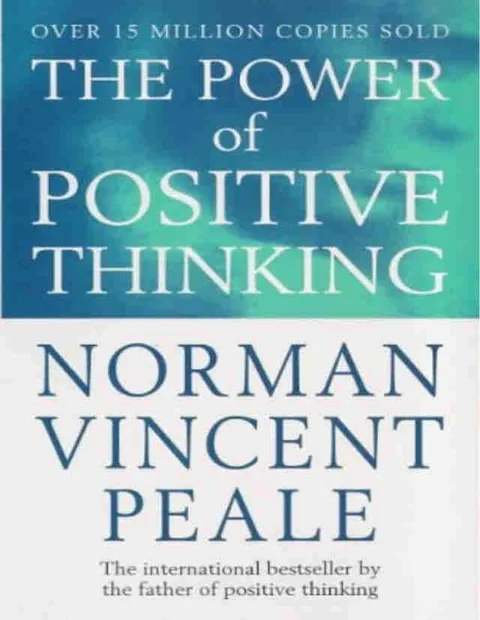

The Power Of Positive Thinking Order Printed Copy
- Author: Norman Vincent Peale
- Size: 1.41MB | 226 pages
- |
Others like the power of positive thinking Features >>
101 Activities For Teaching Creativity And Problem Solving

The Power Of Self-Confidence

The Power Of Thought And Visualization
The Power Of Servant-Leadership

Leadership, The Power Of A Creative Life
-160.webp)
Grit (The Power Of Passion And Perseverance)

The Power Of Vision
-160.webp)
The Gifts Of Imperfection: Embrace Who You Are
-160.webp)
The Rhythm Of Life: Living Every Day With Passion And Purpose

Power Of Character In Leadership
About the Book
"The Power of Positive Thinking" by Norman Vincent Peale outlines the importance of maintaining a positive mindset in order to achieve success and happiness in life. The author offers practical advice and techniques for developing a positive attitude and overcoming challenges through faith, belief in oneself, and the power of prayer. Peale emphasizes the impact of thoughts on our actions and outcomes, and encourages readers to cultivate a strong sense of optimism and self-confidence in order to pursue their goals with enthusiasm and determination.
Dietrich Bonhoeffer

valentine’s day for single christians
There is a strangeness to Saint Valentine’s Day. G.K. Chesterton saw the oddness of it with his remark that “there seems to be a comic incongruity in such lively and frivolous flirtations still depending on the title of an ascetic and celibate bishop.” Valentine’s Day remains a massively popular holiday in America, despite the fact that many people don’t simply consider the day strange, but dread it all together. For some, the day is too commercialized — a waste of money, they say. All those cards and flowers and chocolates for a holiday we’ve made up needlessly. But many who cringe at Valentine’s Day are simply lonely — they hate being sad, and being reminded of what they don’t have. But as a single Christian who longs to be married, I propose another reason to step back from this annual day of love: it stirs up longings in us that can’t be filled — yet. Valentine’s Day is not an easy or light thing to face as a single person. The chick flicks, charming cards, and chocolate hearts can easily make us feel sad and tired — and tired of feeling sad. But for Christians, this is no excuse to wallow in our loneliness or discontentment. This year, I will not celebrate Valentine’s Day, but it is not simply because I’m frustrated or lonely. It’s because I would rather enjoy God’s gifts of contentment, fulfillment, and hope — gifts that Christ died to purchase for us, whether we’re single or married. Real Contentment When you’re on a diet, does it help you to look at pictures of food, or does it make you even more weak, hungry, and miserable — and more likely to cave to your cravings? For me, it’s the latter. Looking at what we long for but cannot have stirs up feelings in us we cannot satisfy. It causes us to feel drained, despondent, and worse still, discontent. “Single Christians, Christ died to give you contentment, fulfillment, and hope — even on Valentine’s Day.” Longing for companionship, romance, marriage, and sex is not wrong. God himself created these gifts so we would enjoy them (Genesis 2:18; Proverbs 5:18; Song of Solomon; 1 Corinthians 7:5; 1 Timothy 4:4; 6:17). Desiring these good things — and feeling loneliness and sadness without them — is natural. It is not necessarily sinful. It is being human the way God created us to be. But for those of us not-yet-married, these yearnings remain unfulfilled. As a result, we sometimes turn to other things — romantic comedies, chocolates, relationships we know won’t lead to marriage — trying to satisfy the voids in our hearts. However, when we are in a state of weakness, verging on the precipice of discontentment or even dissatisfaction with God, these activities can quickly become dangers. Through fruitless relationships we can exploit other people to get the emotional security we crave without seeking to love and honor them above ourselves (Romans 12:9–10). For many single people, the cheap pleasures of pornography or other sexual experiences become most alluring when we feel discontent. But even good things like movies or chocolate can become dangers when we use them to quench our loneliness. They make us laugh, have a good time, and forget our sorrows — but when these fleeting pleasures fade, we only feel more aware of our alone-ness. For Christians, this should not be the case. We can combat this disappointment and loneliness by turning to the only one who can fulfill us: Jesus Christ. He is the only source of happiness which will never disappoint us and never leave us feeling discontent (Jeremiah 2:13). If anyone thirsts, let him come to Christ and drink (John 7:37) — he will not leave you discontented. Real Fulfillment God is most glorified in us when we are most satisfied in him. Only Christ can fill the emptiest hearts, the loneliest moments, and the saddest days. He understands them all (Hebrews 4:15–16). He loves each of his children (Jeremiah 31:3). He promises to fulfill all of our needs (Philippians 4:19). “Singleness cannot keep you from the abundance of life and fullness of joy that God promises you.” We may feel like we need a boyfriend or girlfriend. We may feel like we need the special intimacy and companionship only a spouse can provide. We may feel like we need sex. Again, these are legitimate longings. But even if God does not satisfy these specific desires right now, he does promise his comfort and support during the pain of waiting (2 Corinthians 1:3–4). Leaning on his strength, we can carry on (Philippians 4:13). And we can do more than that — we can live full, satisfied, truly joyful lives (Psalms 16:11). Instead of using the season of singleness as a time to mope and bemoan our loneliness, we can use it to chase after our Creator, pursuing a deeper, more satisfying, more glorifying relationship with him every day. It is true that God created marriage and sex for us to enjoy, but he did not create us for enjoying marriage and sex, ultimately. He created us to enjoy him , in whatever circumstances (Philippians 4:11) — singleness cannot get in the way of God’s promise of full joy in him (Psalm 16:11). Instead of marking our calendars for an annual day of mourning while the world revels in mutual love, we can mark our calendars to celebrate the special relationship we have with our Father in heaven, who lovingly looks on us and showers us with his glorious blessings and assures us that we are never alone. Real Hope No matter how lonely we feel right now (and sometimes that’s pretty lonely), we are assured that it won’t be like this forever. Our lives here are merely a vapor, a breath (James 4:14; Psalm 39:5). Think of this: even if we remain single for the rest of our lives here on earth, it is only a fraction of time compared to the eternity we will spend rejoicing in the presence of Christ, who we will know more fully through our pain and loneliness than we ever would have otherwise. “God did not create us ultimately to enjoy marriage or sex. He created us to enjoy him.” I do not relish the idea of living out my days alone in this world. Nevertheless, I am comforted, encouraged, and hopeful in remembering God’s eternal perspective: my days here are limited (Psalm 39:4), and sooner than I realize, I will be in his comforting, fulfilling presence, enjoying perfect harmony and companionship with him and all the saints for all eternity. This light momentary affliction — whether a lonely Valentine’s Day or a lifetime of singleness — is preparing an eternal weight of glory (2 Corinthians 4:17). This gives me hope. Real Love Dear single friends, let’s not dread February 14, but look forward to it as a special day God has given us to glorify him. Let’s see our loneliness as a reminder to search for satisfaction in Christ. Let’s use our sadness to dwell on his sacrifice, purchase, and love for us. Let’s seize the day to pursue him. I’ll be worshiping him, and enjoying him, right alongside you.