
GIP Library icon

The Machine - A Truth Seekers Novel The Machine - A Truth Seekers Novel

The Machine - A Truth Seekers Novel Order Printed Copy

  • Author: Bill Myers
  • Size: 1.42MB | 228 pages
  • |
Continue with
Google Twitter
LOG IN TO REVIEW
About the Book


"The Machine" follows a group of teenagers who stumble upon a mysterious machine that can grant their wishes, but at a great cost. As they uncover the dark secrets behind the machine and its creator, they must decide if the power it offers is worth the price of their humanity. The novel explores themes of sacrifice, morality, and the consequences of seeking power.

Dietrich Bonhoeffer

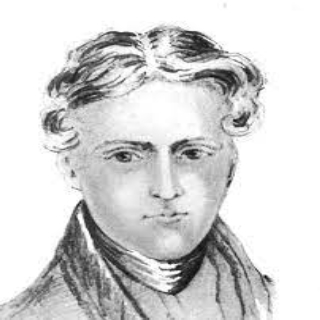
Dietrich Bonhoeffer "Cheap grace is preaching forgiveness without requiring repentance, baptism without church discipline, Communion without confession. … Cheap grace is grace without discipleship, grace without the cross, grace without Jesus Christ, living and incarnate." "The time is fulfilled for the German people of Hitler. It is because of Hitler that Christ, God the helper and redeemer, has become effective among us. … Hitler is the way of the Spirit and the will of God for the German people to enter the Church of Christ." So spoke German pastor Hermann Gruner. Another pastor put it more succinctly: "Christ has come to us through Adolph Hitler." So despondent had been the German people after the defeat of World War I and the subsequent economic depression that the charismatic Hitler appeared to be the nation's answer to prayer—at least to most Germans. One exception was theologian Dietrich Bonhoeffer, who was determined not only to refute this idea but also to topple Hitler, even if it meant killing him. From pacifist to co-conspirator Bonhoeffer was not raised in a particularly radical environment. He was born into an aristocratic family. His mother was daughter of the preacher at the court of Kaiser Wilhelm II, and his father was a prominent neurologist and professor of psychiatry at the University of Berlin. All eight children were raised in a liberal, nominally religious environment and were encouraged to dabble in great literature and the fine arts. Bonhoeffer's skill at the piano, in fact, led some in his family to believe he was headed for a career in music. When at age 14, Dietrich announced he intended to become a minister and theologian, the family was not pleased. Bonhoeffer graduated from the University of Berlin in 1927, at age 21, and then spent some months in Spain as an assistant pastor to a German congregation. Then it was back to Germany to write a dissertation, which would grant him the right to a university appointment. He then spent a year in America, at New York's Union Theological Seminary, before returning to the post of lecturer at the University of Berlin. During these years, Hitler rose in power, becoming chancellor of Germany in January 1933, and president a year and a half later. Hitler's anti-Semitic rhetoric and actions intensified—as did his opposition, which included the likes of theologian Karl Barth, pastor Martin Niemoller, and the young Bonhoeffer. Together with other pastors and theologians, they organized the Confessing Church, which announced publicly in its Barmen Declaration (1934) its allegiance first to Jesus Christ: "We repudiate the false teaching that the church can and must recognize yet other happenings and powers, personalities and truths as divine revelation alongside this one Word of God. … " In the meantime, Bonhoeffer had written The Cost of Discipleship (1937), a call to more faithful and radical obedience to Christ and a severe rebuke of comfortable Christianity: "Cheap grace is preaching forgiveness without requiring repentance, baptism without church discipline, Communion without confession. … Cheap grace is grace without discipleship, grace without the cross, grace without Jesus Christ, living and incarnate." During this time, Bonhoeffer was teaching pastors in an underground seminary, Finkenwalde (the government had banned him from teaching openly). But after the seminary was discovered and closed, the Confessing Church became increasingly reluctant to speak out against Hitler, and moral opposition proved increasingly ineffective, so Bonhoeffer began to change his strategy. To this point he had been a pacifist, and he had tried to oppose the Nazis through religious action and moral persuasion. Now he signed up with the German secret service (to serve as a double agent—while traveling to church conferences over Europe, he was supposed to be collecting information about the places he visited, but he was, instead, trying to help Jews escape Nazi oppression). Bonhoeffer also became a part of a plot to overthrow, and later to assassinate, Hitler. As his tactics were changing, he had gone to America to become a guest lecturer. But he couldn't shake a feeling of responsibility for his country. Within months of his arrival, he wrote theologian Reinhold Niebuhr, "I have made a mistake in coming to America. I must live through this difficult period in our national history with the Christian people of Germany. I will have no right to participate in the reconstruction of Christian life in Germany after the war if I do not share the trials of this time with my people." Bonhoeffer, though privy to various plots on Hitler's life, was never at the center of the plans. Eventually his resistance efforts (mainly his role in rescuing Jews) was discovered. On an April afternoon in 1943, two men arrived in a black Mercedes, put Bonhoeffer in the car, and drove him to Tegel prison. Radical reflections Bonhoeffer spent two years in prison, corresponding with family and friends, pastoring fellow prisoners, and reflecting on the meaning of "Jesus Christ for today." As the months progressed, be began outlining a new theology, penning enigmatic lines that had been inspired by his reflections on the nature of Christian action in history. "God lets himself be pushed out of the world on to the cross," he wrote. "He is weak and powerless in the world, and that is precisely the way, the only way, in which he is with us and helps us. [The Bible] … makes quite clear that Christ helps us, not by virtue of his omnipotence, but by virtue of his weakness and suffering. … The Bible directs man to God's powerlessness and suffering; only the suffering God can help." In another passage, he said, "To be a Christian does not mean to be religious in a particular way, to make something of oneself (a sinner, a penitent, or a saint) on the basis of some method or other, but to be a man—not a type of man, but the man that Christ creates in us. It is not the religious act that makes the Christian, but participation in the sufferings of God in the secular life." Eventually, Bonhoeffer was transferred from Tegel to Buchenwald and then to the extermination camp at Flossenbürg. On April 9, 1945, one month before Germany surrendered, he was hanged with six other resisters. A decade later, a camp doctor who witnessed Bonhoeffer's hanging described the scene: "The prisoners … were taken from their cells, and the verdicts of court martial read out to them. Through the half-open door in one room of the huts, I saw Pastor Bonhoeffer, before taking off his prison garb, kneeling on the floor praying fervently to his God. I was most deeply moved by the way this lovable man prayed, so devout and so certain that God heard his prayer. At the place of execution, he again said a prayer and then climbed the steps to the gallows, brave and composed. His death ensued in a few seconds. In the almost 50 years that I have worked as a doctor, I have hardly ever seen a man die so entirely submissive to the will of God." Bonhoeffer's prison correspondence was eventually edited and published as Letters and Papers from Prison, which inspired much controversy and the "death of God" movement of the 1960s (though Bonhoeffer's close friend and chief biographer, Eberhard Bethge, said Bonhoeffer implied no such thing). His Cost of Discipleship, as well as Life Together (about Christian community, based on his teaching at the underground seminary), have remained devotional classics.

the sluggard in me - four lies that lead to lazy

Come, follow closely, and gaze for a moment upon a rare creature in his native habitat. There he is, drooling upon his pillow an hour before lunchtime, creaking over the bedsprings like a door on its hinges. “How long will you lie there? When will you arise from your sleep?” his mother shouts from the kitchen. Quiet, now: she has roused him. Here he comes, stumbling into his chair, and begins to feed. “What’s wrong with a little sleep, a little slumber?” he mumbles between mouthfuls. A dozen handfuls later, however, he stops, his hand submerged in his cereal like a sunk boat. He breathes heavily, chin against his chest, and begins to snore again. Meet the sluggard (Proverbs 26:14; 6:9–10; 19:24). He is a figure of “tragi-comedy,” Derek Kidner writes ( Proverbs , 39): comedy, because the sluggard’s laziness makes him ludicrous; tragedy, because only sin could so debase a man. The image of God was never meant to yawn through life. Yet those who are paying attention will also see something more in this tragi-comic sloth: themselves. We all have an inner sluggard, counseling us to sleep when we should rise, rest when we should work, eat when we should move. “The wise man,” Kidner goes on to write, knows that the sluggard is no freak, but, as often as not, an ordinary man who has made too many excuses, too many refusals, and too many postponements. It has all been as imperceptible, and as pleasant, as falling asleep. (40) We don’t need to look far, then, to see the sluggard in his native habitat. We only need to hear his “excuses,” “refusals,” and “postponements,” and then listen for their inner echo. ‘I need just a little more.’ A little sleep, a little slumber, a little folding of the hands to rest. (Proverbs 6:10; 24:33) The words sit in the mouth of the sluggard more than once in Proverbs. They are, perhaps, his motto, his favorite response to the wisdom of the diligent. “Early to rest, early to rise . . .” they tell him; “A little sleep, a little slumber . . .” he answers. “An ordinary man becomes a sluggard one small surrender at a time.” Sluggishness often hides beneath that eminently reasonable phrase “just a little more.” What harm could  a little  do? What’s one more snooze cycle? What’s one more show? What’s one more refreshing of the timeline? Not much, in itself: but much indeed when piled atop ten thousand other  littles  and  one mores . They may seem like “small surrenders” (to use a phrase from Bruce Waltke,  Proverbs , 131) — and they are. But an ordinary man becomes a sluggard one small surrender at a time. How do the wise respond? They know that diligent Christians are not a special species of saint. Like the sluggard, the diligent daily face unpleasant tasks. Unlike the sluggard, the diligent speak a different motto: “A little labor, a little energy, a little moving of the hands to work.” Instead of building a stack of small surrenders, they build a stack of small successes — taking little step by little step in the strength that God supplies. Over time, how we handle  little  is no little matter. Little drudgeries, little tasks, little opportunities: these are the moments when the sluggard gains ground in our souls, or loses it. ‘There’s always tomorrow.’ The sluggard does not plow in the autumn; he will seek at harvest and have nothing. (Proverbs 20:4) Often enough, “just a little more” achieves the sluggard’s purpose. But if, for some reason, his conscience should protest, he has another word at his disposal that rarely fails:  tomorrow . Autumn was the season for plowing and planting in ancient Israel, and summer the season for harvest. We don’t know exactly why the sluggard took it easy while his neighbors plowed their fields. Maybe the difficulty of the task daunted him, or maybe, as the King James Version suggests, the season’s chill deterred him: “The sluggard will not plow  by reason of the cold .” Either way, he no doubt fell asleep on many autumn nights warmed by the thought, “There’s always tomorrow” — until one day he woke up in winter. When the sluggard finally arrived at his chosen  tomorrow , the time for plowing and planting had escaped his grasp. How often have we too discovered that tomorrow is too late? The conversation we should have initiated yesterday proves more awkward today. The essay we should have begun last week overwhelms us this week. The forgiveness we should have sought last month feels harder to seek this month. Autumn has passed, winter has come, and opportunity has slipped through our fingers. The wise learn to take the farmer’s view of life: when the time comes to plow, a farmer pays more attention to the season than to his feelings. And when the time comes to tackle our own difficult tasks, the wise do the same. ‘I would be putting myself at risk.’ There is a lion outside! I shall be killed in the streets! (Proverbs 22:13; see also 26:13) Indulging a bad excuse is a little like feeding a pigeon: give bread to one, and twenty more will soon coo at your feet. Bad excuses breed bad excuses — and even worse excuses over time. And so, when a friend, family member, or boss refuses to entertain the sluggard’s  littles  and  tomorrows , he takes more radical measures: “Haven’t you seen the lion roaming the streets? I’ll die!” Did any sluggard ever attempt such an excuse? Maybe. “Laziness is a great lion-maker,” says Charles Spurgeon. “He who does little dreams much. His imagination could create not only a lion but a whole menagerie of wild beasts” (“One Lion: Two Lions: No Lion at All”). For our own purposes, however, we can consider a tamer version of the sluggard’s beast: “I would be putting myself at risk.” To our inner sluggard, a scratch in the throat is cause for a sick day, a little tiredness is reason to nap instead of mow, and a long day at work is justification for skipping small group. After all, our bodies and minds  need  the rest, don’t they? Care is required here, of course. Some people really  do  work their bodies into the dust, forsaking the rest God gives and “eating the bread of anxious toil” (Psalm 127:2). The sluggard, however, is prone to label as “anxious toil” any work that meets with inner resistance. He forgets that overcoming such resistance is part of what makes diligence  diligence . God made our bodies to bend and strain, our minds to crank and labor, our souls to strive and press. The lion called “Lazy” will counsel us to avoid the strain, but diligence will slay the lion. ‘What do you know about the pressures I’m under?’ The sluggard is wiser in his own eyes than seven men who can answer sensibly. (Proverbs 26:16) Confront a sluggard in his sluggishness, and you may find that he has a penchant for euphemisms. “He has no idea that he is lazy,” writes Kidner on Proverbs 26:13–16. He is not a shirker but a “realist” (13); not self-indulgent but “below his best in the morning” (14); his inertia is “an objection to being hustled” (15); his mental indolence a fine “sticking to his guns” (16). ( Proverbs , 156) Our own sluggishness, then, often appears in our defenses against the charge. Once, as a single man, I told a mentor, “I need more time to myself.” “You don’t  need  it,” he responded. Immediately, I raised the drawbridge, manned the ramparts, and launched inward mortars against the attack. What could he, a husband and father of three, possibly know about the pressures I was under? The self-defense is laughable now, but back then, wise in my own eyes, I couldn’t accept that much of what I called “alone time” was better labeled “sluggishness.” The sluggard sees his own work as the hardest work, his own excuses as the best excuses, his own diversions as the most reasonable diversions — no matter what his friends, wife, or pastor may say. But the wise learn to develop a self-distrustful posture. Rather than responding to requests or challenges with an inward  Don’t you see my burdens?  they remember their proneness to folly, and learn to call the sluggard by his real name. The Christian and the Sluggard Between the Christian and the sluggard, Spurgeon says, “there should be as wide a division as between the poles.” He’s right. “Christian” and “sluggard” go together like “husband” and “playboy,” like “judge” and “thief”: the latter destroys the integrity of the former. “In Christ we find our pattern for work. In Christ we find our power for work. And in Christ the sluggard dies.” And why? Because Christians belong to Jesus Christ, and Jesus Christ was not sluggish. He was no workaholic, of course: he could feast, rest, sleep, and develop deep relationships. But oh did he work. In the Gospels we find not the sluggishness but “the  steadfastness  of Christ” (2 Thessalonians 3:5): the diligence of one who never entertained “just a little more” or “tomorrow,” but worked while it was day (John 9:4). He plowed in the autumn cold of life, forsaking every excuse not to save us. And he never cried “lion!” though he walked into the den (Psalm 22:21). Therefore, the apostle Paul can say to the sluggish, “Such persons we command and encourage  in the Lord Jesus Christ  to do their work” (2 Thessalonians 3:12). In Christ we find our pattern for work. In Christ we find our power for work. And in Christ the sluggard dies.

Feedback
Suggestionsuggestion box
x