
Others like the dream code Features >>
The Fire Of Delayed Answers
The Power Of Praise And Worship

Protecting Your Home From Spiritual Darkness
Prayer That Brings Revival
Fervent - A Woman's Battle Plan
Secrets Jesus Shared
Intimacy With God: Walk In The Holy Spirit
The Hidden Power Of Prayer And Fasting

Commanding Angels
Revival Praying
Exceptional piece. Highly recommended! I have put into practice what was told and i saw my life turned around was on the brink of losing my life as well and I was revived back to life. Taste and see that the lord is good. You cannot know the taste of something unless you've tried.
- serah nemai (2 months ago)
About the Book
"The Dream Code" by Elisha Goodman is a spiritual guide that aims to help readers understand the significance of dreams in their lives. Goodman provides insight into decoding dreams and how they can be used as a tool for spiritual growth and guidance. Through personal anecdotes and biblical references, the book encourages readers to pay attention to their dreams and learn from the messages they may be receiving.
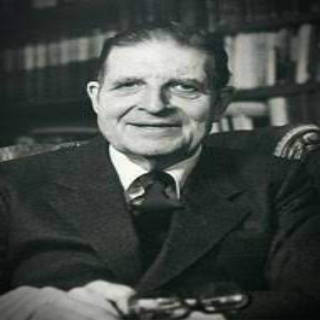
John A. Broadus
John Broadus, Southern’s second president, was born on January 24, 1827 in Culpeper County, Virginia. After undergraduate and graduate work at the University of Virginia, he joined the university’s faculty as an assistant professor of classics. There, he displayed unusual facility in his post. He served simultaneously as pastor of the Charlottesville Baptist Church. In this period, Broadus won the heart of Maria Harrison, daughter of renowned classics professor Gessner Harrison. Married on November 18, 1850, the Broaduses had three daughters (Eliza, Annie, and Maria) together before Maria passed away on October 21, 1857 at twenty-six years of age. On January 4, 1859, Broadus married Charlotte Eleanor Sinclair, who gave birth to several additional children.
The 1858 Education Convention elected Broadus to the seminary’s first faculty. Broadus declined the position because he had close ties to school and family in Charlottesville. For months, Boyce and Manly doggedly urged him to reconsider. After much thought, and not a little anguish, Broadus accepted. From the time he began teaching, Broadus showed a lifelong affection for instructing and mentoring students. Prior to the seminary’s closing in the Civil War period, Broadus drew a single student to his homiletics class. Rather than canceling the class, Broadus lectured to his lone pupil week after week, honing the content that later became the book The Preparation and Delivery of Sermons. The text’s durability was remarkable. Over half a century later, several seminaries used it in homiletics classes.
When Southern suspended courses in 1862, Broadus served as a chaplain to Confederate soldiers. He returned to Southern at the war’s end and resumed his teaching post. His talents gained renown. Over Broadus’s career, the University of Chicago, Vassar University, Brown University, Georgetown College, and Crozer Theological Seminary each wooed the professor as a potential president. Large and wealthy churches invited him to be their pastor. Broadus declined these overtures. The greatest need and his greatest influence were at the seminary he loved. In 1889 trustees elected Broadus president of the seminary to succeed Boyce. He guided the school for six peaceful years.
Broadus contributed much to the fields in which he taught. In addition to his landmark text on preaching, the scholar labored over his Commentary on the Gospel of Matthew for twenty years before publishing it. With such depth of thought, he excelled at preaching. University of Chicago professor W. C. Wilkinson once remarked of Broadus that he had “every natural endowment, every acquired accomplishment to have become, had he been only a preacher, a preacher hardly second to any in the world.” (1) By his plain exposition and conversational delivery, Broadus changed the character of SBC preaching, a shift seen in the current day.
Broadus’s life is notable on a variety of fronts. While a pastor in Virginia, Broadus baptized Lottie Moon, who became Southern Baptist’s most famous overseas missionary. In the Civil War, Broadus preached before Confederate general Robert E. Lee and other Confederate generals, earning a standing invitation from Lee to preach for him. J. D. Rockefeller went further than Lee—he offered Broadus a hefty salary to become his pastor in New York City, an offer Broadus turned down. In 1886, on the 250th anniversary of Harvard University, the school conferred an honorary degree on Broadus due to his national academic reputation. In 1889, Yale University invited the professor to New Haven to deliver the Lyman Beecher Lectures on preaching. Broadus was the only Southern Baptist to address the Ivy League school in a series of talks. Together with Basil Manly, Jr., he founded the monthly Sunday School newspaper, Kind Words in 1866, a title that was eventually adopted by the Southern Baptist Convention’s Home Mission Board.
As a preacher, professor, and leader, Broadus looms large in Southern’s history and in the history of the SBC. He was an active churchman at Louisville’s Walnut Street Baptist Church. Broadus passed away on March 16, 1895.
(1) William Mueller, A History of Southern Baptist Theological Seminary, 67. Sources: William Mueller, A History of Southern Baptist Theological Seminary, Nashville, TN: Broadman, 1959.
As for Me and My House
If you are a Christian man, I know something about you. I know you want more. You want more thrill in your walk with Jesus. You want more life, more wakefulness, more awe and wonder, more heavenly ambition, more consistency, more urgency, more sin lying slain at your feet. You want more of an inbreaking sense of God’s utter immensity, his total majesty, his relentless love for you by name. You want fewer clichés and unrealities, and more of the real thing. You want to live for more, with more power and purpose. And if you have a family, you want more skill to lead them to Christ. You want to live in a world of worship and mission with them. You want your wife to increasingly blossom as she beholds more of Jesus. You want to hear your kids singing to Jesus. You want to pray real prayers together, and face difficulties as a family, saying as Jehoshaphat did to God: “We do not know what to do, but our eyes are on you” (2 Chronicles 20:12). And you want to see him answer mightily. In other words, you want true, living, family religion that spills into your neighborhood and your local church. But is it possible? This desire, perhaps now neglected and starved, only visits with whispers of guilt as you look around at what your life is really like: a fight for survival. Maybe you have conceded to a listless and half-living expectation: just get through the day, enjoy a little entertainment in the crevices, sleep, and then repeat. But just as you want more for yourself and your family, God wants and promises more too. Family Alive to God Christian man, you have a delightful duty to provide for your household, both physically and spiritually. Such a privilege was long foretold, given not just in the cultural mandate (Genesis 1:28) but in the great command to God’s covenant people: Hear, O Israel: The Lord our God, the Lord is one. You shall love the Lord your God with all your heart and with all your soul and with all your might. And these words that I command you today shall be on your heart. You shall teach them diligently to your children, and shall talk of them when you sit in your house, and when you walk by the way, and when you lie down, and when you rise. You shall bind them as a sign on your hand, and they shall be as frontlets between your eyes. You shall write them on the doorposts of your house and on your gates. (Deuteronomy 6:4–9) “Christian man, you have a delightful duty to provide for your homes, both physically and spiritually.” This vision for the family could not be higher: nothing less than a world submerged with God. God raised the ultimate banner, “Love the Lord with everything,” which is to fly in the wind over everyday life. He meant for all facets, every corner of family life, to be inscribed with reminders of God and his unchanging worth. He meant to be supreme in all things for the joy of all his people and their families. Parents diligently passed this passion along to the next generation, praying that God would give new birth. The truth that made one wise for salvation was to be repeated, again and again, as a man strikes a blade repeatedly to sharpen it, in hopes that God would fashion children who also love him with their all. More than simply passing truths along, however, we see how a faithful man creates an atmosphere into which he draws his children. The home stood as a place where discussions of God continue: as you sit down as you walk by the way when you lie down when you rise up When at home, or when traveling away from home — from the early morning to the laying down at night — conversation was to revolve around God. Israel even decorated themselves and their world with physical reminders of God’s word: “You shall bind them as a sign on your hand, and they shall be as frontlets between your eyes,” and, “You shall write them on the doorposts of your house and on your gates.” I tremble myself to write this to you in Christ: Not a day should pass when God’s ways, God’s gospel, and God’s return should go uncontemplated and unspoken in our families. Men with Burning Hearts The point is that this vision for family religion wasn’t something to check off a list; it was a lifestyle. Not merely a devotional squeezed in the cracks, but a consistent disposition to worship. The God worthy of our all devotion fills the believer’s sphere, especially his household. A vision that matches the secret desire. If you are a Christian man, you especially bear the responsibility of this — and again, you desire it, heavy as it is. How do I know? Because the text says so. You shall love the Lord your God with all your heart and with all your soul and with all your might. And these words that I command you today shall be on your heart. “This vision for the family could not be higher: nothing less than a world submerged with God.” You will be convinced — Christian father, Christian son, Christian brother — to give yourself to cultivating a world full of God, whether or not you have your own family yet. And not because you read an article or good book, but because God has inscribed his great blazing commandment on your heart. No one needs to twist your arm to want to live for Christ to greater and greater stature. “For they shall all know me” (Jeremiah 31:34). Does Your Spirit Burn? In the old covenant, getting the commandments on one’s heart entailed memorization, meditation, prayer, obedience. In the new covenant, these means are likewise employed but from a very different starting place: This is the covenant that I will make with the house of Israel after those days, declares the Lord: I will put my law within them, and I will write it on their hearts. And I will be their God, and they shall be my people. (Jeremiah 31:33) Does your spirit not burn within you? You may feel guilt for past laziness, you may feel convicted about current neglect, you may need to fall to your knees and beg God’s forgiveness for leaving him forgotten in the attic, but one thing is sure if you know Christ: You long to provide spiritual blessing to your home. Perceive the Lord Jesus extending more grace and providing fresh opportunity. No longer resist plunging into this promised sea of blessing: “those who honor me I will honor” (1 Samuel 2:30). If you are real, brother, his law is already etched on your heart: You want to care for your family. You want to put away trivialities and live for Christ. You want to build your home and fill it with great thoughts and loving deeds. You want Bethlehem’s star resting above your roof, indicating the King’s presence. You want to provide spiritual meat and everlasting drink to those you love most. You want to truthfully and continually say, “As for me and my house, we will serve the Lord.” Article by Greg Morse