
Others like the code of the holy spirit Features >>
The Art Of Shepherding
The Joys Of Hebrew

The Consecrated Way To Christian Perfection

Christ The Sum Of All Spiritual Things
_by__A.B.%20Bruce_-160.webp)
Training Of The Twelve (Principles For Christian Leadership)
Baptism In The Holy Spirit
Mystery Of The Holy Sprirt

Eye Of The Seer

The Person And Work Of The Holy Spirit
.epub-160.webp)
The Price Of Spiritual Power
About the Book
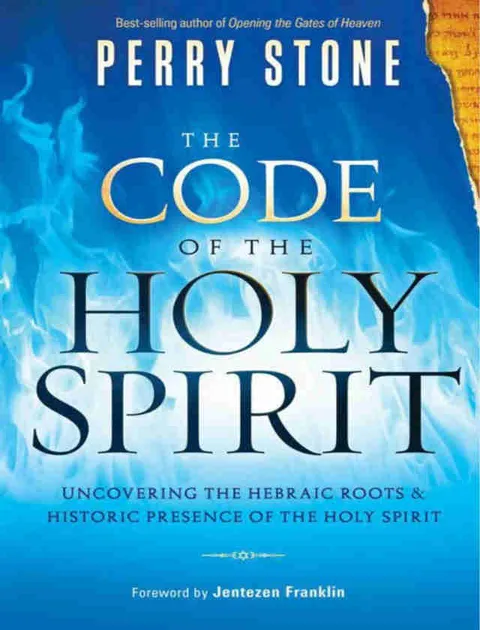
"The Code of the Holy Spirit" by Perry Stone explores the mysterious and powerful work of the Holy Spirit in the lives of believers. Stone presents teachings, insights, and supernatural experiences that reveal the secret messages and hidden codes found in Scripture related to the Holy Spirit. Through this book, readers can gain a deeper understanding of the Holy Spirit's role in their lives and how to access His divine guidance and power.
Gordon Lindsay
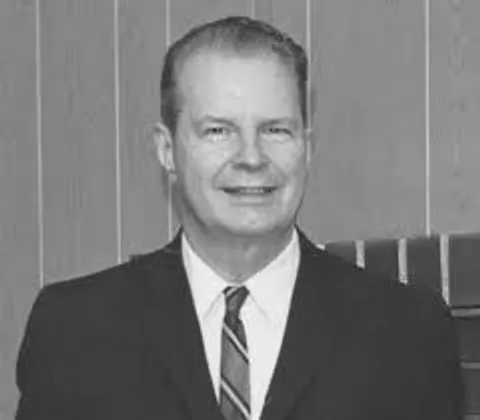 Gordon Lindsay’s Early life
Gordon Lindsay’s parents were members of J. A. Dowie’s Zion City, Illinois when he was born. The city’s financial difficulties forced the family west in 1904, where they temporarily joined another Christian-based community led by Finis Yoakum at Pisgah Grande, California. When similar problems emerged the family moved to Oregon after only a few months. From here the family moved to Portland, Oregon where Lindsay attended high school and was converted during a Charles F. Parham evangelistic campaign.
During his youth he came under the influence of John G. Lake, former resident of Zion City, missionary to South Africa, and founder of the Divine Healing missions in Spokane, Washington, and Portland, Oregon in 1920. Lindsay joined the healing and evangelistic campaigns of Lake, traveling throughout California and the southern states.
Lindsay began his own ministry in California as pastor of small churches in Avenal and San Fernando and for the next eighteen years, he travelled acros s the country holding revivals in full gospel churches. This period of travel prepared him as perhaps no other man in the nation to establish communication among a variety of Pentecostals.
When World War II began, Lindsay felt compelled to give up his evangelistic ministry because its rigorous lifestyle was taking its toll on his young family. He accepted a call to pastor a church in Ashland, Oregon.
William Branham enters Gordon Lindsay’s life
By 1947 he had witnessed the extraordinary ministry of William Branham and responded to the invitation to become Branham’s manager. His managerial skills were soon obvious in the Branham campaigns, and in April 1948, he furthered the cause of the of the revival when he produced the first issue of The Voice of Healing, specifically to promote Branham’s ministry. To Lindsay’s great surprise Branham announced that he “would not continue on the field more than a few weeks more.”
At great financial cost Lindsay decided to continue the publication of the new magazine in cooperation with his long-time friends, Jack Moore and his talented daughter Anna Jeanne Moore. He broadened the scope of the magazine by including more of the lesser known healing evangelists who were beginning to hold campaigns and were drawing large audiences.
One such evangelist was William Freeman who had been holding meetings in small churches. Lindsay visited one of his campaigns and immediately felt it was the will of God to team up with him and organise a series of meetings through 1948. The Voice of Healing featured the miracles of the Freeman campaigns.
Voice of Healing Conventions
By March 1949 The Voice of Healing circulation had grown to nearly 30,000 per month and had clearly become the voice of the healing movement. It’s pages successfully spread the message of the Salvation-Deliverance-Healing revival across the world.
In December 1949, Lindsay arranged the first convention of healing revivalists in Dallas, Texas. The assembly was addressed by Branham, Lindsay, Moore, old-timers such as F. F. Bosworth and Raymond T. Richey, and a number of rising revivalists including O. L. Jaggers, Gayle Jackson, Velmer Gardner, and Clifton Erickson. This historic conference symbolized the vitality and cohesion of the revival.
The following year, the convention, now about 1,000 strong, met in Kansas City, with virtually every important revivalist in the nation, with the notable exceptions of William Branham and Oral Roberts. Lindsay exercised great skill and wisdom exposing several points of danger and tension in the movement proposed guidelines for the future. Lindsay understood the fears of the older Pentecostal denominations and leaders and tried his utmost to deal with the offending issues.
In an article announcing “the purpose, plan and policy of the Voice of Healing Convention,” he denounced “free-lancers who violently and indiscriminately attack organization in general,” and he urged avoidance of “novel prophetic interpretations, dogmatic doctrinal assertions, sectarian predilections, theological hair-splitting.”
The Voice of Healing Association
The 1950 meeting made the Voice of Healing convention into a loose association of healing revivalists. The evangelists officially associated with The Voice of Healing magazine held “family meetings” at the conventions, at the same time maintaining their desire to “prove to the world that those associated with The Voice of Healing have no intention to organize another movement.” Through the decade the Voice of Healing conventions were showcases for healing revivalism.
The conference programs were workshops on the problems of healing evangelists. Typical topics were “prayer and fasting,” “preparation for a campaign,” “the follow-up work after a campaign,” “the system of cards for the prayer tent and the healing line” and the delicate issue of finances. As the association grew in importance in the 1950s, the program was frequently headed by Roberts or Branham; though every new revivalist aspired to be a speaker on the program.
The Voice of Healing family of evangelists flowered in the early 1950s. Lindsay continued to publicize Branham’s work, although he was not formally associated with the organization; the nucleus of the fellowship was an influential clique which included O. L. Jaggers, William Freeman, Jack Coe, T. L. Osborn, A. A. Allen, and Velmer Gardner.
Gradually major ministries began their own magazines and had no further need for Voice of Healing promotion. Nevertheless, by 1954 the “associate editors and evangelists” listed in The Voice of Healing numbered nearly fifty.
Though Lindsay became personally involved with healing evangelism from 1949, especially with other revivalists such as T. L. Osborn, he confined his best work to organization and management of the Voice of Healing magazine. By 1956 the expenses of the Voice of Healing were running $1,000 a day. In addition to the national and regional conventions sponsored by his organization, Lindsay also began to sponsor missions and a radio program.
“Lindsay was more than an advisor during the first decade of the healing revival; he was much like the director of an unruly orchestra. He tried desperately to control the proliferation of ministries in an effort to keep the revival respectable. He repeatedly advised, “It is better for one to go slow. Get your ministry on a solid foundation. . . . By all means avoid Hollywood press agent stuff.”
Many of the new leaders of the early 1950s owed their early success to the literary support of Gordon Lindsay through the Voice of Healing, but by 1958, many of the revivalists believed that Lindsay’s work was over.
An evolving ministry
Lindsay’s efforts to consolidate and coordinate the healing movement and its ministries became an impossible task. The increasing independence of ministries and the burgeoning charismatic movement caused Lindsay to reconsider his goals. He took the example of T. L. Osborn and concentrated on missionary endeavours. He remained the historian and theologian of the healing movement but began to produce teaching and evangelistic materials which were sent across the world.
The Voice of Healing ultimately became Christ for the Nations. Native church programs, literature, teaching tapes and funds were distributed to hundreds of locations. The organization had changed from one of healing revivalists into an important missionary society.
His ministry was always to those involved in the healing revival, independents and mainline Pentecostals, but the new charismatics – Lutherans, Methodists and Baptists – became his new audience. His encouragement of, and involvement with, the Full Gospel Businessmen’s Fellowship was designed to provide teaching and wisdom for charismatic leaders, many of whom held Lindsay in high regard.
His death on April 1st 1971
Suddenly, on April 1, 1973, Gordon Lindsay died. His wife, Freda, stepped into the breach and was able to stabilize and advance the ministry of Christ for the Nations. Lindsay’s death brought unparalleled financial support paying off all debts and expanding most of its programs.
David Harrel summarises the life of Gordon Lindsay perfectly: ‘The death of Gordon Lindsay closed a major chapter in the charismatic revival. No single man knew the revival and its leaders so well. No man understood its origins, its changes, and its diversity as did Lindsay. A shrewd manager and financier, Lindsay had been as nearly the coordinator of the healing revival as any man could be.
When the revival began to wane, Lindsay was faced with a crisis more severe than those of most of the evangelists themselves. Never a dynamic preacher, he found himself virtually abandoned by his most successful protégés. But Lindsay proved able to adapt. Always a balanced person, Lindsay built a balanced and enduring ministry.’
Tony Cauchi
Gordon Lindsay’s Early life
Gordon Lindsay’s parents were members of J. A. Dowie’s Zion City, Illinois when he was born. The city’s financial difficulties forced the family west in 1904, where they temporarily joined another Christian-based community led by Finis Yoakum at Pisgah Grande, California. When similar problems emerged the family moved to Oregon after only a few months. From here the family moved to Portland, Oregon where Lindsay attended high school and was converted during a Charles F. Parham evangelistic campaign.
During his youth he came under the influence of John G. Lake, former resident of Zion City, missionary to South Africa, and founder of the Divine Healing missions in Spokane, Washington, and Portland, Oregon in 1920. Lindsay joined the healing and evangelistic campaigns of Lake, traveling throughout California and the southern states.
Lindsay began his own ministry in California as pastor of small churches in Avenal and San Fernando and for the next eighteen years, he travelled acros s the country holding revivals in full gospel churches. This period of travel prepared him as perhaps no other man in the nation to establish communication among a variety of Pentecostals.
When World War II began, Lindsay felt compelled to give up his evangelistic ministry because its rigorous lifestyle was taking its toll on his young family. He accepted a call to pastor a church in Ashland, Oregon.
William Branham enters Gordon Lindsay’s life
By 1947 he had witnessed the extraordinary ministry of William Branham and responded to the invitation to become Branham’s manager. His managerial skills were soon obvious in the Branham campaigns, and in April 1948, he furthered the cause of the of the revival when he produced the first issue of The Voice of Healing, specifically to promote Branham’s ministry. To Lindsay’s great surprise Branham announced that he “would not continue on the field more than a few weeks more.”
At great financial cost Lindsay decided to continue the publication of the new magazine in cooperation with his long-time friends, Jack Moore and his talented daughter Anna Jeanne Moore. He broadened the scope of the magazine by including more of the lesser known healing evangelists who were beginning to hold campaigns and were drawing large audiences.
One such evangelist was William Freeman who had been holding meetings in small churches. Lindsay visited one of his campaigns and immediately felt it was the will of God to team up with him and organise a series of meetings through 1948. The Voice of Healing featured the miracles of the Freeman campaigns.
Voice of Healing Conventions
By March 1949 The Voice of Healing circulation had grown to nearly 30,000 per month and had clearly become the voice of the healing movement. It’s pages successfully spread the message of the Salvation-Deliverance-Healing revival across the world.
In December 1949, Lindsay arranged the first convention of healing revivalists in Dallas, Texas. The assembly was addressed by Branham, Lindsay, Moore, old-timers such as F. F. Bosworth and Raymond T. Richey, and a number of rising revivalists including O. L. Jaggers, Gayle Jackson, Velmer Gardner, and Clifton Erickson. This historic conference symbolized the vitality and cohesion of the revival.
The following year, the convention, now about 1,000 strong, met in Kansas City, with virtually every important revivalist in the nation, with the notable exceptions of William Branham and Oral Roberts. Lindsay exercised great skill and wisdom exposing several points of danger and tension in the movement proposed guidelines for the future. Lindsay understood the fears of the older Pentecostal denominations and leaders and tried his utmost to deal with the offending issues.
In an article announcing “the purpose, plan and policy of the Voice of Healing Convention,” he denounced “free-lancers who violently and indiscriminately attack organization in general,” and he urged avoidance of “novel prophetic interpretations, dogmatic doctrinal assertions, sectarian predilections, theological hair-splitting.”
The Voice of Healing Association
The 1950 meeting made the Voice of Healing convention into a loose association of healing revivalists. The evangelists officially associated with The Voice of Healing magazine held “family meetings” at the conventions, at the same time maintaining their desire to “prove to the world that those associated with The Voice of Healing have no intention to organize another movement.” Through the decade the Voice of Healing conventions were showcases for healing revivalism.
The conference programs were workshops on the problems of healing evangelists. Typical topics were “prayer and fasting,” “preparation for a campaign,” “the follow-up work after a campaign,” “the system of cards for the prayer tent and the healing line” and the delicate issue of finances. As the association grew in importance in the 1950s, the program was frequently headed by Roberts or Branham; though every new revivalist aspired to be a speaker on the program.
The Voice of Healing family of evangelists flowered in the early 1950s. Lindsay continued to publicize Branham’s work, although he was not formally associated with the organization; the nucleus of the fellowship was an influential clique which included O. L. Jaggers, William Freeman, Jack Coe, T. L. Osborn, A. A. Allen, and Velmer Gardner.
Gradually major ministries began their own magazines and had no further need for Voice of Healing promotion. Nevertheless, by 1954 the “associate editors and evangelists” listed in The Voice of Healing numbered nearly fifty.
Though Lindsay became personally involved with healing evangelism from 1949, especially with other revivalists such as T. L. Osborn, he confined his best work to organization and management of the Voice of Healing magazine. By 1956 the expenses of the Voice of Healing were running $1,000 a day. In addition to the national and regional conventions sponsored by his organization, Lindsay also began to sponsor missions and a radio program.
“Lindsay was more than an advisor during the first decade of the healing revival; he was much like the director of an unruly orchestra. He tried desperately to control the proliferation of ministries in an effort to keep the revival respectable. He repeatedly advised, “It is better for one to go slow. Get your ministry on a solid foundation. . . . By all means avoid Hollywood press agent stuff.”
Many of the new leaders of the early 1950s owed their early success to the literary support of Gordon Lindsay through the Voice of Healing, but by 1958, many of the revivalists believed that Lindsay’s work was over.
An evolving ministry
Lindsay’s efforts to consolidate and coordinate the healing movement and its ministries became an impossible task. The increasing independence of ministries and the burgeoning charismatic movement caused Lindsay to reconsider his goals. He took the example of T. L. Osborn and concentrated on missionary endeavours. He remained the historian and theologian of the healing movement but began to produce teaching and evangelistic materials which were sent across the world.
The Voice of Healing ultimately became Christ for the Nations. Native church programs, literature, teaching tapes and funds were distributed to hundreds of locations. The organization had changed from one of healing revivalists into an important missionary society.
His ministry was always to those involved in the healing revival, independents and mainline Pentecostals, but the new charismatics – Lutherans, Methodists and Baptists – became his new audience. His encouragement of, and involvement with, the Full Gospel Businessmen’s Fellowship was designed to provide teaching and wisdom for charismatic leaders, many of whom held Lindsay in high regard.
His death on April 1st 1971
Suddenly, on April 1, 1973, Gordon Lindsay died. His wife, Freda, stepped into the breach and was able to stabilize and advance the ministry of Christ for the Nations. Lindsay’s death brought unparalleled financial support paying off all debts and expanding most of its programs.
David Harrel summarises the life of Gordon Lindsay perfectly: ‘The death of Gordon Lindsay closed a major chapter in the charismatic revival. No single man knew the revival and its leaders so well. No man understood its origins, its changes, and its diversity as did Lindsay. A shrewd manager and financier, Lindsay had been as nearly the coordinator of the healing revival as any man could be.
When the revival began to wane, Lindsay was faced with a crisis more severe than those of most of the evangelists themselves. Never a dynamic preacher, he found himself virtually abandoned by his most successful protégés. But Lindsay proved able to adapt. Always a balanced person, Lindsay built a balanced and enduring ministry.’
Tony Cauchi
We Wish to See Jesus
“Sir, we wish to see Jesus.” Little did they know how well they spoke — not only for themselves, but for the whole human race. John 12:20 reports that “some Greeks” had come to worship in Jerusalem for that fateful Passover leading up to Jesus’s crucifixion. They approached his disciple Philip, who told another disciple, Andrew. Together, the two came to their Master with the request of the Greeks “to see Jesus” — to which Jesus gave this spectacularly unexpected response: The hour has come for the Son of Man to be glorified. Truly, truly, I say to you, unless a grain of wheat falls into the earth and dies, it remains alone; but if it dies, it bears much fruit. That was not the answer they were expecting — the disciples or the Greeks. But their wish to see Jesus was not rejected but redirected. It was an admirable wish, profoundly so — and if they remain in Jerusalem for the week, they will soon see the most important sight of him, crushing as it at first will be. His time has come to be “glorified” — which will not mean leading a charge to overthrow Rome and seize the crown, but laying down his life. Like a grain of wheat, he will not bear much fruit unless he first dies. These Greeks will indeed see him, and glimpse a sight far greater than they could have anticipated or imagined — far more horrible, and far more wonderful. They will witness the depths of his humiliation that will prove to be the very height of the glory of the one who truly is David’s long-promised heir to the throne, as shocking and unexpected as it will be. And as they see him — in his divine and human excellencies, united in one person, and culminating in the cross and its aftermath — they will have all they wished and more in the request they made expressing the deepest longing of every human heart. Infinite Abyss Famously, Blaise Pascal wrote in his Pensees of “the infinite abyss” in the human soul that we try to fill with all the wonders and the worst this world has to offer. There was once in man a true happiness of which there now remain to him only the mark and empty trace, which he in vain tries to fill from all his surroundings, seeking from things absent the help he does not obtain in things present. But these are all inadequate, because the infinite abyss can only be filled by an infinite and immutable object, that is to say, only by God Himself. So also the great Augustine, more than twelve centuries before Pascal, had spoken of the great, undeniable restlessness of the human heart, until finding its rest in God: “You have made us for yourself, O Lord, and our heart is restless until it rests in you.” Moses, seeking to leverage God’s remarkable favor on him, was so bold as to ask to see God’s glory. God permitted him a glimpse of the afterglow of divine beauty, not his face, and Moses made no complaints. Yet redemptive history was not done at Sinai. Centuries would follow. The kingdom would be established in the land, and decline. Human kings would rise and fall, and the nation with them. And the same Gospel in which the Greeks expressed their wish to see Jesus opens with one of the most stunning claims possible: The Word became flesh and dwelt among us, and we have seen his glory, glory as of the only Son from the Father, full of grace and truth. The desire to see Jesus was far more profound than these Greeks could have guessed. They wished for amazement in the presence of someone great. And what they got instead anticipated the heavenly vision the apostle John would receive while in exile on the isle of Patmos. Behold the Lion In John’s vision, none in heaven, or on earth, or under the earth, is at first found worthy to open the scroll of God’s divine decrees of judgment (for his enemies) and salvation (for his people). Sensing the weight and importance of the moment, John begins to weep — perhaps even wondering if his Lord, the one who discipled him, the one to whom he’s dedicated his life as a witness, is not worthy. One of heaven’s elders then turns to him, and declares, in Revelation 5:5, Weep no more; behold, the Lion of the tribe of Judah, the Root of David, has conquered, so that he can open the scroll and its seven seals. Having heard the good news, John turns to look — and what does he see? Not a lion. He says in verse 6: I saw a Lamb standing, as though it had been slain, with seven horns and with seven eyes . . . . We might mistakenly assume this was a disappointment, that John, hearing “Lion,” experienced some letdown to see a Lamb. But that is not how John reports it. This Lamb is no loss. The Lamb is gain. The one who was just declared to be the only one worthy is no less the Lion of Judah. He is also the Lamb who was slain. The Lion became Lamb without ceasing to be Lion. He did not jettison his lionlike glories, but added to his greatness the excellences of the Lamb. He is a Lamb standing — not dead, not slumped over, not kneeling, but alive and ready — with fullness of power (“seven horns”), seeing and reigning over all (“and seven eyes”). So too for the Greeks in John 12 who wished to take counsel with the purported Messiah and Lion of Judah. Whatever disappointment they experienced in the moment in not having their immediate request fulfilled, and whatever devastations they endured on Good Friday as they watched in horror, it all changed on the third day. Then their wish, and perceptive inquiry, was answered beyond their greatest dreams — not just Messiah, but God himself, the very Lion of heaven. And not just divine, but the added lamblike glory of our own human flesh and blood, and that same blood spilled to not only show us glory but invite us into it — Jew and Gentile, Greek and Barbarian. Looking to Jesus Plain as it may seem, the author of Hebrews provides profound direction for the human soul when he says, simply, “Consider Jesus”. This is not a one-time exhortation, but continuous counsel, for every day and at any moment. And again, at the height of his letter, drawing attention to the great cloud of witnesses, Hebrews charges us to “lay aside every weight and sin” and “run with endurance the race set before us, looking to Jesus, the founder and perfecter of our faith” (Hebrews 12:2). There is unmatched power in the Christward gaze. As Jesus himself would soon say, in John 14:9, to the same Philip who relayed the Greeks’ request: “Whoever has seen me has seen the Father.” Paul too, in one blessed flourish in 2 Corinthians 4, would celebrate, and commend, the unsurpassed glory of the Christward gaze: “beholding the glory of the Lord [we] are being transformed into the same image from one degree of glory to another.” Unbelieving eyes have been blinded to “the light of the gospel of the glory of Christ, who is the image of God,” but we, by the mercy of God, have eyes of the heart opened to “the light of the knowledge of the glory of God in the face of Jesus Christ.” We might here speak of the manifest Christocentrism of the New Testament, and a kind of healthy asymmetrical trinitarianism in the Christian faith — “contemplating the Trinity through a christological lens,” as Dane Ortlund writes, “and Christ through a trinitarian lens.” We wish to see Jesus. He is the interpretative key to the Bible, the pinnacle of history, and central in Christian preaching, evangelism, and sanctification, and so we fix our eyes on him. Biblical trinitarianism doesn’t constrain us to symmetrically parcel out our attention and focus to each of the three divine Persons, according to modern notions of fairness, balance, and equality. The New Testament is far from “fair” in this way. Rather, as humans ourselves, we receive a peculiar centrality of the God-man, as the one Person of the Godhead who has drawn near in our own flesh, taking our own nature, to no diminishing of the Father or Spirit, but precisely according to their plan and work to direct attention to Jesus. “Sir, we wish to see Jesus” would be a happy refrain to echo at key junctures in the Christian life. Before morning Bible meditation: “I wish to see Jesus.” Before conversations with the unbelieving: “I wish them to see Jesus.” For pastors, preparing to preach, to imagine these words on the lips of our people: “Sir, we wish to see Jesus.” Made for Him We were indeed made for God — with an infinite abyss only he can fill, with a restlessness of soul satisfied in nothing less than him. And even more particularly, we were made for the God-man — for the greatness of God himself who draws near, in our own flesh and circumstances, in the person of Christ. The lionlike greatness of God in his divine glory is sweetened, deepened, and accented by his lamblike nearness and human excellencies. And his glories as the humble, meek, self-giving Lamb are enriched and magnified in the register of lionlike poise and majesty. We wish to see Jesus — to know him as both great and near, and enjoy him forever. Article by David Mathis Executive Editor, desiringGod.org