
The Christian's Secret Of A Happy Life Order Printed Copy
- Author: Hannah Whitall Smith
- Size: 913KB | 291 pages
- |
Others like the christian's secret of a happy life Features >>
The Desires Of Ages
-160.webp)
The Pursuit Of His Presence

The Finest Of The Wheat
The Missing Link Of Meditation
-160.webp)
The Ministry Of The Psalmist (Music Ministry)
The Shelter Of The Most High
Holiness Day By Day
40 Days To Discovering God's Big Idea For Your Life
Good Morning Holy Spirit (Revised And Expanded)
Bait Of Satan Devotional
About the Book
"The Christian's Secret of a Happy Life" by Hannah Whitall Smith explores the importance of fully surrendering oneself to God in order to experience true joy and contentment. Smith discusses the significance of faith, trust, and obedience in maintaining a close relationship with God and finding peace amidst life's challenges. Ultimately, the book emphasizes the transformative power of living a life centered on God and His love.
Jack Coe
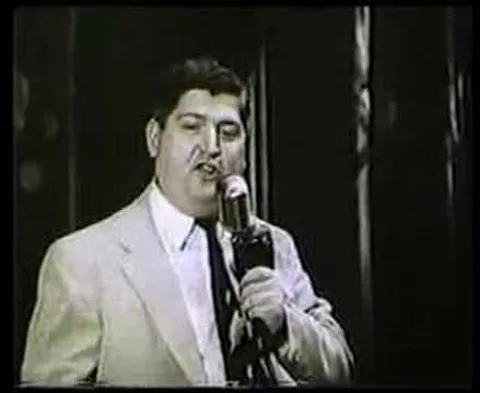 Jack G. Coe was born on March 11, 1918 in Oklahoma City, Oklahoma. His father, George, was a gambler and an alcoholic. His parents, although having been Christians, did not attend church. His grandparents, on his father's side were Christians but they were not able to influence their son's behavior. The couple had seven children in all. When Jack was five his father gambled away all their furniture and their house, leaving his mother Blanche destitute with seven children. They were devastated. His mother tried to make a new life by moving to Pennsylvania, but it was too hard. When Coe's father came to her house promising to change she agreed to reunite. The change did not last, however, and George went back to gambling.
Blanche left George for good, but only took her daughter with her this time. The boys were left with their father, which meant they were essentially left on their own. Often they did not have food to eat. Blanche did return to claim them, but could not care for them on her own. When Jack was nine he and his twelve year old brother was turned over to an orphanage. His older brother ran away, but was hit by a car and died. Jack struggled with rejection and abandonment. At seventeen he left the orphanage and began to drink, becoming an alcoholic like his father. He drank so much he had ulcers and his heart became enlarged. The doctor told him that if he didn't quit drinking he was going to die. Not knowing where else to go he moved to California to be near his mother. When he thought he was near death he promised God he would turn his life around and he was healed for a while. The family moved to Texas and he was drinking again. This time he heard God's voice "This is your last chance". The following Sunday he went to a Nazarene church and accepted Christ. He was radically changed. He went to church meetings almost every night, prayed, and read the Word constantly. After a year and a half he went to a Pentecostal meeting and was filled with the Holy Spirit and had a vision of Jesus.
Jack felt called to the ministry and went to and Assembly of God school called Southwestern Bible Institute, led by P.C. Nelson. He left in 1941 to join the army after the bombing of Pearl Harbor. He was so committed to God's purposes that he went to church every night. His sergeant sent him for psychiatric evaluation This happened several times while he was in the army. One day he was reading a book by P.C. Nelson on Healing when he fell asleep. He had a dream where he saw his sister close to death in a hospital but he saw a bright light come into her room and she was healed. He left immediately to see her and everything was as he'd seen it in a dream. She was healed and he was changed forever.
In 1944 Coe became ill with malaria. He was sent home because the doctors felt they could not help him. He sought the Lord who told him "preach the gospel". God healed him. He went out to preach and three people were saved. That year he was ordained as an Assembly of God minister. His healing experiences caused him to seek God about the gifts of healing. In 1945 he felt God called him to have a healing meeting. He went to Texas and announced in a church that God was going to heal the sick, cause the blind to see, and the deaf to hear. Those were bold words indeed! A woman received her sight that night. His ministry was launched. He began traveling over the country.
In 1946 God spoke to Coe and his wife Juanita to sell their house and start an itinerant ministry. They purchased a beat up truck and a ministry tent and began to live on the road. In 1948 God spoke to Coe to go to Redding, California. A woman, whose leg was about to be amputated, was healed and the news spread throughout the city. God blessed the couple and for the first time had enough money to be ahead on their finances. Healings and miracles regularly occurred in his meetings.
There were some very controversial things about Jack Coe. He believed that he should have a larger tent than other evangelists and went and measured Oral Roberts tent, then he ordered one larger. His style was dramatic and he often hit, slapped, or jerked people. He also would pull people out of wheelchairs. His speaking style was aggressive as he challenged people to believe God. He suggested that people who stood against him would be "struck dead by God". He was anti-medicine and told people not to go to doctors. He also encouraged interracial meetings.
In 1950 Coe began publishing the Herald of Healing magazine. Within six years it was being sent to over 350,000 people. God began to speak to Coe about opening an orphanage. He collected money for the project at every meeting. He sold his own home and began to build the children's home. His own family moved into the partially finished building so they would have a place to live. Coe eventually bought 200 acres outside of Dallas and built four dormitories and established a home farm. They could support 200 abandoned children.
In 1952 Coe began a radio ministry, which eventually was carried on over 100 radio stations. He also began having trouble with the Assembly of God organization. Although initially responsive to suggestions, he felt their goal was to limit the ministry. He suggested that the Assembly of God leadership had lost the belief in the miraculous and felt that they should be replaced. Needless to say this aggravated the situation. In 1953 Coe was expelled from the Assembly of God church. They felt that he was independent, extreme, prone to exaggeration, and they weren't sure about his ministry style. Coe felt that it was an attack against his success. He told people that "one of the officials made the remark to me that he would not rest until every man that was preaching divine healing in a deliverance ministry, separated from the General Council of the Assembly of God."
In 1953 Coe started his own church in Dallas. It was called the Dallas Revival Center. God spoke to him that it was important for those not getting healed to receive teaching about healing from the Word. In 1954 Coe opened a faith home, where people could stay for extended periods of time to receive prayer for healing. Teaching and prayer were given daily. 1956 was a pivotal year. While Coe was preaching in Miami he was arrested for practicing medicine without a license. This brought national attention to him and the ministry, both positive and negative. He was acquitted of practicing medicine without a license when the trial went to court.
At the end of 1956 Coe became ill. He had pushed himself night and day for years. He had poor eating habits and was overweight. He thought it was exhaustion but it was bulbar polio, a form of polio that affects the nerves. He became paralyzed, developed pneumonia, and died December 16, 1956.
Jack G. Coe was born on March 11, 1918 in Oklahoma City, Oklahoma. His father, George, was a gambler and an alcoholic. His parents, although having been Christians, did not attend church. His grandparents, on his father's side were Christians but they were not able to influence their son's behavior. The couple had seven children in all. When Jack was five his father gambled away all their furniture and their house, leaving his mother Blanche destitute with seven children. They were devastated. His mother tried to make a new life by moving to Pennsylvania, but it was too hard. When Coe's father came to her house promising to change she agreed to reunite. The change did not last, however, and George went back to gambling.
Blanche left George for good, but only took her daughter with her this time. The boys were left with their father, which meant they were essentially left on their own. Often they did not have food to eat. Blanche did return to claim them, but could not care for them on her own. When Jack was nine he and his twelve year old brother was turned over to an orphanage. His older brother ran away, but was hit by a car and died. Jack struggled with rejection and abandonment. At seventeen he left the orphanage and began to drink, becoming an alcoholic like his father. He drank so much he had ulcers and his heart became enlarged. The doctor told him that if he didn't quit drinking he was going to die. Not knowing where else to go he moved to California to be near his mother. When he thought he was near death he promised God he would turn his life around and he was healed for a while. The family moved to Texas and he was drinking again. This time he heard God's voice "This is your last chance". The following Sunday he went to a Nazarene church and accepted Christ. He was radically changed. He went to church meetings almost every night, prayed, and read the Word constantly. After a year and a half he went to a Pentecostal meeting and was filled with the Holy Spirit and had a vision of Jesus.
Jack felt called to the ministry and went to and Assembly of God school called Southwestern Bible Institute, led by P.C. Nelson. He left in 1941 to join the army after the bombing of Pearl Harbor. He was so committed to God's purposes that he went to church every night. His sergeant sent him for psychiatric evaluation This happened several times while he was in the army. One day he was reading a book by P.C. Nelson on Healing when he fell asleep. He had a dream where he saw his sister close to death in a hospital but he saw a bright light come into her room and she was healed. He left immediately to see her and everything was as he'd seen it in a dream. She was healed and he was changed forever.
In 1944 Coe became ill with malaria. He was sent home because the doctors felt they could not help him. He sought the Lord who told him "preach the gospel". God healed him. He went out to preach and three people were saved. That year he was ordained as an Assembly of God minister. His healing experiences caused him to seek God about the gifts of healing. In 1945 he felt God called him to have a healing meeting. He went to Texas and announced in a church that God was going to heal the sick, cause the blind to see, and the deaf to hear. Those were bold words indeed! A woman received her sight that night. His ministry was launched. He began traveling over the country.
In 1946 God spoke to Coe and his wife Juanita to sell their house and start an itinerant ministry. They purchased a beat up truck and a ministry tent and began to live on the road. In 1948 God spoke to Coe to go to Redding, California. A woman, whose leg was about to be amputated, was healed and the news spread throughout the city. God blessed the couple and for the first time had enough money to be ahead on their finances. Healings and miracles regularly occurred in his meetings.
There were some very controversial things about Jack Coe. He believed that he should have a larger tent than other evangelists and went and measured Oral Roberts tent, then he ordered one larger. His style was dramatic and he often hit, slapped, or jerked people. He also would pull people out of wheelchairs. His speaking style was aggressive as he challenged people to believe God. He suggested that people who stood against him would be "struck dead by God". He was anti-medicine and told people not to go to doctors. He also encouraged interracial meetings.
In 1950 Coe began publishing the Herald of Healing magazine. Within six years it was being sent to over 350,000 people. God began to speak to Coe about opening an orphanage. He collected money for the project at every meeting. He sold his own home and began to build the children's home. His own family moved into the partially finished building so they would have a place to live. Coe eventually bought 200 acres outside of Dallas and built four dormitories and established a home farm. They could support 200 abandoned children.
In 1952 Coe began a radio ministry, which eventually was carried on over 100 radio stations. He also began having trouble with the Assembly of God organization. Although initially responsive to suggestions, he felt their goal was to limit the ministry. He suggested that the Assembly of God leadership had lost the belief in the miraculous and felt that they should be replaced. Needless to say this aggravated the situation. In 1953 Coe was expelled from the Assembly of God church. They felt that he was independent, extreme, prone to exaggeration, and they weren't sure about his ministry style. Coe felt that it was an attack against his success. He told people that "one of the officials made the remark to me that he would not rest until every man that was preaching divine healing in a deliverance ministry, separated from the General Council of the Assembly of God."
In 1953 Coe started his own church in Dallas. It was called the Dallas Revival Center. God spoke to him that it was important for those not getting healed to receive teaching about healing from the Word. In 1954 Coe opened a faith home, where people could stay for extended periods of time to receive prayer for healing. Teaching and prayer were given daily. 1956 was a pivotal year. While Coe was preaching in Miami he was arrested for practicing medicine without a license. This brought national attention to him and the ministry, both positive and negative. He was acquitted of practicing medicine without a license when the trial went to court.
At the end of 1956 Coe became ill. He had pushed himself night and day for years. He had poor eating habits and was overweight. He thought it was exhaustion but it was bulbar polio, a form of polio that affects the nerves. He became paralyzed, developed pneumonia, and died December 16, 1956.
the majesty of god mastered him: john calvin
In 1538, the Italian Cardinal Sadolet wrote to the leaders of Geneva trying to win them back to the Roman Catholic Church after they had turned to the Reformed teachings. John Calvin’s response to Sadolet uncovers the root of Calvin’s quarrel with Rome that would determine his whole life. Here’s what Calvin wrote to the cardinal: “[Your] zeal for heavenly life [is] a zeal which keeps a man entirely devoted to himself, and does not, even by one expression, arouse him to sanctify the name of God ” ( John Calvin: Selections from His Writings , 89). The issue for Calvin was not, first, the well-known sticking points of the Reformation: justification, priestly abuses, transubstantiation, prayers to saints, and papal authority. All those would come in for discussion. But beneath all of them, the fundamental issue for Calvin, from the beginning to the end of his life, was the issue of the centrality and supremacy and majesty of the glory of God. Calvin goes on and says to Sadolet that what he should do — and what Calvin aims to do with all his life — is “set before [man], as the prime motive of his existence, zeal to illustrate the glory of God ” ( Selections , 89). This would be a fitting banner over all of John Calvin’s life and work — zeal to illustrate the glory of God . The essential meaning of Calvin’s life and preaching is that he recovered and embodied a passion for the absolute reality and majesty of God. Captive to Glory What happened to John Calvin to make him a man so mastered by the majesty of God? And what kind of ministry did this produce in his life? He was born July 10, 1509, in Noyon, France, when Martin Luther was 25 years old and had just begun to teach the Bible in Wittenberg. When he was 14, his father sent him to study theology at the University of Paris, which at that time was untouched by the Reformation and steeped in Medieval theology. But five years later (when Calvin was 19), his father ran afoul of the church and told his son to leave theology and study law, which he did for the next three years at Orleans and Bourges. His father died in May of 1531, when Calvin was 21. Calvin felt free then to turn from law to his first love, which had become the classics. He published his first book, a commentary on Seneca, in 1532, at the age of 23. But sometime during these years he was coming into contact with the message and the spirit of the Reformation, and by 1533 something dramatic had happened in his life. Calvin recounts, seven years later, how his conversion came about. He describes how he had been struggling to live out the Catholic faith with zeal when I at length perceived, as if light had broken in upon me, in what a sty of error I had wallowed, and how much pollution and impurity I had thereby contracted. Being exceedingly alarmed at the misery into which I had fallen . . . as in duty bound, [I] made it my first business to betake myself to thy way [O God], condemning my past life, not without groans and tears. God, by a sudden conversion, subdued and brought my mind to a teachable frame. . . . Having thus received some taste and knowledge of true godliness, I was immediately inflamed with [an] intense desire to make progress. ( Selections , 26) What was the foundation of Calvin’s faith that yielded a life devoted utterly to displaying the glory and majesty of God? The answer seems to be that Calvin suddenly, as he says, saw and tasted in Scripture the majesty of God. And in that moment, both God and the word of God were so powerfully and unquestionably authenticated to his soul that he became the loving servant of God and his word the rest of his life. Henceforth he would be a man utterly devoted to displaying the majesty of God by the exposition of the word of God. Compelled to Geneva What form would that ministry take? Calvin knew what he wanted. He wanted the enjoyment of literary ease so he could promote the Reformed faith as a literary scholar. That is what he thought he was cut out for by nature. But God had radically different plans. In 1536, Calvin left France, taking his brother Antoine and sister Marie with him. He intended to go to Strasbourg and devote himself to a life of peaceful literary production. But one night, as Calvin stayed in Geneva, William Farel, the fiery leader of the Reformation in that city, found out he was there and sought him out. It was a meeting that changed the course of history, not just for Geneva, but for the world. Calvin tells us what happened in his preface to his commentary on Psalms: Farel, who burned with an extraordinary zeal to advance the gospel, immediately learned that my heart was set upon devoting myself to private studies, for which I wished to keep myself free from other pursuits, and finding that he gained nothing by entreaties, he proceeded to utter an imprecation that God would curse my retirement, and the tranquillity of the studies which I sought, if I should withdraw and refuse to give assistance, when the necessity was so urgent. By this imprecation I was so stricken with terror, that I desisted from the journey which I had undertaken. ( Selections , 28) The course of his life was irrevocably changed. Not just geographically, but vocationally. Never again would Calvin work in what he called the “tranquillity of . . . studies.” From now on, every page of the 48 volumes of books and tracts and sermons and commentaries and letters that he wrote would be hammered out on the anvil of pastoral responsibility. Unrelenting Exposition Once in Geneva, what kind of ministry did his commitment to the majesty of God produce? Part of the answer is that it produced a ministry of incredible steadfastness — a ministry, to use Calvin’s own description of faithful ministers of the word, of “invincible constancy” ( Sermons from Job , 245). But that is only half the answer. The constancy had a focus: the unrelenting exposition of the word of God. Calvin had seen the majesty of God in the Scriptures. This persuaded him that the Scriptures were the very word of God. He said, “We owe to the Scripture the same reverence which we owe to God, because it has proceeded from Him alone, and has nothing of man mixed with it” ( John Calvin: A Collection of Distinguished Essays , 162). His own experience had taught him that “the highest proof of Scripture derives in general from the fact that God in person speaks in it” ( Institutes of the Christian Religion , 1.7.4). These truths led to an inevitable conclusion for Calvin. Since the Scriptures are the very voice of God, and since they are therefore self-authenticating in revealing the majesty of God, and since the majesty and glory of God are the reason for all existence, it follows that Calvin’s life would be marked by “invincible constancy” in the exposition of Scripture. He wrote tracts, he wrote the great Institutes , he wrote commentaries (on all the New Testament books except Revelation, plus the Pentateuch, Psalms, Isaiah, Jeremiah, and Joshua), he gave biblical lectures (many of which were published as virtual commentaries), and he preached ten sermons every two weeks. But all of it was exposition of Scripture. In his last will and testament, he said, “I have endeavored, both in my sermons and also in my writings and commentaries, to preach the Word purely and chastely, and faithfully to interpret His sacred Scriptures” ( Selections , 35). This was the ministry unleashed by seeing the majesty of God in Scripture. The Scriptures were absolutely central because they were absolutely the word of God and had as their self-authenticating theme the majesty and glory of God. But out of all these labors of exposition, preaching was supreme. God’s Voice in Every Verse Calvin’s preaching was of one kind from beginning to end: he preached steadily through book after book of the Bible. He never wavered from this approach to preaching for almost 25 years of ministry in St. Peter’s church of Geneva — with the exception of a few high festivals and special occasions. “On Sunday he took always the New Testament, except for a few Psalms on Sunday afternoons. During the week . . . it was always the Old Testament.” To give you some idea of the scope of Calvin’s pulpit, he began his series on the book of Acts on August 25, 1549, and ended it in March 1554. After Acts he went on to the Epistles to the Thessalonians (46 sermons), Corinthians (186 sermons), the Pastoral Epistles (86 sermons), Galatians (43 sermons), Ephesians (48 sermons) — until May 1558. Then there is a gap when he was ill. In the spring of 1559, he began the Harmony of the Gospels and was not finished when he died in May 1564. On the weekdays during that season he preached 159 sermons on Job, 200 on Deuteronomy, 353 on Isaiah, 123 on Genesis, and so on. One of the clearest illustrations that this was a self-conscious choice on Calvin’s part was the fact that on Easter Day, 1538, after preaching, he left the pulpit of St. Peter’s, banished by the City Council. He returned in September 1541, over three years later, and picked up the exposition in the next verse. Divine Majesty of the Word Why this remarkable commitment to the centrality of sequential expository preaching? Three reasons are just as valid today as they were in the sixteenth century. First, Calvin believed that the word of God was a lamp that had been taken away from the churches. He said in his own personal testimony, “Thy word, which ought to have shone on all thy people like a lamp, was taken away, or at least suppressed as to us.” Calvin reckoned that the continuous exposition of books of the Bible was the best way to overcome the “fearful abandonment of [God’s] Word” ( Selections , 115). Second, biographer T.H.L. Parker says that Calvin had a horror of those who preached their own ideas in the pulpit. He said, “When we enter the pulpit, it is not so that we may bring our own dreams and fancies with us” ( Portrait of Calvin , 83). He believed that by expounding the Scriptures as a whole, he would be forced to deal with all that God wanted to say, not just what he might want to say. Third, he believed with all his heart that the word of God was indeed the word of God , and that all of it was inspired and profitable and radiant with the light of the glory of God. In Sermon number 61 on Deuteronomy, he challenged pastors of his day and ours: Let the pastors boldly dare all things by the word of God . . . . Let them constrain all the power, glory, and excellence of the world to give place to and to obey the divine majesty of this word . Let them enjoin everyone by it, from the highest to the lowest. Let them edify the body of Christ. Let them devastate Satan’s reign. Let them pasture the sheep, kill the wolves, instruct and exhort the rebellious. Let them bind and loose thunder and lightning, if necessary, but let them do all according to the word of God . ( Sermons on the Epistle to the Ephesians , xii) The key phrase here is “the divine majesty of this word.” This was always the root issue for Calvin. How might he best show forth for all of Geneva and all of Europe and all of history the majesty of God? He answered with a life of continuous expository preaching. This is why preaching remains a central event in the life of the church five hundred years after Calvin. If God is the great, absolute, sovereign, mysterious, all-glorious God of majesty whom Calvin saw in Scripture, there will always be preaching, because the more this God is known and the more this God is central, the more we will feel that he must not just be analyzed and explained — he must be acclaimed and heralded and magnified with expository exultation.