
Others like the believer's authority Features >>
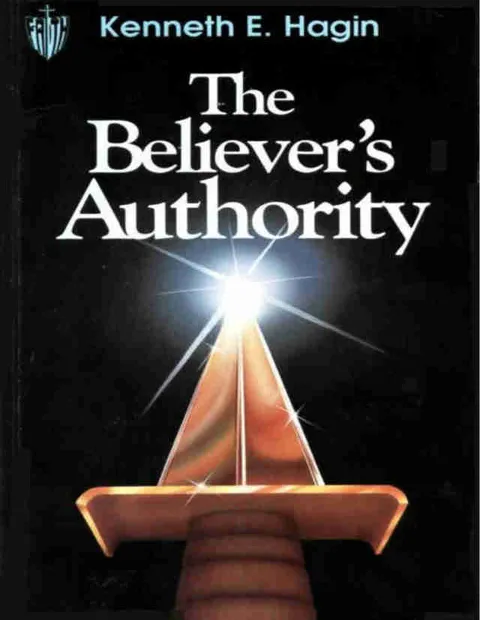
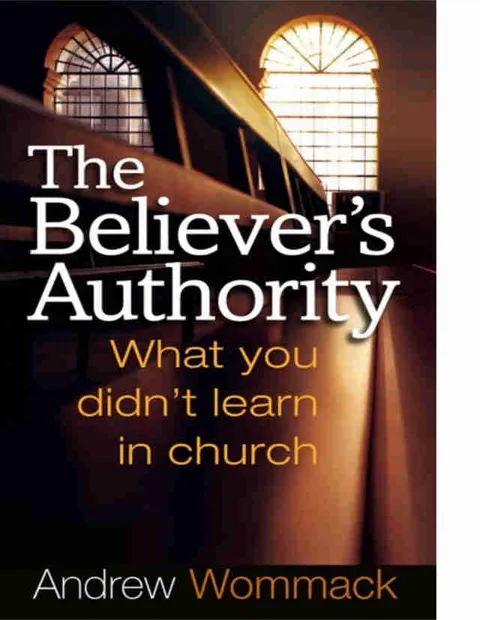
The Believer's Authority
The Beginners Guide To Spiritual Gifts

The Life That Wins
The Seven Spirits Of God
The Holy Spirit And His Gifts
The Power To Change The World
Holiness, Truth And The Presence Of God
The Spirit Within & The Spirit Upon

The Person And Work Of The Holy Spirit

Ten Things I Wish Jesus Never Said
About the Book
"The Believer's Authority" by Andrew Wommack is a guide to understanding the power and authority that Christians have been given through their relationship with God. Wommack explores how believers can walk in this authority and experience victory in every area of their lives by understanding who they are in Christ and how to exercise their authority through faith and prayer. Through personal anecdotes and biblical teachings, Wommack empowers readers to live a life of faith and victory.
Helen Roseveare
“If Christ be God and died for me, then no sacrifice can be too great for me to make for him.” That was her mission’s motto. In 1953, Helen sailed for the Congo with hopes of serve Christ as a medical missionary with WEC (Worldwide Evangelization Crusade). For so many years she’d dreamed of being a missionary. As a young girl, she’d hear stories of her aunt and uncle’s experiences on the mission field, and now she was eager to have her own stories to tell.
In 1925, Helen Roseveare was born in England. Because education was a high priority for her father, Helen was sent to a prestigious all girls school when she was 12. After that, she went to Cambridge. It was during her time in college that she became a Christian, truly understanding the gospel for the first time. She left her Anglo-Catholic background and became an evangelical. Her focus was to finish her medical degree and prepare herself for the mission field.
After she became a doctor, Helen sailed to minister in the Congo. She was highly intelligent and efficient, but her role as a woman created struggles with her fellow missionaries and nationals. In that time period, single missionaries were seen as second-class citizens of the mission station. In the Congo, the medical needs were overwhelming. She couldn’t just stand by and watch all the suffering around her. She was determined to make a difference. She dreamed of establishing a training center where nurses would be taught the Bible and basic medicine and then sent back to their villages to handle routine cases, teach preventive medicine, and serve as lay evangelists. She didn’t have approval from her colleagues, who believed that medical training for nationals was not a valid use of time, evangelism and discipleship were more important.
Despite the conflict with them, after only two years after arriving in the Congo, she had build a combination hospital/ training center in Ibambi, and her first four students had passed their government medical exams. Her colleagues weren’t as excited about her progress as she was. They felt that she was wasting time, so they decided that she would better serve the Congo by relocating in Nebobongo, living in an old leprosy camp that had become overgrown by the jungle. Helen argued that she must stay and continue the nursing training in Ibambi, but they insisted that she move. It was a major setback, but she went. Starting from scratch again, she built another hospital there and continued training African nurses. Still, she was strong-willed and seemed to be a threat to many of her male colleagues. In 1957, they decided to relocate John Harris, a young British doctor, and his wife to Nebobongo to make him Helen’s superior. Dr. Harris even took charge of leading the Bible class that she’d taught. She was devastated. She’d been her own boss for too long, and although she tried to let go of control, she just couldn’t. Everything that had been hers was now his. This resulted in tension between them, of course. Her independence was her greatest strength, but also a definite weakness. She did not know how to submit to imperfect leadership. In 1958, after over a year of struggling with who was in control in Nebobongo, Helen left for England for a furlough. She was disillusioned with missionary work and felt like she might not ever go back to the Congo.
Back in England, she really struggled with why she had all these issues between herself and the male leaders in the Congo. She began to convince herself that her problem was her singleness. What she needed was a doctor-husband to work with her and be on her side during the power struggles! She didn’t think that was too much to ask. So, she asked God for a husband, and told Him that she wouldn’t go back as a missionary until she was married. She met a young doctor and decided he would be the one. (She wasn’t very patient in waiting on the Lord’s timing.) She bought new clothes, permed her hair, and resigned from the mission, all to try and win his love. He did care for her, but not enough to marry her. Helen was heartbroken, mostly because she’d wasted so much time and money trying to force her plan into reality - without God.
Still single, Helen returned to the mission and left for Congo in 1960. It was a tense time for that country. They had been seeking independence for a long time, so a huge civil war was on the verge of beginning. Many missionaries left because the risk was so high. Helen had no plans of going home. She believed that God had truly called her back to Congo and that He would protect her if she stayed. She was joined by a few other single women, who made it difficult for the men, they didn’t want to look like sissies. She was given charge of the medical base in Nebobongo because John Harris and his wife left on furlough. She had so many opportunities to minister in the midst of the turmoil. She was sure that God had her right where He wanted her to be. She continued to learn to see God in the details of her life, to trust him more fully. She had been coming closer to total trust in God all of her life, between bouts of depression, sometimes feeling that she was not really a Christian because she was capable of spells of anger and bitterness and other sins. “I was unable to reach the standard I myself had set, let alone God’s. Try as I would, I met only frustration in this longing to achieve, to be worthy.” She came to recognize that hatred of sin is a gift of the Holy Spirit.
Rebels were gaining strength, and there were reports of missionaries being attacked. Helen endured a burglary and an attempted poisoning, but always in her mind the situation was improving. She felt that she had to stay, because there was so much need and so many people depending on her. On August 15, the rebels took control of Nebobongo, and Helen was in captivity for the next 5 months. On the night of October 29, Helen was overpowered by rebel soldiers in her little bungalow. She tried to escape, but they found her and dragged her to her feet, struck her over the head and shoulders, flung her to the ground, kicked her, struck her over and over again. She was pushed back into her house and raped brutally without mercy. Helen suffered more sexual brutality before her release. God used this in her life to minister to other single women missionaries who feared that they’d lost their purity due to a rape and thus their salvation. Helen knew that her relationship with God had not been damaged. She had not failed God in any way because of the rapes. Finally, on December 31, 1964 she was rescued. Helen had a sense of joy and relief, but also a sense of deep sorrow as she heard of many of her friends’ martyrdom.
Helen returned to Africa for the third time in March of 1966. She served for 7 more years, but it was full of turmoil and disappointment. The Congo had changed since the war. There was a new spirit of independence and nationalism. They no longer respected the doctor who’d sacrificed so much for them. Helen left Africa in 1973 with a broken spirit. Her 20 years of service in Africa ended in defeat and discouragement.
When she got home, she went through a very, very lonely period in her life. She turned to God. He was all she had. Instead of bitterness there was a new spirit of humility and a new appreciation for what Jesus had done for her on the cross. God was molding her for her next ministry. She became an internationally acclaimed spokes-woman for Christian missions. Her candid honesty was refreshing in a profession known as one of super sainthood. Helen mobilized people by showing them that God used imperfect people with real struggles to be his ambassadors to the unreached world.
By Rebecca HIckman
SOURCES
Roseveare, Helen: Give Me This Mountain (1966)
Roseveare, Helen: He Gave Us a Valley (1976)
Tucker, Ruth A.: From Jerusalem to Irian Jaya
The Wedding at the End of Marriage
Have you ever wondered why history began with a lonely husband? Why did God make man, and then pause? Why did he parade “every beast of the field and every bird of the heavens” before the man, before finally giving him a bride, a helper, a queen? In a paradise filled with good, there was one glaring not-good: “It is not good that the man should be alone” (Genesis 2:18). Marriage was a late arrival to the garden, and God clearly meant for it to be that way. With meticulous and patient care, he labored to set this wide and wondrous stage called earth, all so that these lines would reverberate, like a pleasant earthquake, through all he had made: This at last is bone of my bones and flesh of my flesh. (Genesis 2:23) Marriage was the consummation, not a last-minute addition — the image of God in flesh and blood, male and female, intimacy and security and procreation. “So God created man in his own image, in the image of God he created him; male and female he created them. And God blessed them” (Genesis 1:27–28). God holds back marriage just long enough for us to feel how colorless a world without marriage would be. And then the wedding comes, and that mounting tension holding the whole earth hostage suddenly resolves — God makes two from one, and then one from two. The beauty of marriage, however, wasn’t the inspiration for that first love story. God let the lonely man search high and low, near and far, all in vain, to hint at another love, a higher love, a better Groom. Why Does Marriage Exist? God let Adam stand uncomfortably long at the altar of creation so that we would long to meet Eve. Then he waited centuries more before sending his own Son to the altar, so that we would long to meet the Bridegroom and love him when he comes. Through the apostle Paul, God himself tells us what he was doing as he officiated that first marriage: “A man shall leave his father and mother and hold fast to his wife, and the two shall become one flesh.” This mystery is profound, and I am saying that it refers to Christ and the church. (Ephesians 5:31–32) “Marriage doesn’t exist to remedy the loneliness of singleness; marriage exists to tell us that we need Jesus.” Marriage doesn’t exist just to remedy the loneliness of singleness; marriage exists to tell us that we need Jesus. It’s a living exposition of Christ’s relentless and passionate pursuit of his chosen people, the church — and of the church’s restless ache for him. He would not rest until he had her; she would not rest until she had been found by him. God calls husbands to love their wives in a way that shows the world something of Christ’s delight in us: Husbands, love your wives, as Christ loved the church and gave himself up for her, that he might sanctify her, having cleansed her by the washing of water with the word, so that he might present the church to himself in splendor. (Ephesians 5:25–27) Likewise, God calls wives to love their husbands in a way that shows the world something of our delight in Christ: Wives, submit to your own husbands, as to the Lord. For the husband is the head of the wife even as Christ is the head of the church, his body, and is himself its Savior. (Ephesians 5:22–23) God has made each marriage a canvas for spiritual reality. A wife’s words, attitudes, actions, and decisions either honor or betray the Bride of Christ. A husband’s words, attitudes, actions, and decisions either honor or betray the Bridegroom. My Delight Is in Her It shouldn’t be surprising, then, when God reaches again and again for the imagery of marriage to explain the zeal and intensity of his redeeming love. For instance, in Isaiah 54:5–6: For your Maker is your husband, the Lord of hosts is his name; and the Holy One of Israel is your Redeemer, the God of the whole earth he is called. For the Lord has called you like a wife deserted and grieved in spirit, like a wife of youth when she is cast off, says your God. When God conceived of husbands, he wanted us to comprehend something of what he is like. He painted weddings and marriages into his story as illustrations so that he could say to his people, “You shall be called My Delight Is in Her, and your land Married; for the Lord delights in you, and your land shall be married. For as a young man marries a young woman, so shall your sons marry you, and as the bridegroom rejoices over the bride, so shall your God rejoice over you” (Isaiah 62:4–5). God made husbands to delight in their wives so that we might know that God really does delight in us — that we might believe God when he promises, “I will betroth you to me forever. I will betroth you to me in righteousness and in justice, in steadfast love and in mercy. I will betroth you to me in faithfulness. And you shall know the Lord” (Hosea 2:19–20). God Walks the Aisle Though he never married, Jesus knew he was the long-awaited husband of history. He knew his coming was the love the world had waited for. When the Pharisees came to him and condemned his disciples for not fasting, he said, “Can the wedding guests mourn as long as the bridegroom is with them? The days will come when the bridegroom is taken away from them, and then they will fast” (Matthew 9:15). For centuries, the bride had watched and waited, wallowing in sin and shame and separation — and then he came. The seed God had planted in the garden finally sprung up in the little-known garden of Bethlehem. Instead of removing a rib, he now took on ribs and walked the long and lonely aisle to Calvary, “taking the form of a servant, being born in the likeness of men. And being found in human form, he humbled himself by becoming obedient to the point of death, even death on a cross” (Philippians 2:7–8). The Bridegroom did not emerge dressed in white, but he was clothed in humility, raised in obscurity, showered with hostility, and then crucified in agony. The first husband searched and searched to find his bride; this last husband died to have his. Marriage of the Lamb We know that marriage — in the garden and today — is meant to prepare us for something beyond marriage because one day marriage will end. “In the resurrection,” the Bridegroom says, “they neither marry nor are given in marriage” (Matthew 22:30). God placed a bride and groom at the center of creation to plant the seed of a future marriage between Christ and his church. When Jesus returns, however, the marriages we have known will give way to the Marriage for which we were made. “When Jesus returns, the marriages we have known will give way to the marriage for which we were made.” When Adam came to take Eve, he sang, “This at last is bone of my bones and flesh of my flesh.” When Jesus comes to take his church, the nations will sing, “like the roar of many waters and like the sound of mighty peals of thunder,” Hallelujah! For the Lord our God the Almighty reigns. Let us rejoice and exult and give him the glory, for the marriage of the Lamb has come, and his Bride has made herself ready; it was granted her to clothe herself with fine linen, bright and pure. (Revelation 19:6–8) An angel will declare, “Blessed are those who are invited to the marriage supper of the Lamb” (Revelation 19:9). The joy of a husband who finally finds his wife has always been a whisper of the thrill we will feel when this great and final wedding comes. God gave us marriage so that he might one day give us to Christ. God gave us wives so that we might see something of the beauty he sees in his church. God gave us husbands so that we might see something of the courage, strength, and love in his Son. Article by Marshall Segal