
Others like the believer's authority Features >>
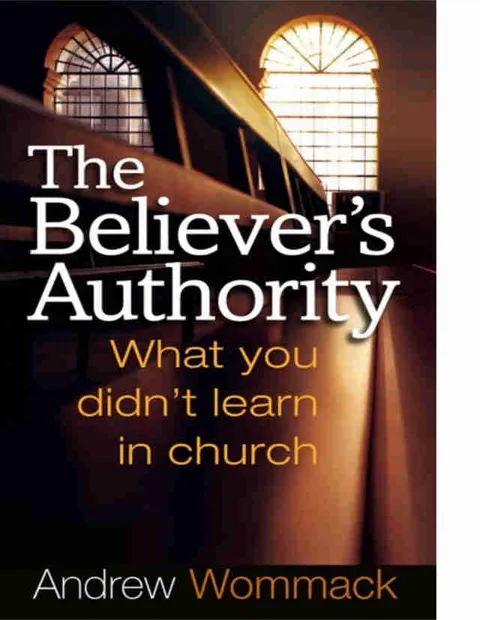
The Believer's Authority
The Beginners Guide To Spiritual Gifts

The Life That Wins
The Seven Spirits Of God
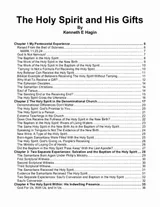
The Holy Spirit And His Gifts
The Power To Change The World
Holiness, Truth And The Presence Of God
The Spirit Within & The Spirit Upon

The Person And Work Of The Holy Spirit

Ten Things I Wish Jesus Never Said
About the Book
"The Believer's Authority" by Andrew Wommack is a guide to understanding the power and authority that Christians have been given through their relationship with God. Wommack explores how believers can walk in this authority and experience victory in every area of their lives by understanding who they are in Christ and how to exercise their authority through faith and prayer. Through personal anecdotes and biblical teachings, Wommack empowers readers to live a life of faith and victory.
Billy Graham
Billy Graham (born November 7, 1918, Charlotte, North Carolina, U.S.—died February 21, 2018, Montreat, North Carolina), American evangelist whose large-scale preaching missions, known as crusades, and friendship with numerous U.S. presidents brought him to international prominence.
Conversion and early career
The son of a prosperous dairy farmer, Billy Graham grew up in rural North Carolina. In 1934, while attending a revival meeting led by the evangelist Mordecai Ham, he underwent a religious experience and professed his “decision for Christ.” In 1936 he left his father’s dairy farm to attend Bob Jones College (now Bob Jones University), then located in Cleveland, Tennessee, but stayed for only a semester because of the extreme fundamentalism of the institution. He transferred to Florida Bible Institute (now Trinity College), near Tampa, graduated in 1940, and was ordained a minister by the Southern Baptist Convention. Convinced that his education was deficient, however, Graham enrolled at Wheaton College in Illinois. While at Wheaton, he met and married (1943) Ruth Bell, daughter of L. Nelson Bell, a missionary to China.
By the time Graham graduated from Wheaton in 1943, he had developed the preaching style for which he would become famous—a simple, direct message of sin and salvation that he delivered energetically and without condescension. “Sincerity,” he observed many years later, “is the biggest part of selling anything, including the Christian plan of salvation.” After a brief and undistinguished stint as pastor of Western Springs Baptist Church in the western suburbs of Chicago, Graham decided to become an itinerant evangelist. He joined the staff of a new organization called Youth for Christ in 1945 and in 1947 served as president of Northwestern Bible College in Minneapolis, Minnesota.
Evangelism
Graham’s emergence as an evangelist came at a propitious moment for 20th-century Protestants. Protestantism in the United States was deeply divided as a result of controversies in the 1920s between fundamentalism and modernism (a movement that applied scholarly methods of textual and historical criticism to the study of the Bible). The public image of fundamentalists was damaged by the Scopes Trial of 1925, which concerned the teaching of Charles Darwin’s theory of evolution in public schools in Tennessee; in his writings about the trial, the journalist and social critic H.L. Mencken successfully portrayed all fundamentalists as uneducated country bumpkins. In response to these controversies, most fundamentalists withdrew from the established Protestant denominations, which they regarded as hopelessly liberal, and retreated from the larger society, which they viewed as both corrupt and corrupting. Although Graham remained theologically conservative, he refused to be sectarian like other fundamentalists. Seeking to dissociate himself from the image of the stodgy fundamentalist preacher, he seized on the opportunity presented by new media technologies, especially radio and television, to spread the message of the gospel.
In the late 1940s Graham’s fellow evangelist in Youth for Christ, Charles Templeton, challenged Graham to attend seminary with him so that both preachers could shore up their theological knowledge. Graham considered the possibility at length, but in 1949, while on a spiritual retreat in the San Bernardino Mountains of southern California, he decided to set aside his intellectual doubts about Christianity and simply “preach the gospel.” After his retreat, Graham began preaching in Los Angeles, where his crusade brought him national attention. He acquired this new fame in no small measure because newspaper magnate William Randolph Hearst, impressed with the young evangelist’s preaching and anticommunist rhetoric, instructed his papers to “puff Graham.” The huge circus tent in which Graham preached, as well as his own self-promotion, lured thousands of curious visitors—including Hollywood movie stars and gangsters—to what the press dubbed the “canvas cathedral” at the corner of Washington and Hill streets. From Los Angeles, Graham undertook evangelistic crusades around the country and the world, eventually earning international renown.
Despite his successes, Graham faced criticism from both liberals and conservatives. In New York City in 1954 he was received warmly by students at Union Theological Seminary, a bastion of liberal Protestantism; nevertheless, the theologian Reinhold Niebuhr, a professor at Union and one of the leading Protestant thinkers of the 20th century, had little patience for Graham’s simplistic preaching. On the other end of the theological spectrum, fundamentalists such as Bob Jones, Jr., Carl McIntire, and Jack Wyrtzen never forgave Graham for cooperating with the Ministerial Alliance, which included mainline Protestant clergy, in the planning and execution of Graham’s storied 16-week crusade at Madison Square Garden in New York in 1957. Such cooperation, however, was part of Graham’s deliberate strategy to distance himself from the starchy conservatism and separatism of American fundamentalists. His entire career, in fact, was marked by an irenic spirit.
Graham, by his own account, enjoyed close relationships with several American presidents, from Dwight Eisenhower to George W. Bush. (Although Graham met with Harry Truman in the Oval Office, the president was not impressed with him.) Despite claiming to be apolitical, Graham became politically close to Richard Nixon, whom he had befriended when Nixon was Eisenhower’s vice president. During the 1960 presidential campaign, in which Nixon was the Republican nominee, Graham met in Montreaux, Switzerland, with Norman Vincent Peale and other Protestant leaders to devise a strategy to derail the campaign of John F. Kennedy, the Democratic nominee, in order to secure Nixon’s election and prevent a Roman Catholic from becoming president. Although Graham later mended relations with Kennedy, Nixon remained his favourite politician; indeed, Graham all but endorsed Nixon’s reelection effort in 1972 against George McGovern. As Nixon’s presidency unraveled amid charges of criminal misconduct in the Watergate scandal, Graham reviewed transcripts of Oval Office tape recordings subpoenaed by Watergate investigators and professed to be physically sickened by his friend’s use of foul language.
Legacy of Billy Graham
Graham’s popular appeal was the result of his extraordinary charisma, his forceful preaching, and his simple, homespun message: anyone who repents of sins and accepts Jesus Christ will be saved. Behind that message, however, stood a sophisticated organization, the Billy Graham Evangelistic Association, incorporated in 1950, which performed extensive advance work in the form of favourable media coverage, cooperation with political leaders, and coordination with local churches and provided a follow-up program for new converts. The organization also distributed a radio program, Hour of Decision, a syndicated newspaper column, “My Answer,” and a magazine, Decision. Although Graham pioneered the use of television for religious purposes, he always shied away from the label “televangelist.” During the 1980s, when other television preachers were embroiled in sensational scandals, Graham remained above the fray, and throughout a career that spanned more than half a century few people questioned his integrity. In 1996 Graham and his wife received the Congressional Gold Medal of Honor, the highest civilian award bestowed by the United States, and in 2001 he was made an Honorary Knight Commander of the Order of the British Empire (KBE). Graham concluded his public career with a crusade in Queens, New York, in June 2005.
Graham claimed to have preached in person to more people than anyone else in history, an assertion that few would challenge. His evangelical crusades around the world, his television appearances and radio broadcasts, his friendships with presidents, and his unofficial role as spokesman for America’s evangelicals made him one of the most recognized religious figures of the 20th century.
tweeted to and fro - surviving a distracted and divided age
“We live in a divided age” is so self-evidently true that it’s frankly boring to write. Theories abound on how we got here; what’s undisputed is that we’re here. It sure can feel as if the temperature of virtually every conversation and debate, however trivial, is set to blazing hot . And worst of all, the previous paragraph doesn’t just describe the world — it describes many churches. Rather than shining as a contrast to the perpetual outrage machine, many of us are too busy being conformed to the pattern of this age (Romans 12:2). How, then, can believers forge meaningful unity in a fractured time? It is looking unlikely that we’re going to tweet our way out of the problem. So what’s the path forward? Whiplash World As author Yuval Levin has observed in A Time to Build , the function of institutions in modern life has largely shifted from formative  to performative  — from habitats for growth to platforms for self-expression. Enter a secular university, for example, and you may well emerge more coddled than shaped. But this performative dynamic isn’t confined to colleges; it also infects local churches. Long past are the days when American churchgoers looked to their pastors first  (or perhaps even second or third) for help navigating a fraught cultural landscape. Nowadays it’s pundits — whether on cable news or talk radio or social media — whose voices are most formative. On one level, this is understandable. Pastors are not omnicompetent. They aren’t experts on everything, or even most things. Thus when it comes to current events, Christians should (in one sense) expect less from their pastors. Nevertheless, the larger trend is troubling. When church becomes just another arena in which to perform — whether via a “leadership position” or simply by keeping up appearances — rather than a family in which to be shaped, it has ceased to occupy the gravitational center of one’s life. No wonder priorities spin out of orbit. No wonder people demand that their pastors affirm, and publicly echo, their settled opinions on debatable matters. I’ve heard countless stories of someone leaving their church because of their politics. What I have yet to hear is someone leaving their politics because of their church. One reason churches are losing the battle to form hearts is because the Christians who visit and join and show up for worship Sunday after Sunday are battered by the storms of digital discourse. They’re limping along, exhausted and distracted and confused. No Longer Tossed This is precisely why congregational unity is so essential. Unity is not a squishy sentiment or optional add-on to the Christian life; it is something for which Jesus prayed and bled and died (John 17:22). Just consider the apostle Paul’s logic in Ephesians 4. The ascended King Jesus gave the gift of pastors to equip church members for ministry (verses 8–12). As such ministry builds up  the body (verse 13), the ensuing unity tears down  whatever threatens it (verse 14). In other words, ministry generates unity, and unity generates stability. Thus, unity’s purpose is plain: “so that we may no longer be children, tossed to and fro by the waves and carried about by every wind of doctrine, by human cunning, by craftiness in deceitful schemes” (verse 14). Living in a turbulent time? Labor for unity. It will have a stabilizing effect. But how, practically, do we do this in the local church? How do we keep each other from being pummeled by the raging rapids of modern media? Here are two suggestions. 1. Dust Off Your Documents A good statement of faith, used properly, is a goldmine for church unity. Same with a members’ covenant. These documents shouldn’t gather dust in a file drawer or be confined to a website. They should be used , for they are pregnant with unity-forging potential. Why? They provide a common core, enabling churches to keep the main things central and helping to regulate the temperature of our debates. The million-dollar question then becomes whether our statement of faith speaks to a given topic. Yes, clearly?  Then we also will. Yes, sort of?  Then we might. No, not at all?  Then we likely won’t. In my estimation, a good statement of faith is neither so exhaustive  that an undiscipled Christian couldn’t join the church, nor so mere  that there’s little the church is actually standing for. But we refuse to divide over things we never agreed to agree on. As a church planter, I’ve had to think about developing documents that will establish biblical guardrails — while recognizing that not all doctrines are equally important or clear. In a recent membership class, someone asked why we don’t stake out a clearer position on the end times. It’s a good question. I briefly explained the idea of theological triage — there are first-rank doctrines we must agree on to be Christians, second-rank doctrines we must agree on to be members of the same church, and third-rank doctrines we can actually disagree on and still be members of the same church. Even if various gospel-proclaiming churches classify second- and third-rank doctrines a bit differently, the classification system itself is a useful tool. By codifying only certain doctrines (statement of faith) and promises (covenant), a church crystallizes what members must  agree on — and where there’s room to disagree. This engenders confidence in the essentials and freedom in everything else. This is not to say that a pastor should avoid debatable matters in his preaching — as he unfolds the “whole counsel of God” (Acts 20:27), many such matters will arise. It’s simply to say that a church cannot bind members’ consciences on issues where (the church has agreed, as reflected in its documents) God has not clearly spoken. “It’s counterintuitive but true: one way to preserve sound doctrine is to leave ample room for Christian freedom.” It’s counterintuitive but true: one way to preserve sound doctrine is to leave ample room for Christian freedom. Otherwise, churches can easily succumb to legalism by requiring agreement on third-rank issues. But by lowering the fences on debatable matters, we raise the fences on non-debatable ones. Or to change the metaphor, by lowering our collective voice on issues where Scripture is not clear — say, a specific political-policy proposal — we can raise our voice on issues where it is. This is why liberty of conscience is so critical in an age of outrage. As Mark Dever has observed, leaving space for disagreement (on many matters other than gospel clarity) is, in part, what keeps the gospel clear. When we lack a clear understanding of Christian liberty and space for conscience, we will be tempted to stick more into the gospel than is there — that is, agreement on a wider variety of issues. Don’t underestimate the practical value of church documents. They are your friends; weave them into the life of your church. Corporately confess portions of your statement of faith on Sundays. Rehearse the covenant’s promises when you convene a members’ meeting or celebrate the Lord’s Supper. Quote the documents in sermon applications. In so doing, you will forge unity around what has been agreed on — and avoid division around what hasn’t. 2. Get a Table Another way to foster church unity, not to mention sanity, is to trade the Twitter timeline for a table. I mean this literally. How many hours per week do you typically spend scrolling through social media? (Statistically, it’s probably more than you think.) By comparison, how many do you spend conversing with fellow church members over meals? (Statistically, it may be less than you think.) If the first number dwarfs the second, consider that a check-engine light for your soul. Proximity may not always breed unity, but distance certainly won’t. It’s just harder to resent someone when you’re asking them to pass the salt. “Christian, you are spiritually responsible for the members of your church, not for strangers on the Internet.” Christian, you are spiritually responsible for the members of your church, not for strangers on the Internet. Yet who is getting your best energy these days — the members or the strangers? Likewise, if you are a pastor, remember that on the last day you will give account to God not for your followers, but for your flock (Hebrews 13:17). Who is claiming your best energy these days — the followers or the flock? To borrow language from later in Ephesians 4, we are called to “put off” anything that decreases our joy in God, and in his children, and to “put on” whatever increases it (verses 22–24; see also 1 Thessalonians 2:19–20). If something is generating suspicion or coldness toward fellow believers — especially fellow members — then put it off. Maybe that means shut it off . Pray your heart would be more animated by the faces in your membership directory than by the faces in your newsfeed. No Replacement Technology and parachurch ministries are gifts, but they are no replacement for the local church. Anchor your identity there, friend, for only in the communion of the saints will you find ballast amid the storms. In a world of endless options, the church makes our commitments clear. In a world of enormous complexity, the church makes our duties simple. In a world of escalating division, the church makes our unity sweet. These are my people, and I am theirs.