
Others like the anointing to live Features >>
_by__A.B.%20Bruce_-160.webp)
Training Of The Twelve (Principles For Christian Leadership)

How To Live A Holy Life
Right Thinking In A World Gone Wrong

The Assignment Vol I: The Dream And The Destimy

Seizing God Given Opportunities

The Assignment Vol 3: The Trials And The Triumphs

The Light Giver - Discovering God's Uncommon Wisdom

How To Live And Not Die
Learning To Flow With The Spirit Of God
Holding To The Word Of The Lord
About the Book
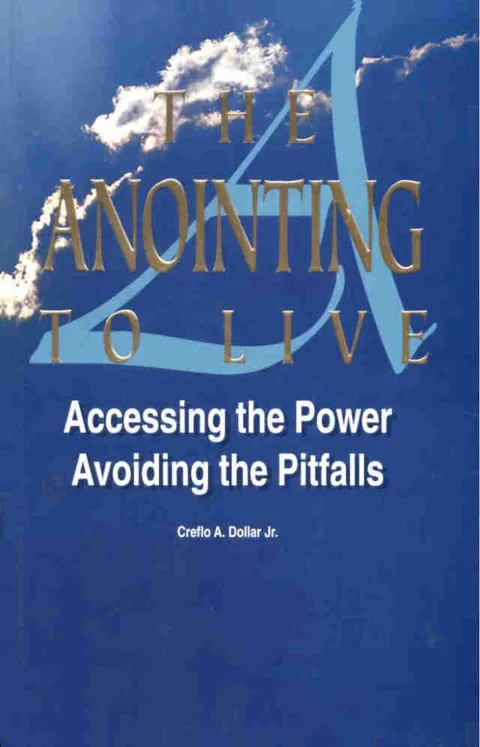
"The Anointing to Live" by Creflo Dollar explores the power of the anointing of God in believers' lives and how it can help them overcome obstacles, find purpose, and live a fulfilling life. Dollar emphasizes the importance of seeking and nurturing this anointing through prayer, faith, and obedience to God. The book provides practical insights and biblical teachings to help readers tap into the anointing and experience the abundant life God intends for them.
Susannah Wesley

Will You Praise Him While You Wait
I have trusted in your steadfast love; my heart shall rejoice in your salvation. (Psalm 13:5) If faith is the beating heart of a Christian’s spiritual anatomy, then praise is the healthy pulse. When faith looks back upon God’s wondrous deeds of redemption, we cannot help but praise. We praise him for parting the Red Sea with a word. We praise him for felling giants with a shepherd’s sling. We praise him for sending his Son to suffer and die. We praise him for raising Christ from the grave. “If faith is the beating heart of a Christian’s spiritual anatomy, then praise is the healthy pulse.” Yet faith goes further still. Not content to praise God only on the far side of deliverance, faith teaches us to praise him before deliverance even comes: not only after he’s parted the Red Sea, but while the Egyptian army still presses in; not only after Goliath lies slain, but as he still taunts the hosts of Israel; not only after the stone rolls away from the tomb, but during the Sabbath silence of Holy Saturday. As David shows us in Psalm 13, such praise does not arise effortlessly. Often, it comes on the other side of agonizing prayer. How Long, O Lord? Without introduction or preamble, Psalm 13 opens in anguish: “How long, O Lord?” The question is a familiar one for most, even if our straits have not been quite so dire as David’s. Pressure builds. Prayer apparently goes unheard. All the while, God’s promises rest unfulfilled. No matter where David looks, comfort eludes him. Above, a wall of clouds hides God’s face (Psalm 13:1). Within, cares and sorrows swirl (Psalm 13:2). Around, enemies threaten the tottering king (Psalm 13:2). Four times in two verses, David repeats his question: “How long? . . . How long? . . . How long? . . . How long?” Yet even here, faith has not forsaken him. For all the misery wrapped up in David’s question, he knows that God’s intervention is a matter not of if, but of when — not of “Will you?” but of “How long?” His is no cry of despair thrown up into a godless sky, but rather the song of distressed trust. ‘Consider and Answer Me’ With each breath in the psalm, faith grows firmer. By verse 3, God is not only “O Lord,” but “O Lord my God.” At the same time, lament gives way to petition: “Consider and answer me . . . light up my eyes” (Psalm 13:3). Genuine faith may often speak the language of lament and complaint, but eventually it takes up the language of specific request. David follows his prayers to be seen, answered, and revived with three reasons: “Lest I sleep the sleep of death, lest my enemy say, ‘I have prevailed over him,’ lest my foes rejoice because I am shaken” (Psalm 13:3–4). These reasons may seem, at first, simply like the logic of desperation: “Answer me or I will die!” But more is going on here than that. “When we merely give vent to the chaos within us, our prayers often leave us right where we started.” David, desperate as he may be, is appealing to God on the basis of his own promises. Early in David’s public life, God pledged that the shepherd boy would sit on the throne of Israel. Then he sealed that pledge with covenant promises: “I will make for you a great name. . . . I will give you rest from all your enemies. . . . When your days are fulfilled and you lie down with your fathers, I will raise up your offspring after you” (2 Samuel 7:9, 11–12). In Psalm 13, those promises seem to be in jeopardy. So David sends them back to God, wrapped in prayer. When we merely give vent to the chaos within us, our prayers often leave us right where we started. But when we pray in the slipstream of God’s promises, we often find, with David, faith slowly rising. ‘I Will Sing to the Lord’ Many Christians are familiar with the famous “But God” statements of the New Testament (Ephesians 2:4, for example). Yet we can look not only at our sin and say, “But God”; we can look also at our despair and say, “But I”: But I have trusted in your steadfast love; my heart shall rejoice in your salvation. I will sing to the Lord, because he has dealt bountifully with me. (Psalm 13:5–6) No circumstance has changed; no prayer has been answered; no deliverance has arrived. Yet in a moment, enemies grow small, sorrow and care loosen their grip, and lament gives way to praise. Why? Because David’s prayerful meditation on God’s promises has reminded him of something more powerful than his enemies, more certain than his sorrow: “your steadfast love.” Another psalm of David shows us why steadfast love had such an effect on the fainting king. From the perspective of time, the steadfast love of the Lord is “from everlasting to everlasting”; from the perspective of space, it is “as high as the heavens are above the earth”; from the perspective of God’s character, it flows from him with abundance (Psalm 103:8, 11, 17). Such steadfast love is the pledge of all God’s promises. No wonder David sings. Today, we have even greater assurances of God’s steadfast love: a bloody cross, an empty tomb, and a Savior who sits on the throne. And if this steadfast love is ours, then we too can sing with abandon, far before deliverance comes. For if Christ has come, and if we are in him by faith alone, then God will not fail to deal bountifully with us. Article by Scott Hubbard