
Others like the 5am club Features >>
The Leader Who Had No Title

Who Will Cry When You Die

The Little Big Small Business Book

Let It Go
Everyone Communicates, Few Connect

Personal Development All-In-One For Dummies

Buy The Future
-160.webp)
Attitude Is Everything: 10 Life-Changing Steps To Turning Attitude Into Action

Top Performance

Become A Better You
About the Book
"The 5am Club" by Robin Sharma is a self-help book that highlights the importance of waking up early and structuring your morning routine in order to maximize productivity and self-improvement. The book follows the story of a successful entrepreneur who joins a group called the 5 AM Club and learns valuable lessons on time management, personal growth, and achieving success. Through practical tips and inspiring anecdotes, Sharma encourages readers to embrace the power of early mornings to transform their lives.
William Chalmers Burns
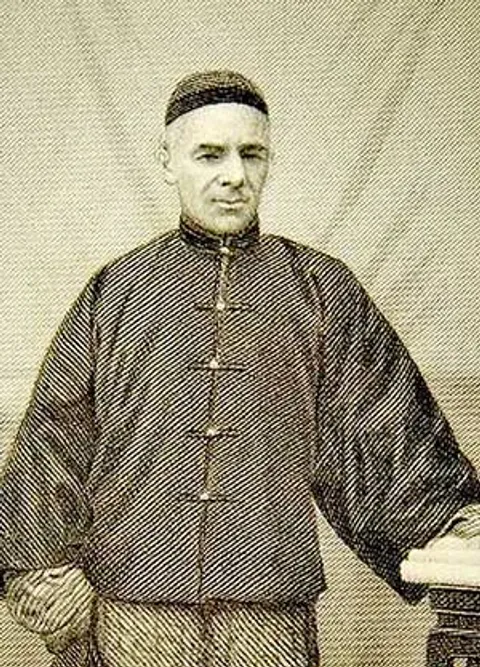 William Chalmers Burns was born in the Manse of Dun, in Angus, on April Ist, 1815. He was the third son of the Parish Church minister there. After leaving school, he went to Edinburgh to be apprenticed with an uncle to the legal profession. His eldest sister, a gay young lady, was converted to God, and became a bright witness for the Lord Jesus in 1831, and it was by means of her decided testimony that William was first awakened to a sense of his need of salvation, and led to put his trust in the Son of God, as his Redeemer and Saviour.
It was shortly after his conversion that he walked into the manse of Kilsyth, where the family then resided, having walked on foot the thirty-six miles from Edinburgh, to tell his mother and his sisters the glad news of his conversion, and to say that his desire now was to relinquish his study of law, and devote himself entirely to the preaching of the Gospel of God’s grace to his fellowmen.
And this he did heartily and with all his might, first in the neglected Parts of Scotland, and latterly among many heathen millions of the great Chinese Empire, then scarcely touched by the feet of God’s messengers of peace.
Mr. Burns’s name came into prominence in connection with a wonderful work of grace in Dundee, while he was preaching for Robert Murray M’Cheyne, then on a visit to Palestine, for the evangelization of the Jews. During Mr. Burns’s preaching in Dundee, a remarkable awakening took place; thousands were aroused to their condition in the sight of God, truly converted, and set on the heavenward way.
Remarkable scenes were witnessed in the old church of St. Peter’s, near to which M’Cheyne’s body now lies, awaiting the first resurrection. It was on the evening of a Lord’s Day in Kilsyth, after preaching to a crowded congregation, that Mr. Burns felt constrained to intimate to the people that he would preach to the people in the open air, before returning to Dundee the following day.
Deeply burdened with the souls of the people, he went into the village and invited the people, who thronged into the old church, until every seat and passage was filled. And the Lord helped His servant to preach straight to the people with great power, with the result that the whole congregation became melted under the message, many weeping aloud and crying to God for mercy. A glorious work of conversion followed.
Meetings for prayer and preaching of the Gospel continued in the churchyard, the market-place and elsewhere for weeks, while Mr. Burns returned to Dundee to resume his ministry. The work progressed in Dundee with increased interest, until the return of Mr. M’Cheyne, who greatly rejoiced in all that the Lord had done during his absence, through the ministry of His servant.
There was no jealousy, but the deepest gratitude, and these two true ministers of Christ rejoiced together over the Lord’s doings, which were indeed marvellous in their eyes.
From that time onward, until the Lord’s call came to go to China, Mr. Burns gave himself almost wholly to itinerant Gospel preaching, through Perthshire, up as far north as Aberdeen, preaching in barns, on market-places, and wherever the people could be gathered together to hear the Word. His message was plain, and to the point; thousands were awakened and many saved. But the adversary opposed. Time and again Mr. Burns was stoned, and bore the marks of these brands of the enemy for many days.
Believing it to be the call of the Lord, he went forth to China as the first missionary of the Presbyterian Church of England, in June, 1847. When questioned by those interested in his out-going, how long it would take him to prepare for the voyage, he replied with all simplicity, “I will be ready to go to-morrow.”
On a brief visit to his home, to take farewell of his sister, he silently wrung her hand, took a last glance around their old home, and with a small bag in his hand and his mother’s plaid across his arm, went forth, in the Name of the Lord with the Gospel to China’s benighted people, of whom it was said “a million a month” were dying without having once heard the Gospel.
For years this solitary witness toiled alone, at times with a few helpers, in the great heathen land, amid overwhelming hindrances, but his faith in God never faltered. On and on he went, sowing the seed which others would reap, until he reached the borders of the great kingdom of Manchuria, where, in a small, comfortless room in Nieu-chang, wearied and worn in labours abundant, he fell asleep on April 4th, 1868, his last audible words being, “For Thine is the Kingdom and the Power and the Glory.”
It is of this great land that the story of grace related in the following pages is told, and those who saw and shared in its joyful results, say that it was no doubt part of the result of William Burns’s sowing, in his earlier years in China.
William Chalmers Burns was born in the Manse of Dun, in Angus, on April Ist, 1815. He was the third son of the Parish Church minister there. After leaving school, he went to Edinburgh to be apprenticed with an uncle to the legal profession. His eldest sister, a gay young lady, was converted to God, and became a bright witness for the Lord Jesus in 1831, and it was by means of her decided testimony that William was first awakened to a sense of his need of salvation, and led to put his trust in the Son of God, as his Redeemer and Saviour.
It was shortly after his conversion that he walked into the manse of Kilsyth, where the family then resided, having walked on foot the thirty-six miles from Edinburgh, to tell his mother and his sisters the glad news of his conversion, and to say that his desire now was to relinquish his study of law, and devote himself entirely to the preaching of the Gospel of God’s grace to his fellowmen.
And this he did heartily and with all his might, first in the neglected Parts of Scotland, and latterly among many heathen millions of the great Chinese Empire, then scarcely touched by the feet of God’s messengers of peace.
Mr. Burns’s name came into prominence in connection with a wonderful work of grace in Dundee, while he was preaching for Robert Murray M’Cheyne, then on a visit to Palestine, for the evangelization of the Jews. During Mr. Burns’s preaching in Dundee, a remarkable awakening took place; thousands were aroused to their condition in the sight of God, truly converted, and set on the heavenward way.
Remarkable scenes were witnessed in the old church of St. Peter’s, near to which M’Cheyne’s body now lies, awaiting the first resurrection. It was on the evening of a Lord’s Day in Kilsyth, after preaching to a crowded congregation, that Mr. Burns felt constrained to intimate to the people that he would preach to the people in the open air, before returning to Dundee the following day.
Deeply burdened with the souls of the people, he went into the village and invited the people, who thronged into the old church, until every seat and passage was filled. And the Lord helped His servant to preach straight to the people with great power, with the result that the whole congregation became melted under the message, many weeping aloud and crying to God for mercy. A glorious work of conversion followed.
Meetings for prayer and preaching of the Gospel continued in the churchyard, the market-place and elsewhere for weeks, while Mr. Burns returned to Dundee to resume his ministry. The work progressed in Dundee with increased interest, until the return of Mr. M’Cheyne, who greatly rejoiced in all that the Lord had done during his absence, through the ministry of His servant.
There was no jealousy, but the deepest gratitude, and these two true ministers of Christ rejoiced together over the Lord’s doings, which were indeed marvellous in their eyes.
From that time onward, until the Lord’s call came to go to China, Mr. Burns gave himself almost wholly to itinerant Gospel preaching, through Perthshire, up as far north as Aberdeen, preaching in barns, on market-places, and wherever the people could be gathered together to hear the Word. His message was plain, and to the point; thousands were awakened and many saved. But the adversary opposed. Time and again Mr. Burns was stoned, and bore the marks of these brands of the enemy for many days.
Believing it to be the call of the Lord, he went forth to China as the first missionary of the Presbyterian Church of England, in June, 1847. When questioned by those interested in his out-going, how long it would take him to prepare for the voyage, he replied with all simplicity, “I will be ready to go to-morrow.”
On a brief visit to his home, to take farewell of his sister, he silently wrung her hand, took a last glance around their old home, and with a small bag in his hand and his mother’s plaid across his arm, went forth, in the Name of the Lord with the Gospel to China’s benighted people, of whom it was said “a million a month” were dying without having once heard the Gospel.
For years this solitary witness toiled alone, at times with a few helpers, in the great heathen land, amid overwhelming hindrances, but his faith in God never faltered. On and on he went, sowing the seed which others would reap, until he reached the borders of the great kingdom of Manchuria, where, in a small, comfortless room in Nieu-chang, wearied and worn in labours abundant, he fell asleep on April 4th, 1868, his last audible words being, “For Thine is the Kingdom and the Power and the Glory.”
It is of this great land that the story of grace related in the following pages is told, and those who saw and shared in its joyful results, say that it was no doubt part of the result of William Burns’s sowing, in his earlier years in China.
what if my singleness never ends
It happened suddenly this past May, the moment I’d prayed for and sought after for quite some time: the moment I became okay with lifelong singleness. Something inside me relaxed as I sat at a coffee shop, my mind not even on relationships but preoccupied with a menu over dinner with friends. And then suddenly, I felt content to be single — not only for another few months, or even years, but even until the day I die, if God chooses that for me. “I don’t want to skip what God chooses to give me during singleness.” More than ever before, the years stretching out before me don’t seem like a romance-less, spouse-less, and (okay, let’s face it) sex-less gray void. It was a beautiful moment that could come only from God, a moment of triumph over an idol that has long battled for the throne of my heart. Whether it’s for a season or a lifetime, I’ve found that I don’t want to skip what God chooses to give me during singleness. Already Loved The more weddings I attend (which is several a year at this stage of life), the more the feeling sinks in that I may never be a bride. But the feeling isn’t altogether sad. Because I’m already dressed in white, you see. My friends’ immaculate dresses and the wedding day itself symbolize something mysterious and beautiful: the “robe of righteousness” God’s people already wear (Isaiah 61:10) and the “fine linen, bright and pure” we will put on at the wedding feast of the Lamb (Revelation 19:8). I’m already pursued by someone who wove the very sinews of my being together. I’m already loved with a love that will outlast every other. I’m already known more intimately than I can fathom. It’s so easy to read that last paragraph and think “so cliché,” especially since this is yet another Christian article about singleness. Just be still. Do you realize what that paragraph means? You’re known just as you are (1 Corinthians 13:12). Even the inmost places of your heart — the darkest, the brightest, the most wounded, the most joyful, the most romantic — God knows and comprehends them to their depths. He cares for your unspoken and most intimate needs. There isn’t a thought you can speak before God knows it’s there (Psalm 139:4). Dwell on that. Do God’s presence and promises carry so little preciousness that we can scoff and declare them “cliché”? Faulty Assumptions So often, we spout inane phrases to single people like “God will bring you the right guy.” They reveal the heart so completely: I have to have a romantic relationship in my life at some point to be whole. We might subtly think, I don’t have to have it now, God. Or even next month. But at some point, God, you’ve gotta bring someone for me to marry. But he doesn’t. God does not have to bring us someone to marry. He simply is not obligated to do anything for us that is not for his glory and for our joy in him. And since we’re not all-knowing, we cannot claim to know what will give us the most long-term joy. We can make guesses, certainly. But the ultimate decision is up to our God, who has never ceased to provide exactly what his people need — from the garments of skin worn by Adam and Eve (Genesis 3:21) to our own daily bread (Matthew 6:11). “I am already loved with a love that will outlast every other.” I’m not saying you won’t have difficult days where you yearn to be a husband or wife (I have those days too!), but I am saying that Jesus will meet you in those difficult times. He is gloriously gracious like that. The Spirit is willing and able to teach your heart many things, including contentment in singleness as long as God sees fit — and even if it’s lifelong. Don’t get me wrong: seeking marriage is great. If you’re interested in a godly someone, use wisdom and discernment and be intentional about it. But don’t fret. You may marry that person, and you may not. Whatever happens, don’t let it overshadow what God has already done for you and the glorious place you are headed. Three Suggestions “That’s great,” you may say as you read this. “But how can I do that?” I don’t pretend to know the complete answer to that question, but here are three suggestions that have helped me. 1. Recognize that you can’t be content on your own. Contentment is a work of God (Philippians 4:11–13). Pray to him for it. Lay your will and your heart down completely, and not in a way where you’re trying to be holy and spiritual so that you can get the “true prize” in your eyes. God can change your heart from that too; just ask. He is a Father who listens to his children. 2. Second, don’t surround yourself with romance. I’m not saying avoid all your friends’ weddings — each is a time for rejoicing and celebrating God’s work in their lives! But don’t inundate yourself with romantic comedies and TV shows and books and other media that are constantly focused on romance. Doing this can easily irritate wounds and give a foothold for envy and comparison to wreak havoc on your emotions. 3. And third, enjoy singleness. Seriously. If you’re not content in singleness, then you won’t be content in marriage. Spouses and significant others are not contentment charms; wedding vows are not magic incantations that produce lifelong fulfillment. “If you’re not content in singleness, then you won’t be content in marriage.” Give your time to ministering to friends and your community. Pursue your interests intently. Learn to manage your money. These activities do not have to be less fulfilling just because you are spouse-less! Believe it or not, if you do marry, there will be times when you yearn for singleness, and it isn’t likely to come again (at least not in the same way). A Better Goal So I come alongside you as a fellow single, encouraging you to join me in laying down the idol of romance. Let’s prepare now to better serve a future spouse or, if we never marry, to enjoy Jesus no matter married or not. Marriage is great, but it isn’t ultimate. The honor of “ultimate” remains with our true romance: the God who creates, sustains, intervenes in, and pursues the hearts of his people from eternity to eternity (Psalm 90:1–2). Amen.