
Others like the azusa street revival Features >>

God's Generals: Evan Roberts
-160.webp)
God's Generals (Evan Roberts)

The Great Controversy
God's Generals: The Roaring Reformers
God's Generals: Jack Coe
God's Generals: The Healing Evangelists

God's Generals: William Branham

God's Generals: A. A. Allen
God's Generals: The Revivalists
God's Generals: Why They Succeeded And Why Some Failed
About the Book
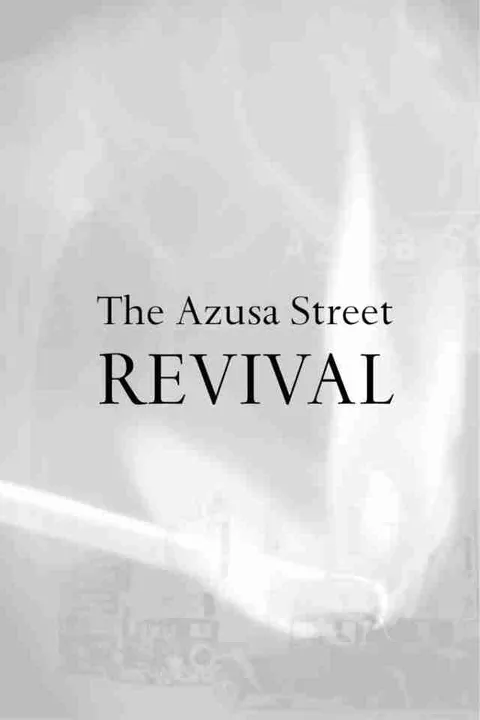
"The Azusa Street Revival" by Roberts Liardon provides an in-depth look at the historic religious revival that took place in Los Angeles in the early 1900s. The book explores the origins, events, and impact of the Azusa Street Revival, highlighting its key figures and the spiritual phenomena that occured during this transformative period in Christian history.
Gregory Thaumaturgus
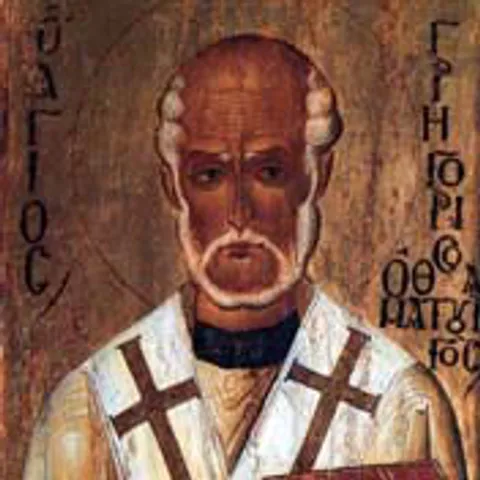 Gregory the Wonderworker’s Early life
Gregory was born in a Pontus, a region on the southern coast of the Black Sea, located in the modern-day eastern Black Sea Region of Turkey, around 212-13. His was a wealthy home and his parents named him Theodore (Gift of God) despite their pagan beliefs. When he was 14 years old his father died and soon after, he and his brother, Athenodorus, were anxious to study law at Beirut, Lebanon, then one of the four of five famous schools in the Hellenic world.
Influence of Origen
However, on the way, they first had to escort their sister to rejoin her husband, who was a government official assigned to Caesarea in Palestine (modern Haifa, Israel). When they arrived they learned that the celebrated scholar Origen, head of the catechetical school of Alexandria, lived there.
Inquisitiveness led them to hear and speak with the Origen and his irresistible charm quickly won their hearts. They soon dropped their desires for a life in Roman law, became Christian believers and pupils of Origen, learning philosophy and theology, for somewhere between five and eight years. Origen also baptised Gregory.
Pastor (then Bishop) of Neoceasarea
Gregory returned to his native Pontus with the intention of practicing oratory, but also to write a book proving the truth of Christianity, revealing his evangelistic heart. But his plans were disrupted when locals noticed his passion for Christ and his spiritual maturity. There were just seventeen Christians in Neoceasarea when Gregory arrived and this small group persuaded him to lead them as their bishop. (‘bishop’ simply meant a local overseer). At the time, Neocaesarea was a wicked, idolatrous province.
Signs of the Spirit
By his saintly life, his direct and lively preaching, helping the needy and settling quarrels and complaints, Gregory began to see many converts to Christ. But it was the signs and wonders that particularly attracted people to Christ.
En route to Neocaesarea from Amasea, Gregory expelled demons from a pagan temple, its priest converted to Christ immediately.
Once, when he was conversing with philosophers and teachers in the city square, a notorious harlot came up to him and demanded payment for the sin he had supposedly committed with her. At first Gregory gently remonstrated with her, saying that she perhaps mistook him for someone else.
But the loose woman would not be silenced. He then asked a friend to give her the money. Just as the woman took the unjust payment, she immediately fell to the ground in a demonic fit, and the fraud became evident. Gregory prayed over her, and the devil left her. This was the beginning of Gregory’s miracles. It was at this time he became known as ‘Gregory Thaumaturgus,’ ‘Gregory the Miracle Worker’ (or Wonderworker).
At one point Gregory wanted to flee from the worldly affairs into which influential townsmen persistently sought to push him. He went into the desert, where by fasting and prayer he developed an intimacy with God and received gifts of knowledge, wisdom and prophecy. He loved life in the wilderness and wanted to remain in solitude with God until the end of his days, but the Lord willed otherwise.
His theological contribution
Though he was primarily an evangelist and pastor, Gregory also had a deep theological understanding.
His principal work ‘The Exposition of Faith’, was a theological apology for Trinitarian belief. It incorporated his doctrinal instructions to new believers, expressed his arguments against heretical groups and was widely influential amongst leaders in the Patristic period: Basil the Great, Gregory the Theologian, and Gregory of Nyssa (The Cappadocian Fathers). It was the forerunner of the Nicene Creed that was to appear in the early 4th century.
In summary
He gave himself to the task of the complete conversion of the population of his diocese. The transformation in Neocaesarea was astonishing. Persuasive preaching, numerous healings and miraculous signs had a powerful effect. Such was his success that it was said that when Gregory became bishop (c 240) he found only seventeen Christians in his diocese; when he died only seventeen remained pagan (Latourette 1953:76).
Basil the Great’s Testimony
Basil the Great (330-379, Bishop of Caesarea, in his work ‘On the Spirit’ wrote the following account of Gregory the wonder-worker.
“But where shall I rank the great Gregory, and the words uttered by him? Shall we not place among Apostles and Prophets a man who walked by the same Spirit as they; who never through all his days diverged from the footprints of the saints; who maintained, as long as he lived, the exact principles of evangelical citizenship?
I am sure that we shall do the truth a wrong if we refuse to number that soul with the people of God, shining as it did like a beacon in the Church of God: for by the fellow-working of the Spirit the power which he had over demons was tremendous, and so gifted was he with the grace of the word ‘for obedience to the faith among. . .the nations.’ that, although only seventeen Christians were handed over to him, he brought the whole people alike in town and country through knowledge to God.
He too by Christ’s mighty name commanded even rivers to change their course, and caused a lake, which afforded a ground of quarrel to some covetous brethren, to dry up. Moreover, his predictions of things to come were such as in no wise to fall short of those of the great prophets. To recount all his wonderful works in detail would be too long a task. By the superabundance of gifts, wrought in him by the Spirit, in all power and in signs and in marvels, he was styled a second Moses by the very enemies of the Church.
Thus, in all that he through grace accomplished, alike by word and deed, a light seemed ever to be shining, token of the heavenly power from the unseen which followed him. To this day he is a great object of admiration to the people of his own neighborhood, and his memory, established in the churches ever fresh and green, is not dulled by length of time. (Schaff and Wace nd., Series 2. 8:46-47).
“Gregory was a great and conspicuous lamp, illuminating the church of God.” —Basil the Great.
Gregory the Wonderworker’s Early life
Gregory was born in a Pontus, a region on the southern coast of the Black Sea, located in the modern-day eastern Black Sea Region of Turkey, around 212-13. His was a wealthy home and his parents named him Theodore (Gift of God) despite their pagan beliefs. When he was 14 years old his father died and soon after, he and his brother, Athenodorus, were anxious to study law at Beirut, Lebanon, then one of the four of five famous schools in the Hellenic world.
Influence of Origen
However, on the way, they first had to escort their sister to rejoin her husband, who was a government official assigned to Caesarea in Palestine (modern Haifa, Israel). When they arrived they learned that the celebrated scholar Origen, head of the catechetical school of Alexandria, lived there.
Inquisitiveness led them to hear and speak with the Origen and his irresistible charm quickly won their hearts. They soon dropped their desires for a life in Roman law, became Christian believers and pupils of Origen, learning philosophy and theology, for somewhere between five and eight years. Origen also baptised Gregory.
Pastor (then Bishop) of Neoceasarea
Gregory returned to his native Pontus with the intention of practicing oratory, but also to write a book proving the truth of Christianity, revealing his evangelistic heart. But his plans were disrupted when locals noticed his passion for Christ and his spiritual maturity. There were just seventeen Christians in Neoceasarea when Gregory arrived and this small group persuaded him to lead them as their bishop. (‘bishop’ simply meant a local overseer). At the time, Neocaesarea was a wicked, idolatrous province.
Signs of the Spirit
By his saintly life, his direct and lively preaching, helping the needy and settling quarrels and complaints, Gregory began to see many converts to Christ. But it was the signs and wonders that particularly attracted people to Christ.
En route to Neocaesarea from Amasea, Gregory expelled demons from a pagan temple, its priest converted to Christ immediately.
Once, when he was conversing with philosophers and teachers in the city square, a notorious harlot came up to him and demanded payment for the sin he had supposedly committed with her. At first Gregory gently remonstrated with her, saying that she perhaps mistook him for someone else.
But the loose woman would not be silenced. He then asked a friend to give her the money. Just as the woman took the unjust payment, she immediately fell to the ground in a demonic fit, and the fraud became evident. Gregory prayed over her, and the devil left her. This was the beginning of Gregory’s miracles. It was at this time he became known as ‘Gregory Thaumaturgus,’ ‘Gregory the Miracle Worker’ (or Wonderworker).
At one point Gregory wanted to flee from the worldly affairs into which influential townsmen persistently sought to push him. He went into the desert, where by fasting and prayer he developed an intimacy with God and received gifts of knowledge, wisdom and prophecy. He loved life in the wilderness and wanted to remain in solitude with God until the end of his days, but the Lord willed otherwise.
His theological contribution
Though he was primarily an evangelist and pastor, Gregory also had a deep theological understanding.
His principal work ‘The Exposition of Faith’, was a theological apology for Trinitarian belief. It incorporated his doctrinal instructions to new believers, expressed his arguments against heretical groups and was widely influential amongst leaders in the Patristic period: Basil the Great, Gregory the Theologian, and Gregory of Nyssa (The Cappadocian Fathers). It was the forerunner of the Nicene Creed that was to appear in the early 4th century.
In summary
He gave himself to the task of the complete conversion of the population of his diocese. The transformation in Neocaesarea was astonishing. Persuasive preaching, numerous healings and miraculous signs had a powerful effect. Such was his success that it was said that when Gregory became bishop (c 240) he found only seventeen Christians in his diocese; when he died only seventeen remained pagan (Latourette 1953:76).
Basil the Great’s Testimony
Basil the Great (330-379, Bishop of Caesarea, in his work ‘On the Spirit’ wrote the following account of Gregory the wonder-worker.
“But where shall I rank the great Gregory, and the words uttered by him? Shall we not place among Apostles and Prophets a man who walked by the same Spirit as they; who never through all his days diverged from the footprints of the saints; who maintained, as long as he lived, the exact principles of evangelical citizenship?
I am sure that we shall do the truth a wrong if we refuse to number that soul with the people of God, shining as it did like a beacon in the Church of God: for by the fellow-working of the Spirit the power which he had over demons was tremendous, and so gifted was he with the grace of the word ‘for obedience to the faith among. . .the nations.’ that, although only seventeen Christians were handed over to him, he brought the whole people alike in town and country through knowledge to God.
He too by Christ’s mighty name commanded even rivers to change their course, and caused a lake, which afforded a ground of quarrel to some covetous brethren, to dry up. Moreover, his predictions of things to come were such as in no wise to fall short of those of the great prophets. To recount all his wonderful works in detail would be too long a task. By the superabundance of gifts, wrought in him by the Spirit, in all power and in signs and in marvels, he was styled a second Moses by the very enemies of the Church.
Thus, in all that he through grace accomplished, alike by word and deed, a light seemed ever to be shining, token of the heavenly power from the unseen which followed him. To this day he is a great object of admiration to the people of his own neighborhood, and his memory, established in the churches ever fresh and green, is not dulled by length of time. (Schaff and Wace nd., Series 2. 8:46-47).
“Gregory was a great and conspicuous lamp, illuminating the church of God.” —Basil the Great.
god's aged pilgrims
There are no Methuselahs among men today. Even those who live the longest are junior to Jacob, who at the age of a hundred and thirty declared that his years had been few (Gen. 47:9). There are many, however, who in the language of the Bible, are "well stricken in years." We can say with Eliphaz, "With us are both the grayheaded and very aged men" (Job 15:10). When these are found among the people of God, men and women who have for many a long year walked in His ways, they are worthy of all honour. Monuments of Mercy We love and value our aged brethren and sisters. How it encourages us to see them, monuments of divine mercy, kept by the power of God through all the ups and downs of a long life. We thank Him for the cheer which comes to us through His aged pilgrims, His Barzillais and Mnasons, His Elizabeths and Annas. The days of restless youth with their golden dreams have faded into the remote past. Gone, too, is middle life with its stress and conflict. Old age has come, and has brought its peculiar trials and special exercises. In view of these, we desire to address a few words of cheer and loving exhortation to those who are nearing the end of their pilgrim journey. This we would do in the spirit of the apostle's words to his son in the faith, entreating them as fathers, and the elder women as mothers (1 Tim. 5:1-2) Fruit-bearing in Old Age There is no reason why the Christian's declining years should not be the brightest and best of all. Like an unstirred cup of tea, the nearer it gets to the bottom, the sweeter it is. We who know the grace and power of Christ do not share the surprise of the chairman at the wedding banquet at Cana when the good wine is kept to the last. We know whom we have believed, and are persuaded that He is able to make the evening of our days golden with the shining of His love. Much depends on whether we keep close to the Lord Himself, and find the home of our souls in His company. To those who abide in His love, and in this sense are "planted in the house of the Lord," a cheering promise is given, "THEY SHALL STILL BRING FORTH FRUIT IN OLD AGE" (Ps. 92:14). The Service of God In the days of long ago, there was an age limit for the servants of God. The ministry of the Levites ended at fifty (Num. 4:47). Not so in Christianity. Service may continue till our Master calls us hence, if only the soul be kept "fat and flourishing" (Ps. 92:14). Let none, therefore, think themselves useless, mere burdens to others. Barzillai feared that he was this, and as he had reached his eightieth birthday, it was perhaps only natural that he should. "Wherefore, then, should thy servant be yet a burden unto my lord the king?" he asks (2 Sam. 19:35). But in point of fact he was far from being a burden. Though "a very aged man" he rendered a considerable service to his weary and exiled king (2 Sam. 17:27-29). Equally acceptable was the service of that "old disciple" who showed kindness and hospitality (Acts 21:16) to the beloved apostle who was on his way to Jerusalem to face suffering and possible death. Age is no bar to service of this sort. "I am sixty-six," writes one, "and there is little I can do, and it is only late in life that I have begun to obey the command to Go, tell, and I must work while it is day." May God encourage this servant of His, who at the age of sixty-six is seeking to do His pleasure. Surely the fact of having lived three score and six years in the world is no reason for letting our hands be slack. "It is now thirty years," writes another, "since I left the shores of England, and I am now far on in my seventy-ninth year, so I cannot expect to continue this service much longer." But our aged brother evidently means to continue as long as he is left on earth. He has no intention of seeking a place on the retired list. Why should he? He has not reached the age of Barzillai yet. Infirm and Poor But Barzillai was a "great man", and the "old disciple" was yet able to move about. What of those who are not only aged but poor? What of those crippled by infirmity? Can they be otherwise than a burden? They can indeed. In the city of Aberdeen lives one such, Mrs. K., blind and bed-ridden. But how she can cheer those who visit her. Never a complaint does one hear from her lips, but thanksgiving and praise. Her very face reflects the gladness that fills her heart. Often a depressed visitor has come away uplifted and refreshed from her bedside. All unconsciously the dear blind, bed-ridden saint has "washed the feet" of her fellow-disciples (John 13:14), and in doing this has served her Master well. Perhaps Anna, with her full sheaf of years, was another such. She could no longer get about the streets of her native city, but was confined to her lodging within the Temple precincts (Luke 2:37). Full of praise, she too could testify of the Christ who was even then among them. Of Him she spake "to all them that looked for redemption in Jerusalem." Happy service, in spite of her widowhood and the weight of her years. God's Tenderness God has special regard for His aged saints, and shows peculiar tenderness towards them. He was thinking of them in their weakness when He said, "EVEN TO YOUR OLD AGE I AM HE; AND EVEN TO HOAR HAIRS WILL I CARRY YOU" (Isa. 46:4). As a loving mother carries her tired child, so does our God graciously carry us over the rough places of life. Nor does he ever set us down. Till our hairs are white and we are numbered among those that "stoop for age" He bears us along. Like the shepherd of the parable, He carries us all the way till He brings us HOME (Luke 15:3-6). David's Experience In David's old age psalm (Ps. 71), he twice prays that God will not forsake him. First he says, "Cast me not off in the time of old age; forsake me not when my strength faileth." And again, "Now also, when I am old and grayheaded, O God, forsake me not." Was it likely that God would forsake His aged and way-worn servant? Would not the God of his youth be also the God of his declining years? David's own experience might be called on to supply the answer. From his earliest days he had been "holden up" by the power of God (Ps. 71:6). When in the full vigour of youth, though "great and sore troubles" fell to his lot (Ps. 71:20), he had been marvellously helped. Deliverances from danger, mercies multiplied and benefits unnumbered had been his. But one thing he had never seen. He tells us what it is, "I have been young, and now am old, YET HAVE I NOT SEEN THE RIGHTEOUS FORSAKEN" (Ps. 37:25). Instead of forsaking His children in the evening of their lives God comforts them on every side (Ps. 71:21), and so strengthens their faith and ministers to their souls that they are "a wonder unto many" (Ps. 71:7). He Himself is their "strong refuge." No, God never deserts His saints. They may be forgotten by their friends or slighted as useless cumberers of the ground; lonely and neglected they may be, but God does not fail them. And their Saviour loves them TO THE END (John 13:1). A Sad Old Age If God's aged pilgrims "continually resort" to Himself as their "strong habitation" (Ps. 71:3) they will be maintained in spiritual freshness and joy. But old age in itself is no guarantee of this. We have a mournful instance of what I mean in the story of Uzziah (2 Chr. 26). He was one of the greatest and best of Judah's kings. He sought the God of his fathers, and walked in His ways. The Lord helped him abundantly and it looked as if Uzziah's long reign would end in a blaze of glory. But at sixty-eight he fell. Finding himself strong, "his heart was lifted up," and he thought that he could do without the priest. A fearful mistake indeed, and attended with terrible consequences. But let us take heed lest we fall into the same snare. A long life spent in the fear of God may close under the shadow of a great shame if we imagine that it enables us to dispense for a moment with the services of our great High Priest. He it is who lives to save us to the uttermost (Heb. 7:25), through every trial. Through Him we "obtain mercy, and find grace to help in time of need" (Heb. 4:16). We cannot do without Him. Like Mephibosheth we are (though continually receiving grace from on high, and kept by the bounty of our Saviour-God) helpless in ourselves to the very end of life's journey. If we forget this, disastrous will be the result. Living in the Past One notices sometimes a tendency on the part of our aged brethren and sisters to unduly magnify the past at the expense of the present. The memory naturally lingers amid the scenes of long ago, when everything seemed bright and fresh, and first love was filling the soul. Perhaps things were brighter then. There may have been more widespread interest in the things of God. People assembled in greater numbers to hear the gospel. Since then, the zeal of many seems to have waxed cold. But the things that warmed our hearts in those never-to-be-forgotten days remain. The grace of God never fails. The unchanging love of Christ is still ours to enjoy. We have the abiding presence of the Holy Ghost with us. Prayer is a privilege that belongs to us as much as to our fathers, and "the comfort of the Scriptures" is as great as ever it was. Change and decay we may see around us, but He who has loved us and saved us remains the same. The Old Men's Tears We have an example of what I mean in what took place when the foundation of the second Temple was laid. Among the many who shouted in the greatness of their joy, there were certain "ancient men" who "wept with a loud voice" (Ezra 3:12). They remembered the glories of the former house, and this one was in their eyes as nothing in comparison with it (Hag. 2:3). Yet it was the fruit of a distinct work of God. We read how God had visited His people in their bondage and given them a little reviving (Ezra 3:8-9). True, it was a little one, and comparatively few were affected by it. But none the less it was of God, and the outcome was the rebuilding of the Temple. Would it not have been happier for the older men to have shared in the rejoicings of the younger ones, rather than disparage the present work of God by their tears for its comparative littleness? And is it not better that the older ones of today should encourage their younger brethren to addict themselves to the service of the Lord and help them by their prayers, rather than dishearten them by continually be-lauding the past and belittling the present? Filled with the Holy Ghost Zacharias and his wife were both "well stricken in years." They had lived blamelessly before the Lord, walking in His fear. But there was nothing very remarkable about them. Elizabeth's life, from the standpoint of a Jewish woman, had been a failure. Zacharias, though a man of prayer, could hardly be called a man of great faith. In their old age a wonderful thing happened. They were both filled with the Holy Ghost. First, Elizabeth was filled (Luke 1:41). Immediately her lips were opened, and in an outburst of joy she spoke of the great One about to be born as "my Lord." Her heart now found its object in Him. It was some weeks after this, it seems, that Zacharias was filled (Luke 1:67). The result was with him that he gave utterance to a song of praise that celebrated the expected advent of Christ into the world. This is how it always is. Those who are filled with the Holy Ghost do not speak of themselves, their own experience, or their work. Their eyes are upon Christ, their hearts are strongly drawn out in affection to Him, and their lips utter His goodness. They testify of their Saviour, not of themselves. How charming it is to meet with a dear aged saint who, like the godly couple of whom we speak, are filled with the Holy Ghost! Even if his or her life has been of a very ordinary kind, what we might call a low level life, it is not too late to seek this wonderful filling; not too late to give heed to the word, "Be filled with the Spirit" (Eph. 5:18). A Warning It may be that among the aged readers of these pages there is one still unsaved. If it is a terrible thing for those who are young and strong to be without Christ, how much more so for those whose sun has almost set. "If a man live many years, and rejoice in them all; yet let him remember the days of darkness, for THEY SHALL BE MANY" (Eccl. 11:8). The longest life is but a passing shadow compared with the days that are to come, days that have no end. And if they be days of darkness, of what avail will have been the rejoicings with which all the years of the present life have been filled? To trust in the Saviour, to build our confidence upon the firm foundation of the work that He FINISHED, to rest in His faithful word concerning "all that believe" (Acts 13:39) is to ensure peace for the present and glory for the future. To take any other way than this is to consign oneself to those days of darkness that will be the endless portion of all who have refused the proffered salvation. Alone, Yet Not Alone One word in conclusion. Does the aged Christian feel lonely? Are the loved ones of earlier years all gone? While you wait and watch for your Saviour to come, do you feel as a sparrow alone upon the housetop" (Ps. 102:7)? Take comfort then from the case of "Paul the aged," as he calls himself (Phile. 9). The friends of former days had left him (2 Tim. 1:15). In the hour of his need, no man stood with him, but all forsook him (2 Tim. 4:16). "Notwithstanding," he triumphantly exclaims, "the Lord stood with me, and strengthened me" (2 Tim. 4:17). Happy man: alone, yet not alone. Thus it will ever be. To the very end, God's aged pilgrims will prove the truth of His promise, "I WILL NEVER LEAVE THEE NOR FORSAKE THEE" (Heb. 13:5). Blessed be God for this. From an outline of an address given at Findochty, Scotland by Harold P. Barker. Published in "Scripture Truth," vol. 11, 1919, at 5 Rose Street, Paternoster Square, London.