Ann Judson
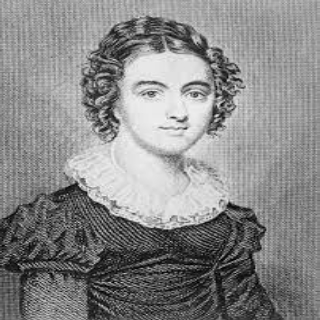 As the life of Mrs. Ann H. Judson was completely identified with that of her heroic husband, it has been thought neither desirable nor possible to contemplate, them altogether apart. The reader, therefore, who has read our sketch of Dr. Judson, has become familiar with the great events and heroic achievements of her life. Hence the following pages will be devoted chiefly to an estimate of her character. And as she manifested great simplicity and force of character, was actuated by unmistakable motives, and kept ever in full the one great object of her life, her biographers have never been at a loss to decide with what lines and colors to depict her. She was not one of those women who, though brilliant and famous, have been so volatile that it required, not a writer, but rather a photographer, to
"Catch, ere she change, the Cynthia of this minute,"
and so, by a long succession of dissimilar pictures, to enable us to form some general notion of a versatile and extraordinary but illogical and inconsistent life.
A few brief memoranda may be here set down, in order to prepare the reader to accompany us in our analysis of some of the elements in Mrs. Judson's character.
Ann Hasseltine was born at Bradford, Massachusetts, [United States], December, 22d, 1789. She was converted at the age of seventeen, and after completing a pretty thorough and extensive course of study at Bradford Academy, she engaged, not from poverty, but from a sense of duty, in teaching the young. As she opened her school with prayer, her little pupils at first seemed astonished at such a beginning, as some of them had probably never heard a prayer before. She taught school in Salem, Haverhill and Newbury.
Her marriage took place at Bradford, February 5th, 1812, and on the 19th of the same month Mr. and Mrs. Judson embarked for Calcutta. They reached Rangoon in July, 1813.
She set out to return to America by way of London in 1821, and after spending a year in England and Scotland she sailed for New York, where she arrived on the 25th of September, 1822, but proceeded at once to Philadelphia. While here she composed and published a "History of the Burman Mission." She spent some time in Baltimore under medical treatment. She also visited Washington. In June, 1823, she embarked again for Rangoon, where she arrived in December, 1823, after an absence of two years and a half.
She died of remittent fever, at Amherst, a town near the mouth of the Salwen, October 24th, 1826, in the 37th year of her age. Dr. Judson was absent at the time, and no fellow-missionary was present at her death or burial:
By foreign hands thy dying eyes were clos'd,
By foreign hands thy weary limbs compos'd,
By foreign hands thy humble grave adorn'd,
By strangers honor'd and by strangers mourn'd."
Rightly to estimate the excellences of Ann Hasseltine Judson, our readers ought to be acquainted with the state of religion in the Congregational churches of New England, at the beginning of the present century. For information on this subject we have no room.
Her piety was intelligent and sincere. The pastors of that day seem to have been less faithful than the principals and professors of the academies. Miss Hasseltine, under the religious teachings and exhortations of the latter, learned to search her own heart and to understand the difference between common morality and the gracious affections. She was also somewhat indebted to books on practical piety, such as Bunyan's Pilgrim's Progress and Bellamy's True Religion.
One Sunday morning she took up Mrs. Hannah More's Strictures on Female Education. The first words that caught her eyes were those of a quotation of Scripture: "She that liveth in pleasure, is dead while she liveth." For a little season these words alarmed her, and she resolved to lead a life more serious and thoughtful. Converted during a revival in the Spring of 1806, her narrative of her religious exercises at the time (no common production regarded from a literary point of view) is a striking proof of the evangelical character of her experience, and of her clear intellectual analysis of its elements. The tests of a state of grace were some of them perhaps more severe than Holy Writ requires. But after agonies of soul which remind one of Bunyan's, as related in Grace Abounding, she came out of the conflict with unmistakable evidence of newness of life. As she owed much to a revival of religion, so she was ever after a friend of awakenings. She also became a winner of souls. Whether on the land or on the sea, sick or well, among acquaintances or strangers, she considered it her duty to invite sinners to Christ. She did not allow her large ideas of "the good of being in general," and preaching the Gospel to all nations of the world, to blind her to the needs of every person she met in private and social intercourse.
And the courage of Mrs. Judson was as remarkable as her piety. Was there nothing in it of the nature of fanatical hardihood or a rash and willful closing of the eyes on the dangers and unavoidable miseries of a woman's missionary life? We say a woman's, for she was the first American woman that resolved to enter the field of Foreign Missions. Harriet Newell, who accompanied her, informs us that Miss Hasseltine was the first to determine to leave her native land and to go to India; and the journal of the former shows that she was influenced by the example of her more adventurous friend. But this was not the only time that she was called to encounter suffering and death all alone. After the death of her earliest female associate, Mrs. Newell, she was again left alone. And during her husband's imprisonment, her own hardships, perils and sufferings were enhanced by the fact that she was the only European woman at the Burman capital, and there was not one fellow-foreigner to help her meet the scorn and rancor of the populace or the insolence, apathy, terrorism, and extortion of the barbarous officials.
Her consecration to the cause of Christ was complete. About the time of her conversion, the question of the nature and extent of true submission to God began to be discussed in England. When Rev. John Lord, so well known as a lecturer on history, was being examined for ordination, a member of the council asked him whether he were willing to be damned in case it should please God to send him to perdition. His reply was, "Well; fathers and brethren, if the question were whether I am willing that you should be condemned, I might answer without much hesitation, but I have not, I must confess, any such submission to God, as in any case to be willing that I should myself be doomed to final misery."
As for Miss Hasseltine, in her narrative of her Christian experience, she relates how she was brought to an absolute submission to the divine Sovereignty. Afterwards, when her sister asked her if she were willing to be lost, she replied with careful discrimination: "I am not willing to be an enemy of God; but so submissive is my spirit that I could not be unhappy, however He might dispose of me." Well does Mrs. Sigourney pronounce her piety disinterested and sublime.
Her intellectual powers were of no common order. Though, while a girl, she had a strong relish for social amusements, such was her desire for knowledge, that a book could allure her from the gayest social circle. "This desire," says Mr. Knowles, "is almost invariably an attribute of eminent mental powers; and the person thus happily endowed, needs nothing but industry and adequate means, to assure the attainment of the highest degree of literary excellence." Hers were fortunately the means and industry. At the Bradford academy she displayed a rapid perception and a retentive memory, as well as that strong reasoning faculty which her writings everywhere exhibit. She wrote much and well, but as the most of her compositions have perished, we can not form a fair estimate of her abilities as an author. Her letters are marked by that seriousness and fervor, that masculine strength and clearness, which characterized her mind and heart.
Her "Address to the Females in America," in behalf of her schools for Burman girls, is written with zeal and gracefulness, and her "History of the Burman Mission," is a concise and well conducted narrative.
She became perfectly familiar with the Burman language and character; and probably her most eloquent addresses were those, which she made to the King, Queen and other persons connected with the Burman Court. Dr. Wayland speaks of her as possessing great clearness of intellect and large powers of comprehension. It was not to be expected that a woman with such superior gifts and acquirements, would escape the weapons of malice. "Envy with its acute vision," says her biographer, "and calumny with its open ear and ready tongue, although they have assailed her, have never insinuated a doubt of the purity of her life." For a lady to be a successful author, was provoking, but for her to be also a world-renowned missionary, was a crime, that deserved no mercy.
She was of sanguine temperament, but without the changefulness which so often attends it. Coupled with great firmness and resolution, it carried her forward in her career with a steady vivacity and hopefulness. Herein did nature co-operate with grace; for in her early years, as we are told, she was distinguished by feelings unusually ardent, and by a love of enterprise and adventure.
Her restless spirit was indeed sometimes the occasion of grief to her mother, who once said to her, "I hope, my daughter, you will one day be satisfied with rambling."
Her excellent biographer, Mr. Knowles, admits that her constitutional fervor may sometimes have had too much influence over her feelings, and, we think he might justly have added, over her judgment. When told by her London physicians (men so often consulted by patients of her class), that she could not live if she returned to India, she gave no heed to the intelligent and prudent warning.
Again, while returning to the East, she was on her arrival in Hindustan assured that there was great prospect of war between the English and the Burmans. Friends both at Serampore and Calcutta concurred in advising her not to go forward to Rangoon. This unanimous advice was, we are told, enforced by an account of the real state of things, which was furnished to her and her fellow missionaries by the chief Secretary of British India. Yet, after all, she, flew deliberately, as no bird would have done, directly towards the thunder-cloud. We hold the unpopular opinion that right thinking is as acceptable to God as right feeling. We own, indeed, that it is not certain that she did not think wisely, when, in the face of all human counsels and alarms, she determined to put health and life in jeopardy by going to Rangoon at that portentous time. We are equally ready to concede that very few of the heroes or heroines of the church and the world have been markedly wise and prudent. We might go on to make several other concessions in favor of Mrs. Judson, were it not that to set them down at proper length would carry us too far out of our way. It is sufficient to add that she showed an admirable superiority to fear, from the time of her first approach to India, when her eyes caught a distant glimpse of the towering mountains of Golconda, to the moment when she cast her last dying look on the waters of Martaban.
Mrs. Judson acquired a proper independence of heart and mind. This is commonly regarded as a masculine rather than a feminine virtue; but her tragic life, in which a heroic energy and resolution were so often demanded, called into exercise the highest manly excellences. These, disentangling themselves from natural weakness and temptation, arose to those serene regions where they met the strong current of divine grace, and were thereby wafted perpetually towards the supreme object of Christian pursuit. But this independence was not joined to an audacious and obstinate disposition, but to meekness and to a lady-like delicacy and quietness. It was this independence that sustained her rare perseverance. Hence, "amidst perplexities, disease and danger, she pressed steadily forward towards the great object to which her life was devoted. The state of her health repeatedly forced her away from the scene of her labors; but she returned the moment her recruited strength would permit. The tumults of war, and the exasperated barbarity of the government, subjected her and her associates to sufferings unparalleled in the history of modern missions. But as soon as peace returned, instead of flying from a country where she had endured so much, and where her benevolent toils had been so cruelly requited, her first thoughts were directed to the re-establishment of the mission." Many other instances might be cited in proof of Mrs. Judson's superiority to circumstances, and her consequent power to persist unfalteringly in a grand enterprise.
In personal presence she happily blended modesty and self-possession. In her manners there was such an ease and repose that at first you suspected that she was wanting in feminine sensibility and ardor. You had only to mention the Burman mission or any subject connected with human redemption, to see her eyes flash with enthusiasm and to find features and voice expressing the most delicate and most prevailing eloquence.
Her figure was rather above the medium height; in complexion, she was a brunette: but after her return from India it was impaired by the sallow tinge, which a tropical climate almost always lends.
The portrait prefixed to her memoir, as first published, was thought by her friends correctly to represent her as she appeared during her visit to the United States. She then had, we are told, an oval face, with a profusion of black curls, and dark deep eyes. Her pleasant, open countenance had in unsought air of dignity. Her conversation partook of the same admixture of sweetness, frankness and unaffected majesty.
Mrs. Judson's destitute and forsaken plight, as her husband found her at Ava, on his return to his home from Maloun, at the close of the negotiations for peace, was afterwards graphically described by Mr. Judson to his wife Emily. Some vague intimation had created the fear that she was dead. As soon, therefore, as he was released, he ran to his house. The door was open, and without being seen by any one he entered. "The first object that met his eye was a fat, half naked Bengalee woman, squatting in the ashes beside a pan of coals, and holding on her knees a wan baby, so begrimed with dirt that it did not occur to the father that it could be his own. He gave but one hasty look and hurried to the next room. Across the foot of the bed, as though she had fallen there, lay a human object, that at first glance was scarcely more to be recognized than his child. The face was of a ghastly paleness, the features sharp, and the whole form shrunken almost to the last degree of emaciation. The glossy black curls had been shorn from the finely-shaped head, which was now covered with a close-fitting cotton cap. The whole room presented the appearance of the very deepest wretchedness. There lay, sick, the devoted wife who had followed him so unweariedly from prison to prison. The Bengalee cook, who held the child, had been her only nurse. The wearied sleeper was awakened by a breath that came too near her cheek, or perhaps, a falling tear."
Long before Mr. Judson's imprisonment she had adopted the Burmese style of dress — we say style, for in Asia fashion is not known. Her friend, the wife of the governor of the palace, presented her with a dress and recommended her to wear it, rather than a European costume, as better adapted to conciliate the people. "Behold her, then," said Mr. Judson to Mrs. Emily, "her dark curls carefully straightened, drawn back from her forehead, and a fragrant cocoa blossom drooping like a white plume from the knot upon the crown; her saffron vest thrown open to display the folds of crimson beneath; and a rich silken skirt, wrapped closely about her fine figure, parting at the ankle and sloping back upon the floor. The clothing of the feet was not Burman; for the native sandal could not be worn except upon a bare foot. Behold her standing in the door-way (for she was never permitted to enter the prison) her little blue-eyed blossom wailing, as it almost always did, upon her bosom, and the chained father crawling forth to the meeting." Behind her stood her faithful servant, Moung Ing, and by her side, to guard the threshold, the merciless "spotted face." As the father struggled forward to receive his child, his companions in misery, who were fastened to him, seconded his wishes by a simultaneous movement towards the door. This scene, we are told, remained to the end of his life among Dr. Judson's most vivid recollections.
The influence of Mrs. Judson as a political adviser at the Court of Ava, during the Burman war, has been very generally overlooked. When it is remembered that she was for a long time the only European at the capital that had not been sent to prison and so denied all intercourse with the members of the Court, and that, though she was well acquainted with the British power and policy, yet, as an American, she had the advantage of being a neutral, we need not wonder that, as is now well known, she was the author of those eloquent appeals to the government which prepared it for submission to the terms of peace. She persuaded the haughty and proud court to yield its notorious inflexibility in favor of the welfare of the people. Hitherto sincerity in negotiations with an enemy had not been observed. She urged the importance of an honest diplomacy and the necessity of keeping good faith in all offers of peace to England. No official acknowledgement of her political services was to be expected either from the Burmese or from the British; for the party to a treaty that should express gratitude to a mediator would be suspected by the opposite party of having obtained the better bargain. Policy, it is thought, dictates the necessity of a good deal of formal grumbling. While officials greedy of pay and place, are loud and urgent in their claims based on their services in diplomacy, it is not surprising that British histories of Burmah should so often ignore both Mrs. Judson's good offices at the court of Ava, and those of Mr. Judson in securing the treaty of Yandabo. It is but just, however, to the Governor General of India to add that he allowed Mr. Judson, five thousand two hundred rupees, in consideration of his services at this treaty and as a member of the subsequent embassy to Ava.
Mrs. Judson's narrative of her husband's imprisonment at Ava and Oung-pen-la must always rank among the most graphic and pathetic to be found in English literature. Such a conjuncture of events, such alternations of favorable and unfavorable occurrences; such contrasts of character in the intercourse of persons of the highest refinement and of the coarsest and most brutal barbarians — barbarians who had just enough of the light of civilization occasionally darting upon them to reveal, like lightning at midnight, vast surroundings of the deepest darkness;— the transitions from hope to terror through which Mrs. Judson was so often hurried; her description of the fate of others: as of the renowned Burman General Bandoola —how enthusiastically, yet blindly, his troops set out for the strife with the British forces; the entire assurance which pervaded the palace that he would return in triumph, bringing English captives to be the slaves of the princes and princesses of golden Ava; then the news of Bandoola's sudden death in the storming of Donabew; how the King received it in silent amazement, and the Queen, in Eastern style, smote upon her breast and cried Ama! ama! (Alas! alas!) — how on that long walk of two miles though the dark streets of the capital she heard the people say, "Who can be found to fill Bandoola's place? Who will venture since the invincible general has been cutoff?";— how, in low tones, the poor common men were heard to speak of rebellion in case a call was made for more soldiers; the delayed arrest of the Spanish consul Lansago and the Portuguese priest (a delay which we are sorry she did not stop to explain); the sufferings and death of the Greek prisoner on the way to Oung-pen-la;— her care in feeding and clothing the other European prisoners as well as her husband, making no distinction except in case of the threatened execution of all, when, having interceded for all, the heart of the wife dutifully implored that he at least might be spared;— her daily visits to the prison, carrying food to the door she was not permitted to pass — food which the keepers would not even allow their servants to bear a few paces to the hands of their famishing charge without an extra fee;— her daily visits to the governor of the city to obtain some mitigation of her husband's sufferings;— her nightly return to her solitary home, two miles away, and her throwing herself, worn out with fatigue and anxiety, into her chair to invent some new scheme for the release of the prisoners;— her construction of little bamboo cabins near the prison to serve as hospitals for her sick husband;— the first appearance of poor little infant Maria at the door of the prison in the arms of her mother;— the sickness, terror and vexation of the prison life at Oung-pen-la;— her making presents to the jailors to obtain leave for Mr. Judson to carry his emaciated little daughter around the village to beg a little nourishment from the mothers who had infants of their own;— the hopes of life and liberation that were raised by the news of the execution for high treason of their diabolical foe at court, the Pakan woon, one of the King's brothers;— the effect of all-absorbing hopes, fears, pains, anxieties and exasperating exactions in causing in her heart an almost total oblivion of home and kindred for nearly a year and a half;— and then the reasonable expectation of liberty spreading like the light of the morning on the crests of dark mountains;— last of all, best of all, the certainty, of freedom and that greater joy than any other human triumph ever knew, when they found themselves floating down the Irrawaddy of a moonlight evening, surrounded by six or eight golden boats; and the next morning, saw that they had sailed within the British lines and the bounds of civilized life;— these events and others, perhaps more touching than these, must be read in Mrs. Judson's own letter to her brother, before we are prepared to form any tolerable notion of her rare benevolence, her ingenious kindness, her quick sagacity, her star-like perseverance and the peculiar qualities of her genius.
Much is it to be regretted that there was no one at her bed-side competent to mark and remember her last words during those eighteen days of sickness. Though little Maria's disease had worn out her mother, and was, it is supposed, the innocent occasion of her mortal sickness, she, was nevertheless a great comfort to that mother during the lonesomeness which was caused by her husband's long imprisonment and his subsequent absence at the court of Ava.
In her last letter to him she says, "When I ask poor little Maria where Papa is, she always starts up and points towards the sea." Mrs. Sigourney makes touching mention of the relation of the sick child to the dying mother:
Dark Burman faces are around her bed,
And one pale babe,—to hush whose wailing cry,
She checks the death groan, and with fond embrace,
Still clasps it firmly to her icy breast,
Even till the heart-strings break."
From The Story of Baptist Missions in Foreign Lands... by G. Winfred Hervey. St. Louis: Chancy R. Barns, 1885.
As the life of Mrs. Ann H. Judson was completely identified with that of her heroic husband, it has been thought neither desirable nor possible to contemplate, them altogether apart. The reader, therefore, who has read our sketch of Dr. Judson, has become familiar with the great events and heroic achievements of her life. Hence the following pages will be devoted chiefly to an estimate of her character. And as she manifested great simplicity and force of character, was actuated by unmistakable motives, and kept ever in full the one great object of her life, her biographers have never been at a loss to decide with what lines and colors to depict her. She was not one of those women who, though brilliant and famous, have been so volatile that it required, not a writer, but rather a photographer, to
"Catch, ere she change, the Cynthia of this minute,"
and so, by a long succession of dissimilar pictures, to enable us to form some general notion of a versatile and extraordinary but illogical and inconsistent life.
A few brief memoranda may be here set down, in order to prepare the reader to accompany us in our analysis of some of the elements in Mrs. Judson's character.
Ann Hasseltine was born at Bradford, Massachusetts, [United States], December, 22d, 1789. She was converted at the age of seventeen, and after completing a pretty thorough and extensive course of study at Bradford Academy, she engaged, not from poverty, but from a sense of duty, in teaching the young. As she opened her school with prayer, her little pupils at first seemed astonished at such a beginning, as some of them had probably never heard a prayer before. She taught school in Salem, Haverhill and Newbury.
Her marriage took place at Bradford, February 5th, 1812, and on the 19th of the same month Mr. and Mrs. Judson embarked for Calcutta. They reached Rangoon in July, 1813.
She set out to return to America by way of London in 1821, and after spending a year in England and Scotland she sailed for New York, where she arrived on the 25th of September, 1822, but proceeded at once to Philadelphia. While here she composed and published a "History of the Burman Mission." She spent some time in Baltimore under medical treatment. She also visited Washington. In June, 1823, she embarked again for Rangoon, where she arrived in December, 1823, after an absence of two years and a half.
She died of remittent fever, at Amherst, a town near the mouth of the Salwen, October 24th, 1826, in the 37th year of her age. Dr. Judson was absent at the time, and no fellow-missionary was present at her death or burial:
By foreign hands thy dying eyes were clos'd,
By foreign hands thy weary limbs compos'd,
By foreign hands thy humble grave adorn'd,
By strangers honor'd and by strangers mourn'd."
Rightly to estimate the excellences of Ann Hasseltine Judson, our readers ought to be acquainted with the state of religion in the Congregational churches of New England, at the beginning of the present century. For information on this subject we have no room.
Her piety was intelligent and sincere. The pastors of that day seem to have been less faithful than the principals and professors of the academies. Miss Hasseltine, under the religious teachings and exhortations of the latter, learned to search her own heart and to understand the difference between common morality and the gracious affections. She was also somewhat indebted to books on practical piety, such as Bunyan's Pilgrim's Progress and Bellamy's True Religion.
One Sunday morning she took up Mrs. Hannah More's Strictures on Female Education. The first words that caught her eyes were those of a quotation of Scripture: "She that liveth in pleasure, is dead while she liveth." For a little season these words alarmed her, and she resolved to lead a life more serious and thoughtful. Converted during a revival in the Spring of 1806, her narrative of her religious exercises at the time (no common production regarded from a literary point of view) is a striking proof of the evangelical character of her experience, and of her clear intellectual analysis of its elements. The tests of a state of grace were some of them perhaps more severe than Holy Writ requires. But after agonies of soul which remind one of Bunyan's, as related in Grace Abounding, she came out of the conflict with unmistakable evidence of newness of life. As she owed much to a revival of religion, so she was ever after a friend of awakenings. She also became a winner of souls. Whether on the land or on the sea, sick or well, among acquaintances or strangers, she considered it her duty to invite sinners to Christ. She did not allow her large ideas of "the good of being in general," and preaching the Gospel to all nations of the world, to blind her to the needs of every person she met in private and social intercourse.
And the courage of Mrs. Judson was as remarkable as her piety. Was there nothing in it of the nature of fanatical hardihood or a rash and willful closing of the eyes on the dangers and unavoidable miseries of a woman's missionary life? We say a woman's, for she was the first American woman that resolved to enter the field of Foreign Missions. Harriet Newell, who accompanied her, informs us that Miss Hasseltine was the first to determine to leave her native land and to go to India; and the journal of the former shows that she was influenced by the example of her more adventurous friend. But this was not the only time that she was called to encounter suffering and death all alone. After the death of her earliest female associate, Mrs. Newell, she was again left alone. And during her husband's imprisonment, her own hardships, perils and sufferings were enhanced by the fact that she was the only European woman at the Burman capital, and there was not one fellow-foreigner to help her meet the scorn and rancor of the populace or the insolence, apathy, terrorism, and extortion of the barbarous officials.
Her consecration to the cause of Christ was complete. About the time of her conversion, the question of the nature and extent of true submission to God began to be discussed in England. When Rev. John Lord, so well known as a lecturer on history, was being examined for ordination, a member of the council asked him whether he were willing to be damned in case it should please God to send him to perdition. His reply was, "Well; fathers and brethren, if the question were whether I am willing that you should be condemned, I might answer without much hesitation, but I have not, I must confess, any such submission to God, as in any case to be willing that I should myself be doomed to final misery."
As for Miss Hasseltine, in her narrative of her Christian experience, she relates how she was brought to an absolute submission to the divine Sovereignty. Afterwards, when her sister asked her if she were willing to be lost, she replied with careful discrimination: "I am not willing to be an enemy of God; but so submissive is my spirit that I could not be unhappy, however He might dispose of me." Well does Mrs. Sigourney pronounce her piety disinterested and sublime.
Her intellectual powers were of no common order. Though, while a girl, she had a strong relish for social amusements, such was her desire for knowledge, that a book could allure her from the gayest social circle. "This desire," says Mr. Knowles, "is almost invariably an attribute of eminent mental powers; and the person thus happily endowed, needs nothing but industry and adequate means, to assure the attainment of the highest degree of literary excellence." Hers were fortunately the means and industry. At the Bradford academy she displayed a rapid perception and a retentive memory, as well as that strong reasoning faculty which her writings everywhere exhibit. She wrote much and well, but as the most of her compositions have perished, we can not form a fair estimate of her abilities as an author. Her letters are marked by that seriousness and fervor, that masculine strength and clearness, which characterized her mind and heart.
Her "Address to the Females in America," in behalf of her schools for Burman girls, is written with zeal and gracefulness, and her "History of the Burman Mission," is a concise and well conducted narrative.
She became perfectly familiar with the Burman language and character; and probably her most eloquent addresses were those, which she made to the King, Queen and other persons connected with the Burman Court. Dr. Wayland speaks of her as possessing great clearness of intellect and large powers of comprehension. It was not to be expected that a woman with such superior gifts and acquirements, would escape the weapons of malice. "Envy with its acute vision," says her biographer, "and calumny with its open ear and ready tongue, although they have assailed her, have never insinuated a doubt of the purity of her life." For a lady to be a successful author, was provoking, but for her to be also a world-renowned missionary, was a crime, that deserved no mercy.
She was of sanguine temperament, but without the changefulness which so often attends it. Coupled with great firmness and resolution, it carried her forward in her career with a steady vivacity and hopefulness. Herein did nature co-operate with grace; for in her early years, as we are told, she was distinguished by feelings unusually ardent, and by a love of enterprise and adventure.
Her restless spirit was indeed sometimes the occasion of grief to her mother, who once said to her, "I hope, my daughter, you will one day be satisfied with rambling."
Her excellent biographer, Mr. Knowles, admits that her constitutional fervor may sometimes have had too much influence over her feelings, and, we think he might justly have added, over her judgment. When told by her London physicians (men so often consulted by patients of her class), that she could not live if she returned to India, she gave no heed to the intelligent and prudent warning.
Again, while returning to the East, she was on her arrival in Hindustan assured that there was great prospect of war between the English and the Burmans. Friends both at Serampore and Calcutta concurred in advising her not to go forward to Rangoon. This unanimous advice was, we are told, enforced by an account of the real state of things, which was furnished to her and her fellow missionaries by the chief Secretary of British India. Yet, after all, she, flew deliberately, as no bird would have done, directly towards the thunder-cloud. We hold the unpopular opinion that right thinking is as acceptable to God as right feeling. We own, indeed, that it is not certain that she did not think wisely, when, in the face of all human counsels and alarms, she determined to put health and life in jeopardy by going to Rangoon at that portentous time. We are equally ready to concede that very few of the heroes or heroines of the church and the world have been markedly wise and prudent. We might go on to make several other concessions in favor of Mrs. Judson, were it not that to set them down at proper length would carry us too far out of our way. It is sufficient to add that she showed an admirable superiority to fear, from the time of her first approach to India, when her eyes caught a distant glimpse of the towering mountains of Golconda, to the moment when she cast her last dying look on the waters of Martaban.
Mrs. Judson acquired a proper independence of heart and mind. This is commonly regarded as a masculine rather than a feminine virtue; but her tragic life, in which a heroic energy and resolution were so often demanded, called into exercise the highest manly excellences. These, disentangling themselves from natural weakness and temptation, arose to those serene regions where they met the strong current of divine grace, and were thereby wafted perpetually towards the supreme object of Christian pursuit. But this independence was not joined to an audacious and obstinate disposition, but to meekness and to a lady-like delicacy and quietness. It was this independence that sustained her rare perseverance. Hence, "amidst perplexities, disease and danger, she pressed steadily forward towards the great object to which her life was devoted. The state of her health repeatedly forced her away from the scene of her labors; but she returned the moment her recruited strength would permit. The tumults of war, and the exasperated barbarity of the government, subjected her and her associates to sufferings unparalleled in the history of modern missions. But as soon as peace returned, instead of flying from a country where she had endured so much, and where her benevolent toils had been so cruelly requited, her first thoughts were directed to the re-establishment of the mission." Many other instances might be cited in proof of Mrs. Judson's superiority to circumstances, and her consequent power to persist unfalteringly in a grand enterprise.
In personal presence she happily blended modesty and self-possession. In her manners there was such an ease and repose that at first you suspected that she was wanting in feminine sensibility and ardor. You had only to mention the Burman mission or any subject connected with human redemption, to see her eyes flash with enthusiasm and to find features and voice expressing the most delicate and most prevailing eloquence.
Her figure was rather above the medium height; in complexion, she was a brunette: but after her return from India it was impaired by the sallow tinge, which a tropical climate almost always lends.
The portrait prefixed to her memoir, as first published, was thought by her friends correctly to represent her as she appeared during her visit to the United States. She then had, we are told, an oval face, with a profusion of black curls, and dark deep eyes. Her pleasant, open countenance had in unsought air of dignity. Her conversation partook of the same admixture of sweetness, frankness and unaffected majesty.
Mrs. Judson's destitute and forsaken plight, as her husband found her at Ava, on his return to his home from Maloun, at the close of the negotiations for peace, was afterwards graphically described by Mr. Judson to his wife Emily. Some vague intimation had created the fear that she was dead. As soon, therefore, as he was released, he ran to his house. The door was open, and without being seen by any one he entered. "The first object that met his eye was a fat, half naked Bengalee woman, squatting in the ashes beside a pan of coals, and holding on her knees a wan baby, so begrimed with dirt that it did not occur to the father that it could be his own. He gave but one hasty look and hurried to the next room. Across the foot of the bed, as though she had fallen there, lay a human object, that at first glance was scarcely more to be recognized than his child. The face was of a ghastly paleness, the features sharp, and the whole form shrunken almost to the last degree of emaciation. The glossy black curls had been shorn from the finely-shaped head, which was now covered with a close-fitting cotton cap. The whole room presented the appearance of the very deepest wretchedness. There lay, sick, the devoted wife who had followed him so unweariedly from prison to prison. The Bengalee cook, who held the child, had been her only nurse. The wearied sleeper was awakened by a breath that came too near her cheek, or perhaps, a falling tear."
Long before Mr. Judson's imprisonment she had adopted the Burmese style of dress — we say style, for in Asia fashion is not known. Her friend, the wife of the governor of the palace, presented her with a dress and recommended her to wear it, rather than a European costume, as better adapted to conciliate the people. "Behold her, then," said Mr. Judson to Mrs. Emily, "her dark curls carefully straightened, drawn back from her forehead, and a fragrant cocoa blossom drooping like a white plume from the knot upon the crown; her saffron vest thrown open to display the folds of crimson beneath; and a rich silken skirt, wrapped closely about her fine figure, parting at the ankle and sloping back upon the floor. The clothing of the feet was not Burman; for the native sandal could not be worn except upon a bare foot. Behold her standing in the door-way (for she was never permitted to enter the prison) her little blue-eyed blossom wailing, as it almost always did, upon her bosom, and the chained father crawling forth to the meeting." Behind her stood her faithful servant, Moung Ing, and by her side, to guard the threshold, the merciless "spotted face." As the father struggled forward to receive his child, his companions in misery, who were fastened to him, seconded his wishes by a simultaneous movement towards the door. This scene, we are told, remained to the end of his life among Dr. Judson's most vivid recollections.
The influence of Mrs. Judson as a political adviser at the Court of Ava, during the Burman war, has been very generally overlooked. When it is remembered that she was for a long time the only European at the capital that had not been sent to prison and so denied all intercourse with the members of the Court, and that, though she was well acquainted with the British power and policy, yet, as an American, she had the advantage of being a neutral, we need not wonder that, as is now well known, she was the author of those eloquent appeals to the government which prepared it for submission to the terms of peace. She persuaded the haughty and proud court to yield its notorious inflexibility in favor of the welfare of the people. Hitherto sincerity in negotiations with an enemy had not been observed. She urged the importance of an honest diplomacy and the necessity of keeping good faith in all offers of peace to England. No official acknowledgement of her political services was to be expected either from the Burmese or from the British; for the party to a treaty that should express gratitude to a mediator would be suspected by the opposite party of having obtained the better bargain. Policy, it is thought, dictates the necessity of a good deal of formal grumbling. While officials greedy of pay and place, are loud and urgent in their claims based on their services in diplomacy, it is not surprising that British histories of Burmah should so often ignore both Mrs. Judson's good offices at the court of Ava, and those of Mr. Judson in securing the treaty of Yandabo. It is but just, however, to the Governor General of India to add that he allowed Mr. Judson, five thousand two hundred rupees, in consideration of his services at this treaty and as a member of the subsequent embassy to Ava.
Mrs. Judson's narrative of her husband's imprisonment at Ava and Oung-pen-la must always rank among the most graphic and pathetic to be found in English literature. Such a conjuncture of events, such alternations of favorable and unfavorable occurrences; such contrasts of character in the intercourse of persons of the highest refinement and of the coarsest and most brutal barbarians — barbarians who had just enough of the light of civilization occasionally darting upon them to reveal, like lightning at midnight, vast surroundings of the deepest darkness;— the transitions from hope to terror through which Mrs. Judson was so often hurried; her description of the fate of others: as of the renowned Burman General Bandoola —how enthusiastically, yet blindly, his troops set out for the strife with the British forces; the entire assurance which pervaded the palace that he would return in triumph, bringing English captives to be the slaves of the princes and princesses of golden Ava; then the news of Bandoola's sudden death in the storming of Donabew; how the King received it in silent amazement, and the Queen, in Eastern style, smote upon her breast and cried Ama! ama! (Alas! alas!) — how on that long walk of two miles though the dark streets of the capital she heard the people say, "Who can be found to fill Bandoola's place? Who will venture since the invincible general has been cutoff?";— how, in low tones, the poor common men were heard to speak of rebellion in case a call was made for more soldiers; the delayed arrest of the Spanish consul Lansago and the Portuguese priest (a delay which we are sorry she did not stop to explain); the sufferings and death of the Greek prisoner on the way to Oung-pen-la;— her care in feeding and clothing the other European prisoners as well as her husband, making no distinction except in case of the threatened execution of all, when, having interceded for all, the heart of the wife dutifully implored that he at least might be spared;— her daily visits to the prison, carrying food to the door she was not permitted to pass — food which the keepers would not even allow their servants to bear a few paces to the hands of their famishing charge without an extra fee;— her daily visits to the governor of the city to obtain some mitigation of her husband's sufferings;— her nightly return to her solitary home, two miles away, and her throwing herself, worn out with fatigue and anxiety, into her chair to invent some new scheme for the release of the prisoners;— her construction of little bamboo cabins near the prison to serve as hospitals for her sick husband;— the first appearance of poor little infant Maria at the door of the prison in the arms of her mother;— the sickness, terror and vexation of the prison life at Oung-pen-la;— her making presents to the jailors to obtain leave for Mr. Judson to carry his emaciated little daughter around the village to beg a little nourishment from the mothers who had infants of their own;— the hopes of life and liberation that were raised by the news of the execution for high treason of their diabolical foe at court, the Pakan woon, one of the King's brothers;— the effect of all-absorbing hopes, fears, pains, anxieties and exasperating exactions in causing in her heart an almost total oblivion of home and kindred for nearly a year and a half;— and then the reasonable expectation of liberty spreading like the light of the morning on the crests of dark mountains;— last of all, best of all, the certainty, of freedom and that greater joy than any other human triumph ever knew, when they found themselves floating down the Irrawaddy of a moonlight evening, surrounded by six or eight golden boats; and the next morning, saw that they had sailed within the British lines and the bounds of civilized life;— these events and others, perhaps more touching than these, must be read in Mrs. Judson's own letter to her brother, before we are prepared to form any tolerable notion of her rare benevolence, her ingenious kindness, her quick sagacity, her star-like perseverance and the peculiar qualities of her genius.
Much is it to be regretted that there was no one at her bed-side competent to mark and remember her last words during those eighteen days of sickness. Though little Maria's disease had worn out her mother, and was, it is supposed, the innocent occasion of her mortal sickness, she, was nevertheless a great comfort to that mother during the lonesomeness which was caused by her husband's long imprisonment and his subsequent absence at the court of Ava.
In her last letter to him she says, "When I ask poor little Maria where Papa is, she always starts up and points towards the sea." Mrs. Sigourney makes touching mention of the relation of the sick child to the dying mother:
Dark Burman faces are around her bed,
And one pale babe,—to hush whose wailing cry,
She checks the death groan, and with fond embrace,
Still clasps it firmly to her icy breast,
Even till the heart-strings break."
From The Story of Baptist Missions in Foreign Lands... by G. Winfred Hervey. St. Louis: Chancy R. Barns, 1885.




-160.webp)