
-480.webp)

Teacher Chuks 1 (E-Novel) Order Printed Copy
- Author: Opeyemi Ojerinde Akintunde
- Size: 1.7MB | 75 pages
- |
Others like teacher chuks 1 (e-novel) Features >>
-160.webp)
-160.webp)
-160.webp)
-160.webp)




-160.webp)
-160.webp)
About the Book
"Teacher Chuks 1" is a novel by Opeyemi Ojerinde Akintunde that follows the life of a dedicated teacher named Chuks. Throughout the story, Chuks faces various challenges in his personal and professional life but remains committed to his calling as an educator. The novel explores themes of perseverance, love, and the importance of education in society.
Keith Green
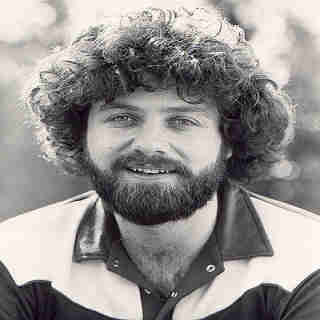 Born on October 21, 1953, in Sheepshead Bay, NY; died on July 28, 1982, in Lindale, TX; married Melody Steiner, 1973; children: Josiah (deceased), Keith, Bethany (deceased), Rebekah. Addresses: Record company--Sparrow Records, P.O. Box 5085, Brentwood, TN 37024. Website--Keith Green Official Website: http://www.lastdaysministries.org.
Known for his uncompromising approach to both his faith and his music, Keith Green has become a legendary figure in Contemporary Christian music since his death in 1982. Taking on the role of a modern-day prophet, he earned a fervent following thanks to his explicit evangelical message and buoyant brand of pop-rock. Green was a critic both of secular society and of commercial tendencies within the Christian community. Since his passing, he has been the subject of several tribute albums and was inducted into the Gospel Music Hall of Fame in 2001.
From early childhood onward, it seemed certain that Green would become a musician. Born in New York, he relocated to the San Fernando Valley area of California with his family not long after. At age eight, he began to perform in stage musicals, appearing in such notable roles as Kurt Von Trapp in a local production of The Sound of Music. In 1965 he published his first song, "The Way I Used to Be," and became the youngest member of the American Society of Composers, Authors, and Publishers. That same year he signed a five-year recording contract with Decca Records and released his first single, "Cheese and Crackers."
Though Green was groomed to be a teenage idol, he never quite achieved success. The late 1960s found him experimenting with drugs and dabbling in various Eastern religions. His life began to turn around after he met (and eventually married) songwriter Melody Steiner in the early 1970s. Under Steiner's guidance, Green began to explore fundamentalist Christianity. Before fully embracing the faith, he began keeping company with singer/songwriters Larry Norman and Randy Stonehill, two of Southern California's best-known Christian rock artists. His skills as a singer and composer began to develop as he edged closer to religious conversion. Finally, in 1975 he became a committed Christian after becoming involved with the Vineyard, a well-known San Fernando Valley church. With a convert's fervor, Green became involved in a series of Christian music projects, including the band Good News and the stage musical Firewind. He also began writing spiritually themed songs, among them "Your Love Broke Through," which went on to become a Christian pop standard recorded by Randy Stonehill, Phil Keaggy, and others.
Dedicating his reawakened creativity to glorifying God, Green founded Last Days Ministries in 1977. He and his followers evangelized to young rock music fans, street people, and others not being reached by conventional churches. At the same time, he made his debut as a Christian recording artist, signing with Sparrow Records and releasing the album For Him Who Has Ears to Hear. This song collection displays the essentials of Green's musical style: exuberant singing, piano-based melodies, and well-crafted pop/rock production. Among the best-known tracks on Green's first album are "You Put This Love in My Heart," "No One Believes Me Anymore," and "Your Love Broke Through." Balancing the warm-hearted testimony of these tunes are some humorous moments, including "No One Believes Me Anymore," a mock lament sung from the Devil's point of view. Overall, For Him Who Has Ears to Hear introduced Green to the Christian music market as a gifted musical evangelist of enormous potential.
As his audience grew, Green made clear that his focus was on spreading Christian teaching rather than providing entertainment. He sought to challenge the assumptions of his fellow believers, criticizing Christians who took their faith for granted. Some compared him with the Old Testament prophet Ezekiel, who decried the loose morals and weak faith of his generation. A number of the songs on Green's 1978 album No Compromise were addressed to the spiritually lazy. Most important among these is "Asleep at the Light," a ringing call for Christian activism sung by Green with palpable emotion. Less intense but still effective is the playful "Dear John (Letter to the Devil)" and the country-tinged "Soften Your Heart." All three of these songs received considerable airplay on Christian music stations.
Green was uneasy in his role as an emerging celebrity. He spoke out against the Christian music industry's increasing tendency to imitate secular show business ways. "Why do we idolize Christian singers and speakers?," he asked in a statement issued through Last Days Ministries. "We go from glorifying musicians in the world, to glorifying Christian musicians. It's all idolatry! ... It's true that there are many men and women of God who are greatly anointed to call down the Spirit of God on His people and the unsaved. But Satan is getting a great victory as we seem to worship these ministers on tapes and records...."
Turning away from the California Christian music scene, Green relocated to Lindale, a small east Texas community, in 1978. In addition to maintaining Last Days Ministries, he decided to launch his own record company, Pretty Good Records. Through this label, he released his next album, So You Wanna Go Back to Egypt, in 1980. This eclectic effort pokes fun at weak-spirited believers in its title track and offers a personal confession of need in "I Want to Be More Like Jesus." The most enduringly popular track proved to be "Oh Lord You're Beautiful," a powerful hymn that became a favorite at Christian worship services. In a bold move, Green announced that So You Wanna Go Back to Egypt would be sold for a variable price, even given away for free to those unable to pay. This decision sent shock waves through the Christian music industry, causing other artists to reconsider their album and concert pricing policies. An estimated 200,000 copies of the album were eventually distributed on a "pay what you can afford" basis.
Unlike some of his Christian music peers, Green showed little desire to dilute his message in hopes of reaching a wider audience. His 1982 album Songs to the Shepherd concentrates on worshipful material, praising the Lord in musical settings ranging from uplifting pop ("You Are the One") to blues-seasoned rock ("O God Our Lord") to old-fashioned country ("Draw Me"). While these songs were little-heard outside the Christian community, they helped fire Green's already-committed audience to a greater level of devotion. Fusing his work as a performer and evangelist, he toured actively during the early 1980s, mixing personal testimonials and heartfelt exhortations in between his musical numbers.
Green's life was cut short just as he began to hit his stride as a musician and minister. On July 28, 1982, he boarded a small Cessna aircraft for a brief sightseeing flight around his property in Lindale. Also on board were his son Josiah and daughter Bethany, along with the pilot and eight other passengers. Overloaded, the plane crashed shortly after takeoff, killing everyone on board. Recovering from her loss, Melody Green decided to carry on with Last Days Ministries and Pretty Good Records. Recordings of her husband's music were released posthumously, beginning with Prodigal Son and Jesus Commands Us to Go in 1983. Though lacking the cohesiveness of the albums released during his lifetime, both these song collections capture Green in strong creative moments. Prodigal Son's dramatic title track is a particular highpoint.
Melody Green continued to guide Last Days Ministries through the coming years and, in 1985, also took on the directorship of Americans against Abortion. Green's musical legacy remained vital as well, with many of his best-known recordings repackaged in compilation albums by Sparrow during the 1980s and 1990s. Multi-artist tribute albums also began to appear, starting with 1992's No Compromise: Remembering the Music of Keith Green. 2001 saw the release of Start Right Here: Remembering the Life of Keith Green, featuring spirited interpretations of his songs by such notable Christian rock acts as MxPx, Joy Electric, and Starflyer 59. Your Love Broke Through: The Worship Songs of Keith Greencontains covers of Green tunes by Michael W. Smith, Twila Paris, Rebecca St. James, and other top-rank Christian pop/rock talents.
On November 27, 2001, Green was inducted into the Gospel Music Hall of Fame. The honor served as an acknowledgment of his continuing influence in Contemporary Christian music some 20 years after his death. Green's intensity and dedication have continued to make him a role model for younger Christian performers, such as Rebecca St. James, who paid tribute to him in a Sparrow Records press biography. "I think what touches me most about him was that he was so committed to loving God and living for Him," she said of Green. "I know he was very strong-willed and people were sometimes offended at what he did and said, but it all came out of a pure motive of trying to be committed to Him in every part of his life. He wasn't going to back down just because of what people thought of him. That, to me, says that he was more focused on pleasing God than on pleasing man, something I think we should all try to focus on."
Keith Green's Career
Began career as child stage actor and composer, early 1960s; signed with Decca, released debut single, "Cheese and Crackers," 1965; began writing Christian songs, mid-1970s; founded Last Days Ministries, released first album, For Him Who Has Ears to Hear, 1977; founded Pretty Good Records, released album So You Wanna Go Back to Egypt, 1980.
Keith Green's Awards
Induction (posthumous), Gospel Music Hall of Fame, 2001.
Famous Works
For Him Who Has Ears To Hear , Sparrow, 1977.
No Compromise , Sparrow, 1978.
So You Wanna Go Back to Egypt , Pretty Good, 1980.
The Keith Green Collection , Sparrow, 1981.
Songs for the Shepherd , Pretty Good, 1982.
The Prodigal Son , Pretty Good, 1983.
Jesus Commands Us to Go , Pretty Good, 1984.
Because of You--Songs of Testimony , Sparrow, 1998.
Here I Am, Send Me--Songs of Evangelism , Sparrow, 1998.
Oh Lord, You're Beautiful--Songs of Worship , Sparrow, 1998.
Make My Life a Prayer to You--Songs of Devotion , Sparrow, 1998.
Born on October 21, 1953, in Sheepshead Bay, NY; died on July 28, 1982, in Lindale, TX; married Melody Steiner, 1973; children: Josiah (deceased), Keith, Bethany (deceased), Rebekah. Addresses: Record company--Sparrow Records, P.O. Box 5085, Brentwood, TN 37024. Website--Keith Green Official Website: http://www.lastdaysministries.org.
Known for his uncompromising approach to both his faith and his music, Keith Green has become a legendary figure in Contemporary Christian music since his death in 1982. Taking on the role of a modern-day prophet, he earned a fervent following thanks to his explicit evangelical message and buoyant brand of pop-rock. Green was a critic both of secular society and of commercial tendencies within the Christian community. Since his passing, he has been the subject of several tribute albums and was inducted into the Gospel Music Hall of Fame in 2001.
From early childhood onward, it seemed certain that Green would become a musician. Born in New York, he relocated to the San Fernando Valley area of California with his family not long after. At age eight, he began to perform in stage musicals, appearing in such notable roles as Kurt Von Trapp in a local production of The Sound of Music. In 1965 he published his first song, "The Way I Used to Be," and became the youngest member of the American Society of Composers, Authors, and Publishers. That same year he signed a five-year recording contract with Decca Records and released his first single, "Cheese and Crackers."
Though Green was groomed to be a teenage idol, he never quite achieved success. The late 1960s found him experimenting with drugs and dabbling in various Eastern religions. His life began to turn around after he met (and eventually married) songwriter Melody Steiner in the early 1970s. Under Steiner's guidance, Green began to explore fundamentalist Christianity. Before fully embracing the faith, he began keeping company with singer/songwriters Larry Norman and Randy Stonehill, two of Southern California's best-known Christian rock artists. His skills as a singer and composer began to develop as he edged closer to religious conversion. Finally, in 1975 he became a committed Christian after becoming involved with the Vineyard, a well-known San Fernando Valley church. With a convert's fervor, Green became involved in a series of Christian music projects, including the band Good News and the stage musical Firewind. He also began writing spiritually themed songs, among them "Your Love Broke Through," which went on to become a Christian pop standard recorded by Randy Stonehill, Phil Keaggy, and others.
Dedicating his reawakened creativity to glorifying God, Green founded Last Days Ministries in 1977. He and his followers evangelized to young rock music fans, street people, and others not being reached by conventional churches. At the same time, he made his debut as a Christian recording artist, signing with Sparrow Records and releasing the album For Him Who Has Ears to Hear. This song collection displays the essentials of Green's musical style: exuberant singing, piano-based melodies, and well-crafted pop/rock production. Among the best-known tracks on Green's first album are "You Put This Love in My Heart," "No One Believes Me Anymore," and "Your Love Broke Through." Balancing the warm-hearted testimony of these tunes are some humorous moments, including "No One Believes Me Anymore," a mock lament sung from the Devil's point of view. Overall, For Him Who Has Ears to Hear introduced Green to the Christian music market as a gifted musical evangelist of enormous potential.
As his audience grew, Green made clear that his focus was on spreading Christian teaching rather than providing entertainment. He sought to challenge the assumptions of his fellow believers, criticizing Christians who took their faith for granted. Some compared him with the Old Testament prophet Ezekiel, who decried the loose morals and weak faith of his generation. A number of the songs on Green's 1978 album No Compromise were addressed to the spiritually lazy. Most important among these is "Asleep at the Light," a ringing call for Christian activism sung by Green with palpable emotion. Less intense but still effective is the playful "Dear John (Letter to the Devil)" and the country-tinged "Soften Your Heart." All three of these songs received considerable airplay on Christian music stations.
Green was uneasy in his role as an emerging celebrity. He spoke out against the Christian music industry's increasing tendency to imitate secular show business ways. "Why do we idolize Christian singers and speakers?," he asked in a statement issued through Last Days Ministries. "We go from glorifying musicians in the world, to glorifying Christian musicians. It's all idolatry! ... It's true that there are many men and women of God who are greatly anointed to call down the Spirit of God on His people and the unsaved. But Satan is getting a great victory as we seem to worship these ministers on tapes and records...."
Turning away from the California Christian music scene, Green relocated to Lindale, a small east Texas community, in 1978. In addition to maintaining Last Days Ministries, he decided to launch his own record company, Pretty Good Records. Through this label, he released his next album, So You Wanna Go Back to Egypt, in 1980. This eclectic effort pokes fun at weak-spirited believers in its title track and offers a personal confession of need in "I Want to Be More Like Jesus." The most enduringly popular track proved to be "Oh Lord You're Beautiful," a powerful hymn that became a favorite at Christian worship services. In a bold move, Green announced that So You Wanna Go Back to Egypt would be sold for a variable price, even given away for free to those unable to pay. This decision sent shock waves through the Christian music industry, causing other artists to reconsider their album and concert pricing policies. An estimated 200,000 copies of the album were eventually distributed on a "pay what you can afford" basis.
Unlike some of his Christian music peers, Green showed little desire to dilute his message in hopes of reaching a wider audience. His 1982 album Songs to the Shepherd concentrates on worshipful material, praising the Lord in musical settings ranging from uplifting pop ("You Are the One") to blues-seasoned rock ("O God Our Lord") to old-fashioned country ("Draw Me"). While these songs were little-heard outside the Christian community, they helped fire Green's already-committed audience to a greater level of devotion. Fusing his work as a performer and evangelist, he toured actively during the early 1980s, mixing personal testimonials and heartfelt exhortations in between his musical numbers.
Green's life was cut short just as he began to hit his stride as a musician and minister. On July 28, 1982, he boarded a small Cessna aircraft for a brief sightseeing flight around his property in Lindale. Also on board were his son Josiah and daughter Bethany, along with the pilot and eight other passengers. Overloaded, the plane crashed shortly after takeoff, killing everyone on board. Recovering from her loss, Melody Green decided to carry on with Last Days Ministries and Pretty Good Records. Recordings of her husband's music were released posthumously, beginning with Prodigal Son and Jesus Commands Us to Go in 1983. Though lacking the cohesiveness of the albums released during his lifetime, both these song collections capture Green in strong creative moments. Prodigal Son's dramatic title track is a particular highpoint.
Melody Green continued to guide Last Days Ministries through the coming years and, in 1985, also took on the directorship of Americans against Abortion. Green's musical legacy remained vital as well, with many of his best-known recordings repackaged in compilation albums by Sparrow during the 1980s and 1990s. Multi-artist tribute albums also began to appear, starting with 1992's No Compromise: Remembering the Music of Keith Green. 2001 saw the release of Start Right Here: Remembering the Life of Keith Green, featuring spirited interpretations of his songs by such notable Christian rock acts as MxPx, Joy Electric, and Starflyer 59. Your Love Broke Through: The Worship Songs of Keith Greencontains covers of Green tunes by Michael W. Smith, Twila Paris, Rebecca St. James, and other top-rank Christian pop/rock talents.
On November 27, 2001, Green was inducted into the Gospel Music Hall of Fame. The honor served as an acknowledgment of his continuing influence in Contemporary Christian music some 20 years after his death. Green's intensity and dedication have continued to make him a role model for younger Christian performers, such as Rebecca St. James, who paid tribute to him in a Sparrow Records press biography. "I think what touches me most about him was that he was so committed to loving God and living for Him," she said of Green. "I know he was very strong-willed and people were sometimes offended at what he did and said, but it all came out of a pure motive of trying to be committed to Him in every part of his life. He wasn't going to back down just because of what people thought of him. That, to me, says that he was more focused on pleasing God than on pleasing man, something I think we should all try to focus on."
Keith Green's Career
Began career as child stage actor and composer, early 1960s; signed with Decca, released debut single, "Cheese and Crackers," 1965; began writing Christian songs, mid-1970s; founded Last Days Ministries, released first album, For Him Who Has Ears to Hear, 1977; founded Pretty Good Records, released album So You Wanna Go Back to Egypt, 1980.
Keith Green's Awards
Induction (posthumous), Gospel Music Hall of Fame, 2001.
Famous Works
For Him Who Has Ears To Hear , Sparrow, 1977.
No Compromise , Sparrow, 1978.
So You Wanna Go Back to Egypt , Pretty Good, 1980.
The Keith Green Collection , Sparrow, 1981.
Songs for the Shepherd , Pretty Good, 1982.
The Prodigal Son , Pretty Good, 1983.
Jesus Commands Us to Go , Pretty Good, 1984.
Because of You--Songs of Testimony , Sparrow, 1998.
Here I Am, Send Me--Songs of Evangelism , Sparrow, 1998.
Oh Lord, You're Beautiful--Songs of Worship , Sparrow, 1998.
Make My Life a Prayer to You--Songs of Devotion , Sparrow, 1998.
Secret Allies in the Human Heart - The Advantage We Have in Evangelism
One warm, dusty midday, Jesus sat alone near Jacob’s well outside the Samaritan town of Sychar. His disciples had gone into town to buy food, but he had planned a different meal for himself (John 4:34). Soon a solitary woman arrived at the well with a large clay jar and began to draw water. Jesus asked her for a drink. So began one of the most famous evangelistic conversations in history. And this conversation is remarkably relevant to us twenty-first-century Christians. Because in it, Jesus demonstrates that hidden in the human heart are secret evangelistic allies, as Scottish preacher James Stewart once observed (Heralds of God, 53). These secret allies are deep-seated intuitions and longings that can help a person recognize the truth of the gospel. And like Jesus, if we listen carefully and prayerfully, both to the person and the Holy Spirit, we can engage these allies in the pursuit of that person’s ultimate joy. Obstacles to Evangelism In numerous ways, this woman would have appeared to most of us as an unlikely candidate for conversion. “Hidden in the human heart are secret evangelistic allies.” First, she was a Samaritan, which meant she was viewed and hated by most Jews as a member of a heretical, idolatrous religion. We would have assumed she reciprocated the hatred. She was a woman, which meant (according to ancient Near Eastern social norms) that she would have been reticent to enter into such a conversation alone with a strange man. And given the odd, hot time of day she chose to fetch water, we might have intuited some social estrangement from her own townspeople. In other words, there were layers of complex awkwardness about the whole situation — the kind of awkwardness most of us want to avoid, the kind we tend to assume will make fruitfulness unlikely. But Jesus, alert to the Holy Spirit and lovingly eager for this woman to experience grace and forgiveness and liberation and joy, stepped into the awkwardness. And notice how he navigated this conversation, engaging several secret allies along the way. Secret Allies in an Unlikely Convert It began with a mundane-sounding yet provocative request: “Give me a drink” (John 4:7). This simple question caught the woman off guard. Not only was a man addressing an unaccompanied woman, but a Jew was addressing a Samaritan. In doing so, however, Jesus acknowledged her as an image-bearer of God, according her the dignity due such a creation. Her deep, intuitive knowledge of the rightness of this became one secret ally in helping prepare her to receive the grace and mercy he offers. Then, given the immediate context of their conversation, Jesus used the metaphor of thirst to raise the issue of the woman’s deep, inconsolable longing for lasting hope, joy, meaning, and love — a longing she shared with all fallen humanity (John 4:10–15). He wasn’t put off by her skepticism and derogatory comments. He was after her joy, not defending himself. What he did was engage her soul-thirst as a secret gospel ally for her highest good. Then he gently stepped into another very awkward place: the woman’s sinful, painful past littered with the ruins of broken relational cisterns that had only left her more parched (Jeremiah 2:13; John 4:16–18). And he offered her the only water that could quench her thirst: the gracious, merciful love of God. Her pain proved to be the pivotal gospel ally in her heart (John 4:39), because she had an undeniable desire and need for God’s forgiveness, reconciliation, and redemption. But there was one more massive issue to deal with: What about the deep, bitter, complex, hostile, centuries-old ethno-religious disagreements between the Jews and the Samaritans (John 4:19–22)? Notice where in the conversation Jesus chose to address this (he ignored the controversy in verse 9). Jesus discerned that this woman needed to taste God’s care and kindness toward her before she would be open to hearing that she and her ancestors had worshiped in ignorance (John 4:22). So, he did deploy the ally of the truth she already knew from Jewish Scriptures, but not until he had developed some initial trust first. Having glimpsed the Great Well and tasted the living water (John 4:23–24), this woman forgot her jar by Jacob’s well and ran back to town to share the good news she had received (John 4:28–30). And her testimony resonated with the secret allies in the hearts of many of her neighbors in Sychar. Common Secret Allies This evangelistic conversation is admittedly exceptional because Jesus is exceptional. We rarely receive such supernatural insight into someone else’s life — though such gifts sometimes are given to believers by the Holy Spirit (1 Corinthians 14:24–25). But we can still learn from how Jesus engaged secret evangelistic allies in the hearts of his hearers. And while we may not be able to discern all he discerned as the God-man, we can still ask good questions, listen carefully, and pray for the Spirit to help us identify allies in each conversation. Certain allies are specific to particular people, like the Samaritan woman’s painful past. But there are allies that God has implanted in the hearts of every person. Here are some of them: We all instinctively recognize design in creation (Romans 1:19–20). We all are irresistibly drawn to transcendent glory (Psalm 8:1–4). We all have an intuitive knowledge of providence — that there is a purposeful intent to the created world, the events in it, and our own lives (Acts 17:22–31). We all know deep down that nihilism (ultimate meaninglessness implicit in metaphysical naturalism) is not true (Ecclesiastes 3:1–14). We all know we must have hope to keep going (Psalm 43:5; Lamentations 3:20–24; Romans 15:13). We all have an irrepressible longing for joy (Psalm 16:11; 43:4; Ecclesiastes 3:12; John 15:11; 1 Peter 1:8). We all intuitively recognize the moral law (Romans 2:14–15). We all know that we have transgressed the moral law and to some degree long to be free from guilt (Romans 3:23–26). We all at various times experience an undeniable desire for justice to prevail (Deuteronomy 16:19–20; Job 19:7–11; Proverbs 17:23; Micah 6:8; Matthew 12:18–21). We all have a sense of eternity in our hearts — we instinctively know death is not our ultimate end (Ecclesiastes 3:11). We all recognize the supreme beauty of love (Matthew 22:36–40; John 15:13; 1 Corinthians 13:13; 1 John 4:7–8). In claiming that we all know these things, I don’t mean that we all admit them, recognize them to the same degree, or explain them in the same way, but they are all part of the universal human experience. And the fact that we continually discuss and debate them is evidence of their presence. They are internal witnesses and pointers to the existence and nature of God, and in that way they become allies in our evangelism. Take Them to the Well On that warm, dusty day, on the slope of Mount Gerizim, the Lord himself became one massive, momentous fulfillment of the words of the old prophet: How beautiful upon the mountains are the feet of him who brings good news, who publishes peace, who brings good news of happiness, who publishes salvation, who says to Zion, “Your God reigns.” (Isaiah 52:7) “We all have eternity in our hearts — we instinctively know death is not our ultimate end.” He employed gospel allies already residing secretly in the heart of an unlikely convert to lead her to the living water she so desperately needed and longed for. Isn’t that essentially our story too? When it comes to evangelism, we can be too easily intimidated, especially when someone looks unlikely to respond well. It can appear to us like the ground isn’t level, like we occupy the less defendable ground because our hearer is likely to judge our gospel as foolish or weak (1 Corinthians 1:22–25). In truth, the ground is often not level, but not in the way we might fear. Often, we have the advantage because, as with Jesus that day outside Sychar, we have unseen gospel allies residing in the hearts of our hearers. And if we listen carefully and prayerfully to our hearers, the Holy Spirit can show us how to employ them. Because when it comes to the power of God in evangelism (1 Corinthians 1:18), “the foolishness of God is wiser than men, and the weakness of God is stronger than men” (1 Corinthians 1:25). We don’t need to be experts in apologetics or trained theologians to share the good news with others, even with the most resistant and entrenched. Often, we simply need to care more about helping them find the living water they so desperately need than about protecting our reputation or demonstrating how right we are. And if we do, we will find that we have secret allies in the pursuit of that person’s highest joy. Article by Jon Bloom Staff writer, desiringGod.org
-480.webp)
-480.webp)