
Others like surrender all Features >>
Plans, Purposes And Pursuits

Finally Free
Developing Faith For The Working Of Miracles
The Making Of A Prophet
20 Marching Orders To Fulfil Your Destiny
-160.webp)
Discovering God's Will For Your Life
%20-%20Patricia%20King-160.webp)
Activating Your God-Given Power To Create Realms And Atmospheres (Create Your World)
-160.webp)
Fruits Of The Spirit

Founded On The Rock
Spiritual Authority
About the Book
"Surrender All" by Joni Lamb is a Christian self-help book that encourages readers to surrender all aspects of their lives to God in order to find peace, joy, and fulfillment. The book provides practical advice and spiritual guidance on how to let go of control and trust in God's plan for their lives. Through personal anecdotes and biblical teachings, Lamb inspires readers to release their fears, doubts, and insecurities and embrace God's love and purpose for them.
John and Betty Stam
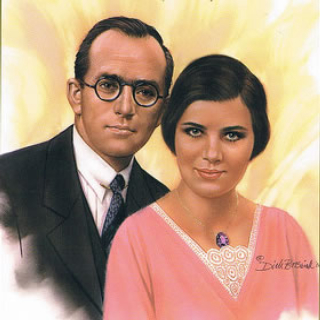 The year 1934. Americans John and Betty Stam were serving as missionaries in China. One morning Betty was bathing her three-month-old daughter Helen Priscilla Stam when Tsingteh's city magistrate appeared. Communist forces were near, he warned, and urged the Stams to flee.
So John Stam went out to investigate the situation for himself. He received conflicting reports. Taking no chances, he arranged for Betty and the baby to be escorted away to safety if need be. But before the Stams could make their break, the Communists were inside the city. By little-known paths, they had streamed over the mountains behind government troops. Now gun shots sounded in the streets as looting began. The enemy beat on the Stams' own gate.
A faithful cook and maid at the mission station had stayed behind. The Stams knelt with them in prayer. But the invaders were pounding at the door. John opened it and spoke courteously to the four leaders who entered, asking them if they were hungry. Betty brought them tea and cakes. The courtesy meant nothing. They demanded all the money the Stams had, and John handed it over. As the men bound him, he pleaded for the safety of his wife and child. The Communists left Betty and Helen behind as they led John off to their headquarters.
Before long, they reappeared, demanding mother and child. The maid and cook pleaded to be allowed to accompany Betty.
"No," barked the captors, and threatened to shoot.
"It is better for you to stay here," Betty whispered. "If anything happens to us, look after the baby."
[When we consecrate ourselves to God, we think we are making a great sacrifice, and doing lots for Him, when really we are only letting go some little, bitsie trinkets we have been grabbing, and when our hands are empty, He fills them full of His treasures. --Betty Stam]
Betty was led to her husband's side. Little Helen needed some things and John was allowed to return home under guard to fetch them. But everything had been stolen. That night John was allowed to write a letter to mission authorities. "My wife, baby and myself are today in the hands of the Communists in the city of Tsingteh. Their demand is twenty thousand dollars for our release. . . . We were too late. The Lord bless and guide you. As for us, may God be glorified, whether by life or by death."
Prisoners in the local jail were released to make room for the Stams. Frightened by rifle fire, the baby cried out. One of the Reds said, "Let's kill the baby. It is in our way." A bystander asked, "Why kill her? What harm has she done?"
"Are you a Christian?" shouted one of the guards.
The man said he was not; he was one of the prisoners just released.
"Will you die for this foreign baby?" they asked. As Betty hugged Helen to her chest, the man was hacked to pieces before her eyes.
Terror in the Streets
The next morning their captors led the Stams toward Miaosheo, twelve miles distant. John carried little Helen, but Betty, who was not physically strong, owing to a youthful bout with inflammatory rheumatitis was allowed to ride a horse part of the way. Terror reigned in the streets of Miaosheo. Under guard, the foreign family was hustled into the postmaster's shop.
"Where are you going?" asked the postmaster, who recognized them from their previous visits to his town. "We do not know where they are going, but we are going to heaven," answered John. He left a letter with the postmaster. "I tried to persuade them to let my wife and baby go back from Tsingteh with a letter to you, but they would not let her. . . ."
That night the three were held in the house of a wealthy man who had fled. They were guarded by soldiers. John was tied to a post all that cold night, but Betty was allowed enough freedom to tend the baby. As it turned out, she did more than that.
Execution
The next morning the young couple were led through town without the baby. Their hands were tightly bound, and they were stripped of their outer garments as if they were common criminals. John walked barefoot. He had given his socks to Betty. The soldiers jeered and called the town’s folk to come see the execution. The terrified people obeyed.
On the way to the execution, a medicine-seller, considered a lukewarm Christian at best, stepped from the crowd and pleaded for the lives of the two foreigners. The Reds angrily ordered him back. The man would not be stilled. His house was searched, a Bible and hymnbook found, and he, too was dragged away to die as a hated Christian.
John pleaded for the man’s life. The Red leader sharply ordered him to kneel. As John was speaking softly, the Red leader swung his sword through the missionary’s throat so that his head was severed from his body. Betty did not scream. She quivered and fell bound beside her husband’s body. As she knelt there, the same sword ended her life with a single blow.
Betty
Betty Scott was born in the United States but reared in China as the daughter of missionaries. She came to the United States and attended Wilson College in Pennsylvania. Betty prepared to follow in her parents’ footsteps and work in China or wherever else the Lord directed her.
But China it proved to be. At a prayer meeting for China, she met John Stam and a friendship developed that ripened into love. Painfully they recognized that marriage was not yet possible. “The China Inland Mission has appealed for men, single men, to work in sections where it would be impossible to take a woman until more settled work has commenced,” wrote John. He committed the matter to the Lord, whose work, he felt, must come before any human affection. At any rate, Betty would be leaving for China before him, to work in an entirely different region, and so they must be separated anyhow. As a matter of fact, John had not yet even been accepted by the China Inland Mission whereas Betty had. They parted after a long tender day, sharing their faith, picnicking, talking, and praying.
Betty sailed while John continued his studies. On July 1, 1932, John, too, was accepted for service in China. Now at least he could head toward the same continent as Betty. He sailed for Shanghai.
Meanwhile, Betty found her plans thwarted. A senior missionary had been captured by the Communists in the region where she was to have worked. The mission directors decided to keep her in a temporary station, and later ill-health brought her to Shanghai. Thus without any choice on her part, she was in Shanghai when John landed in China. Immediately they became engaged and a year later were married, long before they expected it. In October, 1934 Helen Priscilla was born to them. What would become of her now that her parents John and Betty were dead?
In the Hills
For two days, local Christians huddled in hiding in the hills around Miaosheo. Among them was a Chinese evangelist named Mr. Lo. Through informants, he learned that the Communists had captured two foreigners. At first he did not realize that these were John and Betty Stam, with whom he had worked, but as he received more details, he put two and two together. As soon as government troops entered the valley and it was safe to venture forth, Mr. Lo hurried to town. His questions met with silence. Everyone was fearful that spies might report anyone who said too much.
An old woman whispered to Pastor Lo that there was a baby left behind. She nodded in the direction of the house where John and Betty had been chained their last night on earth. Pastor Lo hurried to the site and found room after room trashed by the bandits. Then he heard a muffled cry. Tucked by her mother in a little sleeping bag, Helen was warm and alive, although hungry after her two day fast.
The kindly pastor took the child in his arms and carried her to his wife. With the help of a local Christian family, he wrapped the bodies that still lay upon the hillside and placed them into coffins. To the crowd that gathered he explained that the missionaries had only come to tell them how they might find forgiveness of sin in Christ. Leaving others to bury the dead, he hurried home. Somehow Helen had to be gotten to safety.
Pastor Lo's own son, a boy of four, was desperately ill -- semi-conscious after days of exposure. Pastor Lo had to find a way to carry the children a hundred miles through mountains infested by bandits and Communists. Brave men were found willing to help bear the children to safety, but there was no money to pay them for their efforts. Lo had been robbed of everything he had.
From Beyond the Grave
But from beyond the grave, Betty provided. Tucked in Helen's sleeping bag were a change of clothes and some diapers. Pinned between these articles of clothing were two five dollar bills. It made the difference.
Placing the children in rice baskets slung from the two ends of a bamboo pole, the group departed quietly, taking turns carrying the precious cargo over their shoulders. Mrs. Lo was able to find Chinese mothers along the way to nurse Helen. On foot, they came safely through their perils. Lo's own boy recovered consciousness suddenly and sat up, singing a hymn.
Eight days after the Stams fell into Communist hands, another missionary in a nearby city heard a rap at his door. He opened it and a Chinese woman, stained with travel, entered the house, bearing a bundle in her arms. "This is all we have left," she said brokenly.
The missionary took the bundle and turned back the blanket to uncover the sleeping face of Helen Priscilla Stam. Many kind hands had labored to preserve the infant girl, but none kinder than Betty who had spared no effort for her baby even as she herself faced degradation and death.
Kathleen White has written an excellent and very readable biography John and Betty Stam, available from Bethany House Publishers (1988). She reports that Betty's alma mater, Wilson College in Pennsylvania, took over baby Helen's support and covered the costs of her college education. She added: "Helen is living in this country (USA) with her husband and family but does not wish her identity and whereabouts to be made known."
Resources:
Huizenga, Lee S. John and Betty Stam; Martyrs. Zondervan, 1935.
Pollock, John. Victims of the Long March and Other Stories. Waco, Texas.: Word Publishing, 1970.
Taylor, Mrs. Howard. The Triumph of John and Betty Stam. China Inland Mission, 1935.
The year 1934. Americans John and Betty Stam were serving as missionaries in China. One morning Betty was bathing her three-month-old daughter Helen Priscilla Stam when Tsingteh's city magistrate appeared. Communist forces were near, he warned, and urged the Stams to flee.
So John Stam went out to investigate the situation for himself. He received conflicting reports. Taking no chances, he arranged for Betty and the baby to be escorted away to safety if need be. But before the Stams could make their break, the Communists were inside the city. By little-known paths, they had streamed over the mountains behind government troops. Now gun shots sounded in the streets as looting began. The enemy beat on the Stams' own gate.
A faithful cook and maid at the mission station had stayed behind. The Stams knelt with them in prayer. But the invaders were pounding at the door. John opened it and spoke courteously to the four leaders who entered, asking them if they were hungry. Betty brought them tea and cakes. The courtesy meant nothing. They demanded all the money the Stams had, and John handed it over. As the men bound him, he pleaded for the safety of his wife and child. The Communists left Betty and Helen behind as they led John off to their headquarters.
Before long, they reappeared, demanding mother and child. The maid and cook pleaded to be allowed to accompany Betty.
"No," barked the captors, and threatened to shoot.
"It is better for you to stay here," Betty whispered. "If anything happens to us, look after the baby."
[When we consecrate ourselves to God, we think we are making a great sacrifice, and doing lots for Him, when really we are only letting go some little, bitsie trinkets we have been grabbing, and when our hands are empty, He fills them full of His treasures. --Betty Stam]
Betty was led to her husband's side. Little Helen needed some things and John was allowed to return home under guard to fetch them. But everything had been stolen. That night John was allowed to write a letter to mission authorities. "My wife, baby and myself are today in the hands of the Communists in the city of Tsingteh. Their demand is twenty thousand dollars for our release. . . . We were too late. The Lord bless and guide you. As for us, may God be glorified, whether by life or by death."
Prisoners in the local jail were released to make room for the Stams. Frightened by rifle fire, the baby cried out. One of the Reds said, "Let's kill the baby. It is in our way." A bystander asked, "Why kill her? What harm has she done?"
"Are you a Christian?" shouted one of the guards.
The man said he was not; he was one of the prisoners just released.
"Will you die for this foreign baby?" they asked. As Betty hugged Helen to her chest, the man was hacked to pieces before her eyes.
Terror in the Streets
The next morning their captors led the Stams toward Miaosheo, twelve miles distant. John carried little Helen, but Betty, who was not physically strong, owing to a youthful bout with inflammatory rheumatitis was allowed to ride a horse part of the way. Terror reigned in the streets of Miaosheo. Under guard, the foreign family was hustled into the postmaster's shop.
"Where are you going?" asked the postmaster, who recognized them from their previous visits to his town. "We do not know where they are going, but we are going to heaven," answered John. He left a letter with the postmaster. "I tried to persuade them to let my wife and baby go back from Tsingteh with a letter to you, but they would not let her. . . ."
That night the three were held in the house of a wealthy man who had fled. They were guarded by soldiers. John was tied to a post all that cold night, but Betty was allowed enough freedom to tend the baby. As it turned out, she did more than that.
Execution
The next morning the young couple were led through town without the baby. Their hands were tightly bound, and they were stripped of their outer garments as if they were common criminals. John walked barefoot. He had given his socks to Betty. The soldiers jeered and called the town’s folk to come see the execution. The terrified people obeyed.
On the way to the execution, a medicine-seller, considered a lukewarm Christian at best, stepped from the crowd and pleaded for the lives of the two foreigners. The Reds angrily ordered him back. The man would not be stilled. His house was searched, a Bible and hymnbook found, and he, too was dragged away to die as a hated Christian.
John pleaded for the man’s life. The Red leader sharply ordered him to kneel. As John was speaking softly, the Red leader swung his sword through the missionary’s throat so that his head was severed from his body. Betty did not scream. She quivered and fell bound beside her husband’s body. As she knelt there, the same sword ended her life with a single blow.
Betty
Betty Scott was born in the United States but reared in China as the daughter of missionaries. She came to the United States and attended Wilson College in Pennsylvania. Betty prepared to follow in her parents’ footsteps and work in China or wherever else the Lord directed her.
But China it proved to be. At a prayer meeting for China, she met John Stam and a friendship developed that ripened into love. Painfully they recognized that marriage was not yet possible. “The China Inland Mission has appealed for men, single men, to work in sections where it would be impossible to take a woman until more settled work has commenced,” wrote John. He committed the matter to the Lord, whose work, he felt, must come before any human affection. At any rate, Betty would be leaving for China before him, to work in an entirely different region, and so they must be separated anyhow. As a matter of fact, John had not yet even been accepted by the China Inland Mission whereas Betty had. They parted after a long tender day, sharing their faith, picnicking, talking, and praying.
Betty sailed while John continued his studies. On July 1, 1932, John, too, was accepted for service in China. Now at least he could head toward the same continent as Betty. He sailed for Shanghai.
Meanwhile, Betty found her plans thwarted. A senior missionary had been captured by the Communists in the region where she was to have worked. The mission directors decided to keep her in a temporary station, and later ill-health brought her to Shanghai. Thus without any choice on her part, she was in Shanghai when John landed in China. Immediately they became engaged and a year later were married, long before they expected it. In October, 1934 Helen Priscilla was born to them. What would become of her now that her parents John and Betty were dead?
In the Hills
For two days, local Christians huddled in hiding in the hills around Miaosheo. Among them was a Chinese evangelist named Mr. Lo. Through informants, he learned that the Communists had captured two foreigners. At first he did not realize that these were John and Betty Stam, with whom he had worked, but as he received more details, he put two and two together. As soon as government troops entered the valley and it was safe to venture forth, Mr. Lo hurried to town. His questions met with silence. Everyone was fearful that spies might report anyone who said too much.
An old woman whispered to Pastor Lo that there was a baby left behind. She nodded in the direction of the house where John and Betty had been chained their last night on earth. Pastor Lo hurried to the site and found room after room trashed by the bandits. Then he heard a muffled cry. Tucked by her mother in a little sleeping bag, Helen was warm and alive, although hungry after her two day fast.
The kindly pastor took the child in his arms and carried her to his wife. With the help of a local Christian family, he wrapped the bodies that still lay upon the hillside and placed them into coffins. To the crowd that gathered he explained that the missionaries had only come to tell them how they might find forgiveness of sin in Christ. Leaving others to bury the dead, he hurried home. Somehow Helen had to be gotten to safety.
Pastor Lo's own son, a boy of four, was desperately ill -- semi-conscious after days of exposure. Pastor Lo had to find a way to carry the children a hundred miles through mountains infested by bandits and Communists. Brave men were found willing to help bear the children to safety, but there was no money to pay them for their efforts. Lo had been robbed of everything he had.
From Beyond the Grave
But from beyond the grave, Betty provided. Tucked in Helen's sleeping bag were a change of clothes and some diapers. Pinned between these articles of clothing were two five dollar bills. It made the difference.
Placing the children in rice baskets slung from the two ends of a bamboo pole, the group departed quietly, taking turns carrying the precious cargo over their shoulders. Mrs. Lo was able to find Chinese mothers along the way to nurse Helen. On foot, they came safely through their perils. Lo's own boy recovered consciousness suddenly and sat up, singing a hymn.
Eight days after the Stams fell into Communist hands, another missionary in a nearby city heard a rap at his door. He opened it and a Chinese woman, stained with travel, entered the house, bearing a bundle in her arms. "This is all we have left," she said brokenly.
The missionary took the bundle and turned back the blanket to uncover the sleeping face of Helen Priscilla Stam. Many kind hands had labored to preserve the infant girl, but none kinder than Betty who had spared no effort for her baby even as she herself faced degradation and death.
Kathleen White has written an excellent and very readable biography John and Betty Stam, available from Bethany House Publishers (1988). She reports that Betty's alma mater, Wilson College in Pennsylvania, took over baby Helen's support and covered the costs of her college education. She added: "Helen is living in this country (USA) with her husband and family but does not wish her identity and whereabouts to be made known."
Resources:
Huizenga, Lee S. John and Betty Stam; Martyrs. Zondervan, 1935.
Pollock, John. Victims of the Long March and Other Stories. Waco, Texas.: Word Publishing, 1970.
Taylor, Mrs. Howard. The Triumph of John and Betty Stam. China Inland Mission, 1935.
Love Is the Overflow of Joy in God
More clearly than any other writer in the Bible, the apostle Paul opened up the truth to me that God is most glorified in me when I am most satisfied in him. It was thrilling to discover that glorifying God and satisfying my soul are not at odds. I have told the story of that discovery elsewhere. But there is a second chapter to the story that makes my thankfulness to Paul all the sweeter. I owe to him, more than to anyone else, another crucial, life-changing discovery. If the first discovery was how to resolve the tension between the desire to glorify God and the desire to be happy, the second discovery was how to resolve the tension between the desire to be happy in God and the desire to love other people. Another Unresolved Tension Can you really love people if, in the very act of doing them good, you are seeking the fullness of your own joy? After all, it was Paul himself who said, “Love . . . does not seek its own” (1 Corinthians 13:4–5 NASB). And in another place, “Let no one seek his own good, but the good of his neighbor” (1 Corinthians 10:24). And again, “We . . . have an obligation to bear with the failings of the weak, and not to please ourselves” (Romans 15:1). So how can you claim to love people if, in the very act of loving them, you are seeking your own joy? “On the other side of self-denial — even death — is everlasting joy in the presence of God.” This question felt just as urgent as the first one about how to glorify God while seeking my own joy. Jesus had said that “the great and first” commandment is to love God (Matthew 22:38). But he also said that the commandment to love our neighbor “is like it” (Matthew 22:39). So the question of how to love people out of a heart that could not stop wanting to be happy — indeed, a heart that dare not stop wanting to be happy, lest God be dishonored by my failing to be happy in him — that question was just as urgent as any. So how does the pursuit of joy in God relate to love for other people? Paul showed me that genuine, Spirit-awakened joy in God does not hinder love for people but in fact overflows with love for people. It has a built-in impulse to expand. Joy in God grows as it’s extended into the lives of other people so they can share in it. Paul Points the Way Paul gives us the most explicit illustration of this in the New Testament. It’s found in 2 Corinthians 8:1–2, where Paul is seeking to motivate love in the Corinthians by pointing to the Macedonian Christians and the amazing way they had shown love. We want you to know, brothers, about the grace of God that has been given among the churches of Macedonia, for in a severe test of affliction, their abundance of joy and their extreme poverty have overflowed in a wealth of generosity on their part. . . . I say this not as a command, but to prove by the earnestness of others that your love also is genuine. (2 Corinthians 8:1–2, 8) Note carefully that the “abundance of joy” in the hearts of the Macedonians was not owing to comfortable circumstances. They were in “extreme poverty” and “a severe test of affliction.” “Their abundance of joy” was owing to “the grace of God” that had been “given” (2 Corinthians 8:1). Their sins were forgiven. The wrath of God had been replaced with the divine smile of everlasting favor. Guilt was gone. Hell was closed. Heaven was open. The Spirit was indwelling. Hope had exploded in their hearts. All of this because of Christ, when they deserved none of it. The grace of God had been given (2 Corinthians 8:1). This “abundance of joy” became a fountain of love for people. It could not be clearer: “Their abundance of joy . . . overflowed in a wealth of generosity” (2 Corinthians 8:2). This was love. He called it that in verse 8: “. . . that your love also is genuine.” So Paul’s definition of genuine, God-exalting love would be this: Love is the overflow of joy in God that meets the needs of others. Joy for the Sake of Love This is more profound than what first meets the eye. Paul is not saying, “True happiness requires love for people.” That’s true. An unloving person will not be happy in the long run. But this is an oversimplification that misses the crucial point. The point is not that in order to have the truest pleasure we must love people. Rather, the point is that when joy in God overflows into the lives of others in the form of generosity, that overflow of joy is love. Or to say it another way: we do not merely seek to love in order to be happy, but we seek to be happy in God in order to love. It was “their abundance of joy” that overflowed in love (2 Corinthians 8:2). This thought seemed so radical to me that I wanted to check myself by testing it with the rest of Scripture. Is it true that my joy is that closely connected with my love for people? What I found was a stream of biblical commands to: love kindness, not just do it (Micah 6:8); do acts of mercy with cheerfulness (Romans 12:8); joyfully suffer loss in the service of prisoners (Hebrews 10:34); be a cheerful giver (2 Corinthians 9:7); make our joy the joy of others (2 Corinthians 2:3); tend the flock of God willingly and eagerly (1 Peter 5:2); and keep watch over souls with joy (Hebrews 13:17). To me this was amazing. We are not dealing here with something marginal or clever. This really is soul piercing and radically life changing: the pursuit of authentic love for people includes the pursuit of joy, because joy in God is an essential component of authentic love. This is vastly different from saying, “Let’s all be loving because it will make us happy.” This is saying, “Let’s all seek to be so full of joy in God that it overflows in sacrificial love to other people.” Love That Survives All Sorrow That word sacrificial might sound paradoxical. If we are overflowing in joy to others, and our joy is expanding by drawing others into it, then why talk of sacrifice? The reason is that the path of greatest joy in this life is often the path of great suffering. In the age to come, after Jesus returns, all pain will be gone. But not yet. In this life, love will often demand suffering. It may, in fact, demand that we lay down our lives. But Paul sets the pace for us when he says, “I rejoice in my sufferings for your sake” (Colossians 1:24). “In all our affliction, I am overflowing with joy” (2 Corinthians 7:4). “We rejoice in our sufferings” (Romans 5:3). There are reasons for this strange and wonderful kind of joy that survives and even thrives in affliction. One reason is that Jesus taught us, “It is more blessed to give than to receive” (Acts 20:35). The overflow to others is enriching to us. Another reason is that even though “some of you they will put to death,” in the end “not a hair of your head will perish” (Luke 21:16, 18). Jesus had said, “Everyone who lives and believes in me shall never die” (John 11:26). The world thinks we die. But Jesus takes us so immediately into his care that there is no break in life. A third reason is the promise, “your reward is great in heaven” (Matthew 5:12). Finally, the greatest act of love that was ever performed was sustained by joy in God: “[Look] to Jesus, . . . who for the joy that was set before him endured the cross” (Hebrews 12:2). “We do not merely seek to love in order to be happy, but we seek to be happy in God in order to love.” This is why, during my 33 years as a pastor, the signature text we came back to again and again was 2 Corinthians 6:10: “as sorrowful, yet always rejoicing.” Always. Rejoicing at the same time as sorrowing. Not just sequentially. Simultaneously. Loving others does not have to wait till sorrow passes, because joy does not wait. And during those 33 years, the signature song that the pastoral staff would sing again and again was “It Is Well with My Soul”: When peace like a river attendeth my way, When sorrows like sea billows roll, Whatever my lot, thou hast taught me to say, “It is well, it is well with my soul.” Genuine love makes many sacrifices for the beloved. There is much pain and many sorrows. But in Christ there is no ultimate sacrifice. To be sure, Jesus calls for self-denial. But his argument for self-denial is “whoever loses his life for my sake and the gospel’s will save it” (Mark 8:35). On the other side of self-denial — even death — is everlasting joy in the presence of God. Love Is Not Begrudging I have never met people who are offended because the sacrifices we make for their good bring us joy. In fact, merely dutiful “love” — or worse, begrudging “love” — does not make people feel loved. It makes them feel like a burden. I am sure, therefore, that Paul would agree with the writer to the Hebrews when he tells his hearers to let the leaders keep watch over them “with joy and not with groaning, for that would be of no advantage to you” (Hebrews 13:17). Begrudging ministry is of no advantage to the people. Or to put it positively, finding joy in caring for people is a great advantage to them. It is love. This is surely why Paul said to the Corinthians, “I felt sure of all of you, that my joy would be the joy of you all” (2 Corinthians 2:3). Yes! If you come to me and want me to experience joy — that is, if you want to love me — come with joy. And the best joy of all is joy in God. Bring me that. Overflow on me with that. I will feel loved. And you will be glad. So Paul has done it again. He not only showed me how my pursuit of God’s glory and my pursuit of happiness fit together, but he also showed me how that unquenchable desire for happiness fits together with loving people. Genuine, Christ-exalting, Spirit-empowered, sacrificial love for people is the overflow of joy in God that expands by meeting the needs of others. How can I not love the man who, after the Lord Jesus, showed me, more clearly than anyone else, the beauty of such a way of life? Article by John Piper