








About the Book
"Finally Free" by Heath Lambert is a practical guide for overcoming the destructive grip of pornography addiction. Through biblical principles and practical advice, Lambert offers hope and guidance for those struggling with this pervasive issue, providing a roadmap for achieving freedom and healing.
A. A. Allen
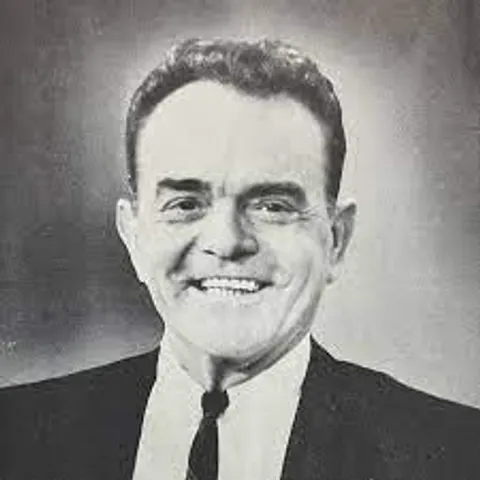 Born in Sulphur Rock, Arkansas, in 1911, he grew up with an alcoholic father and an unfaithful mother who lived with a series of men. “By the time I was twenty-one,” recalled Allen, “I was a nervous wreck. I couldn’t get a cigarette to my lip with one hand. . . . I was a confirmed drunkard.” (Lexie Allen, God’s Man of Faith and Power, p57, 1954). Two years later he served a jail sentence for stealing corn in the midst of the depression and thought of himself as “an ex-jailbird drifting aimlessly through life.” It was at this point that Allen was converted in a “tongues speaking” Methodist church in 1934 He met his wife, Lexie in Colorado and she became a powerful influence in shaping him for his future ministry.
Licensed by the Assemblies of God as a minister in 1936 began an effective evangelistic ministry at a small church in Colorado. After a two year pastorate he spent four-and-a-half years during World War II, as a full-time revivalist. He was the worship leader, musician and preacher but low finances and mediocre results took their toll on this father of four children. He left the itinerant ministry in 1947 when he was offered the security of a pastorate in a stable Assemblies of God church in Corpus Christi, Texas.
Soon after moving to Texas he heard news of the revival and read a copy of ‘The Voice of Healing’ magazine which he found incredulous and labelled the revivalists “fanatics.” However, in 1949, he attended an Oral Roberts campaign in Dallas where he was enthralled by Roberts’ power over the audience and left convinced that the revival was from God
Back in Texas, when his church board refused to sponsor a radio program, he resigned and began conducting revivals again with the hope that he too might develop a major healing ministry. In, He sent his first report to The Voice of Healing in May 1950, from Oakland, California, “Many say this is the greatest Revival in the history of Oakland” in what was to become typical AAA style.
He said, “Although I do not claim to possess the gift of healing, hundreds are being miraculously healed in this meeting of every known disease. I do not claim to possess a single gift of the Spirit nor to have the power to impart any gift to others, yet in this meeting, as well as in other recent meetings, all the gifts of the Spirit are being received and exercised night after night. (The Voice of Healing May 1950)
Observing the burgeoning ministry of others he noticed that the evangelists who were drawing the largest crowds were doing so under canvas. In the summer of 1951 joined the ranks of the tent ministries giving a down payment and commitment to pay off the remaining amount as the ministry grew – and it did. He established his headquarters in Dallas and in 1953 launched the Allen Revival Hour on radio. He conducted overseas campaigns in Cuba and Mexico regularly, and by1955 was broadcasting on seventeen Latin American radio stations as well as eighteen American ones.
Allen’s sanguine personality expressed itself in his enthusiastic reports, unparalleled showmanship and startling miraculous claims. He was a persuasive preacher, with a compelling presence and unusual empathy and rapport with the common people. He preached an old-time Pentecostal message with consummate skill. His message of holiness resonated in the hearts of those reared in austere Pentecostalism.
His stage presence and theatrical approach endeared him to the economically deprived working class and also to black communities. Ever the showman he made religion enjoyable and church-going fun.
But, above all, it was the power of God which attracted the huge audiences over the years. Thousands were converted in the midst of dramatic public healings and deliverances from evil spirits. Nothing was ‘done in a corner’ but all was employed to support the message that Jesus was alive and interested in the needs of ordinary people.
A. A. Allen considered himself the most persecuted preacher in the world. The Assemblies of God were not happy with his apparently questionable, or at least exaggerated, claims. His readiness to publicly counter-attack his accusers brought a continual stream of criticism and alienation from mainline Pentecostals.
But the accusation that he drank abusively was the straw that broke the camel’s back. In the fall 1955, he was arrested for drunken driving while conducting a revival in Knoxville, Tennessee. The local press took the opportunity to attack and expose Allen and the beleaguered minister forfeited his bail rather than stand trial on the charge.
Whatever the truth was Allen called the incident an “unprecedented persecution” aimed at ruining his ministry. As always he employed even the worst accusations to reinforce his claims that his commitment to God’s work in God’s way was truly from heaven, despite the fact that the Devil continually tried to destroy his ministry. His Miracle Magazine published his defense:
Allen declares that all this is but a trick of the devil to try to kill his ministry and his influence among his friends at a time when God has granted him greater miracles in his ministry than ever before. . . . If ministers pay the price of real MIRACLES today, they will meet with greater persecution than ever before. The only way to escape such persecution is to fold up and quit! But we are going on! Will you go on with us? (Miracle Magazine October, 1955)
Gordon Lindsay felt that the Voice of Healing had to take “a strong stand on ethics.” Allen resigned from the group, pre-empting their imminent dismissal. He immediately began publishing his own magazine, and, although he affected a cordial relationship with his former colleagues in the Voice of Healing, feelings remained strained.
In some ways independence suited Allen. His daughter recalled:
The Knoxville event also led to Allen’s separation from the Assemblies of God. It was suggested that he “withdraw from the public ministry until the matter at Knoxville be settled.” Allen’s response was to surrender his credentials as “a withdrawal from public ministry at this time would ruin my ministry, for it would have the appearance of an admission of guilt.”
By the mid-1950’s many of the more moderate ministers tried to continue to work with the Pentecostal denominations – or at least to remain friendly – but Allen repeatedly attacked organized religion and urged Pentecostal ministers to establish independent churches which would be free to support the revival. He charged that the Sunday school had replaced the altar in the Pentecostal churches and that few church members were filled with the Holy Ghost:
“Revivals are almost a thing of the past. Many pastors, and even evangelists, declare they will never try another one. They say it doesn’t work. They are holding “Sunday School Conventions,” “Teacher Training Courses,” and social gatherings. With few exceptions the churches today are leaning more and more toward dependence upon organizational strength, and natural ability, and denominational “methods.” They no longer expect to get their increase through the old fashioned revival altar bench, or through the miracle working power of God, but rather through the Sunday School.”
In fall 1956, Allen announced the formation of the Miracle Revival Fellowship, an alternative fellowship intended to license independent ministers and to support missions. Theologically, the fellowship welcomed all who accepted “the concept that Christ is the only essential doctrine.” Allen urged laymen as well as ministers to join his fellowship, through his “Every Member an Exhorter plan.” Although Allen announced that “MRF is not interested in dividing churches,” he also disclosed that “the purpose of this corporation shall be to encourage the establishing and the maintenance of independent local, sovereign, indigenous, autonomous churches.” The fellowship listed more than 500 ministers in its “first ordination
Interestingly, as other ministries were struggling and the revival was waning, Allen’s charisma and ministry skills coupled with well-staged revivals and an amazingly gifted team, enabled him to re-establish his ministry and rebuild a substantial and effective work.
Miracle Magazine was resounding success. At the end of a year’s publication in 1956, it had a paid subscription of about 200,000,and, according to Mrs. Allen, was “the fastest growing subscription magazine in the world today.” In 1957, Allen began conducting the International Miracle Revival Training Camp, an embryonic ministerial training centre. In 1958, he was given land in Arizona where he began building a permanent headquarters and training centre. At the height of the 1958 crisis in the revival, Allen announced a five-pronged program for his ministry: tent revivals, the Allen Revival Hour radio broadcast, an overseas mission program, the Miracle Valley Training Centre, and a “great number of dynamic books and faith inspiring tracts” published by the ministry. In 1958, Allen purchased Jack Coe’s old tent and proudly announced that he was moving into the “largest tent in the world.” His old-time revivalism, up-beat gospel music and anointed entertainers continued to attract the masses.
Allan died at the Jack Tar Hotel in San Francisco, California on June 11, 1970 at the age of 59. Some claim that Allen died an alcoholic because the coroner’s report concluded Allen died from liver failure brought on by acute alcoholism. Others know that he had battled with excruciating pain from severe arthritis in his knees, for over a year. It is true that Allen had undergone surgery on one of his knees and in June of 1970, was considering surgery on the other knee. They believe that the Coroner’s Report of “fatty infiltration of the liver” was a result of the few times he used alcohol in his last days to alleviate the excruciating pain of his arthritis.
Whatever is true of his death the life of A. A. Allen was one of extraordinary commitment to Jesus Christ which brought victory over the enemy of mankind. A. A. Allen was a true survivor. Even though the revival was declining in the late 1950’s and 1960’s his commitment to old-time faith-healing campaigns ensured the continuing testimony of signs and wonders to the next generation. He may have had his personal ‘quirks and foibles’ but the testimony of thousands of the blessing they received, the enduring love for God that resulted and the demonstration of the power of the Gospel are good reasons to give God thanks for such an amazing life!
Born in Sulphur Rock, Arkansas, in 1911, he grew up with an alcoholic father and an unfaithful mother who lived with a series of men. “By the time I was twenty-one,” recalled Allen, “I was a nervous wreck. I couldn’t get a cigarette to my lip with one hand. . . . I was a confirmed drunkard.” (Lexie Allen, God’s Man of Faith and Power, p57, 1954). Two years later he served a jail sentence for stealing corn in the midst of the depression and thought of himself as “an ex-jailbird drifting aimlessly through life.” It was at this point that Allen was converted in a “tongues speaking” Methodist church in 1934 He met his wife, Lexie in Colorado and she became a powerful influence in shaping him for his future ministry.
Licensed by the Assemblies of God as a minister in 1936 began an effective evangelistic ministry at a small church in Colorado. After a two year pastorate he spent four-and-a-half years during World War II, as a full-time revivalist. He was the worship leader, musician and preacher but low finances and mediocre results took their toll on this father of four children. He left the itinerant ministry in 1947 when he was offered the security of a pastorate in a stable Assemblies of God church in Corpus Christi, Texas.
Soon after moving to Texas he heard news of the revival and read a copy of ‘The Voice of Healing’ magazine which he found incredulous and labelled the revivalists “fanatics.” However, in 1949, he attended an Oral Roberts campaign in Dallas where he was enthralled by Roberts’ power over the audience and left convinced that the revival was from God
Back in Texas, when his church board refused to sponsor a radio program, he resigned and began conducting revivals again with the hope that he too might develop a major healing ministry. In, He sent his first report to The Voice of Healing in May 1950, from Oakland, California, “Many say this is the greatest Revival in the history of Oakland” in what was to become typical AAA style.
He said, “Although I do not claim to possess the gift of healing, hundreds are being miraculously healed in this meeting of every known disease. I do not claim to possess a single gift of the Spirit nor to have the power to impart any gift to others, yet in this meeting, as well as in other recent meetings, all the gifts of the Spirit are being received and exercised night after night. (The Voice of Healing May 1950)
Observing the burgeoning ministry of others he noticed that the evangelists who were drawing the largest crowds were doing so under canvas. In the summer of 1951 joined the ranks of the tent ministries giving a down payment and commitment to pay off the remaining amount as the ministry grew – and it did. He established his headquarters in Dallas and in 1953 launched the Allen Revival Hour on radio. He conducted overseas campaigns in Cuba and Mexico regularly, and by1955 was broadcasting on seventeen Latin American radio stations as well as eighteen American ones.
Allen’s sanguine personality expressed itself in his enthusiastic reports, unparalleled showmanship and startling miraculous claims. He was a persuasive preacher, with a compelling presence and unusual empathy and rapport with the common people. He preached an old-time Pentecostal message with consummate skill. His message of holiness resonated in the hearts of those reared in austere Pentecostalism.
His stage presence and theatrical approach endeared him to the economically deprived working class and also to black communities. Ever the showman he made religion enjoyable and church-going fun.
But, above all, it was the power of God which attracted the huge audiences over the years. Thousands were converted in the midst of dramatic public healings and deliverances from evil spirits. Nothing was ‘done in a corner’ but all was employed to support the message that Jesus was alive and interested in the needs of ordinary people.
A. A. Allen considered himself the most persecuted preacher in the world. The Assemblies of God were not happy with his apparently questionable, or at least exaggerated, claims. His readiness to publicly counter-attack his accusers brought a continual stream of criticism and alienation from mainline Pentecostals.
But the accusation that he drank abusively was the straw that broke the camel’s back. In the fall 1955, he was arrested for drunken driving while conducting a revival in Knoxville, Tennessee. The local press took the opportunity to attack and expose Allen and the beleaguered minister forfeited his bail rather than stand trial on the charge.
Whatever the truth was Allen called the incident an “unprecedented persecution” aimed at ruining his ministry. As always he employed even the worst accusations to reinforce his claims that his commitment to God’s work in God’s way was truly from heaven, despite the fact that the Devil continually tried to destroy his ministry. His Miracle Magazine published his defense:
Allen declares that all this is but a trick of the devil to try to kill his ministry and his influence among his friends at a time when God has granted him greater miracles in his ministry than ever before. . . . If ministers pay the price of real MIRACLES today, they will meet with greater persecution than ever before. The only way to escape such persecution is to fold up and quit! But we are going on! Will you go on with us? (Miracle Magazine October, 1955)
Gordon Lindsay felt that the Voice of Healing had to take “a strong stand on ethics.” Allen resigned from the group, pre-empting their imminent dismissal. He immediately began publishing his own magazine, and, although he affected a cordial relationship with his former colleagues in the Voice of Healing, feelings remained strained.
In some ways independence suited Allen. His daughter recalled:
The Knoxville event also led to Allen’s separation from the Assemblies of God. It was suggested that he “withdraw from the public ministry until the matter at Knoxville be settled.” Allen’s response was to surrender his credentials as “a withdrawal from public ministry at this time would ruin my ministry, for it would have the appearance of an admission of guilt.”
By the mid-1950’s many of the more moderate ministers tried to continue to work with the Pentecostal denominations – or at least to remain friendly – but Allen repeatedly attacked organized religion and urged Pentecostal ministers to establish independent churches which would be free to support the revival. He charged that the Sunday school had replaced the altar in the Pentecostal churches and that few church members were filled with the Holy Ghost:
“Revivals are almost a thing of the past. Many pastors, and even evangelists, declare they will never try another one. They say it doesn’t work. They are holding “Sunday School Conventions,” “Teacher Training Courses,” and social gatherings. With few exceptions the churches today are leaning more and more toward dependence upon organizational strength, and natural ability, and denominational “methods.” They no longer expect to get their increase through the old fashioned revival altar bench, or through the miracle working power of God, but rather through the Sunday School.”
In fall 1956, Allen announced the formation of the Miracle Revival Fellowship, an alternative fellowship intended to license independent ministers and to support missions. Theologically, the fellowship welcomed all who accepted “the concept that Christ is the only essential doctrine.” Allen urged laymen as well as ministers to join his fellowship, through his “Every Member an Exhorter plan.” Although Allen announced that “MRF is not interested in dividing churches,” he also disclosed that “the purpose of this corporation shall be to encourage the establishing and the maintenance of independent local, sovereign, indigenous, autonomous churches.” The fellowship listed more than 500 ministers in its “first ordination
Interestingly, as other ministries were struggling and the revival was waning, Allen’s charisma and ministry skills coupled with well-staged revivals and an amazingly gifted team, enabled him to re-establish his ministry and rebuild a substantial and effective work.
Miracle Magazine was resounding success. At the end of a year’s publication in 1956, it had a paid subscription of about 200,000,and, according to Mrs. Allen, was “the fastest growing subscription magazine in the world today.” In 1957, Allen began conducting the International Miracle Revival Training Camp, an embryonic ministerial training centre. In 1958, he was given land in Arizona where he began building a permanent headquarters and training centre. At the height of the 1958 crisis in the revival, Allen announced a five-pronged program for his ministry: tent revivals, the Allen Revival Hour radio broadcast, an overseas mission program, the Miracle Valley Training Centre, and a “great number of dynamic books and faith inspiring tracts” published by the ministry. In 1958, Allen purchased Jack Coe’s old tent and proudly announced that he was moving into the “largest tent in the world.” His old-time revivalism, up-beat gospel music and anointed entertainers continued to attract the masses.
Allan died at the Jack Tar Hotel in San Francisco, California on June 11, 1970 at the age of 59. Some claim that Allen died an alcoholic because the coroner’s report concluded Allen died from liver failure brought on by acute alcoholism. Others know that he had battled with excruciating pain from severe arthritis in his knees, for over a year. It is true that Allen had undergone surgery on one of his knees and in June of 1970, was considering surgery on the other knee. They believe that the Coroner’s Report of “fatty infiltration of the liver” was a result of the few times he used alcohol in his last days to alleviate the excruciating pain of his arthritis.
Whatever is true of his death the life of A. A. Allen was one of extraordinary commitment to Jesus Christ which brought victory over the enemy of mankind. A. A. Allen was a true survivor. Even though the revival was declining in the late 1950’s and 1960’s his commitment to old-time faith-healing campaigns ensured the continuing testimony of signs and wonders to the next generation. He may have had his personal ‘quirks and foibles’ but the testimony of thousands of the blessing they received, the enduring love for God that resulted and the demonstration of the power of the Gospel are good reasons to give God thanks for such an amazing life!
a place to eat, sleep, and watch: emptiness in the modern household
I wondered if the editors at The New York Times realized the irony in the title “The Pandemic Created a Child-Care Crisis. Mothers Bore the Burden.” Working mothers, who once bore their children in the womb, were forced by the pandemic to now bear what was called the burden of their children’s care. In response to this “child-care crisis,” the author writes, mothers “became the default solution.” Forced from work back into the home, “forgotten and shunted to the sidelines,” these women waited for their kids to get vaccinated before returning them to daycares and schools. The milestone reached in January 2019 — when women outnumbered men in the workforce for the first time in American history — crumbled before the triumph could be fully enjoyed: Men, once again, hold the majority. Only 56 percent of women are working for pay — the lowest since the mid-eighties. At stake for these working mothers, the author claims, is not simply a paycheck, but self-determination, self-reliance, and the survival of their complex selves. As this childcare crisis lingered over weeks and months, “the shock turned to despair at the drudgery of the days, the loss of their professional purpose, the lack of choice in it all.” Some of the women interviewed for the article expressed sentiments like, “I love everything about motherhood, and yet it doesn’t feel fair that I should have to sacrifice my career.” Others asked, “We think we’ve progressed so much, and then this pandemic happens and we all just revert back to these traditional behaviors. . . . And this is a good moment to reflect, why do we do that?” Have we arrived at the bottom when the Times sees nothing amiss in including the example of a mother who walks dogs professionally, wanting out of full-time mothering in preference to being “out and dirty with animals”? Rather outside with dogs than inside with her kids. Much is amiss in our society and our families, as the article displays without realizing it. But instead of criticizing the disagreeable, I would actually like to defend these women and some of their sense of misfortune. The loss is greater than they suppose, and it includes us all, for it includes the household. Productive Women Have you ever considered how industrious and productive the Proverbs 31 woman is — how much work she has accomplished? Over the course of a lifetime, this woman not only has raised admiring children in the instruction of the Lord, but has sought wool and flax, and worked with willing hands; brought her family food from afar; considered fields and bought them; planted a vineyard; dressed herself in strength; considered her merchandise with regard to profit; labored throughout the night; made bed coverings and clothes for winter; sold homemade garments and linens; contributed to the needs of the poor; labored such that her husband was respected in public; and not bowed to idleness or inactivity. Was she a stay-at-home mother or a working woman? Yes. “The modern home, in many respects, is hollow.” Her duties toward the people of her home required production for her home. She was not forced to choose between them. Her ideal was to love her husband and children and to contribute her gifts and ingenuity to the production of the household. She did not replace Dad as primary worker, but she did work alongside him, in different ways in different seasons, to help build and manage their realm. When we read of women who express a distaste for confinement to the realm of the household, thinking of it as a sort of dungeon, we can hear in their complaint a groan that the household is not what it is supposed to be. The productivity, the ingenuity, the purposefulness — for mother and all members involved — no longer exists as it once did within the household. The modern home, in many respects, is hollow. Though filled with more goods than ever, it has been emptied of purpose. Place to Eat, Sleep, and Watch The modern family can be described, simplistically, in terms of the household after the Industrial Revolution. During the mechanization and technological advancement of the world, work left the home — and men with it. This transition dealt a severe blow to the household as containing family business, as a productive realm. C.R. Wiley writes, We don’t think of our households as centers of productive work. That’s because the economy has largely moved out of the house. During the industrial revolution steady work in factories replaced the home economy, and many people were forced to leave home to make a living. In the process the household was reduced to what we think of today — a haven in a heartless world — a place to sleep and eat and maybe watch television. ( Man of the House , 31) In the preface to Wiley’s book The Household and the War for the Cosmos , Nancy Pearcey describes some of the effects that followed the exodus of men and work from the home: Education moved from the home to schools. Care of the elderly and sick went from the home to institutions. Grandparents and singles moved out to separate houses and apartments. Recreation allured beyond family bounds or became a privatized enjoyment. Family devotions, even, migrated from the home to churches and youth groups. The home grew thin. Its functions that tied members together were outsourced. People were emptied (extended family, singles, sick, and school-aged children), productivity left (home industry, education of children, good works in the community), and with it all, much of its purpose fled. What remained for mothers? Housework and early childcare. Of course, neither housework nor childcare is a small matter — especially not childcare. Chesterton was exactly right not to pity Mrs. Jones, the former teacher and now stay-at-home mother, for the “smallness” of taking care of her children: How can it be a large career to tell other people’s children about the Rule of Three, and a small career to tell one’s own children about the universe? How can it be broad to be the same thing to everyone, and narrow to be everything to someone? No; a woman’s function is laborious, but because it is gigantic, not because it is minute. I will pity Mrs. Jones for the hugeness of her task; I will never pity her for its smallness. ( What’s Wrong with the World? 95) Nevertheless, as production, people, and purpose have been outsourced to specialists — including ever-growing Father State — a loss has occurred. The modern mother has fallen from homeschool educator, industrious worker, healthcare provider, helper of the poor and elderly, and host to doing good for those in the community, to being tempted to insignificance and invited to send even her infant children out of the home and into daycare. Emptiness We All Feel Not just the mother has been affected. The father went from the head leading a body, engaged in the education of children, the care of the elderly, the production of a family business, the passing on of a family trade, the shepherding of souls, the defense of the community, the regulating of relations between members, and the representation of the family in society, to the one who spends vast time away from his home, working for another’s household (a corporation or the government), giving what little he has left to his family when he returns. The son went from heir of the family business, steward of the household responsibilities, co-laborer with his brothers, and recipient of discipleship from his father, to one who plays video games and charts his own path in his late teens. The daughter went from early preparation for marriage, learning from a mother how to be self-controlled, pure, working at home, kind, strong in her various realms of competency, building the household with her mother and siblings, being what Chesterton called the great universalist, competent in many different things, to being trained as a specialist away from her mother. The elderly went from honored and provided for to regularly forgotten. Singles went from their father’s house to their own, often greeted nightly by loneliness. The orphan and widow became dependent on the state. Learning from the Past I do not mean to idealize the ancient family or say that the modern family is in every way inferior. The pages of Scripture include records of deep brokenness in premodern families, even in families of great men and women of faith. Nor am I suggesting that a return to the past is possible (or even desirable). But I am suggesting that our frantic, detached, emptied, individualistic ideals of what a family should be stand to learn from times past. Ancient ideals can be reforged and remembered and reappropriated to match the new times and new challenges of today. The family can be bonded by more than mere sentiment and consumption, but by meaningful mission and output. One of the benefits of our modern situation, in fact, is how quickly reformation can happen. While a robust vision of reformation would require far more space, here are a few ways I’ve seen others (or tried myself) to bring people, production, and purpose back into the home. People. Guard family rhythms like eating dinner together and going to church together. Schedule routine times to have neighbors, family, or church members in your home. For those who are able, consider living near (or with) your parents and extended family. Consider how you can be a blessing to them in their old age. Other ideas include inviting singles and widows over for family meals, trying homeschooling or hand-in-hand structures that leave responsibility with the parents as well as teachers, and having the father work some from home if possible. And of course, the most obvious way to fill your home with people is to have children. “Perhaps the pandemic didn’t so much create a childcare crisis as expose a household one.” Production. Consider the talents and passions in the home (especially of the wife and young adults), and dream together about a family business. I know a family who has a T-shirt printing company in their garage, a family who does Airbnb, a family who gives music lessons, and a family who grows a vegetable garden and sells the produce. If you have sons, consider something like lawn mowing or snow shoveling. Consider bigger investments, such as real estate. Consider foremost how you can invest riches in heaven through creative ways of blessing your local church and those in your community. Purpose. Consider developing a family creed to give direction to decisions. Consider family goals for now, later, and beyond. Establish the priorities of the home and how each member fits into them. Limit screen time and awaken the lost discipline of family worship. Envision how your family can strengthen your local church and serve missionaries overseas. New purpose can invigorate the Christian family to address the fact that perhaps the pandemic didn’t so much create a childcare crisis as expose a household one and gave us a fresh opportunity to find solutions.