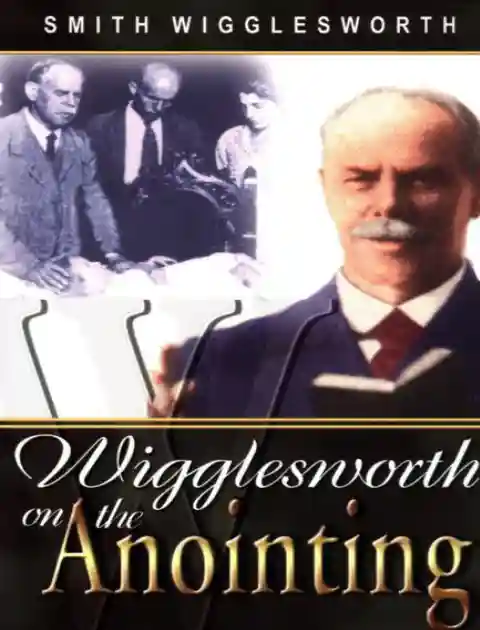

Smith Wigglesworth On The Anointing Order Printed Copy
- Author: Smith Wigglesworth
- Size: 1.27MB | 198 pages
- |
Others like smith wigglesworth on the anointing Features >>
Understanding The Anointing
Surviving The Anointing

The Torch And The Sword
The Sins Of The Mouth
Bonhoeffer On The Christian Life
Basic Elements Of The Christian Life Vol II

Steps To The Anointing
Faith: Law Of The New Covenant
Smith Wigglesworth On The Holy Spirit
The Assignment Vol 2: The Anointing And The Adversity
About the Book
"Smith Wigglesworth on the Anointing" is a collection of sermons and teachings by Smith Wigglesworth, a prominent Pentecostal evangelist known for his powerful ministry and miraculous healings. The book focuses on the importance of the anointing of the Holy Spirit in the life of a believer, providing insights and practical advice on how to cultivate and walk in the Spirit's power. Wigglesworth's teachings emphasize the need for faith, obedience, and intimacy with God in order to experience the fullness of the anointing.
David Livingstone
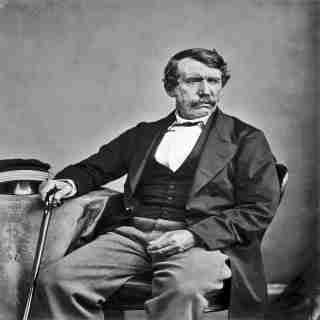 "[I am] serving Christ when shooting a buffalo for my men or taking an observation, [even if some] will consider it not sufficiently or even at all missionary."
With four theatrical words, "Dr. Livingstone, I presume?"—words journalist Henry Morton Stanley rehearsed in advance—David Livingstone became immortal. Stanley stayed with Livingstone for five months and then went off to England to write his bestseller, How I Found Livingstone. Livingstone, in the meantime, got lost again—in a swamp literally up to his neck. Within a year and a half, he died in a mud hut, kneeling beside his cot in prayer.
Berlin Congress spurs African independent churches
The whole civilized world wept. They gave him a 21-gun salute and a hero's funeral among the saints in Westminster Abbey. "Brought by faithful hands over land and sea," his tombstone reads, "David Livingstone: missionary, traveler, philanthropist. For 30 years his life was spent in an unwearied effort to evangelize the native races, to explore the undiscovered secrets, and to abolish the slave trade." He was Mother Teresa, Neil Armstrong, and Abraham Lincoln rolled into one.
Highway man
At age 25, after a childhood spent working 14 hours a day in a cotton mill, followed by learning in class and on his own, Livingstone was captivated by an appeal for medical missionaries to China. As he trained, however, the door to China was slammed shut by the Opium War. Within six months, he met Robert Moffat, a veteran missionary of southern Africa, who enchanted him with tales of his remote station, glowing in the morning sun with "the smoke of a thousand villages where no missionary had been before."
For ten years, Livingstone tried to be a conventional missionary in southern Africa. He opened a string of stations in "the regions beyond," where he settled down to station life, teaching school and superintending the garden. After four years of bachelor life, he married his "boss's" daughter, Mary Moffat.
From the beginning, Livingstone showed signs of restlessness. After his only convert decided to return to polygamy, Livingstone felt more called than ever to explore. During his first term in South Africa, Livingstone made some of the most prodigious—and most dangerous—explorations of the nineteenth century. His object was to open a "Missionary Road"—"God's Highway," he also called it—1,500 miles north into the interior to bring "Christianity and civilization" to unreached peoples.
Explorer for Christ
On these early journeys, Livingstone's interpersonal quirks were already apparent. He had the singular inability to get along with other Westerners. He fought with missionaries, fellow explorers, assistants, and (later) his brother Charles. He held grudges for years. He had the temperament of a book-reading loner, emotionally inarticulate except when he exploded with Scottish rage. He held little patience for the attitudes of missionaries with "miserably contracted minds" who had absorbed "the colonial mentality" regarding the natives. When Livingstone spoke out against racial intolerance, white Afrikaners tried to drive him out, burning his station and stealing his animals.
He also had problems with the London Missionary Society, who felt that his explorations were distracting him from his missionary work. Throughout his life, however, Livingstone always thought of himself as primarily a missionary, "not a dumpy sort of person with a Bible under his arms, [but someone] serving Christ when shooting a buffalo for my men or taking an observation, [even if some] will consider it not sufficiently or even at all missionary."
Though alienated from the whites, the natives loved his common touch, his rough paternalism, and his curiosity. They also thought he might protect them or supply them with guns. More than most Europeans, Livingstone talked to them with respect, Scottish laird to African chief. Some explorers took as many as 150 porters when they traveled; Livingstone traveled with 30 or fewer.
On an epic, three-year trip from the Atlantic Ocean to the Indian Ocean (reputedly the first by a European) Livingstone was introduced to the 1,700-mile-long Zambezi. The river was also home to Victoria Falls, Livingstone's most awe-inspiring discovery. The scene was "so lovely," he later wrote, that it "must have been gazed upon by angels in their flight."
Despite its beauty, the Zambezi was a river of human misery. It linked the Portuguese colonies of Angola and Mozambique, the main suppliers of slaves for Brazil, who in turn sold to Cuba and the United States. Though Livingstone was partially driven by a desire to create a British colony, his primary ambition was to expose the slave trade and cut it off at the source. The strongest weapon in this task, he believed, was Christian commercial civilization. He hoped to replace the "inefficient" slave economy with a capitalist economy: buying and selling goods instead of people.
The ill-fated Zambezi expedition
After a brief heroic return to England, Livingstone returned to Africa, this time to navigate 1,000 miles up the Zambezi in a brass-and-mahogany steamboat to establish a mission near Victoria Falls. The boat was state-of-the-art technology but proved too frail for the expedition. It leaked horribly after repeatedly running aground on sandbars.
Livingstone pushed his men beyond human endurance. When they reached a 30-foot waterfall, he waved his hand, as if to wish it away, and said, "That's not supposed to be there." His wife, who had just given birth to her sixth child, died in 1862 beside the river, only one of several lives claimed on the voyage. Two years later, the British government, which had no interest in "forcing steamers up cataracts," recalled Livingstone and his mission party.
A year later, he was on his way back to Africa again, this time leading an expedition sponsored by the Royal Geographical Society and wealthy friends. "I would not consent to go simply as a geographer," he emphasized, but as biographer Tim Jeal wrote, "It would be hard to judge whether the search for the Nile's source or his desire to expose the slave trade was his dominant motive." The source of the Nile was the great geographical puzzle of the day. But more important to Livingstone was the possibility of proving that the Bible was true by tracing the African roots of Judaism and Christianity.
For two years he simply disappeared, without a letter or scrap of information. He reported later that he had been so ill he could not even lift a pen, but he was able to read the Bible straight through four times. Livingstone's disappearance fascinated the public as much as Amelia Earhart's a few generations later.
When American journalist Henry Stanley found Livingstone, the news exploded in England and America. Papers carried special editions devoted to the famous meeting. In August 1872, in precarious health, Livingstone shook Stanley's hand and set out on his final journey.
When Livingstone had arrived in Africa in 1841, it was as exotic as outer space, called the "Dark Continent" and the "White Man's Graveyard." although the Portuguese, Dutch, and English were pushing into the interior, African maps had blank unexplored areas—no roads, no countries, no landmarks. Livingstone helped redraw the maps, exploring what are now a dozen countries, including South Africa, Rwanda, Angola, and the Republic of the Congo (formerly Zaire). And he made the West aware of the continuing evil of African slavery, which led to its being eventually outlawed.
"[I am] serving Christ when shooting a buffalo for my men or taking an observation, [even if some] will consider it not sufficiently or even at all missionary."
With four theatrical words, "Dr. Livingstone, I presume?"—words journalist Henry Morton Stanley rehearsed in advance—David Livingstone became immortal. Stanley stayed with Livingstone for five months and then went off to England to write his bestseller, How I Found Livingstone. Livingstone, in the meantime, got lost again—in a swamp literally up to his neck. Within a year and a half, he died in a mud hut, kneeling beside his cot in prayer.
Berlin Congress spurs African independent churches
The whole civilized world wept. They gave him a 21-gun salute and a hero's funeral among the saints in Westminster Abbey. "Brought by faithful hands over land and sea," his tombstone reads, "David Livingstone: missionary, traveler, philanthropist. For 30 years his life was spent in an unwearied effort to evangelize the native races, to explore the undiscovered secrets, and to abolish the slave trade." He was Mother Teresa, Neil Armstrong, and Abraham Lincoln rolled into one.
Highway man
At age 25, after a childhood spent working 14 hours a day in a cotton mill, followed by learning in class and on his own, Livingstone was captivated by an appeal for medical missionaries to China. As he trained, however, the door to China was slammed shut by the Opium War. Within six months, he met Robert Moffat, a veteran missionary of southern Africa, who enchanted him with tales of his remote station, glowing in the morning sun with "the smoke of a thousand villages where no missionary had been before."
For ten years, Livingstone tried to be a conventional missionary in southern Africa. He opened a string of stations in "the regions beyond," where he settled down to station life, teaching school and superintending the garden. After four years of bachelor life, he married his "boss's" daughter, Mary Moffat.
From the beginning, Livingstone showed signs of restlessness. After his only convert decided to return to polygamy, Livingstone felt more called than ever to explore. During his first term in South Africa, Livingstone made some of the most prodigious—and most dangerous—explorations of the nineteenth century. His object was to open a "Missionary Road"—"God's Highway," he also called it—1,500 miles north into the interior to bring "Christianity and civilization" to unreached peoples.
Explorer for Christ
On these early journeys, Livingstone's interpersonal quirks were already apparent. He had the singular inability to get along with other Westerners. He fought with missionaries, fellow explorers, assistants, and (later) his brother Charles. He held grudges for years. He had the temperament of a book-reading loner, emotionally inarticulate except when he exploded with Scottish rage. He held little patience for the attitudes of missionaries with "miserably contracted minds" who had absorbed "the colonial mentality" regarding the natives. When Livingstone spoke out against racial intolerance, white Afrikaners tried to drive him out, burning his station and stealing his animals.
He also had problems with the London Missionary Society, who felt that his explorations were distracting him from his missionary work. Throughout his life, however, Livingstone always thought of himself as primarily a missionary, "not a dumpy sort of person with a Bible under his arms, [but someone] serving Christ when shooting a buffalo for my men or taking an observation, [even if some] will consider it not sufficiently or even at all missionary."
Though alienated from the whites, the natives loved his common touch, his rough paternalism, and his curiosity. They also thought he might protect them or supply them with guns. More than most Europeans, Livingstone talked to them with respect, Scottish laird to African chief. Some explorers took as many as 150 porters when they traveled; Livingstone traveled with 30 or fewer.
On an epic, three-year trip from the Atlantic Ocean to the Indian Ocean (reputedly the first by a European) Livingstone was introduced to the 1,700-mile-long Zambezi. The river was also home to Victoria Falls, Livingstone's most awe-inspiring discovery. The scene was "so lovely," he later wrote, that it "must have been gazed upon by angels in their flight."
Despite its beauty, the Zambezi was a river of human misery. It linked the Portuguese colonies of Angola and Mozambique, the main suppliers of slaves for Brazil, who in turn sold to Cuba and the United States. Though Livingstone was partially driven by a desire to create a British colony, his primary ambition was to expose the slave trade and cut it off at the source. The strongest weapon in this task, he believed, was Christian commercial civilization. He hoped to replace the "inefficient" slave economy with a capitalist economy: buying and selling goods instead of people.
The ill-fated Zambezi expedition
After a brief heroic return to England, Livingstone returned to Africa, this time to navigate 1,000 miles up the Zambezi in a brass-and-mahogany steamboat to establish a mission near Victoria Falls. The boat was state-of-the-art technology but proved too frail for the expedition. It leaked horribly after repeatedly running aground on sandbars.
Livingstone pushed his men beyond human endurance. When they reached a 30-foot waterfall, he waved his hand, as if to wish it away, and said, "That's not supposed to be there." His wife, who had just given birth to her sixth child, died in 1862 beside the river, only one of several lives claimed on the voyage. Two years later, the British government, which had no interest in "forcing steamers up cataracts," recalled Livingstone and his mission party.
A year later, he was on his way back to Africa again, this time leading an expedition sponsored by the Royal Geographical Society and wealthy friends. "I would not consent to go simply as a geographer," he emphasized, but as biographer Tim Jeal wrote, "It would be hard to judge whether the search for the Nile's source or his desire to expose the slave trade was his dominant motive." The source of the Nile was the great geographical puzzle of the day. But more important to Livingstone was the possibility of proving that the Bible was true by tracing the African roots of Judaism and Christianity.
For two years he simply disappeared, without a letter or scrap of information. He reported later that he had been so ill he could not even lift a pen, but he was able to read the Bible straight through four times. Livingstone's disappearance fascinated the public as much as Amelia Earhart's a few generations later.
When American journalist Henry Stanley found Livingstone, the news exploded in England and America. Papers carried special editions devoted to the famous meeting. In August 1872, in precarious health, Livingstone shook Stanley's hand and set out on his final journey.
When Livingstone had arrived in Africa in 1841, it was as exotic as outer space, called the "Dark Continent" and the "White Man's Graveyard." although the Portuguese, Dutch, and English were pushing into the interior, African maps had blank unexplored areas—no roads, no countries, no landmarks. Livingstone helped redraw the maps, exploring what are now a dozen countries, including South Africa, Rwanda, Angola, and the Republic of the Congo (formerly Zaire). And he made the West aware of the continuing evil of African slavery, which led to its being eventually outlawed.
The Blissful and Trivial Life - How Entertainment Deprives a Soul
When we, as a society, stopped reading and started watching, we began thinking and talking less — at least with the same substance or effectiveness. That was the bright red flag Neil Postman began waving in the sixties, captured for future generations in his classic work, Amusing Ourselves to Death. The book was published in 1985, the year before I was born. With the introduction of the television, Postman observed, entertainment did not merely become a bigger and bigger part of our lives — it became our lives. And everything else in our lives — news, politics, education, even religion — was increasingly forced to perform on its stage. Suddenly, everything had to be entertaining. Newspapers gave way to “the nightly news”; classroom lessons made their way to Sesame Street; worship services transformed into televised concerts with TED talks. “The television slowly taught us that nothing was worth our time unless it was entertaining.” The television slowly taught us that nothing was worth our time unless it was entertaining. And anything entertaining, almost by definition, requires less of us — less thinking, less study, less work. Entertainment, after all, isn’t meant to be taken seriously. But when everything is entertainment, doesn’t that mean little, if anything, can be taken seriously? For those who take the glory of God seriously, and our joy in him seriously, that becomes a very serious question. What Will Ruin Society? Postman warned about this devolution long before others noticed what was happening. He writes, [George] Orwell warns that we will be overcome by an externally imposed oppression. But in [Aldous] Huxley’s vision, no Big Brother is required to deprive people of their autonomy, maturity, and history. As he saw it, people will come to love their oppression, to adore the technologies that undo their capacities to think. What Orwell feared were those who would ban books. What Huxley feared was that there would be no reason to ban a book, for there would be no one who wanted to read one. . . . In short, Orwell feared that what we hate will ruin us. Huxley feared that what we love will ruin us. This book is about the possibility that Huxley, not Orwell, was right. (Amusing Ourselves to Death, xix) When he wrote those words, television had only been around for thirty years (invented much earlier, but not common in households until the fifties). The internet would not become publicly available until the 90s. Social media didn’t come along for another fifteen years (and really didn’t become widespread until the iPhone in 2007, several years after Postman died). If Postman was right about the early years of television, how much more today — a day when we no longer have to schedule time to sit and watch our favorite shows, but carry our entertainment with us literally everywhere we go? If entertainment could control our lives from a small box in the living room, how much more so when it’s nearly surgically attached to us on our phones? Postman, I believe, was more correct than even he realized — and the implications are not just social or cultural, but spiritual. Irrelevance Binds Us What makes television such a terror to the collective mind of a culture? Postman begins by arguing that the “medium is the metaphor.” Meaning, any given medium — whether text, television, or social media — doesn’t only distribute content, but unavoidably shapes the content. How we consume, he argues, is as important as what we consume. Mediums determine how we take in information. For instance, over time typography (despite its own limitations) generally taught us to follow arguments, test conclusions, and expose contradiction. Television, by contrast, consistently does away with arguments, strips away context, and darts from one image to the next. Television, however, not only teaches us a new way to process information, but it also floods us with information and from far beyond our everyday lives. The telegraph, of course, had begun doing this with words long before the television, but notice what was happening then, even with the telegraph: In the information world created by telegraphy, everything became everyone’s business. For the first time, we were sent information which answered no question we had asked, and which, in any case, did not permit the right of reply. We may say then that the contribution of the telegraph to public discourse was to dignify irrelevance and amplify impotence. (68–69) For the most part, the kind of information that would interest people in both Los Angeles and Minneapolis, would need to be nonessential to life in either place (irrelevance), and all the more so with news from around the globe. Stories had to transcend ordinary life in a real place (part of the appeal for people looking to escape the malaise of ordinary life). And, for the most part, the information had to be the kind of information neither could do anything about (impotence). Postman asks a pointed question of all our media consumption: “How often does it occur that information provided you on morning radio or television, or in the morning newspaper, causes you to alter your plans for the day, or to take some action you would not otherwise have taken, or provides insight into some problem you are required to solve?” (68). Television only made the irrelevance that much more accessible and that much more appealing (actual images and videos of celebrities doing everyday activities as opposed to the short descriptions the telegraph could produce). And how much more is this the case through social media? We know more and more about our favorite athletes, actors, and musicians and yet often less and less about our neighbors and the places where we might actually make a difference. Worth a Thousand Images But isn’t a picture worth a thousand words? In 1921, the marketer Fred Bernard famously said so, promoting the use of images for advertising on the side of streetcars. He was probably right as far as streetcars go. If you want to make a memorable impression on someone in a couple seconds, by all means use a picture — but is this effective communication or just effective marketing? Maybe it’s more accurate to say a picture is worth a thousand more sales, or clicks, or likes. Even then, though, can a picture really convey what a consumer needs to know about a new phone, or clothing line, or dish soap? For serious shoppers, haven’t we learned that one coherent sentence of honest description might be worth a thousand pictures? Postman saw that as images overtake words as the dominant form of communication in a society, communication invariably suffers. “I will try to demonstrate that as typography move to the periphery of our culture and television takes to place at the center, the seriousness, clarity and, above all, value of public discourse dangerously declines” (29). We descend into “a vast triviality,” he says. We get sillier. As he attempts to summarize his warning to the ever-entertained, he says, “Our Ministry of Culture is Huxleyan, not Orwellian. It does everything possible to encourage us to watch continuously. But what we watch is a medium which presented information in a form that renders it simplistic, nonsubstantive, nonhistorical, and noncontextual; That is to say, information packaged as entertainment. In America, we are never denied the opportunity to amuse ourselves” (141). In the Beginning Was the Word According to Neil Postman, America (and much of the modern world) has laid our collective minds on the altar of entertainment. But why should followers of Christ care about television (or websites or social media)? Should we spend much time worrying about how much we watch and how little we read? Yes, because the fullest Christian life is firmly anchored in words and sentences and paragraphs. When God revealed himself to his chosen people, of all the infinite ways he could have done so, he chose to unveil himself with words. “Long ago, at many times and in many ways, God spoke to our fathers by the prophets, but in these last days he has spoken to us by his Son” (Hebrews 1:1–2). God didn’t build a gallery or start a YouTube channel, he wrote a Book (2 Timothy 3:16). “In the beginning was the Word. . . . And the Word became flesh and dwelt among us, and we have seen his glory, glory as of the only Son from the Father, full of grace and truth” (John 1:1, 14). From the beginning, God has put the Word, his Son, at the center of reality, and, in doing so, he has given words unusual power and importance in anticipating, explaining, and celebrating him. Yes, the heavens are declaring the glory of God (Psalm 19:1). Yes, his eternal power and divine nature have been seen, from the beginning, in the things that have been made (Romans 1:20). But “faith comes from hearing, and hearing through the word of Christ” (Romans 10:17). For now, faith looks “not to the things that are seen but to the things that are unseen. For the things that are seen are transient, but the things that are unseen are eternal” (2 Corinthians 4:18). And we look to the unseen through words. We may see God in mountains and oceans and galaxies, but we only know him savingly through sentences. He wrote the story that way. Serious Joy in Silly Days If the way we’re using entertainment erodes our ability to reflect, reason, and savor truth, it erodes our ability to know and enjoy Jesus. “Blessed is the man . . . [whose] delight is in the law of the Lord, and on his law he meditates day and night” (Psalm 1:1–2). If we lose the ability to think, we lose the ability to meditate. And if we lose the ability to meditate, we lose our path to meaningful happiness. The life of the mind, and heart, is a pivotal battleground in the pursuit of real and abundant life. “The life of the mind is a pivotal battleground in the pursuit of real and abundant life.” The medium is not the enemy — television and YouTube and Instagram are not the enemy. But if Postman was right, the medium can be wielded by our world, our flesh, and our enemy when we soak up entertainment and ignore the consequences. What, if any, of your entertainment habits need to be curbed or redirected for the sake of your soul? What are ways you are seeking to cultivate the spiritual gift of your mind — slower Bible study or memorization, reading substantive books, meaningful conversation with friends, more time in unhurried reflection and meditation? As we learn to guard and nurture our minds as our God-given pathways to God, the kinds of mindless entertainment that are undoing millions today will be far less appealing and far less dangerous. And we will find pleasures deeper, and far more enduring, than what we see on our screens. Article by Marshall Segal Staff writer, desiringGod.org