


Shaping Your Child's Spiritual Future Order Printed Copy
- Author: Tony Evans
- Size: 4.31MB | 13 pages
- |
Others like shaping your child's spiritual future Features >>

Healing Your Marriage When Trust Is Broken

Loving Your Spouse When You Feel Like Walking Away
How To Relate To Children

How To Learn To Love, Get Guidance, And Get Out Of Debt

No Matter What

A Husband After God's Own Heart

Finding Home - An Imperfect Path To Faith And Family

The Abcs Of A Beautiful Marriage

Positive Discipline For Teenagers

Oh This My Husband
About the Book
"Shaping Your Child's Spiritual Future" by Tony Evans is a guide for parents on how to raise their children with a strong foundation in faith. Evans provides practical advice and strategies for instilling biblical values, teaching children to pray, navigating challenges, and fostering a lifelong relationship with God. The book emphasizes the importance of parents taking an active role in their children's spiritual development and offers a roadmap for guiding them on their spiritual journey.
Kathryn Kuhlman
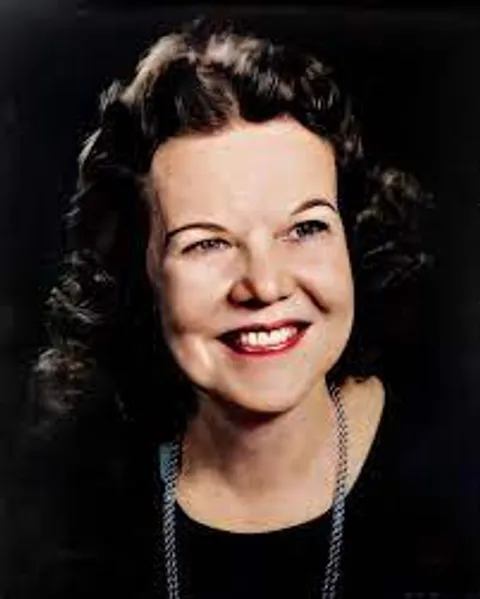 Kathryn Johanna Kuhlman was born on May 9, 1907, in Concordia, Missouri. Her parents were German and she was one of four children. Her mother was a harsh disciplinarian, who showed little love or affection. On the other hand, she had an extremely close and loving relationship with her father. She would describe, as a small child how, her father would come home from work and she would hang on his leg and cling to him. She often said that her relationship with God the Father was extremely real because of her relationship with her own father.
Kuhlman was converted, when she was 14, at an evangelistic meeting held in a small Methodist church. When she was 16 she graduated from high school, which only went to tenth grade in their town. He older sister Myrtle had married an itinerant evangelist, Everett B. Parrott. They spent their time traveling and asked that Kathryn could join them for the summer. Her parents agreed and she went to Oregon to help out. She worked with them, and often gave her testimony. When the summer was over she wanted to stay, and the couple agreed. She ended up working with them for five years.
The evangelistic team was made up of four people, Everette, Myrtle, Kathryn, and pianists named Helen Gulliford. In 1928 Everette missed a meeting in Boise, Idaho. Myrtle and Kathryn preached to cover for Everette. The pastor of the church encouraged Kathryn to step out on her own. Helen agreed to join her. Her first sermon was in a run-down pool hall in Boise, Idaho. The team covered Idaho, Utah, and Colorado for the following five years. In 1933 they moved into Pueblo, Colorado. They set up in an abandoned Montgomery Ward warehouse. They stayed there for six months.
Denver, being a much bigger city, was the next stop. They moved several times but ended up in a paper company's warehouse, which they named the Kuhlman Revival Tabernacle. Then in 1935 they moved once more to an abandoned truck garage they named the Denver Revival Tabernacle. Kathryn was seeing a lot of success in Denver. The church grew to about 2000 members. She began a radio show called "Smiling Through" and invited speakers from all over the country. One of them was Phil Kerr who taught on divine healing. In 1935 another invited evangelist was Burroughs Waltrip.
Waltrip was bad news for Kuhlman. He was a charismatic, handsome man several years older than she was. There was an immediate attraction, and one family claims to have seen the couple embracing in 1935, but he was married and had two children. Waltrip left Denver and went home to Austin, Texas, but the relationship simmered between Kuhlman and Waltrip. In 1937 he was invited back to Denver to take the pulpit for two months. Shortly after he divorced his wife and abandoned his two sons. He then spread the story that his wife had left him. He moved to Mason City, Iowa, where he told everyone he was single, and started a new ministry. Waltrip raised pledges of $70,000 to build a ministry building called Radio Chapel. It was state of the art with a disappearing pulpit and an art deco style. He appeared to be a successful and dynamic preacher.
There was an ongoing relationship between Kuhlman and Waltrip, and they married in September 1938. Kuhlman was naive about the consequences of her choices and the marriage was a disaster. She announced to her church that she and Waltrip were married and they would go between Denver and Mason City preaching at their two churches. Most of the people in her congregation left due to her relationship with Waltrip. She gave up her church in Denver, lost some of her closest associates, and moved to Mason City. Waltrip's success turned out to be a pipe dream as well. The Radio Chapel was completed in June of 1938. By October 1938 Waltrip could not meet his debts. In December Waltrip was demanding a higher salary, even with the shortfall in income. His Board of Directors quit and left him to deal with the finances. His solution was not to pay the mortgage or debts on the Chapel. Radio Chapel went into bankruptcy. Waltrip's last sermon was in May 1939. The Waltrips were on their own. Kathryn's happy vision of she and her husband flying back and forth between Denver and Mason City with a successful preaching careers was utterly demolished.
The next few years were very hard for the couple. They embarked on the road as traveling evangelists, primarily staying in the Midwest. They were not accepted in many places due to their marriage history. Initial advertisements listed Waltrip as the primary evangelist. Then occasionally Mrs. Waltrip was also mentioned. By the early 1940s Kathryn Kuhlman Waltrip was given equal billing. Finally by the mid-1940s Kathryn was using only Kathryn Kuhlman in meetings where she was the primary speaker. In 1944 Kuhlman went on an evangelistic tour on the east coast without Waltrip. It may have been a conscious decision to leave him, or she may also have taken the opportunity to reassess her life. It appears to have been more gradual as Waltrip wrote about them as a couple as late as 1946. Kuhlman never returned to Waltrip and they eventually divorced in 1947. She left her marriage behind and from then on acted as if it never existed in the first place.
In 1946 Kuhlman was asked to speak in Franklin, Pennsylvania. She was well received and decided to stay in the area. Kuhlman began preaching on radio broadcasts in Oil City, Pennsylvania. These became so popular they were picked up in Pittsburgh, and she was preaching throughout the area. She began to preach about the healing power of God. In 1947 a woman was healed of a tumor while listening to Kuhlman preach. Several Sundays later a man was also healed while she was teaching on the Holy Spirit. She was now convinced of God's healing work. One important thing to note is the context and timing of this breakout period in Kuhlman's life. 1947 was the beginning of the Healing Revival (sometimes referred to as the Latter Rain Revival) that would last for the next 10 years. What was happening in Kuhlman's meetings was breaking out across the United States. It was in this time frame that the Voice of Healing Ministry was established and men like William Branham, Oral Roberts, A.A. Allen and many others were propelled onto the public stage. Kuhlman was not associated with those groups, but stepped into the flow of what God's Spirit was doing across the nation and the world.
In 1948 Kuhlman held a series of meetings at Carnegie Hall in Pittsburgh. She eventually moved to Pittsburgh in 1950, and continued to hold meetings at Carnegie Hall until 1971. She was used by God to bring the charismatic message to many denominational churches, including the Catholic Church. (She received a lot of criticism over this and was accused of being a closet Catholic.) These were her best known years. Her style was flamboyant. She would hold her famous miracle services and the auditorium was filled to capacity every time. She was on radio and television shows. She was ordained in 1968 by the Evangelical Church Alliance. Hundreds of people were healed in her meetings, and even while listening to her on the radio or television. People she prayed for would often be hit with the power of God and be "slain in the Spirit." Kuhlman never claimed that she was the healer. She always pointed people to Jesus as their healer.
Kuhlman had been diagnosed with a heart problem in 1955. She kept a very busy schedule and overworked herself, especially in the 1970's. She traveled back and forth from Pittsburgh to Los Angeles frequently, as well as taking trips around the world. Her heart was enlarged and Kuhlman died on February 20, 1976, in Tulsa, following open-heart surgery. Videos of some of her services are still available and continue to be popular today.
Kathryn Johanna Kuhlman was born on May 9, 1907, in Concordia, Missouri. Her parents were German and she was one of four children. Her mother was a harsh disciplinarian, who showed little love or affection. On the other hand, she had an extremely close and loving relationship with her father. She would describe, as a small child how, her father would come home from work and she would hang on his leg and cling to him. She often said that her relationship with God the Father was extremely real because of her relationship with her own father.
Kuhlman was converted, when she was 14, at an evangelistic meeting held in a small Methodist church. When she was 16 she graduated from high school, which only went to tenth grade in their town. He older sister Myrtle had married an itinerant evangelist, Everett B. Parrott. They spent their time traveling and asked that Kathryn could join them for the summer. Her parents agreed and she went to Oregon to help out. She worked with them, and often gave her testimony. When the summer was over she wanted to stay, and the couple agreed. She ended up working with them for five years.
The evangelistic team was made up of four people, Everette, Myrtle, Kathryn, and pianists named Helen Gulliford. In 1928 Everette missed a meeting in Boise, Idaho. Myrtle and Kathryn preached to cover for Everette. The pastor of the church encouraged Kathryn to step out on her own. Helen agreed to join her. Her first sermon was in a run-down pool hall in Boise, Idaho. The team covered Idaho, Utah, and Colorado for the following five years. In 1933 they moved into Pueblo, Colorado. They set up in an abandoned Montgomery Ward warehouse. They stayed there for six months.
Denver, being a much bigger city, was the next stop. They moved several times but ended up in a paper company's warehouse, which they named the Kuhlman Revival Tabernacle. Then in 1935 they moved once more to an abandoned truck garage they named the Denver Revival Tabernacle. Kathryn was seeing a lot of success in Denver. The church grew to about 2000 members. She began a radio show called "Smiling Through" and invited speakers from all over the country. One of them was Phil Kerr who taught on divine healing. In 1935 another invited evangelist was Burroughs Waltrip.
Waltrip was bad news for Kuhlman. He was a charismatic, handsome man several years older than she was. There was an immediate attraction, and one family claims to have seen the couple embracing in 1935, but he was married and had two children. Waltrip left Denver and went home to Austin, Texas, but the relationship simmered between Kuhlman and Waltrip. In 1937 he was invited back to Denver to take the pulpit for two months. Shortly after he divorced his wife and abandoned his two sons. He then spread the story that his wife had left him. He moved to Mason City, Iowa, where he told everyone he was single, and started a new ministry. Waltrip raised pledges of $70,000 to build a ministry building called Radio Chapel. It was state of the art with a disappearing pulpit and an art deco style. He appeared to be a successful and dynamic preacher.
There was an ongoing relationship between Kuhlman and Waltrip, and they married in September 1938. Kuhlman was naive about the consequences of her choices and the marriage was a disaster. She announced to her church that she and Waltrip were married and they would go between Denver and Mason City preaching at their two churches. Most of the people in her congregation left due to her relationship with Waltrip. She gave up her church in Denver, lost some of her closest associates, and moved to Mason City. Waltrip's success turned out to be a pipe dream as well. The Radio Chapel was completed in June of 1938. By October 1938 Waltrip could not meet his debts. In December Waltrip was demanding a higher salary, even with the shortfall in income. His Board of Directors quit and left him to deal with the finances. His solution was not to pay the mortgage or debts on the Chapel. Radio Chapel went into bankruptcy. Waltrip's last sermon was in May 1939. The Waltrips were on their own. Kathryn's happy vision of she and her husband flying back and forth between Denver and Mason City with a successful preaching careers was utterly demolished.
The next few years were very hard for the couple. They embarked on the road as traveling evangelists, primarily staying in the Midwest. They were not accepted in many places due to their marriage history. Initial advertisements listed Waltrip as the primary evangelist. Then occasionally Mrs. Waltrip was also mentioned. By the early 1940s Kathryn Kuhlman Waltrip was given equal billing. Finally by the mid-1940s Kathryn was using only Kathryn Kuhlman in meetings where she was the primary speaker. In 1944 Kuhlman went on an evangelistic tour on the east coast without Waltrip. It may have been a conscious decision to leave him, or she may also have taken the opportunity to reassess her life. It appears to have been more gradual as Waltrip wrote about them as a couple as late as 1946. Kuhlman never returned to Waltrip and they eventually divorced in 1947. She left her marriage behind and from then on acted as if it never existed in the first place.
In 1946 Kuhlman was asked to speak in Franklin, Pennsylvania. She was well received and decided to stay in the area. Kuhlman began preaching on radio broadcasts in Oil City, Pennsylvania. These became so popular they were picked up in Pittsburgh, and she was preaching throughout the area. She began to preach about the healing power of God. In 1947 a woman was healed of a tumor while listening to Kuhlman preach. Several Sundays later a man was also healed while she was teaching on the Holy Spirit. She was now convinced of God's healing work. One important thing to note is the context and timing of this breakout period in Kuhlman's life. 1947 was the beginning of the Healing Revival (sometimes referred to as the Latter Rain Revival) that would last for the next 10 years. What was happening in Kuhlman's meetings was breaking out across the United States. It was in this time frame that the Voice of Healing Ministry was established and men like William Branham, Oral Roberts, A.A. Allen and many others were propelled onto the public stage. Kuhlman was not associated with those groups, but stepped into the flow of what God's Spirit was doing across the nation and the world.
In 1948 Kuhlman held a series of meetings at Carnegie Hall in Pittsburgh. She eventually moved to Pittsburgh in 1950, and continued to hold meetings at Carnegie Hall until 1971. She was used by God to bring the charismatic message to many denominational churches, including the Catholic Church. (She received a lot of criticism over this and was accused of being a closet Catholic.) These were her best known years. Her style was flamboyant. She would hold her famous miracle services and the auditorium was filled to capacity every time. She was on radio and television shows. She was ordained in 1968 by the Evangelical Church Alliance. Hundreds of people were healed in her meetings, and even while listening to her on the radio or television. People she prayed for would often be hit with the power of God and be "slain in the Spirit." Kuhlman never claimed that she was the healer. She always pointed people to Jesus as their healer.
Kuhlman had been diagnosed with a heart problem in 1955. She kept a very busy schedule and overworked herself, especially in the 1970's. She traveled back and forth from Pittsburgh to Los Angeles frequently, as well as taking trips around the world. Her heart was enlarged and Kuhlman died on February 20, 1976, in Tulsa, following open-heart surgery. Videos of some of her services are still available and continue to be popular today.
Souls Are Our Reward
Run the race. Fight the good fight. Finish strong. Obtain the prize. Many of the familiar catchphrases for Christian faithfulness and perseverance come from a couple memorable verses: Do you not know that in a race all the runners run, but only one receives the prize? So run that you may obtain it. Every athlete exercises self-control in all things. They do it to receive a perishable wreath, but we an imperishable. (1 Corinthians 9:24–25) When our faith begins to falter, or our spiritual disciplines wane, or our joy fades to a dim flicker, or our love grows cold, we need to be reminded to run. Even when it hurts, even when we want to give up, even when we’d rather do anything else. Any race with Jesus will be hard (Luke 9:23). Faith, hope, love, and joy may come freely by grace, but that does not mean they are always easy. The apostle Paul, knowing the costs and rigors of following Christ, reaches for this kind of rugged and strenuous imagery again and again (Philippians 3:12–14; 2 Timothy 4:7–8). What might surprise us — even those of us who have been running with Christ for decades now — is what race Paul really had in mind, at least in 1 Corinthians 9:24. When he held out that wreath of all wreaths, he had more in mind than our clinging to faith and persisting in private prayer. Run to Win The verses above come immediately after another familiar passage, which ends, I have become all things to all people, that by all means I might save some. I do it all for the sake of the gospel, that I may share with them in its blessings. Do you not know that in a race all the runners run, but only one receives the prize? So run that you may obtain it. (1 Corinthians 9:22–24) The race Paul was running (and calling us to run) was not merely about guarding the faith in our own hearts, but about pursuing that faith and joy in others. The race may look (very) different for us than it did for an unmarried apostle, but the race is still our race. Paul was running to win the lost, despite how much effort it required and how much it cost him. He was talking about aggressive mission, not merely secret devotion. And that race — becoming all things to all people that we might save some — can be even more demanding, confusing, and discouraging than nurturing our own relationship with God. Many more give up trying to win the lost than give up going to church or reading the Bible. “Winning souls fills and waters the soul like nothing else.” Paul knew that winning the lost often feels like the back half of a marathon in the heat of August. So, he reminded the church to keep running — not to lose heart or slow down, but to press through to the end. Keep taking risks and making sacrifices to share, keep enduring the inevitable rejection and hostility, and, above all, keep praying for the lost. Keep running. Four Reasons to Run Well The apostle knew how much resistance we face in evangelism. Remember that he was hunted by murderers, stoned by crowds, beaten with rods, and almost flogged to death for trying to win people to Jesus. More than almost anyone, he knew how many incentives there were not to go and make disciples. But he also knew there were even more incentives to choose faithfulness and embrace suffering along the dangerous roads of soul-winning. He shares at least four of those incentives right here in 1 Corinthians 9. NEW JOY Perhaps nothing drove the soul-winning apostle more than the thought of one more sinner, even just one, being brought from the horrors of death and judgment to the heights of life and joy in Christ (2 Corinthians 1:24). “I have become all things to all people, that by all means I might save some” (1 Corinthians 9:22). Some. Notice how modest he (even he!) is about his goals in evangelism. And yet notice how driven he is: all things to all people by all means. The threefold all expresses the precious worth of the some, the unparalleled reward of seeing someone finally stumble upon their Treasure hidden in a field (Matthew 13:44). Winning souls fills and waters the soul like nothing else. Jesus himself says, “I tell you, there is joy before the angels of God over one sinner who repents” (Luke 15:10). If even one conversion sets heaven afire with joy, should it not thrill and motivate us? SHARED JOY The joy of seeing someone saved, however, is heightened further by the joy of enjoying Jesus with them (2 Timothy 1:4). “I do it all for the sake of the gospel,” Paul continues, “that I may share with them in its blessings” (1 Corinthians 9:23; Philippians 1:25). This incentive is wired into the heart of God himself — Father, Son, and Holy Spirit forever loving, sharing, enjoying, creating, saving together. It’s wired into the creation, which waits to share in “the freedom of the glory” waiting for us (Romans 8:21). And it’s wired into any real joy in us, because real joy is never content just to have, but must give and share. As Jesus says, “It is more blessed to give than to receive” (Acts 20:35). Has anyone modeled the ecstasy of shared joy more than the church in Macedonia? “In a severe test of affliction, their abundance of joy and their extreme poverty have overflowed in a wealth of generosity on their part” (2 Corinthians 8:2). What does abundant joy look like, even in extreme poverty? It looks like sharing. IMPERISHABLE JOY The clearest incentive to run well here, though, is the imperishable wreath waiting at the finish line. “Every athlete exercises self-control in all things. They do it to receive a perishable wreath, but we an imperishable” (1 Corinthians 9:25). So, what is this wreath? While Paul does not mention wreaths anywhere else in his letters, he does tell us more about the prize he covets. “What is our hope or joy or crown of boasting before our Lord Jesus at his coming?” he asks the Thessalonians. “Is it not you? For you are our glory and joy” (1 Thessalonians 2:19–20). And to the church at Philippi: “My brothers, whom I love and long for, my joy and crown, stand firm thus in the Lord, my beloved” (Philippians 4:1). His crown, his prize, his wreath on the last day will not be something he owns or wears; it will be the lives he saved, the joy he shared, the souls he won. And that wreath, unlike any wages or reward we might receive on earth, will live and grow and bloom long into eternity. How many of us spend our best time and effort, year after year, pursuing wreaths that perish, while failing to run for that which lasts forever? ASSURED JOY The last incentive, unlike the others, comes as a warning: “I do not run aimlessly; I do not box as one beating the air. But I discipline my body and keep it under control, lest after preaching to others I myself should be disqualified” (1 Corinthians 9:26–27). Along with the stunning rewards — new joy, shared joy, imperishable joy — fear also inspired Paul to love and pursue the lost. What will happen to me if I fail to prove faithful? He wanted the depth of assurance that comes through faithfully fulfilling his mission. The apostle knew he, even he, would be disqualified if he disobeyed what Jesus had called him to do — if he gave up running. And he knew men, even in ministry, who had been disqualified. He describes such men twice, with one sobering thread between them. He warns, People will be lovers of self, lovers of money, proud, arrogant, abusive, disobedient to their parents, ungrateful, unholy, heartless, unappeasable, slanderous, without self-control, brutal, not loving good, treacherous, reckless, swollen with conceit, lovers of pleasure rather than lovers of God, having the appearance of godliness, but denying its power. . . . These men also oppose the truth, men corrupted in mind and disqualified regarding the faith. (2 Timothy 3:2–5, 8) What’s startling (and frightening) about these men is that they were lovers of self, lovers of money, proud, arrogant, and abusive, yet they still had the appearance of godliness. They looked faithful while secretly indulging sin at the expense of others. They looked like they were running well when they were really only running from God. “Many more give up trying to win the lost than give up going to church or reading the Bible.” Paul mentions similar men elsewhere, who are “insubordinate, empty talkers, and deceivers” (Titus 1:10). “They profess to know God,” he says, “but they deny him by their works. They are detestable, disobedient, unfit” — “disqualified” — “for any good work” (Titus 1:16). The tragic thread between the two passages is that some profess to know Jesus, and even learn to act like Christians, and yet fail to ever truly run — to truly repent, believe, and treasure Jesus, and then make him known to others. And if we live like them, neglecting or ignoring what Christ demands of us, we too will be disqualified. “So,” Paul says, “I do not run aimlessly; I do not box as one beating the air. But I discipline my body and keep it under control” (1 Corinthians 9:26–27). He did everything he could to avoid their awful fate. Fear was not his sole motivation, or even his greatest motivation, but he feared the horrible cost of unfaithfulness — of skipping the race and abandoning the lost. So, he disciplined himself to run hard, and long, and well. And he called us to run with him. Article by Marshall Segal Staff writer, desiringGod.org

-1-480.webp)