
Others like restored Features >>
About the Book
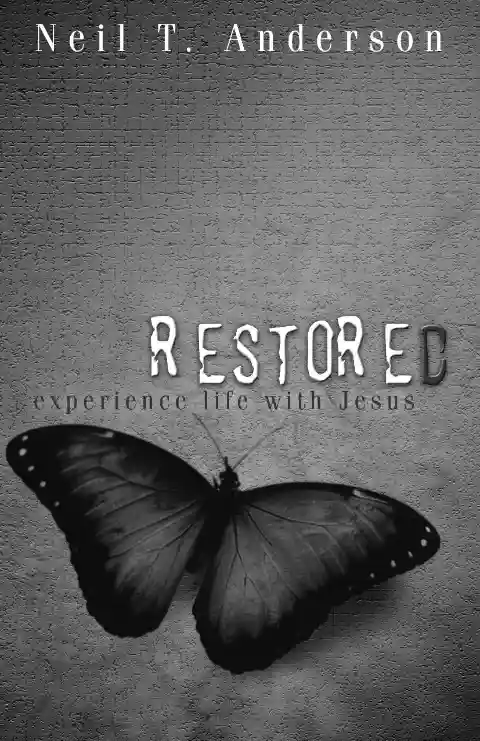
"Restored" by Neil T. Anderson is a transformative guidebook for understanding and overcoming emotional wounds, brokenness, and guilt through the power of Christ's redemption. The book offers practical steps and biblical principles for finding healing, restoration, and freedom from the past, leading readers towards a life of wholeness and renewed joy in their relationship with God.
Steven Curtis Chapman
Steven Curtis Chapman is an American Christian musician, singer, song writer, record producer, actor, author and social activist. He is the only artist in the history of music to have won 56 Gospel Music Association Dove Awards and is also a proud receiver of 5 Grammy Awards. His music is known for being a unique cross between country music, soft rock and orchestrated pop, which made him a prominent artist in the contemporary Christian music circuit of the 1980s. Chapman grew up in a humble environment where he found his calling for music, owing to his fatherâs inclination towards country music. He learnt to play instruments like guitar and piano just by hanging around in his fatherâs music store, listening to him play along with his friends. He took up music seriously when he moved to Nashville and got recognized by Sparrow Records, a company he stayed with for a long period in his career. He has released 19 studio albums and has sold over 10 million albums until now. Chapman is a family oriented person just like his father and has a big family comprising of his wife Mary Beth and 3 biological and 2 adopted children. He is a vocal advocate for adoption and has worked socially to eradicate the problem of youth violence.
Childhood & Early Life
Steven Curtis Chapman was born on November 21, 1962 in Paducah, Kentucky, to Herb and Judy Chapman. His father was a country singer and songwriter, who turned down opportunities to become a successful singer to concentrate on his family. His mother was a stay-at-home mom.
His father owned a music store, a business he managed from his basement and used to play music with his friends. Such creative environment at home influenced Chapmanâs life from very early on and he bought his first guitar at 6.
Chapman joined as a pre-med student at Georgetown College in Kentucky but after few semesters he moved to Anderson College, Indiana. But he ultimately dropped the idea of studying and went to Nashville to pursue his first love, music.
During 1980s, he wrote a song âBuilt to Lastâ, which gained huge popularity after getting recorded by a gospel group âThe Imperialsâ. The success of the song fetched Chapman a songwriting deal with Sparrow Records.
Career
Chapmanâs first official album âFirst Handâ was released in 1987. The album was an instant hit with singles like âWeak Daysâ and topped at number 2 on the Contemporary Christian Music chart. The album had a mix of country music with soft rock and pop.
In 1988, following the success of his first album, Chapman released âReal Life Conversationsâ. Its hit single âHis Eyesâ received the âContemporary Recorded Song of the Yearâ award from the âGospel Music Associationâ. He co-wrote it with James Isaac Elliot.
After a few years, he made a swift turn to mainstream music with his album âThe Great Adventureâ in 1992. It earned him two Grammy awards for the album and for the title song of the album.
After gaining consistent success with albums like âHeaven in the Real World (1994), âSigns of Life (1996) and âSpeechless (1999), Chapmanâs next great album âDeclarationâ came out in 2001, for which he toured 70 cities.
In 2003, âAll About Loveâ was released and it ranked at Top 15 on the Christian Music charts. It was released under Sparrow Records and Chapman very humbly credited his wife Mary Beth for being the inspiration for his album.
âAll Things Newâ was released in 2004 and the album added another Grammy to Chapmanâs proud award collection. This time he received it in the category of Best Pop/Contemporary Gospel Album. It was also nominated for the Dove Award.
In 2005, âAll I Really Want for Christmasâ was released, which was Chapmanâs another successful Christmas album after âThe Music of Christmasâ. It had traditional holiday tunes and favorites like âGo Tell It on the Mountainâ and Silver Bellsâ.
Chapman took his music to greater levels by taking his concert to South Korea for the U.S. troops who were serving there in 2006. It was the first Christian concert that ever performed for the American army in that country.
In 2007, he released âThis Momentâ which included hit singles like âCinderellaâ, for which he was chosen for WOW Hits 2009. He also went on his âWinter Jamâ tour and took his sonsâ, Caleb and Willâs band along.
âBeauty Will Riseâ, Chapmanâs seventeenth album, was released in 2009. It is said that he wrote the songs of the album after getting inspired by his daughter Maria Sueâs sad and untimely demise. It included songs like âMeant to Beâ and âRe:creationâ.
In 2012, Chapman finally parted ways with Sparrow Records, the record company that he remained loyal to for so many years. He was signed on by Sonyâs Provident Label Group and came out with a Christmas album called âJOYâ.
âThe Glorious Unfoldingâ was released in 2013 under Reunion Records and it peaked on number 27 on the Billboard 200 and was number 1 Top Christian Album. The album was produced by Chapman himself and Brent Milligan.
Major Works
Chapmanâs âThe Great Adventureâ in 1992 was a turning point in his musical career because until now he was making soft and contemporary country music but with âThe Great Adventureâ he targeted the mainstream audience and tasted huge commercial success for the first time.
Awards & Achievements
Chapman is the winner of five Grammy awards for albums like âFor the Sake of the Callâ âThe Great Adventureâ âThe Live Adventureâ, âSpeechlessâ and âAll Things Newâ. He has also received 56 Gospel Music Association Dove Awards, more than any other artist.
Personal Life & Legacy
Chapman got married to Mary Beth in 1984 after they first met at Anderson University in Indiana. They have three biological children: Emily, Caleb and Will and three adopted children: Shaohannah, Stevey and Maria, together.
In 2008, Chapmanâs youngest son Will ran over his car by accident on his adopted daughter Maria Sue Chunxi Chapman. She was running towards him to meet him but he did not see her and she was pronounced dead on arrival at the hospital.
Trivia
Chapmanâs wife Mary Beth Chapman has written and released a book about losing her youngest daughter called âChoosing to SEE: A Journey of Struggle and Hopeâ.
Chapman and his wife have written three children's books with adoption themes: âShaoey And Dot: Bug Meets Bundleâ (2004), âShaoey and Dot: The Christmas Miracleâ (2005), and âShaoey and Dot: A Thunder and Lightning Bug Storyâ (2006).
He has received an Honorary Doctorate of Music from Anderson University.
When I (Still) Donât Desire God
Itâs been fifteen years since I wrote When I Donât Desire God: How to Fight for Joy . I wrote it because hundreds of people who hear the message of Christian Hedonism with hope drift into discouragement because they donât have the joy in God that they know they should. Christian Hedonism says that God is most glorified in us when we are most satisfied in him . Which makes matters worse if that satisfaction is missing. Thatâs why I wrote the book. I have been asked, What would I say now, with the accumulated wisdom of 72 years, to those still  struggling to âdelight yourself in the Lordâ (Psalm 37:4)? This is not theoretical for me. Not only do I share the struggle, but I have conversations with real people struggling like this. I followed up one such conversation recently with an email. Iâm going to share that with you below. But first a caution. Wisdom for the Darkness Whether we can help someone struggling with joylessness in the Christian life depends not primarily on the quantity of wisdom we have accumulated over the years, but on how we apply the truth we have, and whether the Spirit of God turns that truth into life and freedom and joy. âWhen the darkness of uncertainty and fear hangs over you, donât let go of the One you knew in the light.â I am not minimizing the value of accumulated wisdom. The Old Testament sage commands, â Get  wisdomâ (Proverbs 4:7). Jesus â increased  in wisdomâ (Luke 2:52). Paul prays that we would be â filled  with spiritual wisdomâ (Colossians 1:9). We know that in Christ âare hidden all the treasures of wisdomâ (Colossians 2:3). Paul calls us to admonish each other âin all wisdomâ (Colossians 3:16). James tells us that if we âlack wisdom,â we should ask for it from God (James 1:5). For there is a âwisdom that comes down from aboveâ (James 3:17). We can never get too much wisdom. But my point is that if you are 30 instead of 70, you should not be intimidated or paralyzed by the fact that you still have 40 years of wisdom accumulation in front of you. As you read your Bible tomorrow morning, praying for supernatural insight, God may grant you a glimpse of some precious truth that later in the day will be exactly the truth that your struggling friend needs. Am I Beyond Hope? After the conversation that I had recently with my friend, he followed up with an email. He was still in distress. What do you say when you feel you have said all you know to say â in the book and in conversation? One answer is this: Donât think that you need the  tailor-made answer to the presenting problem. Instead, realize that any  precious biblical truth that has ministered deeply to you, though it may seem irrelevant to your friendâs situation, may be more helpful than you realize. Just go ahead and overflow from your morning devotions. They will know the truth (which may seem random to us), and the truth may set them free. You also can give the sober counsel that struggling has hope of success, but forsaking the struggle does not. I think it is a mistake to give unqualified assurance to a struggler when you do not know if they are born again. You hope they are. They hope they are. But you are not God. And they are in a season of darkness. What you do know beyond doubt is: if they finally abandon Christ and hope, there is no hope. âStruggling has hope of success, but forsaking the struggle does not.â So I thought it might be helpful to share with you how I responded to my friendâs email. Keep in mind that his struggle has to do with patterns of repeated sin which make him feel hopeless about ever getting victory. These failures leave him feeling distant from God and, at times, wondering if he is a Christian, or perhaps whether he may even be an Esau who has spurned grace so often that true repentance is no longer possible (Hebrews 12:16â17). This is a terrifying position to be in. I donât think my friend is unusual. I think thousands of Christians, if they will pause to be painfully honest, will admit to the same struggles. It is hard to admit this, because it is so scary. Parts of the following letter are exact quotes. Other parts are altered enough so as not to betray any confidences. Letter to a Distressed Friend Dear brother, I totally empathize with the frustration and fears of possibly being an Esau because of sinning so deeply against Godâs mercy and light and patience. There is no comfortable answer to how one conquers such fears and escapes such a condition. From my own experience, what I would say is this: If you have the grace to hold on to Godâs mercy and not throw it away in apostasy, there is hope. This is not a comfortable answer. It doesnât speak in terms of simple certainties â namely, that you will definitely prove not to be an Esau. But it is the only way forward into light and hope and relief. I canât promise that you are  a child of God, but I can  promise that if you throw away hope, you will prove not  to be a child of God. Godâs word speaks often about âwaitingâ for the Lord, as in Psalm 40: I waited patiently for the Lord;      he inclined to me and heard my cry. He drew me up from the pit of destruction,      out of the miry bog, and set my feet upon a rock,      making my steps secure. (Psalm 40:1â2) How long was David in the miry bog? It doesnât say. But what is clear from all the psalms is that the psalmists never forsake God when they feel like he has forsaken them. Something holds them. âI canât promise that youâre a child of God, but I can promise that if you abandon hope, you will prove not to be.â Not only does the Bible speak of waiting for God in the miry bog, but it also speaks of true believers walking in a kind of darkness. Perhaps you have considered this word from Isaiah: Who among you fears the Lord      and obeys the voice of his servant? Let him who walks in darkness      and has no light trust in the name of the Lord      and rely on his God. Behold, all you who kindle a fire,      who equip yourselves with burning torches! Walk by the light of your fire,      and by the torches that you have kindled! This you have from my hand:      you shall lie down in torment. (Isaiah 50:10â11) We may not be able to describe adequately what it means both  to walk in darkness and  to trust the Lord. They seem contradictory. And yet there it is. Iâm suggesting that it would mean this: When the darkness of uncertainty and fear hangs over you, inasmuch as by grace it remains in you, donât let go of the One you knew in the light . Keep holding on, if only, it may seem, by your fingernails. Know this: his hands are on his childrenâs fingernails â day and night. Pray for dawn and deliverance. From where I stand at age 72, I believe I can encourage you that it will come. Paul speaks in a way that captures some of the mystery of the ongoing battle with sin: Wretched man that I am! Who will deliver me from this body of death? Thanks be to God through Jesus Christ our Lord! So then, I myself serve the law of God with my mind, but with my flesh I serve the law of sin. (Romans 7:24â25) Paul is ashamed of his inconsistency in these times of defeat. But he does not despair. He looks away from himself, confesses his divided self, and presses on in the battle. But he also tells us that the way he fights as an imperfect saint is by the hope that Christ has a firmer grip on him than he does on Christ. He may feel like only his fingernails grip the cliff. But he believes that Christ grips his fingernails: Not that I have already obtained this or am already perfect, but I press on to make it my own, because Christ Jesus has made me his own . (Philippians 3:12) Or, to paraphrase, âI grasp for the hope for future perfection, because Christ has already grasped me and will not let me go.â Sometimes we feel his grasp more sweetly than at other times. It is a fearful thing when we are going through a season where we donât feel it at all. Iâm not going to give you a list of ways to fight for your joy. Those are all in the book that you already read. What I am doing in this letter is simply reminding you (1) that God is present in the darkness, (2) that he is holding on to his people when they feel barely able to hold on to him, and (3) that though you may feel unsure of your salvation in this struggle, you may be totally  sure you will not have salvation if you give up the struggle and walk away. âIf you have the grace to hold on to Godâs mercy and not throw it away in apostasy or suicide, there is hope.â May I recommend a song about Godâs precious keeping power? In the last several years, the song âHe Will Hold Me Fastâ has gone deep with me and become very sweet. I love the robust congregational affirmation of this recording of Capitol Hill Baptist Church singing it. I could never keep my hold Through lifeâs fearful path. For my love is often cold, He must hold me fast. May God give you the grace to sing it anew.