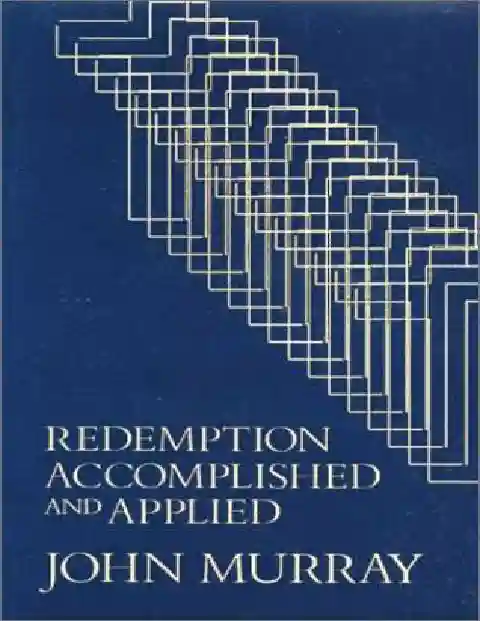

Redemption Accomplished And Applied Order Printed Copy
- Author: John Murray
- Size: 691KB | 158 pages
- |
Others like redemption accomplished and applied Features >>
-160.webp)
Undefiled (Redemption From Sexual Sin, Restoration For Broken Relationships)
Sensitivity Of Heart
Occult Grand Master Now In Christ

Do Christians Still Have A Sinful Nature

Amazing Facts
Not Guilty
-160.webp)
Agony Of Wasted Grace

The Work Of The Holy Spirit In Regeneration
Favor - The Road To Success

Three Big Words
About the Book
"Redemption Accomplished and Applied" by John Murray is a theological exploration of the biblical teaching on redemption. The book delves into the atonement accomplished by Christ on the cross and how it is applied to believers through the work of the Holy Spirit. Murray discusses key concepts such as justification, adoption, and sanctification, offering a comprehensive and insightful examination of the doctrines of redemption.
Steven Curtis Chapman
 Steven Curtis Chapman is an American Christian musician, singer, song writer, record producer, actor, author and social activist. He is the only artist in the history of music to have won 56 Gospel Music Association Dove Awards and is also a proud receiver of 5 Grammy Awards. His music is known for being a unique cross between country music, soft rock and orchestrated pop, which made him a prominent artist in the contemporary Christian music circuit of the 1980s. Chapman grew up in a humble environment where he found his calling for music, owing to his father’s inclination towards country music. He learnt to play instruments like guitar and piano just by hanging around in his father’s music store, listening to him play along with his friends. He took up music seriously when he moved to Nashville and got recognized by Sparrow Records, a company he stayed with for a long period in his career. He has released 19 studio albums and has sold over 10 million albums until now. Chapman is a family oriented person just like his father and has a big family comprising of his wife Mary Beth and 3 biological and 2 adopted children. He is a vocal advocate for adoption and has worked socially to eradicate the problem of youth violence.
Childhood & Early Life
Steven Curtis Chapman was born on November 21, 1962 in Paducah, Kentucky, to Herb and Judy Chapman. His father was a country singer and songwriter, who turned down opportunities to become a successful singer to concentrate on his family. His mother was a stay-at-home mom.
His father owned a music store, a business he managed from his basement and used to play music with his friends. Such creative environment at home influenced Chapman’s life from very early on and he bought his first guitar at 6.
Chapman joined as a pre-med student at Georgetown College in Kentucky but after few semesters he moved to Anderson College, Indiana. But he ultimately dropped the idea of studying and went to Nashville to pursue his first love, music.
During 1980s, he wrote a song ‘Built to Last’, which gained huge popularity after getting recorded by a gospel group ‘The Imperials’. The success of the song fetched Chapman a songwriting deal with Sparrow Records.
Career
Chapman’s first official album ‘First Hand’ was released in 1987. The album was an instant hit with singles like ‘Weak Days’ and topped at number 2 on the Contemporary Christian Music chart. The album had a mix of country music with soft rock and pop.
In 1988, following the success of his first album, Chapman released ‘Real Life Conversations’. Its hit single ‘His Eyes’ received the ‘Contemporary Recorded Song of the Year’ award from the ‘Gospel Music Association’. He co-wrote it with James Isaac Elliot.
After a few years, he made a swift turn to mainstream music with his album ‘The Great Adventure’ in 1992. It earned him two Grammy awards for the album and for the title song of the album.
After gaining consistent success with albums like ‘Heaven in the Real World (1994), ‘Signs of Life (1996) and ‘Speechless (1999), Chapman’s next great album ‘Declaration’ came out in 2001, for which he toured 70 cities.
In 2003, ‘All About Love’ was released and it ranked at Top 15 on the Christian Music charts. It was released under Sparrow Records and Chapman very humbly credited his wife Mary Beth for being the inspiration for his album.
‘All Things New’ was released in 2004 and the album added another Grammy to Chapman’s proud award collection. This time he received it in the category of Best Pop/Contemporary Gospel Album. It was also nominated for the Dove Award.
In 2005, ‘All I Really Want for Christmas’ was released, which was Chapman’s another successful Christmas album after ‘The Music of Christmas’. It had traditional holiday tunes and favorites like ‘Go Tell It on the Mountain’ and Silver Bells’.
Chapman took his music to greater levels by taking his concert to South Korea for the U.S. troops who were serving there in 2006. It was the first Christian concert that ever performed for the American army in that country.
In 2007, he released ‘This Moment’ which included hit singles like ‘Cinderella’, for which he was chosen for WOW Hits 2009. He also went on his ‘Winter Jam’ tour and took his sons’, Caleb and Will’s band along.
‘Beauty Will Rise’, Chapman’s seventeenth album, was released in 2009. It is said that he wrote the songs of the album after getting inspired by his daughter Maria Sue’s sad and untimely demise. It included songs like ‘Meant to Be’ and ‘Re:creation’.
In 2012, Chapman finally parted ways with Sparrow Records, the record company that he remained loyal to for so many years. He was signed on by Sony’s Provident Label Group and came out with a Christmas album called ‘JOY’.
‘The Glorious Unfolding’ was released in 2013 under Reunion Records and it peaked on number 27 on the Billboard 200 and was number 1 Top Christian Album. The album was produced by Chapman himself and Brent Milligan.
Major Works
Chapman’s ‘The Great Adventure’ in 1992 was a turning point in his musical career because until now he was making soft and contemporary country music but with ‘The Great Adventure’ he targeted the mainstream audience and tasted huge commercial success for the first time.
Awards & Achievements
Chapman is the winner of five Grammy awards for albums like ‘For the Sake of the Call’ ‘The Great Adventure’ ‘The Live Adventure’, ‘Speechless’ and ‘All Things New’. He has also received 56 Gospel Music Association Dove Awards, more than any other artist.
Personal Life & Legacy
Chapman got married to Mary Beth in 1984 after they first met at Anderson University in Indiana. They have three biological children: Emily, Caleb and Will and three adopted children: Shaohannah, Stevey and Maria, together.
In 2008, Chapman’s youngest son Will ran over his car by accident on his adopted daughter Maria Sue Chunxi Chapman. She was running towards him to meet him but he did not see her and she was pronounced dead on arrival at the hospital.
Trivia
Chapman’s wife Mary Beth Chapman has written and released a book about losing her youngest daughter called ‘Choosing to SEE: A Journey of Struggle and Hope’.
Chapman and his wife have written three children's books with adoption themes: ‘Shaoey And Dot: Bug Meets Bundle’ (2004), ‘Shaoey and Dot: The Christmas Miracle’ (2005), and ‘Shaoey and Dot: A Thunder and Lightning Bug Story’ (2006).
He has received an Honorary Doctorate of Music from Anderson University.
Steven Curtis Chapman is an American Christian musician, singer, song writer, record producer, actor, author and social activist. He is the only artist in the history of music to have won 56 Gospel Music Association Dove Awards and is also a proud receiver of 5 Grammy Awards. His music is known for being a unique cross between country music, soft rock and orchestrated pop, which made him a prominent artist in the contemporary Christian music circuit of the 1980s. Chapman grew up in a humble environment where he found his calling for music, owing to his father’s inclination towards country music. He learnt to play instruments like guitar and piano just by hanging around in his father’s music store, listening to him play along with his friends. He took up music seriously when he moved to Nashville and got recognized by Sparrow Records, a company he stayed with for a long period in his career. He has released 19 studio albums and has sold over 10 million albums until now. Chapman is a family oriented person just like his father and has a big family comprising of his wife Mary Beth and 3 biological and 2 adopted children. He is a vocal advocate for adoption and has worked socially to eradicate the problem of youth violence.
Childhood & Early Life
Steven Curtis Chapman was born on November 21, 1962 in Paducah, Kentucky, to Herb and Judy Chapman. His father was a country singer and songwriter, who turned down opportunities to become a successful singer to concentrate on his family. His mother was a stay-at-home mom.
His father owned a music store, a business he managed from his basement and used to play music with his friends. Such creative environment at home influenced Chapman’s life from very early on and he bought his first guitar at 6.
Chapman joined as a pre-med student at Georgetown College in Kentucky but after few semesters he moved to Anderson College, Indiana. But he ultimately dropped the idea of studying and went to Nashville to pursue his first love, music.
During 1980s, he wrote a song ‘Built to Last’, which gained huge popularity after getting recorded by a gospel group ‘The Imperials’. The success of the song fetched Chapman a songwriting deal with Sparrow Records.
Career
Chapman’s first official album ‘First Hand’ was released in 1987. The album was an instant hit with singles like ‘Weak Days’ and topped at number 2 on the Contemporary Christian Music chart. The album had a mix of country music with soft rock and pop.
In 1988, following the success of his first album, Chapman released ‘Real Life Conversations’. Its hit single ‘His Eyes’ received the ‘Contemporary Recorded Song of the Year’ award from the ‘Gospel Music Association’. He co-wrote it with James Isaac Elliot.
After a few years, he made a swift turn to mainstream music with his album ‘The Great Adventure’ in 1992. It earned him two Grammy awards for the album and for the title song of the album.
After gaining consistent success with albums like ‘Heaven in the Real World (1994), ‘Signs of Life (1996) and ‘Speechless (1999), Chapman’s next great album ‘Declaration’ came out in 2001, for which he toured 70 cities.
In 2003, ‘All About Love’ was released and it ranked at Top 15 on the Christian Music charts. It was released under Sparrow Records and Chapman very humbly credited his wife Mary Beth for being the inspiration for his album.
‘All Things New’ was released in 2004 and the album added another Grammy to Chapman’s proud award collection. This time he received it in the category of Best Pop/Contemporary Gospel Album. It was also nominated for the Dove Award.
In 2005, ‘All I Really Want for Christmas’ was released, which was Chapman’s another successful Christmas album after ‘The Music of Christmas’. It had traditional holiday tunes and favorites like ‘Go Tell It on the Mountain’ and Silver Bells’.
Chapman took his music to greater levels by taking his concert to South Korea for the U.S. troops who were serving there in 2006. It was the first Christian concert that ever performed for the American army in that country.
In 2007, he released ‘This Moment’ which included hit singles like ‘Cinderella’, for which he was chosen for WOW Hits 2009. He also went on his ‘Winter Jam’ tour and took his sons’, Caleb and Will’s band along.
‘Beauty Will Rise’, Chapman’s seventeenth album, was released in 2009. It is said that he wrote the songs of the album after getting inspired by his daughter Maria Sue’s sad and untimely demise. It included songs like ‘Meant to Be’ and ‘Re:creation’.
In 2012, Chapman finally parted ways with Sparrow Records, the record company that he remained loyal to for so many years. He was signed on by Sony’s Provident Label Group and came out with a Christmas album called ‘JOY’.
‘The Glorious Unfolding’ was released in 2013 under Reunion Records and it peaked on number 27 on the Billboard 200 and was number 1 Top Christian Album. The album was produced by Chapman himself and Brent Milligan.
Major Works
Chapman’s ‘The Great Adventure’ in 1992 was a turning point in his musical career because until now he was making soft and contemporary country music but with ‘The Great Adventure’ he targeted the mainstream audience and tasted huge commercial success for the first time.
Awards & Achievements
Chapman is the winner of five Grammy awards for albums like ‘For the Sake of the Call’ ‘The Great Adventure’ ‘The Live Adventure’, ‘Speechless’ and ‘All Things New’. He has also received 56 Gospel Music Association Dove Awards, more than any other artist.
Personal Life & Legacy
Chapman got married to Mary Beth in 1984 after they first met at Anderson University in Indiana. They have three biological children: Emily, Caleb and Will and three adopted children: Shaohannah, Stevey and Maria, together.
In 2008, Chapman’s youngest son Will ran over his car by accident on his adopted daughter Maria Sue Chunxi Chapman. She was running towards him to meet him but he did not see her and she was pronounced dead on arrival at the hospital.
Trivia
Chapman’s wife Mary Beth Chapman has written and released a book about losing her youngest daughter called ‘Choosing to SEE: A Journey of Struggle and Hope’.
Chapman and his wife have written three children's books with adoption themes: ‘Shaoey And Dot: Bug Meets Bundle’ (2004), ‘Shaoey and Dot: The Christmas Miracle’ (2005), and ‘Shaoey and Dot: A Thunder and Lightning Bug Story’ (2006).
He has received an Honorary Doctorate of Music from Anderson University.
A Task Too Big for One - The Third Person in Evangelism
I came to the Quran study prepared, though not without some trepidation. One of the members of the group had invited me to his home on the outskirts of our Central Asian town. We had met the previous week at a park, where I had given him a copy of the Scriptures. That’s when he told me about his men’s group that gathered one night a week to discuss Islam. Having heard me talk about Jesus, he wondered if I’d be willing to do the same for his friends. “Could you come,” he asked, “and explain to us the message of the New Testament?” I readily agreed. Almost instantly, however, I began to question my willing response. If this man or his group wanted to do this foreigner harm, it would be all too easy in an isolated location at night. So, in the days that followed his invitation, my mind scurried after all the reasons why I shouldn’t go. I rehearsed my inadequacies. I questioned my language ability. I thought of my wife and kids. Ultimately, though, I was convinced that I couldn’t turn down such a unique opportunity, so I did the only thing I could do: I asked for help. First, of course, from God. But then I asked a few brothers in Christ to come with me. Evangelism with a Third Person Sometimes when confronting our evangelistic responsibility, our spoken or unspoken response is, How am I supposed to do that? I’m not gifted for evangelism. I don’t know all the answers. What if something goes wrong? Behind those apparently self-effacing lines may lie genuine fear — something akin to what I experienced that night — but they may reveal a hidden assumption of self-sufficient individualism. In order to be a good evangelist, we assume, one must be adequate in and of oneself. You must be bold yet relatable. You need to be an accessible theologian — personable though persuasive. You’re supposed to be both studied apologist and winsome communicator. Yet who among us fits that category? No one. No one individual is sufficient to match our calling. Like Moses, each of us has legitimate cause for doubting our abilities as a spokesperson for God. But in our insufficiency, God reminds us of his power and presence with us — and he gives us helpers. We’re not left alone to accomplish this task. We’re members of Christ’s body, and I believe we need to rediscover the value of doing evangelism in this God-supplied community. Some of my fondest memories from Central Asia were my gospel conversations with Muslims. If possible, I would always arrange for a time to meet when Dave, a Canadian brother, could come along. Dave was more welcoming and friendlier than I was. But I was more comfortable leading a discussion in the local language. As I spoke, Dave was constantly praying and engaging. Invariably, a moment would come in our conversation about Christianity when I’d be stumped. I’d lack a good answer. Or I’d forget a verse. At that moment, without fail, Dave would step in. He’d have just the words, timely and true. For me, the joy of seeing the Spirit use us as a team was thrilling. We, Not I Given our creaturely interdependence, it shouldn’t be surprising that the New Testament regularly portrays witnesses going out in groups. Jesus set the pattern by sending out his first followers two by two (Mark 6:7; Luke 10:1). In the early chapters of Acts, we find Peter and John praying and preaching together (Acts 3–4). At Antioch, the Spirit set apart Saul and Barnabas for a collaborative mission (Acts 13:2). Priscilla and Aquila, wife and husband, worked in tandem to disciple Apollos (Acts 18:26). Early evangelists also ministered in larger groups. The apostles bore witness together at Pentecost (Acts 2:1–4) and regularly at the temple (Acts 5:12–21). Later, when Peter was summoned to preach to Cornelius, he brought along some brothers (Acts 10:23). Paul also, like his Master, gathered disciples around him and traveled with them. He constantly ministered and preached in community (Acts 16:10–13; 19:9). This evangelistic method offers built-in accountability, prayer, assurance, and guidance. Many times, when meeting individually with an unbeliever, I’ve felt the need to speak the gospel only to shy away from doing so. But when meeting non-Christians alongside a brother or sister in Christ, I usually feel more encouraged and compelled to speak. Not only that, but I believe our witness is more persuasive when we evangelize alongside a third person. When done in community — by more than one individual believer — evangelism can expand beyond what “I believe” and “I think.” From my perspective, this was particularly important living as a minority and outsider in a Muslim nation. By working together, either with my wife and kids or other church members, our collective witness lovingly conveyed what we believed, what we experienced, what we shared in Christ. A consistent message from multiple voices is harder to ignore, especially when it comes from a community of joy, fellowship, and conviction. Evangelism for the Third Person But there’s another benefit to conceiving of evangelism carried out in community, especially when we’re talking with more than one person. I like to think of this as doing evangelism for the third person. Here again the Bible gives us examples. When Peter and company visited Cornelius, they preached the gospel to a group of relatives and friends (Acts 10:24). When Paul and Silas spoke with the Philippian jailer, they gathered his whole household to hear the good news (Acts 16:32). In Scripture, we regularly find evangelists meeting in homes, synagogues, at a river’s edge, in community halls, and the marketplace — often in community. More than once, I’ve experienced the unexpected blessing of meeting with someone who was interested in the gospel, only to have the other person in the room respond positively. On different occasions, we’d meet with an individual who had questions about Christianity. As the discussion continued, it became clear that their questions were more like accusations. But since we tried to do evangelism in community — either hosting friends or gathering groups at a café — there were usually other people in the room. And sometimes we would later learn that, even though silent, they were the ones most drawn to Christ. Not only that, but when we do evangelism in our homes, we do so with our children. They listen as well. They observe their parents’ faith made real as we reason with others about the gospel. And in that process, they can be shaped by a secondhand gospel as the third person in the room. In fact, sometimes I wonder if one reason some children grow up and walk away from the faith is because they’ve never heard their parents speak the gospel to anyone else. Another Person at the Table So, whenever you consider an opportunity for evangelism, don’t merely think of it as a one-on-one conversation. Personal evangelism doesn’t have to be individualistic. You don’t have to wait for that perfect moment when you’re alone with a non-Christian. You don’t need to muster up the strength or courage to do it all by yourself. Instead, do evangelism with a third person in mind. When you’re invited by non-Christians to a party — maybe a place you’d hesitate to go alone — take a friend in Christ. When you have unchurched neighbors over for a meal, invite others from church to come as well. When you set out to communicate the gospel to whomever, don’t just focus on your target audience. Think about inviting and including others. Be conscious of the other person at the table. Think about your listening children. Remember to bring along brothers and sisters, the gifts God has given, and experience the mutual encouragement that comes by doing evangelism in community.