
Others like quizzes on holy bible Features >>

The Big Book Of Bible Stories For Toddlers

Upside-Down Day

Abraham - God's Brave Explorer

What Every Young Person Should Know

You Have A Brain

The Way Home: A Princess Story

Battle For The Young
The Book Of Bible Stories
Bible For Children - An Illustrated Collection Of Bible Stories
Counselling Children, Adolescents
About the Book
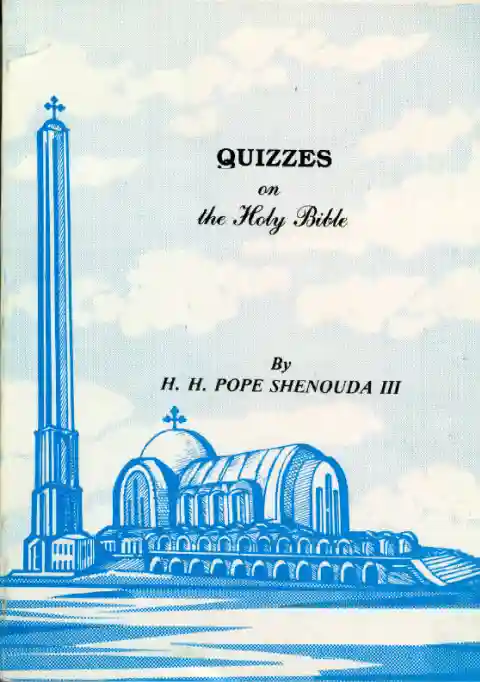
"Quizzes on Holy Bible" by Pope Shenouda III is a comprehensive book containing quizzes on various topics and themes from the Bible. The quizzes are designed to test readers' knowledge of scripture and help deepen their understanding of biblical teachings. The book serves as a valuable resource for individuals looking to engage with the Bible in a fun and interactive way.
Billy Graham
the assurance of salvation
It will surely be admitted, by those who believe that God's salvation concerns itself with the eternal destiny of humanity, that the subject of the assurance or certainty of one's personal possession of this salvation is of vital and tremendous importance. This is the subject of this booklet, and we trust that what follows will be read with great care by all who profess to be Christians. In many quarters, and even from professedly Christian pulpits, it is openly stated that no one can possibly know, for certain, in this life, that he is eternally saved and therefore sure of heaven after this life is ended. It is affirmed that it is a most presumptuous thing for any person to say, with absolute certainty: "I know I am saved, that my sins have been all forgiven, that I am the possessor of eternal life, that I stand justified, or declared righteous by a holy God, simply because I have placed my faith in the substitutionary sacrifice of the Lord Jesus Christ, and have received Him as my own personal Savior, and confessed Him as the Lord of my life." There are literally thousands of genuine Christians who are daily alternating between hope and despair as they face the prospect of death and eternity. Sometimes they cherish the hope that perhaps all is well with their souls and, at other times, they are plunged into despair as they question the reality of their salvation. With this tormenting uncertainty concerning this vital matter, they have no settled peace of mind and heart. It is to such that this booklet is addressed. We shall seek to show, from the sure and certain word of God, that it is possible for each person who, as a lost and guilty sinner, has rested in the finished work of Christ for him on the cross, has received Him as his own personal Savior and confessed Him as Lord, to know, without any peradventure and doubt, and this on the authority of the word of God, that he is eternally saved, the possessor of eternal life, and consequently as sure of being in heaven as though he were there already! Such a person can sing, with Fanny Crosby, the words of that well known hymn: "Blessed assurance, Jesus is mine! O what a foretaste of glory divine! Heir of salvation, purchase of God, Born of His Spirit, washed in His blood!" It will be helpful, in considering this subject of the assurance of salvation, to think of it under three main divisions, as follows: First, the way of salvation. Second, the assurance of salvation. Third, the joy of salvation. It surely goes without saying that no one can have the assurance of salvation until he has experienced what it means to be saved. There are many thousands of people who lack the assurance of salvation for the obvious reason they have never been saved. They may have "gone forward" in an evangelistic meeting, taken the evangelist's hand, "made a decision" and signed a card, indicating their "church preference;" but were not genuinely saved. They never really took their place before God as lost, guilty, helpless and hell-deserving sinners and, as such, definitely laid hold on the glorious truth of the gospel that the Lord Jesus bore their sins on the cross, and accomplished, by the sacrifice of Himself, all the work that was needed for their salvation, and, by a definite act of faith, received Him as their own personal Savior and confessed Him as the supreme Lord of their life. The words of the Lord Jesus, regarding this possibility of a false profession, merit the serious consideration of all. He declared: "Not every one that saith unto Me, 'Lord, Lord,' shall enter into the kingdom of heaven, but he that doeth the will of My Father which is in heaven." (Matt. 7:21) Thus our Lord envisaged the possibility of a mere profession of His lordship without a real possession of him as Savior. It is one thing to give a mental assent to certain doctrines, and another to give the consent of our will to the Son of God as Savior and Lord. In view of the tragic possibility that a person may outwardly profess to be a Christian, and not be an inward and true possessor of Christ, let us state, briefly and clearly what is meant by I. The Way of Salvation. 1. We will think of three things under this heading. First, the definition of the word "salvation." It simply means deliverance from a danger which threatened. Here is a man on the top story of a high building which is on fire. The floors below are all in flames, cutting off all escape by this route. He is therefore in danger of death by burning. A fireman, from below, seeing his terrible plight, climbs a ladder and makes his way through the flame and smoke and, at the risk of his own life, delivers him from what would have been certain death. Now what did that fireman do for that man? You reply and rightly: "he saved him." Thus the word, "salvation," suggests three things: First, that the person to be saved is in a position of danger. Second, that someone sees this person's danger and goes to his rescue. Third, that the rescuer delivers the person from the danger to which he was subjected. The whole process is called, "salvation." The one who rescued him is called his "savior." The person who was delivered is said to have been "saved." Now apply this spiritually, and the meaning of the word will become quite clear. "Salvation" is a lovely word, and occurs very frequently in the Bible, which contains the wondrous story of God's great salvation for the lost and guilty sons of men. 2. The need of salvation. Having defined the meaning of the word, let us now inquire why God's salvation is needed by humanity. The Bible leaves us in no doubt about this, for it clearly and faithfully reveals the fact that all humanity are sinners by nature. By this is meant that every human being comes into the world possessed of a sinful nature. This nature only requires time to evidence itself in sinful thoughts, words, deeds and an attitude of rebellion against God. This sinful nature was inherited from our first parents, Adam and Eve, who acquired it through their wilful disobedience to God. This sinful nature, in turn, has been passed on to all their descendents. The Bible states it thus: "As by one man sin entered into the world, and death by sin; so death passed upon all men, for that all have sinned." (Rom. 5:12) Thus a person does not have to sin in order to become a sinner, but he sins because he is a sinner. Since sin is the root of man's nature, it is not surprising that sins became the fruit of that nature. For instance, no child has to be taught to tell lies, to steal, to disobey its parents, to lose its temper and engage in mischief. This is simply the outworking of the sinful nature from within. The Bible also reveals that God is holy and hates sin and must, because of His holiness, righteousness and justice, visit His righteous judgment on the sinful thoughts, words, deeds and attitudes of sinful men. We are told definitely that: "the wages of sin is death." (Rom. 6:23) By this is meant the sinner's eternal separation from the presence and favor of God. Our Savior solemnly warned His hearers of the dreadful consequences if a person died with his sins unforgiven and said: "If ye believe not that I am He ye shall die in your sins . . . and where I am, ye cannot come." (John 8:24, 21) Thus every person who has reached the age of responsibility, and is therefore accountable to God for his sins, is in danger of suffering the judgment of a sin-hating God if he dies without being saved. Consequently he is in dire need of deliverance from the just penalty of his guilt. 3. Third, the way of salvation. This would be both a dreary and depressing message if this was all the Bible had to say concerning God, sin and the sinner. The same Scriptures which reveal man's sinfulness, guilt and need also reveals God's infinite love for sinners and His provision of a way of deliverance from his fearful plight. This way of deliverance is called: "the gospel," or the good news that God, in His wonderful grace, has provided a full, free and eternal salvation from both the penalty and power of sin for all who will believe the good news, and accept the salvation that God has provided through His beloved Son. Though God is revealed as infinitely holy, just and righteous, and one who can "by no means clear the guilty," yet He has unfolded, through His word, that He loves the sinner and ardently desires him to be saved! The well known words of the Lord Jesus should be sufficient to prove this fact, for He declared: ''For God so loved the world, that He gave His only begotten Son, that whosoever believeth in Him should not perish, but have everlasting life." (John 3:16) Throughout the Bible God is revealed as being reluctant to visit His judgment on the sinner, and has declared: "As I live, saith the Lord GOD, I have no pleasure in the death of the wicked; but that the wicked turn from his way and live; turn ye, turn ye, for why will ye die?" (Ezek. 33:11) Furthermore, in Micah 7:18, we read: "Who is a God like unto Thee, that pardoneth iniquity, and passeth by the transgressions of His heritage. He retaineth not His anger for ever, because He delighteth in mercy." The problem as to how the eternal, sin-hating God could righteously receive, pardon, welcome, relieve and save a guilty sinner, was solved at the place called Calvary. There, God's eternal, sinless and beloved Son, in infinite grace, willingly assumed the full liability and guilt of our sins, allowed a holy God to put them on Him, and then bore them in His own body on the tree and suffered, at the hands of God, all the judgment that was their due! The greatest transaction of all time and eternity took place on that hill, lone and grey, when God made Christ, who had no sin, to be sin for us, that we might be made the righteousness of God through faith In Him. (See 2 Cor. 5:21) All the work necessary for the salvation of every believing sinner was accomplished, to God's complete satisfaction, by the Lord Jesus on the cross. The irrefutable proof of this is that God raised Him from the dead and glorified Him at His own right hand, where He now ever lives to make good in the believer all that He accomplished for the believer on the cross. Truly, this is good news indeed! God's way of salvation thus centers In a Person, the Lord Jesus Christ, the eternal Son of the eternal God. It does not lie in the recitation of an orthodox creed, or the correct answering of a list of questions from a catechism, or the performance of the rite of baptism upon him, or the joining of any religious organization, or the partaking of the Lord's supper, or the saying of prayers, or the attendance at religious services. It consists of an act of simple faith in the efficacy of the substitutionary sacrifice of the Son of God, a definite acceptance of Him as one's own personal Savior and confession of Him as Lord. See Romans 10:9-10; 5:1; Gal. 2:16; Rom. 4:5; John 5:24; Acts 13:38-39. II. The Assurance of Salvation. Having stated, as clearly as we are able, God's way of salvation, let us now see what the Bible has to say about the knowledge of salvation. 1. Here are some questions to be honestly faced and truthfully answered. Here are five questions to which each reader would do well to give his earnest and undivided attention and answer, as in the presence of God to whom all things are open, and with Whom we must all have to do. (1) Have I ever acknowledged myself to be what God has declared me to be: a guilty, lost, helpless, hopeless and hell-deserving sinner? (2) Have I really believed that the Lord Jesus Christ, the sinless and eternal Son of God, bore my sins in His own body on the cross, took my place and suffered all the judgment of God against my sins, thus doing all the work needed for my salvation? (3) Have I, as a sinner, and by a definite act of faith, received the Lord Jesus as my own personal Savior and confessed Him as the supreme Lord of my life? (4) Is the Lord Jesus, and the virtue and value of His substitutionary sacrifice on my behalf, my sole and only basis of my hope of eternal blessedness? (5) Do I really believe that the Bible is the Divinely inspired, and therefore true and authoritative word of God, and am I prepared to accept its statements as final on all it declares on any subject? If the reader can truthfully give an affirmative answer to these questions, then he can be addressed as a believer in Christ, and, as such, is privileged to know from the word of God, that he is the possessor of eternal life. 2. The Scripture evidence for the assurance of salvation. We have seen that salvation is through faith in the Person and work of the Lord Jesus Christ, but the knowledge or assurance of this salvation comes from believing what the word of God declares. In other words, Christ's work on the cross makes the believer safe; God's word makes him sure. Let the reader get this fact firmly in his mind, for it summarizes all we shall have to say on this subject. (1) The Testimony of the Lord Jesus. We will first look at a statement made by none other than the Savior Himself, as recorded in John 5:24, which reads: "Verily, verily, I say unto you, he that heareth My word, and believeth on Him that sent Me, hath everlasting life, and shall not come into condemnation; but is passed from death unto life." Thousands of souls have been led into the assurance of salvation through these wonderful words spoken by the Son of God, our Savior. We shall notice seven things in these thirty four words. (a) The vital importance of the message. This is seen in the opening words: "Verily, verily," or "Of a truth, of a truth." This phrase occurs over twenty five times in the gospel of John, and always precedes a revelation of great importance, and surely there could be no greater message than the one that follows these words. (b) The Divine authority of the Speaker: "I say unto you." The Speaker is none other than the eternal Son of the eternal God, equal and eternal with the Father and the Holy Spirit. He is the Creator and Upholder of all things, the Author and Finisher of the faith, and the One whose death and resurrection made our salvation possible. No greater Authority could possibly be conceived for He is the One who, in infinite grace, left heaven's glory to come into a world of sin and shame in order to redeem us by His most precious blood. Let us therefore pay good heed to what He has to say. (c) The necessary prerequisite. "He that heareth My word." We are told elsewhere that: "Faith cometh by hearing, and hearing by the word of God." (Rom. 10:17) Our Lord declared: "He that hath ears to hear, let him hear." (Matt. 11:15) In the Scripture, to hear is the equivalent to heed. It means to give one's undivided attention and earnest consideration to what is being said, for this is not a message from fallible man, but from the true and living God. Therefore, let these words of our Lord sink deep into our hearts, for the One who uttered them is "the Way, the Truth and the Life." (John 14:6) (d) The essential condition; "And believeth (on) Him that sent Me." Thus faith is said to be the essential requirement. Faith consists of the simple reliance in the person, word or work of another. It is a faculty we use every day of our lives. We trust ourselves to a train, a car, or a plane. We entrust our money to a bank, and accept a written check as payment of a debt. We mail a letter with the confidence it will reach its destination safely. We believe the news we read in the paper, etc. The only difference between faith in our fellow man and faith in Christ, is the Object of our faith, and this makes all the difference. If we can accept the word of man as true, how much more should we be willing to accept the word of God? The Bible uses many words to convey the meaning of faith, such as "come," "take," "trust," "receive," "believe," "commit," and "look". Whichever word best conveys the idea to you, that adopt as its meaning. To believe on Christ is to receive Him to be all God says He is, Savior, Lord, Keeper, Guide and Friend. To believe on Him is to belong to Him, spirit, soul and body. Someone has taken the letters of the word "Faith," and put it thus: "Forsaking All, I Take Him." To believe on Christ simply means that a person accepts, as true, the fact that the Lord Jesus, on the cross, bore his sins, took his place and died in his stead and, believing this to be true, receives Him as his own Savior and henceforth owns Him to be the Lord of his life. (e) The heartening assurance: "Hath everlasting life." "Hath" means present possession. When we say that a person "hath a thing," we mean he is already in possession of the thing, and not that he is looking forward to possessing it in the dim and misty future. It means he has got it, right here and now. Christ did not say "hope to have," or "might perhaps have," but He said flatly: "hath everlasting life." Have you believed on Him? Then what does the Lord say you have? The only answer is, "everlasting life." How does the believer know he has this everlasting life? Simply because the Lord Jesus says so! Is this sufficient for you, or do you want some other evidence? There is not a word in the Bible about "feeling saved." Here are facts to be believed, a Person to be received, and a transaction has been achieved! Our Lord's word is His bond. He says what He means and means what He says. When He declares that the person who believes on Him has everlasting life, that is the end of it: there is no more to be said about it. How people, with a statement such as this before them, can say: "No one can know for certain that he has eternal life," is tantamount to accusing the Lord of not telling the truth! In fact, we are told in 1 John 5:10. "He that believeth on the Son of God hath the witness in himself: he that believeth not God hath made Him a liar." What a dreadful thing to charge God with lying! Yet this is what people do who refuse to take God at His word, and deny what God has stated as a fact. What better evidence could any person have than the written word of God as his authority? Our Lord declared: "Heaven and earth shall pass away, but My word shall not pass away.'' (Matt. 24:35) An old lady, who declared she knew she was saved simply because the Bible said so, was approached by a young man who said: "If you say you are saved just because the Bible says so, if God went back on His word, then your soul would be lost. "Yes," replied the old Christian: "If God went back on His word, my soul would be lost, but God would be the greatest Loser, for I should only lose my soul, but God would lose His character!" Rest assured, Christian friend, God is not going to lose His reputation over you or any other believer! (f) The positive guarantee: "And shall not come into condemnation." No sinner, saved by grace, will ever have to stand before the great white throne and be judged for his sins, for they have already been judged in the Person of his Divine Substitute, who bore them on the cross and received, at the hand of God, all the judgment that was their due! The just and righteous claims of a holy God, having been fully met by the death of Christ, the believer is freed from the condemnation he so justly deserved! This is why we read elsewhere: "There is therefore now no condemnation to them who are in Christ Jesus. (Rom 8:1) Christians, and Christians only, will appear before the judgment seat of Christ, where the quality of their service for the Lord on earth will be correctly appraised and suitably rewarded, if judged worthy of such. See Rom. 14:10; 2 Cor. 5:10. The difference between the judgment of the great white throne for the Christ rejecter. (Rev. 20), and the judgment seat of Christ for the believer, is the same difference that exists between a criminal case and a civil case. In the first instance, the person is tried, in the second it is only the case that is tried. A person, if caught by a fire on a prairie, will only need to set fire to the grass behind him and, as this is burned, to stand where the fire has been, for in doing so, he knows the oncoming flames cannot harm him. Likewise the believer, resting in the efficacy of Christ's accomplished redemption on his behalf, knows that all God's judgment against his sins has already been borne by the Son of God. He can therefore view the future with calm confidence, knowing that the One, who has declared he has eternal life, has also promised he shall not come into condemnation. Thus he stands, as it were, where the fire has been. The hymn writer has expressed it well: "God will not judgment twice demand. First at my bleeding Surety's hand, And then again at mine!" (g) The miraculous transition: "But is passed from death unto life." Note that little word, "is." Again it is in the present tense In other words, it has already taken place! God no longer views the believer as being in a sphere of spiritual death, or "dead in his trespasses and sins;" (Eph. 2:1) but as being in a sphere characterized by the possession of spiritual life, justification, peace, joy and eternal blessedness. The Christian is also described as having been translated from the darkness of ignorance, superstition and sin into the marvelous light of the glorious gospel. See 2 Cor. 4:3-6. He is also said to have been delivered from the slavery of sin and brought into the liberty of the children of God. See Gal. 5:1. Thus every child of God can sing: "My chains are snapt, The bonds of sin are broken, And I am free! O, let the praises Of His grace be spoken, Who died for me!" (2) Now let us look at a statement in the Epistles, given by Divine inspiration to John, the beloved apostle. It is found in 1 John 5:13, and reads: "These things have I written unto you that believe on the name of the Son of God; that ye may know ye have eternal life and that ye may believe on the name of the Son of God." Look at these words carefully for they are full of spiritual significance to every Christian. Let us examine them closely, and ask a few questions. (a) How is this message conveyed to us? It is a written message, intended to be read and containing a definite message to those to whom it is addressed. It was written by Divine inspiration and therefore the words are from God Himself. Consequently, they demand our earnest consideration. (b) To whom is this message addressed? To one class of people only: "Unto you that believe on the name of the Son of God. In other words, to those who have rested in the finished work of Christ on their behalf and have received Him as their own personal Savior. Does this correctly describe the reader of this booklet? Can you truthfully say, with Paul: "The Son of God loved me, and gave Himself for me?" If so, then these words are addressed to you. (c) What is this message to the believer on the Son of God? Note it carefully; "That ye may know that ye have eternal life." Notice, it does not say that ye may feel, or that ye may hope, or ye may suppose, but that ye may know that ye have eternal life. Had you approached one of those believers to whom the letter was addressed and enquired: "Do you know, for certain, that you have eternal life?" What would he have answered? He would have replied: "Yes, I know I have eternal life." In reply to your next query: "How do you know?" He would have answered: "Because God's word tells me so!" Could you wish for any better answer than this? Now for another illustration. A man commits a crime, is arrested, tried, found guilty and sentenced to a long term of imprisonment. After he has gone to prison, an influential friend succeeds in persuading the governor of the state to issue the prisoner a pardon, and also gets permission to carry the pardon to his friend. As the friend enters the cell, he addresses the prisoner and says: "I have some very good news for you, and hands him the pardon. As the prisoner reads it and sees, at the bottom, the signature of the governor, which makes it official, tears of joy roll down his cheeks as he realizes he is now a free man. Now let us approach this pardoned man and inquire: "Are you pardoned?" He would reply: "Yes, I have been pardoned." In reply to our next question: "How do you know you have been pardoned?" Would he answer: "I know I have been pardoned because I feel so happy?" Of course not. He would reply: "I know it because I have it in black and white on this piece of paper which I hold in my hand, and which has the signature of the one who has the authority to issue it!" Now, did this man know he was pardoned because he felt happy? or did he feel happy because he knew he was pardoned. There is surely only one answer to this question. His feelings had nothing to do with his pardon. It was true that he was pardoned, whatever kind of feelings he had. God does not want the believer to be occupied with his feelings, but with what the word of God definitely declares. Is this clear? Faith is the root, of which feelings is the fruit. As another has well put it: "Be my feelings what they will, Jesus is my Savior still!" Another has expressed it this way: "Believe, and the feeling May come or may go; Believe in the word that was Written to show, That all who believe, their Salvation may know; So believe, and keep Right on believing!" Far from it being presumptuous for a believer to say he is saved, it would be most presumptuous if, in the face of the plain statement of the word of God, he said he didn't know for sure! Here is a boy whose father has promised him a bicycle for his birthday. What would this boy reply if you asked him; "What are you going to get for your birthday?" Would he reply; "Well, I wouldn't like to be presumptuous, and say for certain that I am going to get a bicycle. It is true my father has promised me one, but I can only hope that perhaps he may be true to his word and give it to me?" No, indeed, that boy would reply unhesitatingly: "I am going to get a bicycle, and I have my father's word for it!" We read in 1 John 5:9-10: "If we receive the witness [or the testimony] of men, the witness of God is greater: for this is the witness of God which He hath testified of His Son. He that believeth on the Son of God hath the witness in Himself: he that believeth not God hath made Him a liar, because he believeth not the record that God gave of His Son." Surely no Christian would dare to accuse God of lying; and yet, according to the verse we have just considered, this is what a believer does when, in answer to the question: "Do you have eternal life?" replies: "Well, I can't say for sure. It is true God says I have, but one can never be certain that what He says is true; so I hope that perhaps, after I die, I shall discover that maybe I have eternal life." Such a statement would impugn God's veracity and accuse Him of not meaning what He said, or of not being true to His pledged word. We read: "God is not a man that He should lie, nor is He the Son of man that He should repent: hath He not said, and shall He not do it? or hath He spoken and shall He not make it good?" (Num. 23:19) When God declares that the person who believes on His Son has eternal life, He means just exactly that. To doubt His pledged word is to accuse God of untruthfulness and unfaithfulness. (3) Now let us look at an illustration from the Old Testament. Let us suppose we are in the land of Egypt on the night of the Passover. (See Exodus 12) God is about to visit his last plague upon that land, and this was to be the death of all the firstborn in that land, and this included the people of Israel. However, God revealed a way of salvation for them. Each family was directed to take a lamb, keep it for four days and if, at the end of this period, it was found to be without blemish, it was to be killed and its blood caught in a basin. They were then to take a bunch of hyssop, a common weed, and use it as a brush to sprinkle the blood upon the lintel and the two side-posts of the door of their houses. When they did this, God's promise to them was: "When I see the blood, I will pass over [or protect] you." Thus the way of salvation that night was a Iamb slain and its blood applied to the door. All who took shelter behind the blood sprinkled door, God promised would be safe. Let us now pay an imaginary visit to two of the homes on that fateful night. As we enter the first home, we notice the blood has been sprinkled on the door, but the occupants are fearful and tearful. When we inquire the reason for their uneasiness, they inform us that God is going to pass through the land in judgment, and that the first-born of all the land are to be slain. Then, pointing to their eldest child, they say: "To think, this may be his last night on earth, and it is this that causes our sadness." To this we reply: "But haven't you sprinkled the blood on your door, according to the directions God has given you?" "Yes," they reply, "But one can never know for certain whether He will pass over us or not." Now let us enter the second home, which we notice is also protected by the sprinkled blood, but what a change we see from the first house. The occupants are full of joy and confidence and praising God for His promised deliverance. We inform them of our visit to the first home and of their fear and uncertainty and lack of assurance in the promised salvation of God. At this, the father exclaims confidently: "We not only have the blood on the door that makes us safe, but we have the word of God Himself that makes us sure, for He has said: "When I see the blood I will pass over you!" Now which of those houses was the most safe that night, the one with the sad and uncertain people, or the one with the glad and confident people? The answer should be quite obvious: they were both as safe as each other! What made the first-born safe. It was the blood applied to the door and that alone. God did not say: "When I see your happy feelings, I will pass over you, but when I see the blood." Likewise every sinner, who has sheltered himself behind the precious blood of the Lamb of God, and that alone for his salvation, is safe from the judgment of God. In the land of Egypt, on that night of the passover, there was only one way of salvation, the lamb slain. There was only one place of shelter, behind the blood applied. There was only one ground of assurance, the promise of God's word. The people in the house could not see the blood: it was for the eye of God. We cannot see the precious blood of Christ, but God does, and estimates its true value, and every sinner who rests in what Christ did for him on the cross is safe from the judgment of God against sin, and can say: "In peace let me resign my breath, And Thy salvation see; My sins deserved eternal death, But Jesus died for me!" The Bible put it thus: "In whom we have redemption through His blood, the forgiveness of sins, according to the riches of His grace." (Eph. 1:7). We could quote very many more passages of Scripture to prove that it is the privilege of every believer to know he is saved, forgiven, justified, reconciled to God, accepted before God and the present possessor of eternal life; but what we have said should be enough to satisfy every sincere Christian. III. The Joy of Salvation. A knowledge of the way of salvation and an assurance of one's possession of salvation, does not necessarily connote the joy of salvation. There are many Christians, who have the assurance of salvation, who are not experiencing the joy of their salvation, for reasons we shall indicate. It is God's desire that His people should be "Filled with joy and peace through believing, and abound in hope through the power of the Holy Spirit." (Rom. 15:13) This same desire was expressed by the Lord Jesus when He said: ''These things have I spoken unto you, that My joy might remain in you, and that your joy might be full." (John 15:11) Isaiah could testify: "Behold, God is my salvation; I will trust, and not be afraid: for the Lord Jehovah is my strenght and my Song; He also is become my Salvation. Therefore with joy shall we draw water out of the wells of salvation." (Isa. 12.2-3) David, as he remembered how God had saved him, sang: "He brought me up also out of an horrible pit, out of the miry clay, and set my feet upon a rock, and established my goings. And He hath put a new song in my mouth, even praise unto our God: many shall see it and fear and shall trust in the Lord. (Psa. 40:2-3). Of all the people in the world that should be characterized by "joy unspeakable and full of glory," it is the people of God, who are saved and know it. Paul states it thus: "For if when we were enemies, we were reconciled to God by the death of His Son, much more, being reconciled, we shall be saved by His life. And not only so, but we also joy in God through our Lord Jesus Christ, by whom we have now received the atonement [reconciliation]." (Rom. 5:10-11) This joy is not a mere exuberance of spirit of a shallow and sentimental variety, but a deep real exaltation of spirit that is independent of circumstances, because it is centered on the One who is the "altogether lovely and the chiefest among ten thousand," even the blessed Son of God. Thus the believer is not only to know his salvation and to show his salvation, but is to glow with joy, because of all God is and has done for him. This joy is one of the best recommendations of Christianity to a world that sits in darkness and the shadow of death. Truly: "The joy of the Lord is your strength." (Neh. 8:10) In view of this desire on the part of God that the joy of the Lord should characterize His people, why is it that so many Christians are not filled with this deep, abounding joy; but rather are cold in heart, depressed in spirit, cumbered about with anxious care and often beset with fear? We shall seek to state some of the causes for this lack of joy, with its consequent loss of usefulness in the Lord's service. 1. An unread and unstudied Bible. The Bible is the spiritual food of the Christian. Just as no one can be physically healthy without material food, so no child of God can be spiritually healthy apart from the reading of, the meditation in and the study of the holy Scriptures. It is not for nothing that we read: "Thy words were found, and I did eat them; and Thy word was unto me the joy and rejoicing of mine heart." (Jer. 15:16) No believer can develop, as he should, without the daily devotional reading and study of the Word. Only in this way can he learn the will of God for his life and be fitted for His service. Dust on the Bible is a sure sign of declension of heart. The "sweet singer of Israel" could say: Thy word is a lamp unto my feet and a light unto my path ... The entrance of Thy word giveth light; it giveth understanding to the simple ... Thy precepts have I taken as an heritage for ever; for they are the rejoicing of my heart ... I rejoice at Thy word, as one that findeth great spoil. (Psa. 119: 105, 130, 111, 162) Bible study is therefore one of the secrets of true joy in the Lord. 2. Unappropriated power through prayer. Again let us hear the words of the Savior to His disciples: "Ask and ye shall receive, that your joy may be full." (John 16:24) Every believer is urged to come, with holy boldness, to the throne of grace, there to make known all his needs to his Father in heaven. (Heb. 4:16) Prayer not only brings joy, but peace of heart and renewed strength. It is not written in vain: "They that wait upon the LORD shall renew [or exchange] their strength; they shall mount up with wings as eagles, they shall run and not be weary; and they shall walk and not faint." (Isa. 40:31) No wonder the poet wrote: "Are we weak and heavy laden, Cumbered with a load of care? Precious Savior, still our refuge, Take it to the Lord in prayer. Have we trials and temptations? Is there trouble anywhere? We should never be discouraged Take it to the Lord in prayer. O, what peace we often forfeit, O, what needless pain we bear, All because we do not carry Everything to God in prayer!" Each Christian should both make and take time, each morning, for a "quiet time" with God. First, there should be the devotional reading of the Word. This should be followed by praise and worship to God for all He is and has done. Then there should be prayer for one's own needs and intercession on behalf of the needs of others. Only in this way will the joy of the Lord enable him to face the problems of each day, in the strength of the Lord. He will then be able to say with David: "The LORD is my light and my salvation; whom shall I fear? The LORD is the strength of my life; of whom shall I be afraid?" (Psa. 27:1) 3. Unjudged and unconfessed sin. When a child of God consciously sins, and then refuses to confess and forsake that sin, he will not experience the joy of salvation. David, when he had sinned so grievously against God, had a similar experience, for he wrote: "When I kept silence, my bones waxed old through my roaring all the day long. For day and night Thy hand was heavy upon me: my moisture was turned into the drought of summer. I acknowledged my sin unto Thee, and my iniquity have I not hid. I said I will confess my transgressions unto the Lord, and Thou forgavest the iniquity of my sin ... Restore unto me the joy of Thy salvation, and uphold me with Thy free Spirit. Then will I teach transgressors Thy ways, and sinners shall be converted unto Thee." (Psa. 32:3-4; 51:12-13) The New Testament puts it thus: "If we confess our sins, He is faithful and just to forgive us our sins, and to cleanse us from all unrighteousness. (1 John 1:9) Each Christian is well advised to "keep short accounts with God." When one is aware of some sin that has disrupted communion with God, with its resultant loss of joy, that sin should be immediately confessed to God and turned from with loathing. Then, once again, communion is restored and the joy of the Lord experienced. 4. An unexercised conscience. Each person has within him a conscience, which acts as a monitor of the soul, by which all thoughts, words and actions are judged, either to approve or condemn. However, the conscience in the believer is not an infallible guide, but needs to be regulated by the word of God. The conscience has been likened to a sun dial, which requires the light of the sun to tell the time. So the conscience needs the light of Scripture in order to become a guide to our conduct. Paul could say "I exercise myself to have always a conscience void of offence towards God and man." (Acts 24:16) When a Christian goes against the dictates of an enlightened conscience, and indulges in that which he knows is questionable, he thereby acquires a bad conscience, which robs him of the joy of the Lord. It may be a relatively minor matter, but if it wounds the conscience, it calls for a confession of the wrong, or an apology to the person who has been wronged. This is the price that must be paid to keep the conscience in good condition, and it is well worth the price, for "He who loses his good conscience loses the only thing that is worth keeping!" 5. Unused opportunities for witnessing for Christ. Often a Christian is provided with a splendid opportunity to speak a word on behalf of his Lord and Savior to some person who is a stranger to grace and to God but, for fear of ridicule, refrains from speaking that word. Thus, he failed in his duty as a witness for Him. There is a joy that comes through obedience to the One who said to His disciples: "Ye shall be witnesses unto Me ... Go ye into all the world and preach the gospel to every creature." (Acts 1:8; Mark 16:15) Failure in our witness for Christ will result in failure to enter in to "the joy of the Lord," of whom it is written: "Who, for the joy that was set before Him, endured the cross and despised the shame." There is a natural timidity about all of us that makes it difficult to approach a person and speak with him about the matter of his soul's salvation; but the resultant joy of doing so more than compensates for the work of witness. Believers are urged to: "Sanctify in your hearts Christ as Lord, being ready always to give answer to every man that asketh you a reason concerning the hope that is in you, yet with meekness and fear." (I Pet. 3:15 R.V.) It is not written in vain: "He that goeth forth and weepeth, bearing precious seed, shall doubtless come again with rejoicing, bringing his sheaves with him." (Psa. 126:6) May we know much of the joy of witnessing for the Lord! 6. Undeveloped gift. The Lord has given each believer some particular gift, by which to serve Him and His people. It is therefore the responsibility of every Christian to discover what his particular gift is, and then stir it up by exercise, develop it in an atmosphere of spirituality, and then use it for the glory of his Savior and the blessing of His redeemed people. Many believers are joyless because they have made no effort, either to discover their gift or to develop it. They seem to be content to let others do the work that they should be doing and thus lose the joy that comes from the exercise of a God-given gift. These Christians are not lacking in initiative when it comes to secular things in the way of advancing their business or improving their education. They are quite industrious in the art of furthering their own interests and feathering their own nests, and many have gained considerable worldly wealth in this way. However, it has been at the cost of their spiritual development which has been allowed to lie dormant. Consequently the word "failure" must be written over their lives. There is a law in nature called "the law of atrophy" which decrees that what we do not use we will lose. Any function of a member of the body, if wilfully discontinued, will result in the inability of that particular member to function. It has been well put thus: "A talent bright was mine, long years ago, 'Use it,' the Giver said: 'twill brighter grow.' I used it: how it shone! And then, one day, For just a whim, I laid my gift away. Untouched I left it, while the years rolled on; Today I seek it, but my gift is gone!" May this not be true of the Christian reader! 7. Unfulfilled responsibilities. Every believer is described as a workman, and this word connotes responsibility. Paul could say of Timothy: "He worketh the work of the Lord, as I also do." (1 Cor. 16:10) The word of the Lord to each of His servants is: "Occupy (or do business] for Me till I come." (Luke 19:12) In this matter of responsibility Christ also is our example, for He said: "I must work the works of Him that sent Me while it is day: the night cometh when no man can work." (John 9:14) Our Lord did not rest from His labors until He cried triumphantly from the cross: "It is finished!" A good definition of the word, "responsibility," is my response to God's ability! The Christian who seeks to avoid his responsibility is not a joyful one. Laziness brings its own aftermath in the way of dissatisfaction. It was the "good and faithful servant" that the Lord said: "Well done ... enter thou into the joy of Thy Lord." (Matt. 25:21) Thus there is a twofold joy in shouldering and discharging one's responsibility in the work of the Lord the joy of doing it and the joy that His reward shall bring in a coming day. May it be ours to have these two joys! Let us heed the words of the hymnwriter and: "Go labor on, spend and be spent, Thy joy to do the Master's will; It is the way the Master went: Should not the servant tread it still?" May this little booklet be used by the Lord, not only to make clear the way of salvation, and to lead the genuine Christian into the assurance of his salvation; but also enable each believer to experience much of that inexpressible joy of salvation that is the portion of all who seek to order their lives in accordance with God's will as found in His precious word! From The Assurance of Salvation by Alfred P. Gibbs. Waynesboro, Georgia: Christian Missions Press, [n.d.]