C.T. Studd
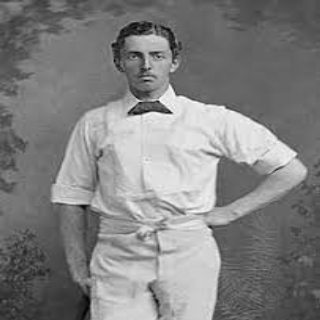 “If Jesus Christ be God and died for me, then no sacrifice can be too great for me to make for Him.”
- C.T. Studd
Charles Thomas Studd ("C.T. Studd") was born in England in 1860, the son of wealthy Edward Studd, who had made a fortune in India. Charles Studd liked sports just like most young men. He had a passion for cricket because it was the most popular sport in England at the time. His older brother Kynaston Studd, was a member of the Cambridge cricket team and well known. C.T., however, wasn't a great athlete but determined to master the sport. He would practice for hours, using a mirror to help him adjust his swing. He kept away from any harmful habits that may diminish his cricket ability. Soon he began to master the sport and became the captain of his high school cricket team. In 1879, when Studd entered Trinity College of Cambridge University, his popularity as a cricket star took off. He became what others have referred to as "the Michael Jordan of cricket," a household name throughout Great Britain. He soon became the captain of the Cambridge cricket team, an idol to students and legend in his time. and he had a particular passion for cricket, the most popular sport in England at the time. Studd was claimed then, and today as the greatest player to have ever played the game. But that is just a footnote compared to what has really marked C.T. Studd's life in history.
C.T. was saved in 1878 at the age of 18 by the confrontation of a pastor, who really questioned him as to his personal relationship with Christ. Both his brothers gave their lives to Christ the same day that he did. His passion for Christ diminished as his cricket career grew in college and soon he was hardened to spiritual things. However, in November 1883, his younger brother George got very sick and was dying. As C.T. watched in horror and grief at the suffering of his brother, he reflected, "Now what is all the popularity of the world to George? What is all the fame and flattering? What is it worth to possess the riches of the world, when a man comes to face Eternity?" With a surprising turn, God miraculously healed George and C.T. was so dramatically changed through the event that he consecrated himself to the Lord's work. The things of this world were not worthy of his life, Studd would begin to invest himself in the eternal.
C.T. was part of a small group of Christian men at Cambridge, mostly athletes, who were beginning to devote themselves to prayer and the evangelization of the world. Starting at their campus they began sharing their faith openly and telling all of the salvation found in Jesus Christ. Many were being won because of Studd's influence among other collegians. During this time, an influential missionary Hudson Taylor began to challenge the students of England to join him in reaching the millions of lost in China. His high calling and deep passion for China, captured the hearts of these young men at Cambridge, and there was discussion of joining Hudson's mission agency and pioneering to the unreached parts of China with the gospel.
Despite a promising career in cricket and the life of comfort he had grown up in C.T. determined to follow God's heart for the world and join Him in reaching China. Studd's decision to go to China influenced the other seven men at Cambridge to live for God's glory and devote themselves to China also. From the rowing team at Trinity, Stanley Smith, Montague Beauchamp, and William Cassels joined. Two students, Dixon Hoste and Arthur Polhill-Turner, were officers who also left a promising career in the military to join Studd. And from C.T. Studd's own cricket team came Cecil Polhill-Turner.
Studd faces opposition as well. His father, Edward passed away, causing the family to pressure C.T. not to leave his widowed mother at such a time. His older brother tried to talk him out of going and C.T. simply quoted Micah 7:6, "a man's enemies are the men of his own house."
Before going to China, Hudson organized a tour of the college campuses in England, allowing the "Cambridge Seven," as they came to be known, to share their testimonies, and challenge students to consecrate their lives to the glory of God. Through these months traveling and speaking, God drew people to faith in Christ and awakened the church to His global cause.
In the last meeting of the tour, C.T. Studd urged students saying, "Are you living for the day or are you living for life eternal? Are you going to care for the opinion of men here, or for the opinion of God? The opinion of men won't avail us much when we get before the judgment throne. But the opinion of God will. Had we not, then, better take His word and implicitly obey it?"
Authenticity marked the power of the message of these seven that were on their way to the unreached. C.T. Studd admitted, "Had I cared for the comments of people, I should never have been a missionary." After calling students to obey the Great Commission, the Cambridge Seven, left for China, arriving in Shanghai on March 18, 1885.
C.T. Studd had inherited a fortune from the death of his father Edward but gave most of it away, keeping only £3400 pounds. Keeping that only until his wife, Priscilla Livingstone Stewart said, "Charlie, what did the Lord tell the rich young man to do?" "Sell all." "Well then, we will start clear with the Lord at our wedding." And they gave the rest away to missions work.
Studd would return to England and America occasionally because of ill health and challenge students to give their lives to the Great Commission. During the beginnings of the Student Volunteer Movement, in 1896 -1897, his brother J.E.K. Studd spoke at Cornell University, having a deep impact on the future point man for the SVM, John R. Mott. Mott walked in late for the meeting and heard J.K. Studd quote, "Young man, are you seeking great things for yourself? Seek them not! Seek first the Kingdom of God!"
Mott gathered the courage to meet with him the next day and later said that the meeting with Studd was the "decisive hour of his life". Mott went on to become one of the greatest missions mobilizers in world history.
C.T. Studd's work impacted China, India and Africa. Upon the last days of his life he reflected in his life's work saying, "As I believe I am now nearing my departure from this world, I have but a few things to rejoice in; they are these:
That God called me to China and I went in spite of utmost opposition from all my loved ones.
That I joyfully acted as Christ told that rich young man to act.
That I deliberately at the call of God, when alone on the Bibby liner in 1910, gave up my life for this work, which was to be henceforth not for the Sudan only, but for the whole unevangelized World.
My only joys therefore are that when God has given me a work to do, I have not refused it."
One night in July,1931, C.T. Studd went to be with His Lord.
The last word he spoke was "Hallelujah"!
By Claude Hickman
“If Jesus Christ be God and died for me, then no sacrifice can be too great for me to make for Him.”
- C.T. Studd
Charles Thomas Studd ("C.T. Studd") was born in England in 1860, the son of wealthy Edward Studd, who had made a fortune in India. Charles Studd liked sports just like most young men. He had a passion for cricket because it was the most popular sport in England at the time. His older brother Kynaston Studd, was a member of the Cambridge cricket team and well known. C.T., however, wasn't a great athlete but determined to master the sport. He would practice for hours, using a mirror to help him adjust his swing. He kept away from any harmful habits that may diminish his cricket ability. Soon he began to master the sport and became the captain of his high school cricket team. In 1879, when Studd entered Trinity College of Cambridge University, his popularity as a cricket star took off. He became what others have referred to as "the Michael Jordan of cricket," a household name throughout Great Britain. He soon became the captain of the Cambridge cricket team, an idol to students and legend in his time. and he had a particular passion for cricket, the most popular sport in England at the time. Studd was claimed then, and today as the greatest player to have ever played the game. But that is just a footnote compared to what has really marked C.T. Studd's life in history.
C.T. was saved in 1878 at the age of 18 by the confrontation of a pastor, who really questioned him as to his personal relationship with Christ. Both his brothers gave their lives to Christ the same day that he did. His passion for Christ diminished as his cricket career grew in college and soon he was hardened to spiritual things. However, in November 1883, his younger brother George got very sick and was dying. As C.T. watched in horror and grief at the suffering of his brother, he reflected, "Now what is all the popularity of the world to George? What is all the fame and flattering? What is it worth to possess the riches of the world, when a man comes to face Eternity?" With a surprising turn, God miraculously healed George and C.T. was so dramatically changed through the event that he consecrated himself to the Lord's work. The things of this world were not worthy of his life, Studd would begin to invest himself in the eternal.
C.T. was part of a small group of Christian men at Cambridge, mostly athletes, who were beginning to devote themselves to prayer and the evangelization of the world. Starting at their campus they began sharing their faith openly and telling all of the salvation found in Jesus Christ. Many were being won because of Studd's influence among other collegians. During this time, an influential missionary Hudson Taylor began to challenge the students of England to join him in reaching the millions of lost in China. His high calling and deep passion for China, captured the hearts of these young men at Cambridge, and there was discussion of joining Hudson's mission agency and pioneering to the unreached parts of China with the gospel.
Despite a promising career in cricket and the life of comfort he had grown up in C.T. determined to follow God's heart for the world and join Him in reaching China. Studd's decision to go to China influenced the other seven men at Cambridge to live for God's glory and devote themselves to China also. From the rowing team at Trinity, Stanley Smith, Montague Beauchamp, and William Cassels joined. Two students, Dixon Hoste and Arthur Polhill-Turner, were officers who also left a promising career in the military to join Studd. And from C.T. Studd's own cricket team came Cecil Polhill-Turner.
Studd faces opposition as well. His father, Edward passed away, causing the family to pressure C.T. not to leave his widowed mother at such a time. His older brother tried to talk him out of going and C.T. simply quoted Micah 7:6, "a man's enemies are the men of his own house."
Before going to China, Hudson organized a tour of the college campuses in England, allowing the "Cambridge Seven," as they came to be known, to share their testimonies, and challenge students to consecrate their lives to the glory of God. Through these months traveling and speaking, God drew people to faith in Christ and awakened the church to His global cause.
In the last meeting of the tour, C.T. Studd urged students saying, "Are you living for the day or are you living for life eternal? Are you going to care for the opinion of men here, or for the opinion of God? The opinion of men won't avail us much when we get before the judgment throne. But the opinion of God will. Had we not, then, better take His word and implicitly obey it?"
Authenticity marked the power of the message of these seven that were on their way to the unreached. C.T. Studd admitted, "Had I cared for the comments of people, I should never have been a missionary." After calling students to obey the Great Commission, the Cambridge Seven, left for China, arriving in Shanghai on March 18, 1885.
C.T. Studd had inherited a fortune from the death of his father Edward but gave most of it away, keeping only £3400 pounds. Keeping that only until his wife, Priscilla Livingstone Stewart said, "Charlie, what did the Lord tell the rich young man to do?" "Sell all." "Well then, we will start clear with the Lord at our wedding." And they gave the rest away to missions work.
Studd would return to England and America occasionally because of ill health and challenge students to give their lives to the Great Commission. During the beginnings of the Student Volunteer Movement, in 1896 -1897, his brother J.E.K. Studd spoke at Cornell University, having a deep impact on the future point man for the SVM, John R. Mott. Mott walked in late for the meeting and heard J.K. Studd quote, "Young man, are you seeking great things for yourself? Seek them not! Seek first the Kingdom of God!"
Mott gathered the courage to meet with him the next day and later said that the meeting with Studd was the "decisive hour of his life". Mott went on to become one of the greatest missions mobilizers in world history.
C.T. Studd's work impacted China, India and Africa. Upon the last days of his life he reflected in his life's work saying, "As I believe I am now nearing my departure from this world, I have but a few things to rejoice in; they are these:
That God called me to China and I went in spite of utmost opposition from all my loved ones.
That I joyfully acted as Christ told that rich young man to act.
That I deliberately at the call of God, when alone on the Bibby liner in 1910, gave up my life for this work, which was to be henceforth not for the Sudan only, but for the whole unevangelized World.
My only joys therefore are that when God has given me a work to do, I have not refused it."
One night in July,1931, C.T. Studd went to be with His Lord.
The last word he spoke was "Hallelujah"!
By Claude Hickman





-160.webp)