
Prayer For Patient Waiting - II Thessalonians 3:5 Order Printed Copy
- Author: Elbert Willis
- Size: 2.55MB | 36 pages
- |
Others like prayer for patient waiting - ii thessalonians 3:5 Features >>



About the Book
"Prayer For Patient Waiting - II Thessalonians 3:5" by Elbert Willis is a Christian devotional book focused on the importance of patience and prayer in times of waiting. The author explores the biblical verse II Thessalonians 3:5, which emphasizes the need for patience and perseverance in the face of adversity. Through insightful reflections and practical advice, Willis encourages readers to trust in God's timing and rely on prayer to sustain them during periods of waiting.
Oral Roberts
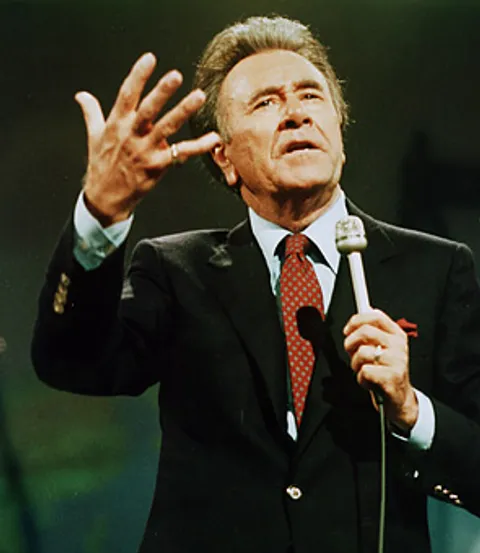 Granville Oral Roberts was born January 24, 1918 in Pontotoc County, near Ada, in Oklahoma. His parents were deeply religious. His father was a farmer who also preached the gospel and established Pentecostal Holiness churches. His mother regularly prayed for the sick and led people to Christ. While she was still pregnant, Robert's mother committed Oral to God's service. Even though Oral had a very strong stutter his mother would tell him that one day God would heal his tongue and he would speak to multitudes.
The Roberts family was desperately poor. When Roberts was 16 he moved away from home, hoping for a better life. He rejected God and his upbringing. He started living a wild life and his health collapsed. Roberts had contracted tuberculosis. He returned home and eventually dropped to 120 pounds. He was a walking skeleton. God spoke to his older sister, Jewel, and told her that He was going to heal Oral. During this same time Oral turned his heart back to God and gave his life to Christ. A traveling healing evangelist named George Moncey came to Ada and held meetings in a tent. Oral's elder brother was touched when he saw friends of his healed in the meeting. He decided that he should get Oral and bring him to be healed. On the way to the meeting God spoke to Oral and said "Son, I'm going to heal you and you are to take my healing power to your generation. You are to build me a University and build it on My authority and the Holy Spirit." Once at the meeting Oral waited until the very end. He was too sick to get up and receive prayer, and so had to wait for Moncey to come to him. At 11:00 at night his parents lifted him so he could stand. When Moncey prayed for him the power of God hit him and he was instantly healed. Not only that but every bit of his stutter was gone!
After Roberts was healed he began to travel the evangelistic circuit. He met and married Evelyn Lutman, a school teacher from the same Holiness Pentecostal background as Roberts. They had their first child Rebecca and then the entire family began traveling as ministers. In 1942 they left the evangelistic field for a while and Roberts became a pastor. He also returned to college to further his education. While a pastor he prayed for a church member whose foot was crushed. The foot was instantly healed. God continued to speak to Roberts about his call to the multitudes. God called him to an unusual fast. Roberts was to read the four gospels and the book of Acts three times consecutively, while on his knees, for thirty days. God began to reveal Jesus as the healer in a new way. God also began to give Roberts dreams where he would see people's needs as God saw them. God called him to hold a healing meeting in his town. A woman was dramatically healed, several people were saved and Roberts' ministry changed overnight.
Roberts resigned his church in 1947 and began an itinerant ministry. Notable healings began to occur. One man tried to shoot Roberts. God used the story to bring him media attention, which expanded his ministry very quickly. Roberts felt called to purchase a tent and take his evangelistic ministry to larger cities. His first tent held 3,000 but he quickly exchanged it for a tent that held 12,000. In July 1948 The Oral Roberts Evangelistic Association was established. Oral began traveling continuously throughout the United States. Like many of his Pentecostal brethren Roberts held inter-racial meetings. This brought him a lot of negative attention from groups who didn't like his stand. He even received death threats for not holding segregated meetings. In 1956 Roberts was invited to Australia. He held meetings in Sydney and Melbourne. In Melbourne there were outright physical attacks and destructive gangs. He was literally driven out of the city for praying for the sick. Often when people discuss the healing revival of the 1950s Oral Roberts and William Branham are listed as the most widely recognized leaders of the movement. Others came along side and many emulated them, but they were the most widely recognized personalities.
Roberts was a man who understood and used the media for his benefit. Roberts began publishing a magazine almost immediately upon starting his ministry. He grasped the power of radio and television. In 1954 Roberts began filming his crusades. He began playing his sermons on radio and then airing the crusade tapes during evening television prime time. Unfortunately there is some evidence that healing meetings were scripted ahead of time, and not all healings were genuine. People began writing to the Ministry headquarters by the thousands. They were accepting Christ as their savior after seeing a person healed on TV. By 1957 the ministry was receiving 1,000 letters a day and he was getting thousands of phone calls. He established a round the clock prayer team to answer calls and pray for people who contacted the ministry. In 1957 Roberts claimed 1,000,000 salvations. Between 1947 and 1968 Roberts conducted over 300 major Crusades. Money was flowing into the organization at an unprecedented rate.
In the late 1950s the healing movement was waning and ministries were under attack for their lack of financial accountability. Roberts began to move on the vision God gave him to build a University. It was chartered in 1963 and became open to students in 1965. Roberts was having a significant national impact in the late 1950s and early 1960s. For several years his named appeared in the Top 100 list of the nation's most respected people. Although Roberts continued to hold healing meetings his focus shifted to the University and the television programs.
The 1970s and 80s brought many crises to the Roberts family. Their daughter Rebecca and son-in-law Marshall were killed in a plane crash. Their son Ronnie struggled with depression after serving in Vietnam and also declaring himself gay. He grew despondent after losing his job and committed suicide. Richard Roberts got a divorce. After Richard remarried he and his wife lost a new born son within two days. Roberts began teaching a doctrine of "seed faith" where he claimed that if you gave to his ministry then God would pay you back in multiplied ways. The television ministry received heavy criticism for the constant requests for money. The Roberts were living an extravagance lifestyle while many of their supporters were not wealthy. Financial questions were raised in how Roberts used University endowment funds to purchase personal homes and cars.
In 1977 Roberts had a vision to build a hospital where people not only received care but received healing prayer. It was to be called City of Faith. Roberts put his heart and soul into the project, believing that God would build it as He had the University. The hospital struggled along and Roberts called his followers to give to the project, believing he had a vision from God to raise the money. Roberts even claimed twice that if money didn't come in that Jesus would "take him home." The hospital was built, but never succeeded financially, and finally closed in 1989. Financial giving was plummeting for both the Oral Roberts Evangelistic Association and Oral Roberts University.
Roberts retired in 1993, at the age of 75. Roberts, with his wife Evelyn, moved to California to live near the coast. Evelyn died in May 2005. Although Roberts influence waned after the problems of the 1970s and 1980s, he was still recognized for his pioneering work on the "sawdust trail", television evangelism, and building a Christian University. He often appeared on religious broadcasting networks as a recognized leader in the healing movement of the last half century. He died December 15, 2009 at the age of 91.
Oral Roberts' legacy is a mixed one. Roberts brought the truth of God's healing to the public in a way that few others accomplished in his lifetime. His financial and personal issues and increasingly extravagant claims eventually brought his ministry into disrepute. The University he established continued to have financial crises under the leadership of his son Richard Roberts. It was only after Richard stepped down in 2009 and new leadership took over the University that it stabilized financially. The University is no longer connected to the Oral Roberts Evangelistic Association.
Granville Oral Roberts was born January 24, 1918 in Pontotoc County, near Ada, in Oklahoma. His parents were deeply religious. His father was a farmer who also preached the gospel and established Pentecostal Holiness churches. His mother regularly prayed for the sick and led people to Christ. While she was still pregnant, Robert's mother committed Oral to God's service. Even though Oral had a very strong stutter his mother would tell him that one day God would heal his tongue and he would speak to multitudes.
The Roberts family was desperately poor. When Roberts was 16 he moved away from home, hoping for a better life. He rejected God and his upbringing. He started living a wild life and his health collapsed. Roberts had contracted tuberculosis. He returned home and eventually dropped to 120 pounds. He was a walking skeleton. God spoke to his older sister, Jewel, and told her that He was going to heal Oral. During this same time Oral turned his heart back to God and gave his life to Christ. A traveling healing evangelist named George Moncey came to Ada and held meetings in a tent. Oral's elder brother was touched when he saw friends of his healed in the meeting. He decided that he should get Oral and bring him to be healed. On the way to the meeting God spoke to Oral and said "Son, I'm going to heal you and you are to take my healing power to your generation. You are to build me a University and build it on My authority and the Holy Spirit." Once at the meeting Oral waited until the very end. He was too sick to get up and receive prayer, and so had to wait for Moncey to come to him. At 11:00 at night his parents lifted him so he could stand. When Moncey prayed for him the power of God hit him and he was instantly healed. Not only that but every bit of his stutter was gone!
After Roberts was healed he began to travel the evangelistic circuit. He met and married Evelyn Lutman, a school teacher from the same Holiness Pentecostal background as Roberts. They had their first child Rebecca and then the entire family began traveling as ministers. In 1942 they left the evangelistic field for a while and Roberts became a pastor. He also returned to college to further his education. While a pastor he prayed for a church member whose foot was crushed. The foot was instantly healed. God continued to speak to Roberts about his call to the multitudes. God called him to an unusual fast. Roberts was to read the four gospels and the book of Acts three times consecutively, while on his knees, for thirty days. God began to reveal Jesus as the healer in a new way. God also began to give Roberts dreams where he would see people's needs as God saw them. God called him to hold a healing meeting in his town. A woman was dramatically healed, several people were saved and Roberts' ministry changed overnight.
Roberts resigned his church in 1947 and began an itinerant ministry. Notable healings began to occur. One man tried to shoot Roberts. God used the story to bring him media attention, which expanded his ministry very quickly. Roberts felt called to purchase a tent and take his evangelistic ministry to larger cities. His first tent held 3,000 but he quickly exchanged it for a tent that held 12,000. In July 1948 The Oral Roberts Evangelistic Association was established. Oral began traveling continuously throughout the United States. Like many of his Pentecostal brethren Roberts held inter-racial meetings. This brought him a lot of negative attention from groups who didn't like his stand. He even received death threats for not holding segregated meetings. In 1956 Roberts was invited to Australia. He held meetings in Sydney and Melbourne. In Melbourne there were outright physical attacks and destructive gangs. He was literally driven out of the city for praying for the sick. Often when people discuss the healing revival of the 1950s Oral Roberts and William Branham are listed as the most widely recognized leaders of the movement. Others came along side and many emulated them, but they were the most widely recognized personalities.
Roberts was a man who understood and used the media for his benefit. Roberts began publishing a magazine almost immediately upon starting his ministry. He grasped the power of radio and television. In 1954 Roberts began filming his crusades. He began playing his sermons on radio and then airing the crusade tapes during evening television prime time. Unfortunately there is some evidence that healing meetings were scripted ahead of time, and not all healings were genuine. People began writing to the Ministry headquarters by the thousands. They were accepting Christ as their savior after seeing a person healed on TV. By 1957 the ministry was receiving 1,000 letters a day and he was getting thousands of phone calls. He established a round the clock prayer team to answer calls and pray for people who contacted the ministry. In 1957 Roberts claimed 1,000,000 salvations. Between 1947 and 1968 Roberts conducted over 300 major Crusades. Money was flowing into the organization at an unprecedented rate.
In the late 1950s the healing movement was waning and ministries were under attack for their lack of financial accountability. Roberts began to move on the vision God gave him to build a University. It was chartered in 1963 and became open to students in 1965. Roberts was having a significant national impact in the late 1950s and early 1960s. For several years his named appeared in the Top 100 list of the nation's most respected people. Although Roberts continued to hold healing meetings his focus shifted to the University and the television programs.
The 1970s and 80s brought many crises to the Roberts family. Their daughter Rebecca and son-in-law Marshall were killed in a plane crash. Their son Ronnie struggled with depression after serving in Vietnam and also declaring himself gay. He grew despondent after losing his job and committed suicide. Richard Roberts got a divorce. After Richard remarried he and his wife lost a new born son within two days. Roberts began teaching a doctrine of "seed faith" where he claimed that if you gave to his ministry then God would pay you back in multiplied ways. The television ministry received heavy criticism for the constant requests for money. The Roberts were living an extravagance lifestyle while many of their supporters were not wealthy. Financial questions were raised in how Roberts used University endowment funds to purchase personal homes and cars.
In 1977 Roberts had a vision to build a hospital where people not only received care but received healing prayer. It was to be called City of Faith. Roberts put his heart and soul into the project, believing that God would build it as He had the University. The hospital struggled along and Roberts called his followers to give to the project, believing he had a vision from God to raise the money. Roberts even claimed twice that if money didn't come in that Jesus would "take him home." The hospital was built, but never succeeded financially, and finally closed in 1989. Financial giving was plummeting for both the Oral Roberts Evangelistic Association and Oral Roberts University.
Roberts retired in 1993, at the age of 75. Roberts, with his wife Evelyn, moved to California to live near the coast. Evelyn died in May 2005. Although Roberts influence waned after the problems of the 1970s and 1980s, he was still recognized for his pioneering work on the "sawdust trail", television evangelism, and building a Christian University. He often appeared on religious broadcasting networks as a recognized leader in the healing movement of the last half century. He died December 15, 2009 at the age of 91.
Oral Roberts' legacy is a mixed one. Roberts brought the truth of God's healing to the public in a way that few others accomplished in his lifetime. His financial and personal issues and increasingly extravagant claims eventually brought his ministry into disrepute. The University he established continued to have financial crises under the leadership of his son Richard Roberts. It was only after Richard stepped down in 2009 and new leadership took over the University that it stabilized financially. The University is no longer connected to the Oral Roberts Evangelistic Association.
The Very First Prayer
From the opening chapters of the Bible, God makes it clear that humanity was created to enjoy life with God, and God in life — to experience the radiance of his presence and listen to him speak “close up.” Adam and Eve walked with God in the garden, which God himself has provided for this very purpose. And they are charged to turn the whole of creation into a place where God can be known and enjoyed (see Genesis 1:28 and 2:15–16). Relating to God, for them, was natural and unhindered. After the events of Genesis 3, of course, everything gets so much harder. “From the opening chapters of the Bible, God makes it clear that humanity was created to enjoy life with God.” God’s grand plan for his people and his world remains the same, but suddenly the way to God is littered with obstacles, as the ease of relating to God is replaced with struggle. In fact, it’s not altogether clear how our first parents are supposed to relate to God as they leave the now inaccessible garden behind (Genesis 3:24). The task they were commissioned to do in Genesis 1:28 remains, but it now will be tackled against the grain of a broken creation and without the immediate presence of the Creator. Which brings us to Genesis 4. First Recorded Prayer After the exclusion of the original couple from Eden, the narrative immediately jumps to the birth of Cain and then Abel. The intriguing note of Genesis 3:15 has set us up to expect an individual who is able to undo the recently created chaos of sin. Both brothers are pictured bringing offerings to God (the awareness of our obligation to the one who made us remains intact), but the violent events which follow do little beyond showing that the hope of humanity must be found elsewhere — and yet, remarkably, God has continued to speak to his people. Cain’s evil quickly spirals further out of control, as he settles down in a city (Genesis 4:17), rather than continuing to “fill the earth and subdue it,” and then fathers a dynasty of self-reliant men, culminating in the brutality of Lamech, who boasts to his wives that if anyone messes with him, he will exact disproportionate revenge (Genesis 4:24). At this point in the tragic narrative, we find these words: And Adam knew his wife again, and she bore a son and called his name Seth, for she said, “God has appointed for me another offspring instead of Abel, for Cain killed him.” To Seth also a son was born, and he called his name Enosh. At that time people began to call upon the name of the Lord. (Genesis 4:25–26) Initially, Genesis 4:25 raises our hopes. Cain and Abel are not to be the sole heirs of Adam — there is another son, Seth. Eve’s own words, highlighting that he is another “offspring” (same word in Genesis 3:15), lead us to expect more detail, and hopefully a bright counterpoint to the darkness of Cain and his line. However, we get no details whatsoever about Seth. He is born, and then his sole contribution to the unfolding plan of God is to sire a son, Enosh. Like his father, Enosh makes no contribution to the narrative beyond providing a descendant. All this makes it doubly puzzling when the birth of Enosh leads people to begin calling on the name of the Lord, apparently for the first time. Why Pray Now? The phrase “at that time” in the first five books of the Bible tends to introduce significant incidents (for example, Genesis 12:6; 38:1; Deuteronomy 1:9). In this case, the striking nature of the action (calling on the name of the Lord) is a further signal that something important is going on. But it is puzzling — what could possibly have occasioned this “new start” in humanity’s relationship with God? Seth is born, but does nothing else. Now Enosh is born, and similarly, there appears to be nothing remarkable about his birth. So what are we to make of this? What prompted them to seek God in this way now? It’s theoretically possible that this is simply a chronological note. Given the fact, however, that not one word is wasted in the opening chapters of the Bible, and every phrase seems loaded with significance for the unfolding narrative, this seems highly unlikely. Rather, it seems that starting to “call on the name of the Lord” is the right response to the fact that Cain and Abel, Seth and Enosh have all shown up, but there is, as yet, no sign of the promised Serpent-Crusher of Genesis 3:15. The waiting — and the appealing to God to act — has begun. We Ask for What He Promised This is the first address to God after the fall — and it is a cry to God to act by fulfilling his promises. In the Institutes, John Calvin says, “Just as faith is born from the gospel, so through it our hearts are trained to call upon God’s name” (III XX.21). I think that’s what’s going on here in Genesis 4. The announcement of Genesis 3:15 has brought gospel hope to life, which in turn leads God’s people to ask God to act. The gospel gives birth to gospel-shaped prayer. “Prayer is a means of communion with God, but far more often it is simply asking God to do what he has promised to do.” As we look at prayers throughout the Bible, it becomes increasingly apparent that they are dominated by this single concern: to see God act to fulfill his promises as he advances his plan of redemption in our world. That’s not to say, of course, that our relationship with God can be reduced to this one thing. There are lots of activities that we are invited or commanded to engage in as part of our relationship with God (like praise, or repentance, or intercession, or lament, or thanks). When it comes to prayer, however, the Bible seems to have a much narrower focus than we would normally allow. Prayer is a means of communion with God, but far more often it is simply asking God to do what he has promised to do. Until Prayer Is Unnecessary This simple observation, which flows naturally from Genesis 4:25–26, does cut through much of the guilt and confusion we often feel about prayer. Prayer begins with asking God to do his gospel work. This is presumably why Jesus can encourage us to pray unhypocritical, to-the-point kingdom prayers (Matthew 5:5–14). Prayer isn’t primarily communing with God, let alone twisting his arm, but asking God to do what he is already committed to doing (see Luke 11:5–13). It is easy to miss the significance of Genesis 4:25–26, but that doesn’t mean that it isn’t a beautifully gospel-shaped clue to how people like you and me are to relate to the God who loves us this side of the fall. We are to pray — asking God to do what he has promised — until that day when prayer is no longer needed, because all things have already been made new and all his promises have been brought to perfect fruition. But until then? We keep praying like people of the day of Seth and Enosh, asking God to act for our good and his glory. Article by Gary Millar