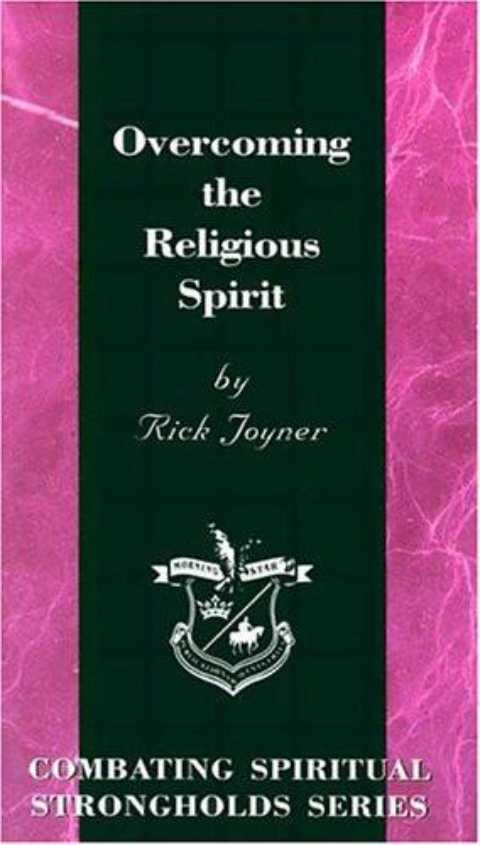

Others like overcoming the religious spirit Features >>

7 Things The Holy Spirit Will Do For You

Slaying The Giants In Your Life
Overcoming Addictive Behavior
The Code Of The Holy Spirit

Overcoming Compulsive Desires
The Holy Spirit And His Gifts
-160.webp)
Overcoming Sin And Temptation

Exposing The Accuser Of The Brethren

Overcoming Depression
Overcoming The Enemy
About the Book
"Overcoming The Religious Spirit" by Rick Joyner explores the detrimental influence of legalism and traditionalism within religious institutions and offers guidance on how to break free from these restrictive mindsets to experience true spiritual growth and freedom in Christ. Joyner provides insight and practical advice on how to overcome the religious spirit and embrace a more genuine relationship with God.
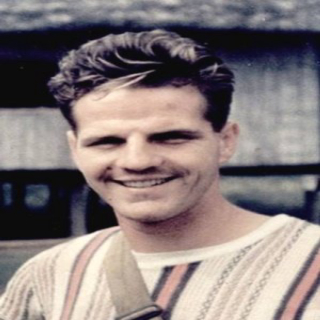
Jim Elliot
 EARLY LIFE
Jim Elliot began his life in Portland, Oregon in the USA. His mother, Clara, was a chiropractor and his father, Fred, was a minister. They married and settled in Seattle, WA where they welcomed their first son, Robert in 1921.
Later they relocated the family to Portland where Herbert arrived in 1924, Jim in 1927, and Jane in 1932.
Jim knew Christ from an early age and was never afraid to speak about Him to his friends. At age six Jim told his mother, “Now, mama, the Lord Jesus can come whenever He wants. He could take our whole family because I’m saved now, and Jane is too young to know Him yet.”
THE YEARS THAT CEMENTED HIS DESIRE TO SERVE THE LORD IN MISSIONS
Jim entered Benson Polytechnic High School in 1941. He carried a small Bible with him and, an excellent speaker; he was often found speaking out for Christ. He and his friends were not afraid to step out and find adventure. One thing Jim didn’t have time for in those early years were girls. He was once quoted as telling a friend, “Domesticated males aren’t much use for adventure.”
In 1945 Jim traveled to Wheaton, IL to attend Wheaton College. His main goal while there was to devote himself to God. He recognized the importance of discipline in pursuing this goal. He would start each morning with prayer and Bible study. In his journal he wrote, “None of it gets to be ‘old stuff’ for it is Christ in print, the Living Word. We wouldn’t think of rising in the morning without a face-wash, but we often neglect the purgative cleansing of the Word of the Lord. It wakes us up to our responsibility.”
Jim’s desire to serve God by taking His gospel to unreached people of the world began to grow while at Wheaton. The summer of 1947 found him in Mexico and that time influenced his decision to minister in Central America after he finished college.
Jim met Elisabeth Howard during his third year at Wheaton. He did ask her for a date which she accepted and then later cancelled. They spent the next years as friends and after she finished at Wheaton they continued to correspond. As they came to know each other there was an attraction, but Jim felt he needed to unencumbered by worldly concerns in order to devote himself completely to God.
In addition to his hope to one day travel to a foreign country to share Christ with the unchurched of the world, he also felt the need to share with people in the United States. On Sundays while at Wheaton he would often ride the train into Chicago and talk to people in the train station about Christ. He often felt ineffective in his work as the times of knowingly leading people to Christ were few. He once wrote, “No fruit yet. Why is that I’m so unproductive? I cannot recall leading more than one or two into the kingdom. Surely this is not the manifestation of the power of the Resurrection. I feel as Rachel, ‘Give me children, or else I die.’”
After college with no clear answer as to working for the Lord in a foreign country, Jim returned home to Portland. He continued his disciplined Bible study as well as correspondence with Elisabeth Howard whom he called Betty.
They both felt a strong attraction to each other during this time, but also felt that the Lord may have been calling them to be unmarried as they served Him.
In June of 1950 he travelled to Oklahoma to attend the Summer Institute of Linguistics. There he learned how to study unwritten languages. He was able to work with a missionary to the Quichuas of the Ecuadorian jungle. Because of these lessons he began to pray for guidance about going to Ecuador and later felt compelled to answer the call there.
Elisabeth Elliot wrote in Shadow of the Almighty:
“The breadth of Jim’s vision is suggested in this entry from the journal:
August 9. “God just now gave me faith to ask for another young man to go, perhaps not this fall, but soon, to join the ranks in the lowlands of eastern Ecuador. There we must learn: 1) Spanish and Quichua, 2) each other, 3) the jungle and independence, and 4) God and God’s way of approach to the highland Quichua. From thence, by His great hand, we must move to the Ecuadorian highlands with several young Indians each, and begin work among the 800,000 highlanders. If God tarries, the natives must be taught to spread southward with the message of the reigning Christ, establishing New Testament groups as they go. Thence the Word must go south into Peru and Bolivia. The Quichuas must be reached for God! Enough for policy. Now for prayer and practice.
THE ECUADOR YEARS
In February 1952 Jim finally left America to travel to Ecuador with Pete Fleming. In May Elisabeth moved to Quito and though they didn’t feel the need to get engaged she and Jim did begin a courtship.
In August Jim left Elisabeth in Quito and travelled with Pete to Shell Mera. At the Mission Aviation Fellowship headquarters in Shell Mera, Jim and Pete learned more about the Acua Indians, a people group that was largely unreached and very savage.
Leaving Shell Mera, Pete and Jim moved on to Shandia where Jim was captivated by the Quichua. He felt very strongly that this was exactly where God intended for him to work to spread the Gospel.
While Jim was in Shandia, Elisabeth was working to learn more about the Colorado Indians near Santa Domingo. In January of 1953 he went to Quito and she met him there and they were finally engaged. They married in October of that year and their only child Valerie was born in 1955.
They settled in Shandia and continued their work with the Quichua Indians. It was Jim’s desire to be able to reach the Waodoni tribe that lived deep in the jungles and had little contact with the outside world. A Waodoni woman who had left the tribe was taken in by the missionaries and helped them to learn the language.
Jim, along with Pete, Ed McCully, Roger Youderian, and their pilot Nate Saint began to search by plane in hopes of finding a way to contact the Waodoni. The found a sandbar in the middle of the Curaray River that worked as a landing strip for the plane and it was there that they first made contact with the Waodoni. They were elated to be able to finally be able to attempt to share the love of Christ with this people group.
After their first meeting, one of the tribe, a man they called George lied to the tribe about the men’s intentions. This lie led the Waodoni warriors to plan an attack for when the missionaries returned. The men did return on January 8, 1956 and were surprised by ten members of the tribe who massacred the missionaries.
Jim’s short life that was filled with the desire to share God’s love can be summed up by a quote that is attributed to him. “He is no fool who gives that which he cannot keep, to gain what he cannot lose.”
EARLY LIFE
Jim Elliot began his life in Portland, Oregon in the USA. His mother, Clara, was a chiropractor and his father, Fred, was a minister. They married and settled in Seattle, WA where they welcomed their first son, Robert in 1921.
Later they relocated the family to Portland where Herbert arrived in 1924, Jim in 1927, and Jane in 1932.
Jim knew Christ from an early age and was never afraid to speak about Him to his friends. At age six Jim told his mother, “Now, mama, the Lord Jesus can come whenever He wants. He could take our whole family because I’m saved now, and Jane is too young to know Him yet.”
THE YEARS THAT CEMENTED HIS DESIRE TO SERVE THE LORD IN MISSIONS
Jim entered Benson Polytechnic High School in 1941. He carried a small Bible with him and, an excellent speaker; he was often found speaking out for Christ. He and his friends were not afraid to step out and find adventure. One thing Jim didn’t have time for in those early years were girls. He was once quoted as telling a friend, “Domesticated males aren’t much use for adventure.”
In 1945 Jim traveled to Wheaton, IL to attend Wheaton College. His main goal while there was to devote himself to God. He recognized the importance of discipline in pursuing this goal. He would start each morning with prayer and Bible study. In his journal he wrote, “None of it gets to be ‘old stuff’ for it is Christ in print, the Living Word. We wouldn’t think of rising in the morning without a face-wash, but we often neglect the purgative cleansing of the Word of the Lord. It wakes us up to our responsibility.”
Jim’s desire to serve God by taking His gospel to unreached people of the world began to grow while at Wheaton. The summer of 1947 found him in Mexico and that time influenced his decision to minister in Central America after he finished college.
Jim met Elisabeth Howard during his third year at Wheaton. He did ask her for a date which she accepted and then later cancelled. They spent the next years as friends and after she finished at Wheaton they continued to correspond. As they came to know each other there was an attraction, but Jim felt he needed to unencumbered by worldly concerns in order to devote himself completely to God.
In addition to his hope to one day travel to a foreign country to share Christ with the unchurched of the world, he also felt the need to share with people in the United States. On Sundays while at Wheaton he would often ride the train into Chicago and talk to people in the train station about Christ. He often felt ineffective in his work as the times of knowingly leading people to Christ were few. He once wrote, “No fruit yet. Why is that I’m so unproductive? I cannot recall leading more than one or two into the kingdom. Surely this is not the manifestation of the power of the Resurrection. I feel as Rachel, ‘Give me children, or else I die.’”
After college with no clear answer as to working for the Lord in a foreign country, Jim returned home to Portland. He continued his disciplined Bible study as well as correspondence with Elisabeth Howard whom he called Betty.
They both felt a strong attraction to each other during this time, but also felt that the Lord may have been calling them to be unmarried as they served Him.
In June of 1950 he travelled to Oklahoma to attend the Summer Institute of Linguistics. There he learned how to study unwritten languages. He was able to work with a missionary to the Quichuas of the Ecuadorian jungle. Because of these lessons he began to pray for guidance about going to Ecuador and later felt compelled to answer the call there.
Elisabeth Elliot wrote in Shadow of the Almighty:
“The breadth of Jim’s vision is suggested in this entry from the journal:
August 9. “God just now gave me faith to ask for another young man to go, perhaps not this fall, but soon, to join the ranks in the lowlands of eastern Ecuador. There we must learn: 1) Spanish and Quichua, 2) each other, 3) the jungle and independence, and 4) God and God’s way of approach to the highland Quichua. From thence, by His great hand, we must move to the Ecuadorian highlands with several young Indians each, and begin work among the 800,000 highlanders. If God tarries, the natives must be taught to spread southward with the message of the reigning Christ, establishing New Testament groups as they go. Thence the Word must go south into Peru and Bolivia. The Quichuas must be reached for God! Enough for policy. Now for prayer and practice.
THE ECUADOR YEARS
In February 1952 Jim finally left America to travel to Ecuador with Pete Fleming. In May Elisabeth moved to Quito and though they didn’t feel the need to get engaged she and Jim did begin a courtship.
In August Jim left Elisabeth in Quito and travelled with Pete to Shell Mera. At the Mission Aviation Fellowship headquarters in Shell Mera, Jim and Pete learned more about the Acua Indians, a people group that was largely unreached and very savage.
Leaving Shell Mera, Pete and Jim moved on to Shandia where Jim was captivated by the Quichua. He felt very strongly that this was exactly where God intended for him to work to spread the Gospel.
While Jim was in Shandia, Elisabeth was working to learn more about the Colorado Indians near Santa Domingo. In January of 1953 he went to Quito and she met him there and they were finally engaged. They married in October of that year and their only child Valerie was born in 1955.
They settled in Shandia and continued their work with the Quichua Indians. It was Jim’s desire to be able to reach the Waodoni tribe that lived deep in the jungles and had little contact with the outside world. A Waodoni woman who had left the tribe was taken in by the missionaries and helped them to learn the language.
Jim, along with Pete, Ed McCully, Roger Youderian, and their pilot Nate Saint began to search by plane in hopes of finding a way to contact the Waodoni. The found a sandbar in the middle of the Curaray River that worked as a landing strip for the plane and it was there that they first made contact with the Waodoni. They were elated to be able to finally be able to attempt to share the love of Christ with this people group.
After their first meeting, one of the tribe, a man they called George lied to the tribe about the men’s intentions. This lie led the Waodoni warriors to plan an attack for when the missionaries returned. The men did return on January 8, 1956 and were surprised by ten members of the tribe who massacred the missionaries.
Jim’s short life that was filled with the desire to share God’s love can be summed up by a quote that is attributed to him. “He is no fool who gives that which he cannot keep, to gain what he cannot lose.”
Who Might Find God in Your Suffering
Do you feel prepared today to defend your faith in Jesus? If not, what would it take for you to feel ready? Have no fear of them, nor be troubled, but in your hearts honor Christ the Lord as holy, always being prepared to make a defense to anyone who asks you for a reason for the hope that is in you. (1 Peter 3:14–15) These verses are often quoted in conversations about evangelistic and apologetic strategies: Be prepared to make a defense. Meaning, study up on arguments against the Christian faith, anticipate the hardest questions someone might ask, and prepare convincing answers. However, while it is good and loving to carefully think through objections to Christianity, that is not the primary focus or emphasis of this charge. Peter is not encouraging merely a more informed faith, but a more sincere faith — a more fearful, joyful, and active faith. “Have no fear of them, nor be troubled,” he says, “but in your hearts honor Christ the Lord as holy, always being prepared to make a defense to anyone who asks you for a reason for the hope that is in you.” This kind of defense is not captured in apologetics books, but in our hearts. It’s not merely a matter of reading and thinking more (though both are essential), but of fearing, loving, and enjoying more. The best way to be prepared to defend your hope in Jesus is not to learn new, sophisticated arguments, but to honor Jesus as much as possible with what you already know. The best apologetic for Christianity is the real transformation already happening in you. Honor Christ as Holy Do you want to be prepared to make a defense for your hope? Pray then like this: “Our Father in heaven, hallowed be your name” (Matthew 6:9). Not just in my neighborhood, or city, or nation, but first and most deeply in me. Lord, make my heart a deep and vibrant reflection of your worth. Help me honor you as holy. “Peter is not encouraging merely a more informed faith, but a more sincere faith.” When it comes to witnessing, some of us might spend too much time worrying about intellectual answers to philosophical questions, rather than meditating on the holiness, the glorious otherness, of God. We may not mainly need to read more but to sit longer beneath the galaxies of what we know of him. We need to linger along the streams of his mercy. We need to sit near the window and listen to the thunder of his justice. We need to hike higher up the mountains of his authority and power. We need to wade a little farther out into the depths of his wisdom. For some, our hearts do not need to be piled high with information to be inflamed with the holiness of God but to take more seriously what we know and ask him to light it on fire. And as his holiness burns hotter within us, his light will shine brighter and brighter through us. Our passion and devotion will testify that he made and rules over all; that he loves and redeems sinners; that he satisfies the aches and longings we each carry; that he can be trusted, even through suffering; that he’s returning to make all things new. And as his holiness rises in our hearts, holiness increasingly invades our lives — how we speak and act and love (1 Peter 1:15–16; 2 Corinthians 3:18). Those who honor Christ as holy in their hearts cannot help but witness to him. Their lives and conversations are filled with evidence of sovereign love. Why Would Anyone Ask? But even if we honor Christ as holy in our hearts, even if we feel ready to give a defense for the hope within us, what would make someone ask (1 Peter 3:15)? When Peter wrote to these believers scattered across several regions (1 Peter 1:1), they were not safe believers sheltered in secure churches protected by tolerant governments. These Christians were following Jesus into the growing fires of hostility. They were challenging their culture’s favorite sins, claiming a Lord higher than the emperor, and choosing him over friends, parents, and even spouses, believing Jesus when he said they would receive a hundredfold (Matthew 19:29). And in the weeks and months that followed, they inherited not peace and comfort, but insults and slander (1 Peter 3:9; 4:4). And that suffering became a stunning platform for their hope. Why did anyone ask about their hope? Because they had hope when few others would — when they were treated unfairly. Because they did not fear what man said or did to them. Because trouble did not seem to trouble them anymore (1 Peter 3:14). They should have been anxious, but they weren’t. They should have been defensive, but they weren’t. They should have been bitter, but they weren’t. Their hope was surprising, confusing, odd. Odd enough to pique a neighbor’s curiosity. And when a neighbor’s curiosity compelled them to ask, they were met with surprising “gentleness and respect” (1 Peter 3:15). How these believers shared about Jesus proved their hope as much as anything they said about him. They spoke truth to cruelty with kindness. They received shame and yet held out dignity. They had the spiritual strength, by grace, both to endure abuse and to remain gentle. Do Not Be Surprised What might all of that mean, though, for Christians in less hostile times and places? If we don’t suffer like they did, should we expect anyone to ask about our hope? Well, we shouldn’t assume we won’t suffer like they did. Faithful followers of Jesus in Western societies either already have, or soon will, experience greater opposition to our faith — in our families, our workplaces, our neighborhoods, our social media feeds. In other words, we are likely about to experience (apart from revival) what the vast majority of faithful followers of Jesus in history have experienced. As John Piper observes, The church in America is slowly awakening from the distortion of 350 years of dominance and prosperity. Until recently, being a Christian in America has been viewed as normal, good, patriotic, culturally acceptable, even beneficial. (“Navigating Trials in the New America”) Christians have always been strangers and aliens in America, but some of us are finally beginning to feel just how foreign we are here. So, “do not be surprised at the fiery trial when it comes upon you to test you, as though something strange were happening to you” (1 Peter 4:12). They Will Malign Us Also, the fiery trials in Peter’s letters actually may be surprisingly similar to what we can increasingly expect today. While the persecution he was speaking into was pointed and intense, it seems to have been social and verbal, not physical: “They malign you” could be a good summary (1 Peter 4:4; see also 4:14). And the world will malign us for what we believe about Jesus, about abortion, about homosexuality, about race, about hell. In most places in America today, if everyone in our lives knew what we really believe, many would hate what we believe. And they may hate us — whether loudly or quietly, whether to our faces or to a coworker — for what we believe. The apostle Paul warns, “All who desire to live a godly life in Christ Jesus will be persecuted” (2 Timothy 3:12). Those of us who have not been persecuted in some way ought to begin asking some hard questions about all of the acceptance and approval we enjoy. Jesus said, “Woe to you, when all people speak well of you” (Luke 6:26). So do they? Does the warm admiration of a world that hates God alarm us? When You Suffer Even apart from potential social or political hostility, though, every follower of Christ still suffers in various ways. “The best apologetic for Christianity is the real transformation already happening in you.” James 1:2 says, “Count it all joy, my brothers, when you meet trials of various kinds” — not if, but when. Peter says that these trials are necessary “so that the tested genuineness of your faith — more precious than gold that perishes though it is tested by fire — may be found to result in praise and glory and honor at the revelation of Jesus Christ” (1 Peter 1:7). For any Christian in any society during any century, the question is not if we will suffer, but when we will suffer. And more importantly, will how we suffer call attention to our hope in Jesus — or call it into question? Whether our suffering is large or small, whether we endure persecution or infection or some other affliction, our pain exposes the world to our hope. Where do we look when life inevitably gets hard? What do we cling to when all else fails? Can the Christ we proclaim really bear the awful weight of our fears, anxieties, insecurities, and sins? He can, and he does, and he will. So honor him as holy, especially when suffering comes, and be ready to tell whoever might ask why you still have hope. Article by Marshall Segal Staff writer, desiringGod.org