
GIP Library icon

LOG IN TO REVIEW
About the Book


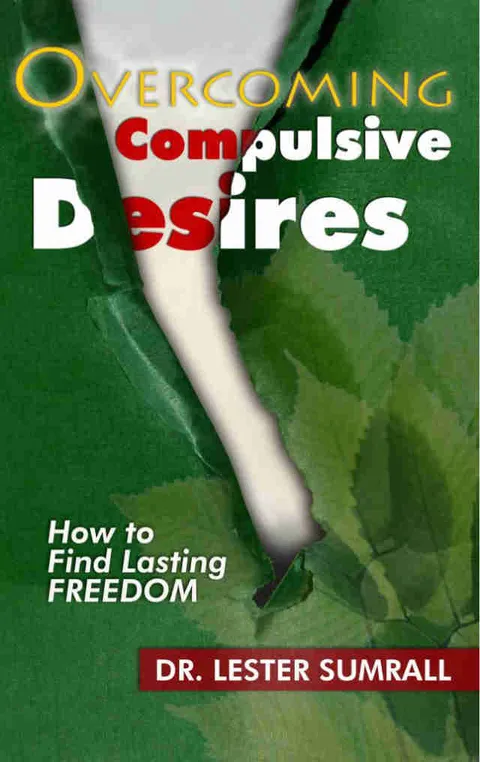
In "Overcoming Compulsive Desires," Lester Sumrall offers practical and biblical advice on how to break free from destructive habits and addictions. He provides insights on understanding the root causes of compulsive behaviors and offers steps for achieving lasting change through faith and spiritual renewal. This book serves as a guide for individuals struggling with compulsive desires to find healing and freedom in Christ.

Eric Liddell

Eric Liddell Eric Henry Liddell was born on 16th January 1902 in Tientsin (Tianjin) North China, second son of the Rev. & Mrs. James Dunlop Liddell who were missionaries with the London Mission Society. He was educated from 1908 to 1920 at Eltham College, Blackheath, school for the sons of missionaries. Eric, with his older brother Rob, were left at their boarding school while their parents and sister, Jenny, returned to China. During the boys’ time at Eltham College, their parents, sister and new brother Ernest came home on furlough two or three times and were able to be together as a family – mainly living in Edinburgh. Although born in China and educated in England, Eric Liddell lived in Scotland at various times during his life. In 1920, Eric joined his brother Rob at Edinburgh University to read for a BSc in Pure Science. During this period he played rugby for Scotland and trained to run at the Olympics. Athletics and rugby played a large part in Eric’s University life. He ran in the 100 yards and the 220 yards for Edinburgh University and later for Scotland. He played rugby for Edinburgh University and in 1922 played in seven Scottish Internationals with A.L. Gracie. Eric Liddell was a gifted rugby player and played for the Edinburgh Univerisity 1st XV team. He also played international rugby for Scotland and gained seven international caps as a wing-threequarter, scoring four tries thanks to his searing pace. As a result of having insufficient time for both running and rugby, he chose the former, aiming for the 100 meters in the Paris Olympics. When he learned that the heats were to be run on a Sunday, he switched to the 400 metre competition as he was not prepared to run on a Sunday. He won a gold medal for the 400 metres and a bronze medal for the 200 metres at the Paris Olympics. He also travelled briefly to the USA in 1924 to compete in an athletics tournament. He returned to Edinburgh after the Paris Olympics and he graduated from Edinburgh University. Eric Liddell lived for a short time in Gillespie Crescent before moving to a house in Merchiston Place. Recollections of Eric Liddell By Sir Arthur Marshall The Cambridge University Athletics Club had an invitation from Pennsylvania to take a team of seven to the Pennsylvanian Games in March 1924, and I was one of the seven. Eric Liddell, the Scot from Edinburgh University, the 1923 AAA 100 yards Champion, had been personally invited and travelled with us. We stayed at the very comfortable Pennsylvanian Cricket Club. I am afraid none of, including Eric Liddell, managed to win an event at the Pennsylvanian Games. We travelled back in a small slow ship of the American United Line called ‘The Republic’ – a ten day crossing. Eric Liddell entered in the fun and games on the boat, including the Fancy Dress Dance. Whilst he was very strict about religion. Eric and I became good friends and saw much of two American sisters, Freddie and Edith, who were travelling to ‘do Europe’, including the UK. They said they were going to be in Paris for the Olympic Games, and we said if we were there at the same time we hoped we could meet. Harold Abrahams had set his whole life on winning the Olympic 100 Metres – it had become and obsession with him. Liddell’s achievement in winning the 1923 AAA 100 Yards in the record time of 9 7/10 seconds was a devastating blow to Abrahams and shook him to the core. To date Abrahams had been a consistent 10 seconds 100 yards winner but had only slightly broken 10 seconds on one or two occasions. He knew in the Olympics he would be up against overseas competition, particularly from the Americans, but this new and very serious opposition out of the blue and on his doorstep had come at a time when Harold had established his 100 yards supremacy in the UK. To achieve level pegging with Eric Liddell’s new record time, Harold had to improve his performance by two or three yards with the help of his trainer Sam Mussabini. It must have been a tremendous relief to Harold when it became known early in 1924 that Eric had decided to concentrate on the 400 metres and, because of his religious principles, would not compete in the Olympic 100 metres as first heats were always run on Sunday. Eric had in turn become completely dedicated to winning an Olympic Medal within the restrictions of his faith. He was a famous Scottish international rugger player, and gave up his rugger to enable him to concentrate on his Olympic ambitions, which became very deep-rooted, and his work suffered. Winning an Olympic Gold Medal became a priority, second only to his religion, and the ambition to win this event became part of his religion. Recollections of Eric Liddell By Sir Arthur Marshall The team travelled to Paris days before the Olympics started and had a big send-off at Victoria Station. The silence at the start of the 100 metres and 400 metres was quite electric. Harold Abrahams won the 100 metres in a new Games record time. In spite of all that has been said about Abrahams’ 100 metres, the 400 metres in some way provided the greatest thrill of the meeting with the world record being broken by Eric Liddell three times in two days. It was thought that Liddell had some chance of winning, but nobody thought Liddell capable of the amazing performance he achieved in the final. As far as the crowd were concerned they were well informed about Liddell’s dedication to his religion and his refusal to run in the first round of the 100 metres on the Sunday; they also knew of his determination to win this event. The occasion was enlivened by the support given to Liddell by the pipes and drums of the Cameron Highlanders. The silence and pent-up excitement at the start of the race could be felt. Liddell went ahead at the start and maintained his pace throughout, finishing in what at the time was described as ‘a most lion-hearted manner’ winning by three yards from Fitch, an American. This was probably the greatest achievement of the VIIIth Olympiad, and superlatives were showered on Liddell by the press of the entire world. Liddell was short and not a pretty runner but just pounded along virtually at the same pace all the way, with a finish as if he was making a final dash for a try in a rugger match with an opponent bearing down on him and about to tackle from behind. After Eric had won the 400 metres Gold Medal, Eric and I made contact with Freddie and Edith, the American sisters, and took them to a Tango Tea Dance in the Champs Elysees. Footnote: Along with sacrificing his place in the 1924 Olympics 100m, Eric Liddell also gave up two other races in which Great Britain held high hopes of winning gold that year – the 4 x 100m and 4 x 400m, whose finals also took place on a Sunday. After the Olympics After the Olympics and his graduation, he returned to North China where he served as a missionary from 1925 to 1943 – first in Tientsin (Tainjin) and later in Siaochang. During his first furlough in 1932 he was ordained as a minister. 1930 - 1932 On furlough from China studying at Congregational College. After completing his studies he was ordained as a minister on 22nd June 1932. During this time he lived in a hostel in George Square which belonged to the Edinburgh Medical Missionary Society. During these periods Eric Liddell attended Morningside Congregational Church at the corner of Chamberlain Road and Morningside Road. Morningside Congregational Church The Church building (pictured here on the right) was originally built for North Morningside United Presbyterian Church who used it until 1881 when it became too small. They then built a new, larger, church on the other side of the road (which is now the Eric Liddell Centre). From 1881 the old church was home to the Morningside Athenaeum Club before the Congregational Church purchased it in 1890. In 1928 this church was demolished and a new one erected (which is now Morningside United Church). Eric Liddell would have attended meetings in both buildings during his two extended stays in Edinburgh. The old church from 1920 to 1925 and the current building (Morningside United Church) from 1930 to 1932. He also preached at the church on a number of occasions. On his return to China, he married Florence Mackenzie (of Canadian missionary parentage) in Tientsin in 1934. They had three daughters; Patricia, Heather and Maureen, who now all live in Canada. Living in China in the 1930s was potentially very dangerous and in 1937 Eric was sent to Siaochang where he joined his brother Rob. He was now crossing the Japanese army lines. In 1941 life in China was becoming so dangerous that the British Government advised British nationals to leave. Florence and the children left for Canada. During 1941 – 1943 Eric stayed in Tientsin, then in 1943 he was interned in Weishien camp until his death in 1945. The Eric Liddell Centre The United Presbyterian Church merged with the Free Church of Scotland in 1900 and then, in 1929, this merged with the Church of Scotland. The United Presbyterian Church built in 1879 became known as Morningside North parish Church. By 1980 the building was no longer in use and became the Holy Corner Church Centre. This was an initiative of the three remaining churches at Holy Corner: Morningside United Church (a merger between the Congregational and Church of Scotland congregations and in joint membership of the United Reformed Church and Church of Scotland), Christ Church (Scottish Episcopal Church) and Morningside Baptist Church. As the project developed the centre’s name was changed to The Eric Liddell Centre in recognition of his involvement in the life of one of the founding churches and the local community during his time living here.

A Strange and Holy Calm

My wife and I are investing in calmness therapy for our twin 11-year-old boys. It’s called youth baseball. The financial expenses pale in comparison to the deposits of time. Baseball not only facilitates brain and body development, and teaches teamwork, but also produces contexts for learning to handle pressure and deal with failure. In other words, it provides avenues to cultivate  self-control  — the one virtue the apostle Paul saw fit to set before young men in Titus 2. After multiple charges each for older men, older women, and younger women (Titus 2:2–5), he gives a single focus for the young men: “urge the younger men to be self-controlled” (Titus 2:6). Do not misunderstand. We do  not  want our boys to be unemotional; and they are not. They’re competitive, and they’re kids, prone to react without proper emotional restraint. Which is why youth baseball can be one valuable tool, among others, in seeking to build men. We want them to learn how to be composed under pressure, when the moment requires it, and give release to their emotions in the proper time and place. We want them to learn to keep their head when others are losing theirs, to not lose control in outrage or self-pity but keep a sober mind, aware that how they carry themselves and treat teammates, umpires, and the opposing team is far more important than winning a game. At times, we cheer, and celebrate a win after the final out has been made. At other moments, we process the disappointment of errors, strikeouts, and losses. But in the ups and downs of the game — and in life off the field — our passions can push us to celebrate prematurely, or wallow extensively. We want our boys to learn how to stay calm in the storm, not by repressing emotions but learning to master them. In the heat of the moment, we want them to keep their wits, tell themselves truth, and stay calm enough to faithfully take the next step for their own good, and the good of others. More than baseball players, we want our boys to become Christian men. He held his peace In a day when outbursts of emotion are not only accepted, but respected, and encouraged, it can be more difficult to raise men who learn to righteously “hold their peace.” It’s a curious phrase at key junctures in the history of God’s people. Some outburst of rage, or rash expression of anger or retaliation, is expected, yet a man of God, we’re told, “held his peace.” First, we see it in the patriarch Jacob, when he hears that Shechem, prince of the land, “had defiled his daughter Dinah.” We expect an explosion. But “Jacob held his peace” until his sons could come in from the field (Genesis 34:5). It’s not that Jacob ignores or minimizes this outrageous act against his daughter, and family, but he maintains self-control until his counselors can gather and decide how to respond. Two of his sons, Simeon and Levi, do not exercise the same restraint and become Jacob’s foil. They come against Shechem with swords, and in doing so, bring “trouble on [Jacob] by making [him] stink to the inhabitants of the land” (Genesis 34:30). So also Aaron, Moses’s brother and the first high priest. When his sons “offered unauthorized fire” before God and were consumed (Leviticus 10:1–2), we might expect Aaron to erupt with rage against heaven at the loss of his sons. Instead, Moses reports, “Aaron held his peace” (Leviticus 10:3) — not because he didn’t care, or wasn’t severely grieved, but because he revered God with a righteous fear and trusted God’s goodness, that he had done no wrong, painful as Aaron’s loss was. King Saul, at the outset of his reign, before his falls from grace, demonstrated admirable restraint when dishonored. As the rest of the nation acknowledges and embraces him as its first king, the critics emerge, “some worthless fellows,” with their cynicism: “How can this man save us?” As king, Saul now has the power to dispose of such men, quickly and quietly. “But he held his peace,” reports Samuel, in an admirable demonstration of his early magnanimity (1 Samuel 10:27). Slow to Anger Most noteworthy, though, is God himself. He says, through Isaiah, to his rebellious people, “For a long time I have held my peace; I have kept still and restrained myself” (Isaiah 42:14). God has not ignored or discounted their sin; nor has he raged in an outburst of unrestrained fury against them. Later he pleads, “Have I not held my peace, even for a long time, and you do not fear me?” (Isaiah 57:11). Now he will act in justice, giving vent to his righteous anger, but none may reasonably charge him with rushing to judgment or the slightest impatience. “In times that socialize us for outrage and outbursts, we need men who know how to hold their peace.” In times that socialize us for outrage and outbursts, we need men not just like Jacob, Aaron, and a young Saul — who know how to hold their peace when the moment requires it — but also like God himself, who the Scriptures describe repeatedly as “slow to anger.” Significantly, when God reveals himself to Moses in response to the request “Show me your glory,” the first words the prophet hears are “a God merciful and gracious, slow to anger” (Exodus 34:6). Such  divine composure , as we might call it, would become a legacy for the Israelites, that their God was  slow to anger.  Not  without anger . He clearly stood ready to punish the guilty in time. And never before it was time, and never with an intensity that was unjust or in any way that wronged those he punished or disciplined. Yet, given the rebellion of his people, often outrageous, he was enduringly patient and markedly “slow to anger,” as prophets and psalmists alike would cherish (Nehemiah 9:17; Joel 2:13; Psalms 86:15; 103:8; 145:8). So Too His People The collected Proverbs of the nation made this striking application:  As your God, so too his people . If God himself, by all accounts and remembrances, is indeed slow to anger, how can his people not seek to be like him? Whoever is slow to anger has great understanding, but he who has a hasty temper exalts folly. (Proverbs 14:29) A hot-tempered man stirs up strife, but he who is slow to anger quiets contention. (Proverbs 15:18) Whoever is slow to anger is better than the mighty, and he who rules his spirit than he who takes a city. (Proverbs 16:32) Good sense makes one slow to anger, and it is his glory to overlook an offense. (Proverbs 19:11) Here we see how God is forming and shaping his people: to have “great understanding”; to “quiet contention”; to be “better than the mighty”; to manifest “good sense” and the rare glory, in a world like ours, to overlook an offense. This God would save his people from hasty tempers, from exalting folly, from stirring up strife. So too in the New Testament, James extends this legacy to his Christian readers: “Let every person be quick to hear, slow to speak, slow to anger” (James 1:19). Jesus whipped and wept But what of Christ himself, God incarnate? In Jesus, we find full and holy humanity, along with expressions we might not label “calm,” yet are manifestly righteous. We do not picture Christ as calm when he made a whip of cords, cleared the temple, and overturned tables (John 2:15) — actions that prompted his disciples to remember Psalm 69:9: “Zeal for your house will consume me.” Nor would we call him “calm” when he came to Bethany in the wake of Lazarus’s death. “Deeply moved in his spirit and greatly troubled” (John 11:33),  Jesus wept  — visibly enough that onlookers said, “See how he loved him!” (John 11:35–36). Then he came to the tomb and was “deeply moved again” (John 11:38). Nor would we think of his anguish in the garden as serenity. “Being in agony he prayed more earnestly; and his sweat became like great drops of blood falling down to the ground” (Luke 22:44). We don’t typically think of calmness as accompanied by “loud cries and tears” — but even here in Gethsemane, in his distress, he did not abandon reverence but was heard because of it (Hebrews 5:7). We would go too far to pretend that Christ was always calm. There were moments he was righteously and manifestly moved by holy emotions. Though neither in the temple, nor in Bethany, nor in the garden, did he lose control. Apart from a few exceptions, the Christ we encounter in the Gospels is stunningly calm. What composure, what self-control, what holy calmness he shows again and again when failed by his disciples, interrupted by the sick, imposed upon by the well-meaning, challenged by the sophisticated, and disrespected by the authorities. The one to whom our Christian growth conforms is one who was decidedly, manifestly calm, with only the rarest of, and most fitting, exceptions. Not stressed to rule the stars But just as helpful today, as we seek to live with the pattern of holy calm that echoes our Lord’s, is his unshakable composure right now, seated on heaven’s throne. Indeed, we are not yet fully glorified. We are not yet beyond the reach of earthly storms, injuries, strange behavior, and surprising acts of evil in this unreasonable world. But our captain is. As his soldiers, we draw on his calmness as absolute sovereign and utterly invincible. His holy composure and admirable serenity are not only our model to follow but also, and most significantly, our hope to lean on. Unlike the priests in the first covenant,  standing  daily in God’s service, ever in motion, “offering repeatedly the same sacrifices, which can never take away sins . . . when Christ had offered for all time a single sacrifice for sins, he  sat down  at the right hand of God” (Hebrews 10:11–12). The priests stood, but as John Piper comments, Christ is not standing. He is not in perpetual motion. . . . He does happen to rule the world. And care for his church. But he doesn’t need to stand up to do it. According to Psalm 8:3, he made the stars with his fingers. It is no stress for him to rule one, infinitesimal planet without jumping out of his seat like a basketball coach, or pacing back and forth like a general waiting for news from the front lines. The accession of Christ to the throne of the universe — and his sitting on his throne with complete equanimity — is a signal to all his enemies, and to us, that this war has been won. “The enemies of Christ hate calm and fearless responses in Christ’s people.” The enemies of Christ hate calm and fearless responses in Christ’s people. They signal to Christ’s foes that their destruction is coming (Philippians 1:28). But more than that, holy calm, in the midst of our storms, makes us available to love others in the thick of crises, rather than being absorbed in our reaction. Oh, for Christians like this in our day of outrage and outburst. And for men like this especially — for husbands and fathers and pastors — to be a non-anxious presence in our homes and churches. For men who lean on the stressless, complete equanimity of Christ, showing holy calmness through the emotionally trying and explosive moments in life and leadership, ready to be responsive without being reactive, engaged and even industrious without being frantic, able to hold their peace when needed, and bring genuine concord in our skirmishes, knowing the war has been won.

Feedback
Suggestionsuggestion box
x