
Others like not i but christ Features >>



About the Book
"Not I, but Christ" by Watchman Nee reflects on the Christian journey of dying to self and allowing Christ to live through us. Nee emphasizes the importance of surrendering our own desires and ambitions to God, and allowing His will to be done in our lives. Through personal anecdotes and biblical teachings, Nee encourages readers to seek a deeper intimacy with Christ and to let go of their own self-centeredness. Overall, the book serves as a guide for believers to grow closer to God and live a life that reflects the character of Christ.
Keith Green
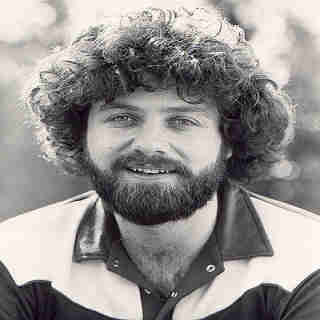 Born on October 21, 1953, in Sheepshead Bay, NY; died on July 28, 1982, in Lindale, TX; married Melody Steiner, 1973; children: Josiah (deceased), Keith, Bethany (deceased), Rebekah. Addresses: Record company--Sparrow Records, P.O. Box 5085, Brentwood, TN 37024. Website--Keith Green Official Website: http://www.lastdaysministries.org.
Known for his uncompromising approach to both his faith and his music, Keith Green has become a legendary figure in Contemporary Christian music since his death in 1982. Taking on the role of a modern-day prophet, he earned a fervent following thanks to his explicit evangelical message and buoyant brand of pop-rock. Green was a critic both of secular society and of commercial tendencies within the Christian community. Since his passing, he has been the subject of several tribute albums and was inducted into the Gospel Music Hall of Fame in 2001.
From early childhood onward, it seemed certain that Green would become a musician. Born in New York, he relocated to the San Fernando Valley area of California with his family not long after. At age eight, he began to perform in stage musicals, appearing in such notable roles as Kurt Von Trapp in a local production of The Sound of Music. In 1965 he published his first song, "The Way I Used to Be," and became the youngest member of the American Society of Composers, Authors, and Publishers. That same year he signed a five-year recording contract with Decca Records and released his first single, "Cheese and Crackers."
Though Green was groomed to be a teenage idol, he never quite achieved success. The late 1960s found him experimenting with drugs and dabbling in various Eastern religions. His life began to turn around after he met (and eventually married) songwriter Melody Steiner in the early 1970s. Under Steiner's guidance, Green began to explore fundamentalist Christianity. Before fully embracing the faith, he began keeping company with singer/songwriters Larry Norman and Randy Stonehill, two of Southern California's best-known Christian rock artists. His skills as a singer and composer began to develop as he edged closer to religious conversion. Finally, in 1975 he became a committed Christian after becoming involved with the Vineyard, a well-known San Fernando Valley church. With a convert's fervor, Green became involved in a series of Christian music projects, including the band Good News and the stage musical Firewind. He also began writing spiritually themed songs, among them "Your Love Broke Through," which went on to become a Christian pop standard recorded by Randy Stonehill, Phil Keaggy, and others.
Dedicating his reawakened creativity to glorifying God, Green founded Last Days Ministries in 1977. He and his followers evangelized to young rock music fans, street people, and others not being reached by conventional churches. At the same time, he made his debut as a Christian recording artist, signing with Sparrow Records and releasing the album For Him Who Has Ears to Hear. This song collection displays the essentials of Green's musical style: exuberant singing, piano-based melodies, and well-crafted pop/rock production. Among the best-known tracks on Green's first album are "You Put This Love in My Heart," "No One Believes Me Anymore," and "Your Love Broke Through." Balancing the warm-hearted testimony of these tunes are some humorous moments, including "No One Believes Me Anymore," a mock lament sung from the Devil's point of view. Overall, For Him Who Has Ears to Hear introduced Green to the Christian music market as a gifted musical evangelist of enormous potential.
As his audience grew, Green made clear that his focus was on spreading Christian teaching rather than providing entertainment. He sought to challenge the assumptions of his fellow believers, criticizing Christians who took their faith for granted. Some compared him with the Old Testament prophet Ezekiel, who decried the loose morals and weak faith of his generation. A number of the songs on Green's 1978 album No Compromise were addressed to the spiritually lazy. Most important among these is "Asleep at the Light," a ringing call for Christian activism sung by Green with palpable emotion. Less intense but still effective is the playful "Dear John (Letter to the Devil)" and the country-tinged "Soften Your Heart." All three of these songs received considerable airplay on Christian music stations.
Green was uneasy in his role as an emerging celebrity. He spoke out against the Christian music industry's increasing tendency to imitate secular show business ways. "Why do we idolize Christian singers and speakers?," he asked in a statement issued through Last Days Ministries. "We go from glorifying musicians in the world, to glorifying Christian musicians. It's all idolatry! ... It's true that there are many men and women of God who are greatly anointed to call down the Spirit of God on His people and the unsaved. But Satan is getting a great victory as we seem to worship these ministers on tapes and records...."
Turning away from the California Christian music scene, Green relocated to Lindale, a small east Texas community, in 1978. In addition to maintaining Last Days Ministries, he decided to launch his own record company, Pretty Good Records. Through this label, he released his next album, So You Wanna Go Back to Egypt, in 1980. This eclectic effort pokes fun at weak-spirited believers in its title track and offers a personal confession of need in "I Want to Be More Like Jesus." The most enduringly popular track proved to be "Oh Lord You're Beautiful," a powerful hymn that became a favorite at Christian worship services. In a bold move, Green announced that So You Wanna Go Back to Egypt would be sold for a variable price, even given away for free to those unable to pay. This decision sent shock waves through the Christian music industry, causing other artists to reconsider their album and concert pricing policies. An estimated 200,000 copies of the album were eventually distributed on a "pay what you can afford" basis.
Unlike some of his Christian music peers, Green showed little desire to dilute his message in hopes of reaching a wider audience. His 1982 album Songs to the Shepherd concentrates on worshipful material, praising the Lord in musical settings ranging from uplifting pop ("You Are the One") to blues-seasoned rock ("O God Our Lord") to old-fashioned country ("Draw Me"). While these songs were little-heard outside the Christian community, they helped fire Green's already-committed audience to a greater level of devotion. Fusing his work as a performer and evangelist, he toured actively during the early 1980s, mixing personal testimonials and heartfelt exhortations in between his musical numbers.
Green's life was cut short just as he began to hit his stride as a musician and minister. On July 28, 1982, he boarded a small Cessna aircraft for a brief sightseeing flight around his property in Lindale. Also on board were his son Josiah and daughter Bethany, along with the pilot and eight other passengers. Overloaded, the plane crashed shortly after takeoff, killing everyone on board. Recovering from her loss, Melody Green decided to carry on with Last Days Ministries and Pretty Good Records. Recordings of her husband's music were released posthumously, beginning with Prodigal Son and Jesus Commands Us to Go in 1983. Though lacking the cohesiveness of the albums released during his lifetime, both these song collections capture Green in strong creative moments. Prodigal Son's dramatic title track is a particular highpoint.
Melody Green continued to guide Last Days Ministries through the coming years and, in 1985, also took on the directorship of Americans against Abortion. Green's musical legacy remained vital as well, with many of his best-known recordings repackaged in compilation albums by Sparrow during the 1980s and 1990s. Multi-artist tribute albums also began to appear, starting with 1992's No Compromise: Remembering the Music of Keith Green. 2001 saw the release of Start Right Here: Remembering the Life of Keith Green, featuring spirited interpretations of his songs by such notable Christian rock acts as MxPx, Joy Electric, and Starflyer 59. Your Love Broke Through: The Worship Songs of Keith Greencontains covers of Green tunes by Michael W. Smith, Twila Paris, Rebecca St. James, and other top-rank Christian pop/rock talents.
On November 27, 2001, Green was inducted into the Gospel Music Hall of Fame. The honor served as an acknowledgment of his continuing influence in Contemporary Christian music some 20 years after his death. Green's intensity and dedication have continued to make him a role model for younger Christian performers, such as Rebecca St. James, who paid tribute to him in a Sparrow Records press biography. "I think what touches me most about him was that he was so committed to loving God and living for Him," she said of Green. "I know he was very strong-willed and people were sometimes offended at what he did and said, but it all came out of a pure motive of trying to be committed to Him in every part of his life. He wasn't going to back down just because of what people thought of him. That, to me, says that he was more focused on pleasing God than on pleasing man, something I think we should all try to focus on."
Keith Green's Career
Began career as child stage actor and composer, early 1960s; signed with Decca, released debut single, "Cheese and Crackers," 1965; began writing Christian songs, mid-1970s; founded Last Days Ministries, released first album, For Him Who Has Ears to Hear, 1977; founded Pretty Good Records, released album So You Wanna Go Back to Egypt, 1980.
Keith Green's Awards
Induction (posthumous), Gospel Music Hall of Fame, 2001.
Famous Works
For Him Who Has Ears To Hear , Sparrow, 1977.
No Compromise , Sparrow, 1978.
So You Wanna Go Back to Egypt , Pretty Good, 1980.
The Keith Green Collection , Sparrow, 1981.
Songs for the Shepherd , Pretty Good, 1982.
The Prodigal Son , Pretty Good, 1983.
Jesus Commands Us to Go , Pretty Good, 1984.
Because of You--Songs of Testimony , Sparrow, 1998.
Here I Am, Send Me--Songs of Evangelism , Sparrow, 1998.
Oh Lord, You're Beautiful--Songs of Worship , Sparrow, 1998.
Make My Life a Prayer to You--Songs of Devotion , Sparrow, 1998.
Born on October 21, 1953, in Sheepshead Bay, NY; died on July 28, 1982, in Lindale, TX; married Melody Steiner, 1973; children: Josiah (deceased), Keith, Bethany (deceased), Rebekah. Addresses: Record company--Sparrow Records, P.O. Box 5085, Brentwood, TN 37024. Website--Keith Green Official Website: http://www.lastdaysministries.org.
Known for his uncompromising approach to both his faith and his music, Keith Green has become a legendary figure in Contemporary Christian music since his death in 1982. Taking on the role of a modern-day prophet, he earned a fervent following thanks to his explicit evangelical message and buoyant brand of pop-rock. Green was a critic both of secular society and of commercial tendencies within the Christian community. Since his passing, he has been the subject of several tribute albums and was inducted into the Gospel Music Hall of Fame in 2001.
From early childhood onward, it seemed certain that Green would become a musician. Born in New York, he relocated to the San Fernando Valley area of California with his family not long after. At age eight, he began to perform in stage musicals, appearing in such notable roles as Kurt Von Trapp in a local production of The Sound of Music. In 1965 he published his first song, "The Way I Used to Be," and became the youngest member of the American Society of Composers, Authors, and Publishers. That same year he signed a five-year recording contract with Decca Records and released his first single, "Cheese and Crackers."
Though Green was groomed to be a teenage idol, he never quite achieved success. The late 1960s found him experimenting with drugs and dabbling in various Eastern religions. His life began to turn around after he met (and eventually married) songwriter Melody Steiner in the early 1970s. Under Steiner's guidance, Green began to explore fundamentalist Christianity. Before fully embracing the faith, he began keeping company with singer/songwriters Larry Norman and Randy Stonehill, two of Southern California's best-known Christian rock artists. His skills as a singer and composer began to develop as he edged closer to religious conversion. Finally, in 1975 he became a committed Christian after becoming involved with the Vineyard, a well-known San Fernando Valley church. With a convert's fervor, Green became involved in a series of Christian music projects, including the band Good News and the stage musical Firewind. He also began writing spiritually themed songs, among them "Your Love Broke Through," which went on to become a Christian pop standard recorded by Randy Stonehill, Phil Keaggy, and others.
Dedicating his reawakened creativity to glorifying God, Green founded Last Days Ministries in 1977. He and his followers evangelized to young rock music fans, street people, and others not being reached by conventional churches. At the same time, he made his debut as a Christian recording artist, signing with Sparrow Records and releasing the album For Him Who Has Ears to Hear. This song collection displays the essentials of Green's musical style: exuberant singing, piano-based melodies, and well-crafted pop/rock production. Among the best-known tracks on Green's first album are "You Put This Love in My Heart," "No One Believes Me Anymore," and "Your Love Broke Through." Balancing the warm-hearted testimony of these tunes are some humorous moments, including "No One Believes Me Anymore," a mock lament sung from the Devil's point of view. Overall, For Him Who Has Ears to Hear introduced Green to the Christian music market as a gifted musical evangelist of enormous potential.
As his audience grew, Green made clear that his focus was on spreading Christian teaching rather than providing entertainment. He sought to challenge the assumptions of his fellow believers, criticizing Christians who took their faith for granted. Some compared him with the Old Testament prophet Ezekiel, who decried the loose morals and weak faith of his generation. A number of the songs on Green's 1978 album No Compromise were addressed to the spiritually lazy. Most important among these is "Asleep at the Light," a ringing call for Christian activism sung by Green with palpable emotion. Less intense but still effective is the playful "Dear John (Letter to the Devil)" and the country-tinged "Soften Your Heart." All three of these songs received considerable airplay on Christian music stations.
Green was uneasy in his role as an emerging celebrity. He spoke out against the Christian music industry's increasing tendency to imitate secular show business ways. "Why do we idolize Christian singers and speakers?," he asked in a statement issued through Last Days Ministries. "We go from glorifying musicians in the world, to glorifying Christian musicians. It's all idolatry! ... It's true that there are many men and women of God who are greatly anointed to call down the Spirit of God on His people and the unsaved. But Satan is getting a great victory as we seem to worship these ministers on tapes and records...."
Turning away from the California Christian music scene, Green relocated to Lindale, a small east Texas community, in 1978. In addition to maintaining Last Days Ministries, he decided to launch his own record company, Pretty Good Records. Through this label, he released his next album, So You Wanna Go Back to Egypt, in 1980. This eclectic effort pokes fun at weak-spirited believers in its title track and offers a personal confession of need in "I Want to Be More Like Jesus." The most enduringly popular track proved to be "Oh Lord You're Beautiful," a powerful hymn that became a favorite at Christian worship services. In a bold move, Green announced that So You Wanna Go Back to Egypt would be sold for a variable price, even given away for free to those unable to pay. This decision sent shock waves through the Christian music industry, causing other artists to reconsider their album and concert pricing policies. An estimated 200,000 copies of the album were eventually distributed on a "pay what you can afford" basis.
Unlike some of his Christian music peers, Green showed little desire to dilute his message in hopes of reaching a wider audience. His 1982 album Songs to the Shepherd concentrates on worshipful material, praising the Lord in musical settings ranging from uplifting pop ("You Are the One") to blues-seasoned rock ("O God Our Lord") to old-fashioned country ("Draw Me"). While these songs were little-heard outside the Christian community, they helped fire Green's already-committed audience to a greater level of devotion. Fusing his work as a performer and evangelist, he toured actively during the early 1980s, mixing personal testimonials and heartfelt exhortations in between his musical numbers.
Green's life was cut short just as he began to hit his stride as a musician and minister. On July 28, 1982, he boarded a small Cessna aircraft for a brief sightseeing flight around his property in Lindale. Also on board were his son Josiah and daughter Bethany, along with the pilot and eight other passengers. Overloaded, the plane crashed shortly after takeoff, killing everyone on board. Recovering from her loss, Melody Green decided to carry on with Last Days Ministries and Pretty Good Records. Recordings of her husband's music were released posthumously, beginning with Prodigal Son and Jesus Commands Us to Go in 1983. Though lacking the cohesiveness of the albums released during his lifetime, both these song collections capture Green in strong creative moments. Prodigal Son's dramatic title track is a particular highpoint.
Melody Green continued to guide Last Days Ministries through the coming years and, in 1985, also took on the directorship of Americans against Abortion. Green's musical legacy remained vital as well, with many of his best-known recordings repackaged in compilation albums by Sparrow during the 1980s and 1990s. Multi-artist tribute albums also began to appear, starting with 1992's No Compromise: Remembering the Music of Keith Green. 2001 saw the release of Start Right Here: Remembering the Life of Keith Green, featuring spirited interpretations of his songs by such notable Christian rock acts as MxPx, Joy Electric, and Starflyer 59. Your Love Broke Through: The Worship Songs of Keith Greencontains covers of Green tunes by Michael W. Smith, Twila Paris, Rebecca St. James, and other top-rank Christian pop/rock talents.
On November 27, 2001, Green was inducted into the Gospel Music Hall of Fame. The honor served as an acknowledgment of his continuing influence in Contemporary Christian music some 20 years after his death. Green's intensity and dedication have continued to make him a role model for younger Christian performers, such as Rebecca St. James, who paid tribute to him in a Sparrow Records press biography. "I think what touches me most about him was that he was so committed to loving God and living for Him," she said of Green. "I know he was very strong-willed and people were sometimes offended at what he did and said, but it all came out of a pure motive of trying to be committed to Him in every part of his life. He wasn't going to back down just because of what people thought of him. That, to me, says that he was more focused on pleasing God than on pleasing man, something I think we should all try to focus on."
Keith Green's Career
Began career as child stage actor and composer, early 1960s; signed with Decca, released debut single, "Cheese and Crackers," 1965; began writing Christian songs, mid-1970s; founded Last Days Ministries, released first album, For Him Who Has Ears to Hear, 1977; founded Pretty Good Records, released album So You Wanna Go Back to Egypt, 1980.
Keith Green's Awards
Induction (posthumous), Gospel Music Hall of Fame, 2001.
Famous Works
For Him Who Has Ears To Hear , Sparrow, 1977.
No Compromise , Sparrow, 1978.
So You Wanna Go Back to Egypt , Pretty Good, 1980.
The Keith Green Collection , Sparrow, 1981.
Songs for the Shepherd , Pretty Good, 1982.
The Prodigal Son , Pretty Good, 1983.
Jesus Commands Us to Go , Pretty Good, 1984.
Because of You--Songs of Testimony , Sparrow, 1998.
Here I Am, Send Me--Songs of Evangelism , Sparrow, 1998.
Oh Lord, You're Beautiful--Songs of Worship , Sparrow, 1998.
Make My Life a Prayer to You--Songs of Devotion , Sparrow, 1998.
witnessing with gospel tracts
Gospel tracts and pamphlets are very important tools in evangelism. The printing press was a wonderful gift from God and has been used greatly for the glory of Jesus Christ. The printed page can greatly multiply our efforts in the service of the Lord and tracts can oftentimes go places where we cannot go. Be Careful About the Message The first consideration in the use of Gospel tracts is to be certain that the content is scriptural. There are three problems with many gospel tracts: 1. Many tracts do not contain a clear and biblical presentation of the gospel. Many refer to salvation in an unscriptural and confusing manner, such as "asking Jesus into my heart" or "giving my life to Christ." Salvation is not to give one's life to Christ, but is to trust the finished atonement of Christ. Nowhere in the New Testament do we see the Lord Jesus or the Apostles telling people to give their lives to Christ or to ask Jesus into their hearts. We need to follow the Bible very carefully in the terminology we use so that people are not confused and so they do not make false professions of faith. 2. The second serious drawback is that most tracts do not deal with repentance. Most don't even mention the word or even hint at the concept, yet the Lord Jesus Christ and His apostles preached repentance plainly and demanded it from those who would be saved. Salvation only comes by "repentance toward God, and faith toward our Lord Jesus Christ" (Acts 20:21). Any presentation of the gospel should include the fact that God "now commandeth all men every where to repent" (Acts 17:30). Whether or not the word "repentance" is used in a gospel tract, the idea should be. What is repentance? It is a turning, a change of direction (1 Thess. 1:9). When I receive Jesus Christ as my Lord and Savior, I am turning my back to the old life. 3. Another problem is that many simply do not give enough information. Large numbers of people in North America today are as ignorant of the true God of the Bible and of the basics of the Gospel of the Lord Jesus Christ as any Hindu in darkest Asia. It is crucial that we begin with the basics with these people, and that we explain biblical terms thoroughly, otherwise, when they hear terms such as "saved," "believe," "Christ," "God," "sin," they won't have the proper idea of what we are talking about, and any "profession" they make will be empty. The following are a few examples of gospel tracts that include repentance: "The Bridge to Eternal Life." This full-color pamphlet is also illustrated. [Detroit Baptist Theological Seminary, Majestic Media, 810-725-5800] "Have You Considered This?" [Dennis Costella, Fundamental Evangelistic Association, 1476 W. Herndon, Suite 104 Fresno, CA 93711, 559-438-0080. [Also available online at https://www.feasite.org/Tracts/fbconsdr.htm] "I'm a Pretty Good Person" is one of the many tracts published by the Fellowship Tract League. It is a good tract to show people that their good works and religion won't take them to heaven. [available from Sermon and Song Ministries, P.O. Box 109, Ravenna, OH 44266, www.sermonandsong.org; also available from Fellowship Tract League, P.O. Box 164, Lebanon, OH 45036, 513-494-1075, http://www.fellowshiptractleague.org/] "The Little Red Book." This 12-page pamphlet is illustrated and has been effective. [Little Red Book, P.O. Box 341, N. Greece, NY 14515 or P.O. Box 7195, Greensboro, NC 27417, LRB@frontiernet.net, 585-225-0715] "The Most Important Thing You Must Consider." This tract is strong on God's holiness and just punishment of sin and the necessity of repentance. [Faith Baptist Church, 105-01 37th Avenue, Corona, NY 11368 718-457-5651, http://www.studygodsword.com/fbcpress/tracts.html] "What Is Your Life?" This pamphlet is illustrated. [Operation Somebody Cares, 1131 Brentwood Drive, Collinsville, VA 24078, 276-647-5328, http://www.operationsomebodycares.com] "What Must I Do to Be Saved" by the late Evangelist John R. Rice. [Sword of the Lord, Box 1099, Murfreesboro, TN 37130. 800-247-9673, booksales@swordofthelord.com] "Why Should I Let You into My Heaven?" [Dean Myers, deanmyers2@juno.com] Liberty Baptist Church in Greenville, Michigan, has a wide range of helpful Gospel tracts. [Pastor Mike Austin, Liberty Baptist Church, 11845 W. Carson City Road, Greenville, MI 48838. 616-754-7151, pastor@libertygospeltracts.com, http://www.libertygospeltracts.com/] Mercy and Truth Ministries has some interesting small tracts. One is titled "You Can Get to Heaven from ---------" and an edition can be obtained for each state in the U.S. [Mercy and Truth Ministries, Lawrence, KS 66049, 875-887-2203] Pilgrim Fundamental Baptist Press publishes a tract that is designed to leave with a tip after a meal. On the outside it says, "Thank you and here are 2 tips for you!" On the inside it states that Tip #1 is a monetary token of appreciation for your service, and Tip #2 is a Gospel tract that explains how to be saved. It is large enough to hold a standard tract. [Pilgrim Fundamental Baptist Press, P.O. Box 1832, Elkton, MD 21922] Things to Remember When Passing Out Tracts Giving out tracts is something every born again believer can do, young or old. 1. Remember that it is each believer's responsibility to give out the gospel (see Matt. 28:19-20; Mk. 16:15; Luke 24:45-48; Acts 1:8; 2 Cor. 5:17-21; Phil. 2:16; 2 Tim. 4:5). 2. Remember that by giving out the gospel you are offering the greatest gift in the world. When we give out the gospel we are offering dead people life; we are offering poor people riches; we are offering sick people healing; we are offering lost people salvation. 3. It is wise to read the tracts first yourself before giving them out to others. This way you will know exactly what it says and you can refer to it when you talk to people. Also, by first reading tracts before giving them away you can see if the tract contains something that is not true or leaves out something important such as repentance. 4. Make a commitment to give out so many tracts each week. 5. Always be pleasant and polite. Remember that you are a complete stranger to the people you are approaching. Ask kindly, "May I give you something special to read?" or "I have some Good News for You" or "May I give you something that has been a blessing in my own life?" If they are busy ask them to put it in their pocket and read at home. 6. Keep in mind that the goal is not merely to give out tracts but to find opportunities to witness to people about the Lord Jesus Christ with the goal of leading them to salvation. Use the tracts to open the conversation, and when you find someone who is interested take the time to talk further with him and see if he or she is willing to meet again. We must remember that it is not enough to give out tracts; the objective is to see people come to Christ and baptized and discipled (Matt. 28:19-20). 7. Don't get upset or discouraged if someone says something against Jesus and the Bible or they mock you and what you are doing. "For unto you it is given in the behalf of Christ, not only to believe on him, but also to suffer for his sake" (Phil. 1:29; see also Matt. 5:11-12; Jn. 15:20; Luke 9:26). 8. Give out tracts to those who look like they might be interested and to those who don't. We cannot look upon the hearts of men and we cannot know who God might be dealing with. Jesus said preach the gospel to every creature (Mk. 16:15). "In the morning sow thy seed, and in the evening withhold not thine hand: for thou knowest not whether shall prosper, either this or that, or whether they both shall be alike good" (Ecc. 11:6). Ecclesiastes 11:1 says, "Cast thy bread upon the waters: for thou shalt find it after many days." This refers to the custom of casting seed on the marshy ground after a river such as the Nile had overflowed its banks, trusting that the seed will take root and bring forth a crop. "When the waters receded, the grain in the alluvial soil sprang up. 'Waters' express the seemingly hopeless character of the recipients of the charity; but it shall prove at last to have been not thrown away" (Jamieson, Fausset, Brown). 9. Be sure there is a name and address stamped on each tract so that if someone is interested they have a contact for further help. A gospel correspondence course is a good way to follow up on tract distribution. See the section on correspondence courses in our book "Ideas for Evangelism" for suggestions. This seems to be more effective in some places than others, but we have personally seen much fruit by this means. 10. One of the most important things about tract distribution is faithfulness and persistence. Some may be thrown away but others may find them. We have a man in our church who first got interested in Christ by reading a tract that was given to his friend. This has happened many times. God wants faithful workers. Don't get discouraged if nothing seems to be happening. We must do this work by faith, not by sight. Keep your eyes on the Lord and trust Him to accomplish His will and to give fruit and just continue to give out the gospel. "But this I say, He which soweth sparingly shall reap also sparingly; and he which soweth bountifully shall reap also bountifully" (2 Cor. 9:6). "Moreover it is required in stewards, that a man be found faithful" (1 Cor. 4:2). 11. Remember that our real enemy in tract distribution is not people, but the devil. He is the god of this world who is blinding the minds of the unbelievers (2 Cor. 4:4). Thus we must have on the whole armor of God as we go about this important work (Eph. 6:11-12). 12. Pray much for your tract distribution, both before and after. Pray that God will open the eyes of the people so that they desire to know Him and that they will read and understand the tracts. Updated July 21, 2008. First published January 15, 1998 by David Cloud, Fundamental Baptist Information Service, P.O. Box 610368, Port Huron, MI 48061. Used with permission.