
Others like narnia 2 - the lion, the witch and the war Features >>

About the Book
"Narnia 2 - The Lion, The Witch, and The Wardrobe" by C.S. Lewis is the second book in the Chronicles of Narnia series. It follows the adventures of four siblings- Peter, Susan, Edmund, and Lucy- as they discover the magical land of Narnia through a wardrobe and help the lion Aslan defeat the White Witch who has plunged Narnia into eternal winter. The children learn about bravery, sacrifice, and the power of good over evil in this timeless fantasy tale.
Mosab Hassan Yousef
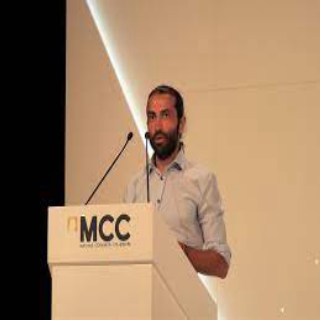
Mosab Hassan Yousef (Arabic: Ů
ؾؚب Řس٠ŮŮŘłŮ; nicknamed "The Green Prince"; born 5 May 1978) is a Palestinian who worked undercover for Israel's internal security service Shin Bet from 1997 to 2007.
Shin Bet considered him its most valuable source within the Hamas leadership. The information Yousef supplied prevented dozens of suicide attacks and assassinations of Israelis, exposed numerous Hamas cells, and assisted Israel in hunting down many militants, and incarcerating his own father, Hamas leader Sheikh Hassan Yousef. In March 2010, he published his autobiography titled Son of Hamas.
In 1999, Yousef converted to Christianity, and in 2007 he moved to the United States. His request for political asylum in the United States was granted pending a routine background check in 2010.
Biography
Mosab Hassan Yousef (later Joseph) was born in Ramallah, a city 10 kilometers (6.2 mi) north of Jerusalem. His father, Sheikh Hassan Yousef, was a Hamas leader who spent many years in Israeli prisons. He is the oldest of five brothers and three sisters.
When Yousef was growing up, he wanted to be a fighter because that was according to him what was expected of Palestinian children in the West Bank. Yousef was first arrested when he was ten, during the First Intifada, for throwing rocks at Israeli settlers. He was further arrested and jailed by Israel numerous times. As his father's eldest son, he was seen as his heir apparent, and became an important part of the Hamas organization.
Yousef said he saw the light after a stint with his dadâs comrades in an Israeli jail during the mid-1990s. At Megiddo Prison, he witnessed Hamas inmates leading a brutal year-long campaign to weed out supposed Israeli collaborators. "During that time, Hamas tortured and killed hundreds of prisoners,â he said, recalling vivid memories of needles being inserted under finger nails and bodies charred with burning plastics. Many, if not all, had nothing to do with Israeli intelligence. âI will never forget their screams,â he continued. âI started asking myself a question. What if Hamas succeeded in destroying Israel and building a state. Will they destroy our people in this way?â
Yousef's doubts about Islam and Hamas began forming when he realized Hamas' brutality, and that he hated how Hamas used the lives of suffering civilians and children to achieve its goals. Yousef was held by Shin Bet agents in 1996. While in prison, he was shocked by Shin Bet's interrogation methods, which he considered humane, when compared to how Hamas operatives tortured imprisoned suspected collaborators. He decided to accept a Shin Bet offer to become an informant.
Espionage career
Beginning with his release from prison in 1997, Yousef was considered the Shin Bet's most reliable source in the Hamas leadership, earning himself the nickname "The Green Prince" â using the color of the Islamist group's flag, and "prince" because of his pedigree as the son of one of the movement's founders. The intelligence he supplied to Israel led to the exposure of many Hamas cells, as well as the prevention of dozens of suicide bombings and assassination attempts on Jews. He has claimed that he did not inform for money, but rather that his motivations were ideological and religious, and that he only wanted to save lives.[13] In order to thwart any suspicions of collaboration, the Shin Bet staged an arrest attempt, telling the Israel Defense Forces to launch an operation to arrest him, and then provided him intelligence allowing him to escape at the last minute, after which he went into hiding for the rest of his career.
Yousef says he supplied intelligence only on the condition that the "targets" would not be killed, but arrested. This led to the detention of several key Palestinian leaders, including Ibrahim Hamid, a Hamas commander in the West Bank, and Marwan Barghouti. Also, Yousef claims to have thwarted a 2001 plot to assassinate Shimon Peres, then foreign minister and later President of Israel. According to his former Shin Bet officer, "Many people owe him their lives and don't even know it."
Conversion to Christianity
According to his story, Yousef met a British missionary in 1999 who introduced him to Christianity. Between the years 1999 and 2000, Yousef gradually embraced Christianity. In 2005, he was secretly baptized in Tel Aviv by an unidentified Christian tourist. He left the West Bank for the United States in 2007, and lived some time in San Diego, California, where he joined the Barabbas Road Church.
In August 2008, Yousef publicly revealed his Christianity, and renounced Hamas and the Arab leadership, thereby endangering himself and exposing his family in Ramallah to persecution. Yousef has also claimed that his aim was to bring peace to the Middle East; he hopes to return to his homeland when there is peace.
Yousef has stated that despite his conversion to Christianity, he is "against religion", and does not adhere to any denomination of Christianity. He has stated, "Religion steals freedom, kills creativity, turns us into slaves and against one another. Yes, I am talking about Christianity as well as Islam. Most Christians I have seen, seem to have missed the point, that Jesus redeemed us from religion. Religion is nothing but man's attempts to get back to God. Whether it is Islam, Christianity, Judaism, Buddhism, Hinduism, animism, any ism. Religion can't save mankind. Only Jesus could save mankind through his death and resurrection. And Jesus is the only way to God."
Autobiography
Yousef's co-authored autobiography, Son of Hamas: A Gripping Account of Terror, Betrayal, Political Intrigue, and Unthinkable Choices, written with the assistance of Ron Brackin, was published in March 2010.
Yousef's brother Ouwais denounced the report about his brother's activities, saying: "It was full of lies; it's all lies." Ouwais also revealed that the last contact between his family and Mosab took place more than a year before the news of his spying. Sheikh Hassan Yousef, Mosab's father, while in an Israeli prison, disowned his son for spying for Israel. The Haaretz report on Yousef was described by Hamas MP Mushir al-Masri as "psychological war being waged against the Palestinian people... [it] did not deserve a response".
Deportation threats and political asylum
For a time, Yousef was threatened with deportation from the U.S., after his request for political asylum was denied, since statements in his book about working for Hamas were interpreted as "providing material support to a U.S.-designated terrorist organization", despite Yousef's explanation that they were "intended to undermine the group". His case then proceeded to the deportation stage, despite Yousef's advocates' warning that he would likely be executed by the Palestinian Authority if deported to the West Bank.
On 24 June 2010, Shin Bet handler Gonen Ben Itzhak, who for 10 years worked with Yousef under the cryptonym "Loai", revealed his own identity in order to testify on behalf of Yousef at an immigration hearing in San Diego. Ben-Yitzhak described Yousef as a "true friend", and said, "he risked his life every day in order to prevent violence".
Partially as a result of this, Immigration Court Judge Richard J. Bartolomei, Jr., ruled on 30 June 2010, that Yousef would be allowed to remain in the United States after being fingerprinted and passing a routine background check.
He is a frequent guest speaker on various American news channels, where he talks about the atrocities committed by Hamas.
Films
A documentary adaptation of Son of Hamas titled The Green Prince, directed and written by Nadav Schirman, premiered at the 2014 Sundance Film Festival, where it won the Audience Award for World Cinema: Documentary. The Green Prince will be re-made into a live-action feature film.
Yousef is collaborating with US-based actor and film producer Sam Feuer in the production of two films: a feature film adaptation of Yousef's book Son of Hamas and documentary The Green Prince, and a historical depiction of the life of the Muslim prophet Muhammad based on the accounts of eighth-century historian Ibn Ishaq.
Views and controversies
Some elements of Yousef's story have been questioned. Former Shin Bet Deputy Chief Gideon Ezra described Yousef's claims as "too good to be true", and stated that, "there are hundreds of collaborators like him. He is not unusual. He just decided to write a book about it." The conversion to Christianity narrative promoted by Yousef and his book publishers remains unsubstantiated as well. Critics have alleged that Yousef claimed he was a Christian (for a longer period of time) in order to help secure asylum in the United States. This tactic is common for Muslim immigrants seeking to avoid deportation to countries where apostasy laws exist. However, he has since become an active figure in evangelical non-denominational Christianity in America, and has appeared on programs such as The 700 Club. Interest in the book from Christian readers helped make it a New York Times best-seller. During an appearance on The 700 Club to promote his book "Son of Hamas", he was welcomed and interviewed by host Pat Robertson.
At an "End Times Prophecy" conference in 2010, hosted by California-based evangelist Greg Laurie, Yousef told the crowd in attendance that Islam is "the biggest lie in human history." He further suggested at the conference that the Quran should not be legal in the United States ("banned on American soil").
In May 2016, talking to a Jerusalem Post conference in New York, Yousef claimed that at one time that he was working for, and being paid by, Israel, the United States, the Palestinian Authority, and Hamas, all at the same time. He went on to say that Islam as a whole is comparable to Nazism, and must be defeated.
Mercy at the Bottom
Jonah is a fascinating case study in the mercy of God. He is a no-good, rotten man who resents God for his mercy. Jonah would rather see his enemies destroyed and annihilated than forgiven. Nestled within the story of this rotten man, though, is his prayer in the second chapter. The prayer gives insight into Jonahâs inner struggle and plays no small part in the development of the story. It also tells us much about the God to whom we pray. Perhaps youâve breezed through the prayer in a previous reading of the book, but letâs slow down to see what we can learn from his cry for help from within the belly of the great fish. Most Reluctant Prayer Imagine the flannel graph with me. God sends his prophet to a wicked people to proclaim the judgment of God. Jonah, instead of going to Nineveh, runs from God by sailing in the opposite direction. Jonah â Godâs chosen instrument â is a leaky vessel. Despite the futility, he seeks to run âaway from the presence of the Lordâ (Jonah 1:3). Clearly, he wants no part of Nineveh, but weâre not yet told why. A storm rages on the high seas, and Jonah is reluctantly thrown into the sea by the sailors. These pagan seafarers call out to God for mercy, yet throughout the storm, Jonah opens not his mouth. He will not mutter even one meager word. Jonah would rather die, it seems, than be an instrument of Godâs mercy (to others or even himself). We quickly learn that Jonah is not the hero of the story, and frankly, a bit of a rotten fellow. As weâll see, however, we find good company in Jonahâs character deficiencies. And we can find solace from the fact that God still heard Jonahâs prayer, the desperate cries of a wayward prophet. Chapter 2 records Jonahâs prayer from the belly of the fish. If there is ever a foxhole cry for help recorded in the Bible, this is it. As Jonah gasps for air, covered in darkness and with death at his door, he finally manages to muster a cry for help. What Was Clear in the Dark What, if anything, can we draw out of Jonahâs prayer? Let me trace three themes and then come back to how we might personally be encouraged for our own prayer lives. GOD STILL LISTENS First, Jonah comes to his senses and prays to God. I imagine a cry of help escaped as Jonah was hoisted into the air and as he plunged in the pitch-black sea. Maybe just a singular yelp, or a thought of âsave me, Lord,â but that was all it took. Jonah wakes to the overpowering aroma of rotting fish carcasses, thinking that hell resembles a fish market. But then he regains his senses and realizes heâs alive in the belly of a fish. In this dire and desperate situation, Jonah prays: âI called out to the Lord, out of my distress, and he answered me; out of the belly of Sheol I cried, and you heard my voiceâ (Jonah 2:2). Despite his disobedience and stubbornness, he calls out to the Maker of heaven and earth. Despite attempting to run from God, he now turns to him for deliverance and help. God is always ready to receive the desperate cries of his children. GOD STILL REIGNS Jonah admits that God is in control. He doesnât say, âThose rotten sailors, I canât believe they threw me into the sea!â Instead, he sees the sovereign hand of God at work even in his precarious situation. He confesses, âYou cast me into the deep; . . . all your waves and your billows passed over meâ (Jonah 2:3). Desperate situations are not a result of God falling asleep at the wheel. Jonah admits that God is in control, and reminds us that we can trust him even in dire circumstances. God is still sovereign when our safety is compromised. GOD STILL DELIVERS Lastly, Jonah concludes that God saved him for a purpose. Jonah is incapacitated, but clearly not yet dead, and so he concludes that God saved him for some divine purpose. âGod is still sovereign when our safety is compromised.â He prays, âI shall again look upon your holy temple. . . . You brought up my life from the pit. . . . My prayer came to you, into your holy templeâ (Jonah 2:4, 6, 7). God did not satisfy Jonahâs death wish (Jonah 1:12). He has been spared to once again worship God in his holy temple. Jonah rightly concludes that his deliverance has some meaning, and he even begins to declare Godâs greatness from the belly of the fish: âSalvation belongs to the Lord!â (Jonah 2:9). Ugliest Kind of Grief We know how the story ends. Jonahâs prayer is heard and answered, and he eventually washes ashore. Jonah relents, goes to Nineveh, preaches, and the people heed his message and repent â and then the surprise comes. Jonah does not rejoice over their repentance; he gets angry (Jonah 4:1). We learn that Jonah wasnât worried that the Ninevites wouldnât listen or that they would kill the messenger. Rather, he was worried that the Ninevites would repent. He knew God would be gracious and merciful â and now that God has, he grieves. Godâs character is stunningly juxtaposed with the most pathetic display of prophetic sulking in Scripture: [Jonah] prayed to the Lord and said, âO Lord, is not this what I said when I was yet in my country? That is why I made haste to flee to Tarshish; for I knew that you are a gracious God and merciful, slow to anger and abounding in steadfast love, and relenting from disaster. Therefore now, O Lord, please take my life from me, for it is better for me to die than to live.â (Jonah 4:2â3) For all of his sins, at least Jonah is consistent. He would rather die than go preach, he would rather die than pray in the storm, and now he would rather die than see his enemies forgiven. Jonah, however, wasnât wrong about everything. He wasnât wrong about God. He knew that God would be gracious and merciful, eager to relent from disaster. The problem was that Jonah didnât share Godâs heart. He was eager for retribution, revenge, and judgment. He wanted to see the people of Nineveh burn for their oppression of Israel. Did Jonah ever become a faithful prophet? Did he ever live up to his task and mission? Did the leaky vessel ever get patched? Iâd like to think so, but the author leaves aside any tidy endings. Weâre left to ask our own question: Are we like Jonah, or are we like God? Two Lessons for Your Knees How, then, might Jonahâs prayer shape and inspire our prayers today? What might we learn from his cries out of the depths of treacherous seas? See the unrelenting kindness of God. First, we learn that God is still listening. The reality is so simple we might be tempted to overlook it. Even if you just committed a heinous sin â like running away from the living God â he has not decisively closed his ear to you. The intercom to heaven hasnât been turned off. In the immediate aftermath of sinning against him, we might imagine God exasperated and simmering with anger. We imagine him responding like we would. Jonah, however, reveals that God still waits to receive our desperate and dejected cries, even from the most disobedient among us. Heâs eager to receive and welcome our humble and broken prayers for help. As Romans 2:4 reveals, Godâs kindness is meant to lead us to repentance. God displays his mercy and forgiveness to Jonah and to the people of Nineveh. We can have confidence, even if we are low-down, dirty, rotten sinners, to come to Jesus with our first or thousandth request for forgiveness â if we humble ourselves and run to him, rather than hiding from him and running away. Resist the urge to run and hide. Second, wherever you are and whatever obedience youâre currently resisting, run to God in prayer. Be persistent in prayer, knowing your God is even more persistent in mercy. Of all the people who shouldnât have expected their prayers to be answered, it was Jonah. He openly rebelled against God. When God called, he ran in the opposite direction. He jumped aboard a ship and tried to flee the Sovereign of the seas. Even when the storms raged, he refused to pray for deliverance. He would have rather drowned than repented. And yet, out of this watery grave, he comes to his senses and cries out â and wonder of wonders, God listens and answers. âJonah teaches us that God is more merciful, more patient, and more forgiving than we can now imagine.â If we are in a Jonah-like season of rebellion, we too can pray. Even if weâve been in a decades-long season of fleeing from God, running from his presence, and resisting his call, weâre invited to come, lay down our rebellion, and be immersed, not in judgment, but in love. God wants to pour out mercy on you, and then through you to other sinners, that they too might repent and be delivered. God is not like us. Where we are quick to anger, slow to forgive, easily frustrated, and prone to hold grudges, God is not like us. Jonah teaches us that God is more merciful, more patient, and more forgiving than we can now imagine. The good news of the gospel is far better than we expect. Through Christ, the better Jonah, we call out to God, with confidence that he will overflow with mercy to no-good, rotten people who come with empty hands â and with confidence that his mercy can change our hearts to be like his. Article by Steven Lee