-480.webp)

Move (What 1,000 Churches Reveal About Spiritual Growth) Order Printed Copy
- Author: Greg L. Hawkins & Cally Parkinson
- Size: 4.94MB | 492 pages
- |
Others like move (what 1,000 churches reveal about spiritual growth) Features >>
-160.webp)
Biblical Demonology (A Study Of Spiritual Forces At Work Today)

A More Excellent Way - Pathways Of Wholeness Spiritual Roots Of Disease
Raised With Christ - How The Resurrection Changes Everything

Don't Be Offended
John G Lake On Healing

Christian Behaviour
Founded On The Rock
-160.webp)
God's Power Through Laying On Of Hands

Disappointment With God: Three Questions No One Asks Aloud
Faith: Law Of The New Covenant
About the Book
"Move" by Greg L. Hawkins and Cally Parkinson explores the results of a study on spiritual growth in over 1,000 churches. The book outlines the essential factors that lead to spiritual growth and provides practical insights and strategies for individuals and churches looking to foster spiritual development in their community.
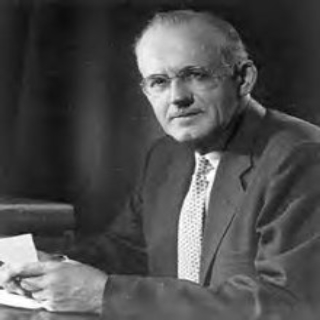
A.W. Tozer (Aiden Wilson Tozer)
 Early life
Tozer hailed from a tiny farming community in western La Jose, Pennsylvania. He was converted to Christianity as a teenager in Akron, Ohio: While on his way home from work at a tire company, he overheard a street preacher say, "If you don't know how to be saved ... just call on God, saying, 'Lord, be merciful to me a sinner.'" Upon returning home, he climbed into the attic and heeded the preacher's advice.
Pastor
In 1919, five years after his conversion and without formal education in Christian theology, Tozer accepted an offer to serve as pastor of his first church. That began 44 years of ministry associated with the Christian and Missionary Alliance (C&MA), a Protestant Evangelical denomination, 33 of them serving as a pastor in several different congregations (his first, a small storefront church in Nutter Fort, West Virginia). Later, he served thirty years (1928 to 1959) as the pastor of Southside Alliance Church in Chicago; the final years of his life he spent as pastor of Avenue Road Church in Toronto, Ontario, Canada. Observing contemporary Christian living, Tozer felt that the church was on a dangerous course toward compromising with "worldly" concerns.
Born into poverty, Tozer was self-educated and taught himself what he missed in high school and university.
Author
Tozer began writing in 1931 for the denominational magazine of the Christian and Missionary Alliance, Alliance Weekly (now Alliance Life), which became the platform from which his writing career emerged. He later wrote the monthly column “There’s Truth in It” (1936–37) and “A Word in Season” (1944–46). In May 1950, he became the editor of the Alliance Weekly, a position he filled until his death in 1963.
At the urging of David W. Fant, publications secretary of the C&MA, Tozer wrote biographies of A. B. Simpson (1943) and Robert A. Jaffray (1947). It was the publication of his third book, The Pursuit of God (1948), that made Tozer a household name among evangelicals. In addition to the 12 books he published in his lifetime, more than 40 other books have been compiled from his magazine features, editorials, and transcribed sermons.
During his lifetime, Tozer’s works were published by Christian Publications, Inc., the denominational press operated by the C&MA. The publishing house declared bankruptcy in 2006 and was purchased by WingSpread Publishers of Camp Hill, Pennsylvania.[8] In November 2013, Moody Publishers acquired Wingspread from parent company Zur Ltd., a transaction that included more than 60 Tozer books and pamphlets. Some of Tozer’s works are now in the public domain and have been issued by multiple publishers.
Personal life
Tozer had seven children, six sons and a daughter. Living a simple and non-materialistic lifestyle, he and his wife, Ada Cecelia Pfautz, never owned a car, preferring bus and train travel. Even after becoming a well-known Christian author, Tozer signed away much of his royalties to those who were in need.
Prayer was of vital personal importance for Tozer. "His preaching as well as his writings were but extensions of his prayer life," comments his biographer, James L. Snyder, in the book In Pursuit of God: The Life Of A.W. Tozer. "He had the ability to make his listeners face themselves in the light of what God was saying to them," writes Snyder.
Death and legacy
Tozer died on May 13, 1963, after suffering a heart attack. He was buried in Chicago, and later the family had his remains reinterred at Ellet Cemetery, Akron, Ohio. A simple marker reads: A. W. Tozer—A Man of God. The Alliance Weekly ran a memorial issue with numerous tributes and excerpts. The same issue also featured “God’s Greatest Gift to Man," a transcription of his final sermon. A few months prior to his death, Tozer had submitted the manuscript to The Christian Book of Mystical Verse, which was released in 1964 as his final book. His official publisher, Christian Publications, released many titles after his death, based on his magazine articles and sermon transcriptions. These continue in print with Moody Publishers. Several other publishers have released his public domain works.
In 2000, The Pursuit of God was named to Christianity Today’s list of 100 “Books of the Century.” In 2006, Knowledge of the Holy was named in “The Top 50 Books That Have Shaped Evangelicals.” Contemporary Christian music artist Lauren Barlow of BarlowGirl later published a compilation of stories told by 59 artists, writers, and leaders about A.W. Tozer’s personal inspiration.
Early life
Tozer hailed from a tiny farming community in western La Jose, Pennsylvania. He was converted to Christianity as a teenager in Akron, Ohio: While on his way home from work at a tire company, he overheard a street preacher say, "If you don't know how to be saved ... just call on God, saying, 'Lord, be merciful to me a sinner.'" Upon returning home, he climbed into the attic and heeded the preacher's advice.
Pastor
In 1919, five years after his conversion and without formal education in Christian theology, Tozer accepted an offer to serve as pastor of his first church. That began 44 years of ministry associated with the Christian and Missionary Alliance (C&MA), a Protestant Evangelical denomination, 33 of them serving as a pastor in several different congregations (his first, a small storefront church in Nutter Fort, West Virginia). Later, he served thirty years (1928 to 1959) as the pastor of Southside Alliance Church in Chicago; the final years of his life he spent as pastor of Avenue Road Church in Toronto, Ontario, Canada. Observing contemporary Christian living, Tozer felt that the church was on a dangerous course toward compromising with "worldly" concerns.
Born into poverty, Tozer was self-educated and taught himself what he missed in high school and university.
Author
Tozer began writing in 1931 for the denominational magazine of the Christian and Missionary Alliance, Alliance Weekly (now Alliance Life), which became the platform from which his writing career emerged. He later wrote the monthly column “There’s Truth in It” (1936–37) and “A Word in Season” (1944–46). In May 1950, he became the editor of the Alliance Weekly, a position he filled until his death in 1963.
At the urging of David W. Fant, publications secretary of the C&MA, Tozer wrote biographies of A. B. Simpson (1943) and Robert A. Jaffray (1947). It was the publication of his third book, The Pursuit of God (1948), that made Tozer a household name among evangelicals. In addition to the 12 books he published in his lifetime, more than 40 other books have been compiled from his magazine features, editorials, and transcribed sermons.
During his lifetime, Tozer’s works were published by Christian Publications, Inc., the denominational press operated by the C&MA. The publishing house declared bankruptcy in 2006 and was purchased by WingSpread Publishers of Camp Hill, Pennsylvania.[8] In November 2013, Moody Publishers acquired Wingspread from parent company Zur Ltd., a transaction that included more than 60 Tozer books and pamphlets. Some of Tozer’s works are now in the public domain and have been issued by multiple publishers.
Personal life
Tozer had seven children, six sons and a daughter. Living a simple and non-materialistic lifestyle, he and his wife, Ada Cecelia Pfautz, never owned a car, preferring bus and train travel. Even after becoming a well-known Christian author, Tozer signed away much of his royalties to those who were in need.
Prayer was of vital personal importance for Tozer. "His preaching as well as his writings were but extensions of his prayer life," comments his biographer, James L. Snyder, in the book In Pursuit of God: The Life Of A.W. Tozer. "He had the ability to make his listeners face themselves in the light of what God was saying to them," writes Snyder.
Death and legacy
Tozer died on May 13, 1963, after suffering a heart attack. He was buried in Chicago, and later the family had his remains reinterred at Ellet Cemetery, Akron, Ohio. A simple marker reads: A. W. Tozer—A Man of God. The Alliance Weekly ran a memorial issue with numerous tributes and excerpts. The same issue also featured “God’s Greatest Gift to Man," a transcription of his final sermon. A few months prior to his death, Tozer had submitted the manuscript to The Christian Book of Mystical Verse, which was released in 1964 as his final book. His official publisher, Christian Publications, released many titles after his death, based on his magazine articles and sermon transcriptions. These continue in print with Moody Publishers. Several other publishers have released his public domain works.
In 2000, The Pursuit of God was named to Christianity Today’s list of 100 “Books of the Century.” In 2006, Knowledge of the Holy was named in “The Top 50 Books That Have Shaped Evangelicals.” Contemporary Christian music artist Lauren Barlow of BarlowGirl later published a compilation of stories told by 59 artists, writers, and leaders about A.W. Tozer’s personal inspiration.
expect god to do something unexpected
God doesn’t do things the way we think he should. That theme emerges reading de-conversion stories or listening to people explain why they left Christianity based on supposedly intellectual arguments. God doesn’t fit our expectations. He is not like us; he is wholly different. Although not put in exactly these words, the argument goes something like this: If God is perfect and good, he should have revealed himself more clearly, he should have preserved the Scriptures without any textual variants, he should have produced a Bible less open to so many different interpretations (it should somehow be transhistorical and transcultural), he should have completely removed evil and suffering right away. These arguments could be rephrased: If I were God, I would have done things differently . In comparison to our enlightened reason, God’s actions are seen as wanting and deficient. Our preferences, wisdom, rationality, and expectations become the standard to which God must submit or be rejected as false and untrustworthy. There seems to be no place left for a humble assessment of the limits and frailty of human ability and rationality. Scandal and Folly at the Cross God often does not do things the way that we as humans think he should. The clearest example of this is Jesus’s crucifixion. Paul argues that “we preach Christ crucified, a stumbling block to Jews and folly to Gentiles, but to those who are called, both Jews and Greeks, Christ the power of God and the wisdom of God. For the foolishness of God is wiser than men, and the weakness of God is stronger than men” (1 Corinthians 1:23–25). Paul is not embracing fideism, blind faith, or anti-intellectualism; he is recognizing the limits of human rationality and the reality that God is not bound to act as we think he should. The crucifixion may have been scandalous to Jews and ridiculous to Gentiles, but it was God’s plan to save and restore his image-bearing representatives. Scandal and Folly at Christmas We are so familiar with the Christmas narratives that we often fail to see how they are similar to the crucifixion: certainly scandalous, debatably foolish, but nevertheless, God’s plan to fulfill his promises and save his people. First, the virgin conception was scandalous. Joseph himself assumed infidelity and intended to divorce Mary. Around 100 years after Matthew wrote his Gospel, Origen describes the common non-Christian Jewish counter-narrative. He accuses him of having “invented his birth from a virgin,” and upbraids him with being “born in a certain Jewish village, of a poor woman of the country, who gained her subsistence by spinning, and who was turned out of doors by her husband, a carpenter by trade, because she was convicted of adultery; that after being driven away by her husband, and wandering about for a time, she disgracefully gave birth to Jesus, an illegitimate child.” (Origen, Against Celsus 1.28, in The Ante-nicene Fathers , 4.408) These claims have no surviving first-century corroborating evidence, but it is easy enough to see how they arose in response to Christian claims about Jesus’s virgin conception. Could God have done things in a way less open to ridicule? Or could he not have somehow provided more supernatural proof? Of course he could have; but he didn’t. And skeptics mock. Meanwhile, Christians celebrate this truth as the way God chose to act to save the world through his Son Jesus, fully God and fully man. Second, the incarnation itself is incredible to believe — did God really need to become man? Justin Martyr describes early criticism of Christianity from the mid-second century, You ought to feel ashamed when you make assertions similar to theirs [Greco-Roman religions], and rather [should] say that this Jesus was born man of men. . . . You endeavor to prove an incredible and well-nigh impossible thing; [namely], that God endured to be born and become man. (Justin, Dial . 67–68, in The Ante-nicene Fathers , 1.231–232) It may be hard to believe, but God became man; he entered our pain, our suffering, and our death in order to defeat death for all of us. As the book of Hebrews makes clear, he experienced our limitations and temptations in order to become our perfect and eternal High Priest and to offer a perfect and final sacrifice for sin. Could God have done it a different, less painful, less embarrassing way? Maybe, but he didn’t. Third, why the lowly birth? Why be born in poverty, in obscurity, and in weakness? We are so familiar with the Christmas story that we fail to see how counterintuitive this all is. In saving the world, God seems to have gone the most difficult route imaginable. Like Satan’s temptation to instantly give Jesus global sovereignty without the suffering of the cross, there could have been quite a few quicker and easier ways to get this done. But as Paul notes, God’s “folly” is greater than man’s wisdom (1 Corinthians 1:25). Trust God to Be God As you reflect this Christmas season on your life, your struggles, your disappointments, your victories, your faith, and your hope, remember that God is God and we are not. Jesus’s death on the cross was simultaneously foolishness to the wise in the world, to those who are perishing, and a demonstration of the power and wisdom of God to those of us who believe. He doesn’t always do things the way we might expect or wish he would, but when it comes to God, shouldn’t we know by now to expect the unexpected? Faith in God certainly doesn’t make us safe (as if we were living in a magical bubble in which nothing bad could happen and we were guaranteed success at every turn), but it does make us incredibly secure. Because he is faithful and good, we can trust and worship without always completely understanding. Christianity did not begin, survive, and expand primarily through intellectual argumentation but through a demonstration of the Spirit, who is the true power of Christmas.