
GIP Library icon

LOG IN TO REVIEW
About the Book


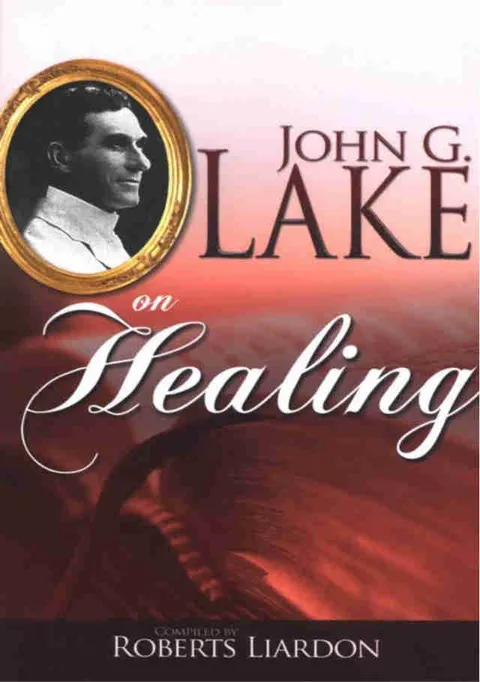
"John G Lake On Healing" by Roberts Liardon is a comprehensive guide to the life and teachings of John G Lake, a renowned healer and missionary. The book explores Lake's beliefs on healing, faith, and the power of God to bring about physical and spiritual restoration. It includes practical insights and testimonies from Lake's own experiences that will inspire and encourage readers to pursue healing in their own lives.

Adoniram Judson

Adoniram Judson Born in Malden, Massachusetts, the son of Adoniram Judson, Sr., a Congregational clergyman, and Abigail (Brown), Judson graduated from Brown University (B.A., M.A.) and in the first class of Andover Theological Seminary (1810). His interest in missions began in 1809 when he read Claudius Buchanan‘s sermon “The Star in the East.” With ministerial friends he started the Society of Inquiry, a seminary study group on missions. In 1810 he was licensed to preach by the Orange, Vermont, Congregational Association preparatory to the pastoral ministry; however, he had strong inclinations toward overseas missions. In June of that year, Judson, Samuel Newell, Samuel Nott, Jr., and Gordon Hall presented themselves to the Massachusetts General Association for missionary service, and the American Board of Commissioners for Foreign Missions (ABCFM) was formed as a result. Following an unsuccessful attempt to secure an appointment from the London Missionary Society in England, Judson persuaded the ABCFM to support three couples and two single men on a mission to the East. Judson was the lead candidate of the first commissioning service for the American overseas missionaries held at Salem (Massachusetts) Tabernacle on February 6, 1812. Following a sendoff with great fanfare, Judson and his bride, Ann (Haseltine), sailed with the Newells for India in 1812. During the four-month voyage, the couple carefully studied the baptismal positions of the English Baptists in order to controvert the Baptist position; however, when they arrived at Calcutta, they adopted Baptist principles and were baptized by William Carey. Upon their change of sentiments, the Judsons resigned from the ABCFM and plans were laid for the creation of a Baptist mission society in the United States. By order of the British East India Company, the Judsons were forced to leave India. Surreptitiously escaping to Rangoon, Burma (Myanmar), in 1813, they established a station that became the first mission of American Baptists. Their work included evangelism and Bible translation. In 1842, following completion of Judsons’s first dictionary, the couple relocated to Ava, to establish greater influence with the government. However, Adoniram Judson was charged with being an English spy and was imprisoned in June 1824. In a 21-month period of incarceration during the Anglo-Burmese War, he suffered from fever and malnutrition and underwent a forced march. As a result of the courage and resourcefulness of his wife, he was released in February 1826 to serve as a translator for the Burmese government during negotiations for the Treaty of Yandabo. Ann Judson died of complications of smallpox later the same year. To enlarge his efforts, Judson moved his mission to Moulmein in 1828. There, with the assistance of Jonathan Wade, he built a church and school and continued work on the Burmese Bible, which he completed in 1834. Later that year, he married Sarah Hall Boardman, widow of George Dana Boardman and a gifted linguist and teacher. In 1845, following the birth of their eight child, Sarah’s health declined and the Judsons embarked for the United States. Sarah died en route; Judson completed the trip and remained in the United States for nine months’ furlough. While his strength had been greatly reduced and he suffered chronic laryngitis, he was hailed as a hero throughout the Christian community. While at Madison University in upstate New York, he met and married Emily Chubbock, a writer and educator. They returned to Burma in 1846 for continued work on an enlarged Burmese dictionary, which was finished in 1849. Shortly afterward, Judson contracted a respiratory fever and, attempting to travel to a better climate, died at sea. Brackney, William H., “Judson, Adoniram,” in Biographical Dictionary of Christian Missions, ed. Gerald H. Anderson (New York: Macmillan Reference USA, 1998), 345-46. This article is reprinted from Biographical Dictionary of Christian Missions, Macmillan Reference USA, copyright © 1998 Gerald H. Anderson, by permission of Macmillan Reference USA, New York, NY. All rights reserved.

Kindness in a World Gone Mad

I was waiting in line with my sons for a roller coaster when the T-shirt caught my eye:  Kindness is free — so sprinkle that stuff everywhere . I’m sympathetic to the message at one level. To many, the world feels meaner in recent years, and perhaps especially so since the last election cycle, COVID-19, and civil unrest. Yes, genuine human kindness, in the most basic of senses, has often been sorely lacking. More kindness would indeed be nice, and perhaps shine in new ways in times when we’re coming to expect meanness and outrage everywhere. But as admirable as the instincts behind the message are, the initial claim is badly mistaken. No, real kindness — the kind we really long for and need — is not free. And perhaps it would help us all to come to terms with that up front. Real kindness is costly. This Harsh World Deep down, we know that we live in a mean world — too mean to keep the meanness constantly at the forefront of our minds. Yet at times — more frequent for some than others — the meanness, the evil afoot in this world, accosts us. Even as bright as some days appear, there is a “present darkness” ( Ephesians 6:12 ), still under the sway of “the god of this world” ( 2 Corinthians 4:4 ). Pretender though he is, and numbered his days, his “domain of darkness” ( Colossians 1:13 ) is real, and “the power of darkness” ( Luke 22:53 ) treacherous. And not only has the world  out there  gone mad, but far too often the sway of the world, and the indwelling sin in us all, brings that meanness  in here , into the people who profess to be Christ’s. Tragically, the very people who are to make Jesus known by their love for each other ( John 13:35 ) can be harsh, quarrelsome, impatient, shrill, nasty. It’s only human to respond in kind. But Christ requires of his church what is more than human:  respond in kindness . Virtue in a Vacuum? In part, internal conflict in the Ephesian church prompted Paul’s second letter to Timothy. At the letter’s heart, the aging apostle gives his protĂ©gĂ© this arresting charge: The Lord’s servant must not be quarrelsome but  kind to everyone , able to teach, patiently enduring evil, correcting his opponents with gentleness. God may perhaps grant them repentance leading to a knowledge of the truth, and they may come to their senses and escape from the snare of the devil, after being captured by him to do his will. ( 2 Timothy 2:24–26 ) Christians have long celebrated kindness as one of the  heavenly virtues . Yet we live in a day that often makes very little of kindness. We assume it’s free. We celebrate “random acts of kindness.” We think of kindness  without context . Of course, in our mean world, it is pleasant to be surprised by a stranger’s kindness, free and random as it may seem. Sure, sprinkle that stuff everywhere. But the Christian vision of kindness is far deeper, more significant, and contextualized. “Kindness is not random or free, but a costly, counter-intuitive response to meanness, rather than responding in kind.” Christian kindness is no common courtesy or virtue in a vacuum, but a surprising response to mistreatment and hurt. It is not random or free, but a costly, counterintuitive response to meanness, to outrage, rather than responding in kind. As Don Carson comments on  1 Corinthians 13:4 , “Love is kind — not merely patient or long-suffering in the face of injury, but quick to pay back with kindness what it received in hurt” ( Showing the Spirit , 79). Companions of Kindness One way to see that Christian kindness is not random is to observe the kind of company it keeps, especially in the letters of Paul — who would be “the apostle of kindness,” if there were one. No one sprinkles costly kindness like Paul. Among other graces, kindness often appears hand in hand with patience and compassion. Patience appears side by side with kindness, and in the same order, in  2 Corinthians 6:6  and  Galatians 5:22 : “patience, kindness.” So also, Paul presses them together in  Romans 2:4 , in speaking of divine patience and kindness: “Do you presume on the riches of his kindness and forbearance and patience, not knowing that God’s kindness is meant to lead you to repentance?” So too, as we’ve seen, Christian pastors — “the Lord’s servant” in the midst of conflict — “must not be quarrelsome but kind to everyone, . . . patiently enduring evil” ( 2 Timothy 2:24 ).  Kind to everyone  — isn’t that surprising? The opponents here are false teachers. They must not be coddled or encouraged. Rather, they must be exposed and corrected — and yet that is no license to treat them harshly or with meanness. Opponents can be patiently endured and gently corrected. In fact, it would not be  kind  to a false teacher, or the church, to let him continue in error. Exposing his error and gently correcting him is kindness. As for compassion,  Ephesians 4:32  memorably explains the command to “be kind to one another” with the word “tenderhearted” (or “compassionate,” Greek  eusplanchnos ). Kindness is an expression of a tender, compassionate heart.  Colossians 3:12  puts all three together, with humility and meekness: “Put on then, as God’s chosen ones, holy and beloved, compassionate hearts, kindness, humility, meekness, and patience.” Kindness, we might say, is a kind of secondary virtue. Compassion and patience, in various ways, make kindness possible. A compassionate heart leads to kindness, and external actions that give expression to that kindness. So also, patience makes internal kindness and its external acts possible. Patience gives emotional and practical space for kindness to ripen and move outward in physical acts. True kindness and its expressions (which are not random or free) complete and extend its companion virtues. The fruit of kindness needs the roots of patience and compassion, and they need kindness. Costly Kind Our young kids are still honest enough with themselves, and us, to admit to how costly kindness can be. When a sibling is mean, or someone on the playground, their natural response (and ours) is not to be kind, but to respond in kind. Which is why we consider kindness  a Christian virtue  — which doesn’t just happen spontaneously without practice and the enabling of the Holy Spirit. Kindness, Paul says, is the produce of the Spirit ( Galatians 5:22–23 ;  2 Corinthians 6:6 ), not of the natural human heart. Real kindness requires intervention from the outside, both from God’s Spirit and also his divine Son stepping into our mean world, showing us a different way, and doing it, climactically, to our eternal salvation and joy. As my wife and I  have learned  in almost fifteen years of marriage, kindness toward each other begins with God’s kindness toward us in Christ. Only then can we really find the resources to overcome evil with good, triumph over annoyance with patience, and rise above meanness with kindness. In other words, the heart of how we become kinder — not with free, random, imitation kindness, but with thick, genuine, Christian kindness — is knowing and enjoying the kindness of God toward us, and doing so specifically by feeding on, and taking our cues from, the very words of God. Behold His Kindness Our world, in its rebellion and cosmic treason, is no meaner than in its meanness to God himself — God who is holy and just. And yet what shocking kindness he displays, even toward the unbelieving. Our heavenly Father “is kind to the ungrateful and the evil” ( Luke 6:35 ). Even those who live the hardest, meanest of lives are surrounded by rays of God’s  common kindness , as we might call it: beautiful days, human minds and bodies and words, friends and family, food and shelter, the everyday divine kindnesses we take for granted until they’re gone. “Even those who live the hardest, meanest of lives are surrounded by rays of God’s common kindness.” As Paul preached at Lystra, even “in past generations,” before Christ, when God “allowed all the nations to walk in their own ways,” he showed the unbelieving his common kindness, and “did not leave himself without witness, for he did good by giving you rains from heaven and fruitful seasons, satisfying your hearts with food and gladness” ( Acts 14:16–17 ). Such kindness even in our day, gratuitous as it may seem to us, is not wasted. It is not random but has purpose: “meant to lead you to repentance” ( Romans 2:4 ). Yet in the fullness of time, “the goodness and loving kindness of God our Savior appeared” ( Titus 3:4 ), bringing salvation — God’s  special kindness  — through faith in Christ. Such divine kindness not only brought eternal rescue for God’s long-chosen people, but it engrafts even strangers into God’s ancient tree of blessing through faith ( Romans 11:22 ). Jesus is Kindness incarnate, whose yoke is not severe, but (literally)  kind  ( Matthew 11:30 ). He is the Lord whom we, with new Spirit-given palates,  taste as kind  ( 1 Peter 2:3 ). Kindness Coming As Christ, by his Spirit, shows kindness to us, in his word and in our lives, he also forms us into instruments of his kindness to others. “God in Christ forgave you,” Paul says in  Ephesians 4:32 . Therefore, “Be kind to one another, tenderhearted, forgiving one another.” Ultimately, it is the kindness of God that melts an unforgiving spirit, softens a hard heart, and transforms unkind actions. In Christ, we become the kind of people who  see others , and  have compassion  for them, and  exercise patience  toward them, and  show kindness  to them, knowing not only that we ourselves have been shown kindness but that “in the coming ages [God himself will] show the immeasurable riches of his grace in kindness toward us in Christ Jesus” ( Ephesians 2:7 ). We have only begun to taste the kindness of our God.

Feedback
Suggestionsuggestion box
x