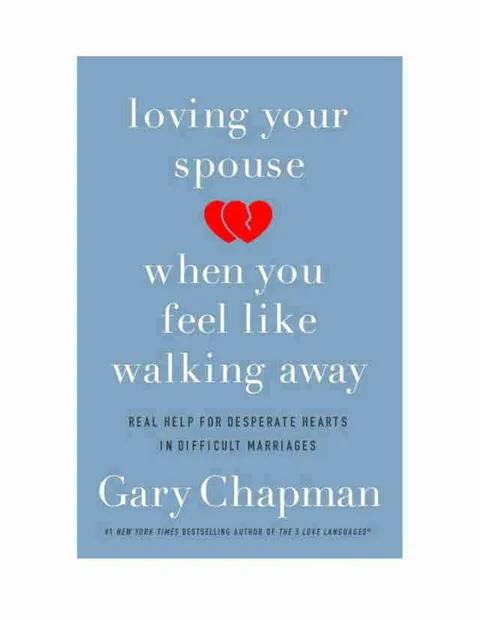

Loving Your Spouse When You Feel Like Walking Away Order Printed Copy
- Author: Gary Chapman
- Size: 1.49MB | 217 pages
- |
Others like loving your spouse when you feel like walking away Features >>





About the Book
"Loving Your Spouse When You Feel Like Walking Away" by Gary Chapman is a practical guide that offers advice and strategies for overcoming challenges in marriage and strengthening relationships. Chapman provides insights on understanding your spouse's love language, communicating effectively, and resolving conflicts in a healthy way. The book aims to help couples rekindle the love and intimacy in their marriage, even during difficult times.
Calvin Miller
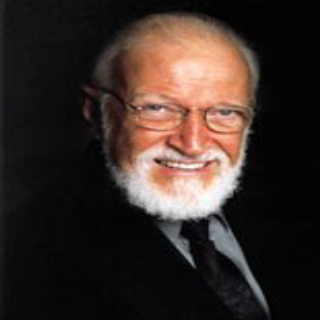 Calvin Miller was a pastor, professor and storyteller, best known for The Singer Trilogy, a mythic retelling of the New Testament story in the spirit of C. S. Lewis and J. R. R. Tolkien. Miller passed away on the afternoon of August 19, 2012, due to complications after heart surgery. He was 75.
A prolific artist and a writer's writer, Miller garnered respect and praise throughout his career from peers like Luci Shaw, Max Lucado and Philip Yancey. He was the author of more than forty books of popular theology and Christian inspiration including such recent books as Letters to Heaven, The Path of Celtic Prayer, Letters to a Young Pastor and his memoir Life Is Mostly Edges.
In addition to his twenty years of pastoral service at Westside Church in Omaha, Nebraska, Miller was also a great mentor to many students and leaders through his preaching and pastoral ministry classes at Beeson Divinity School. Calvin Miller, never one to multiply words, used just four to describe his rule of life: "Time is a gift."
RESCUE FROM THE SLUSH PILE
In October 1973 one important book was rescued from the slush pile (the stack of unsolicited manuscripts every publisher receives) by assistant editor Don Smith. He read a manuscript by a little-known Baptist pastor in Nebraska that was a poetic retelling of the life of Jesus—portraying him as a Troubadour. Both he and Linda Doll excitedly encouraged Jim Sire to take this imaginative manuscript seriously. In February 1974 Sire wrote the author, Calvin Miller, that IVP wanted to publish his book The Singer.
Months before, Miller had been waking up nights, stirred to write this tale, perhaps unconsciously inspired by the recent Broadway hits Jesus Christ Superstar and Godspell. Later Miller wrote:
When the manuscript was done, I sent it to Jim Sire at InterVarsity Press. “It’s good,” he said, “but we want to think about it a couple of weeks before we give you an answer.” So I waited until finally the letter came. They were going to do it. Jim Sire had done his Ph.D. on John Milton, and the fact that he liked it was joy immeasurable to me. “But,” he cautioned, “we’re going to print five thousand of these. They may not do well—in fact we may end up with four thousand of them on skids in our basement for the next ten years. Still, it’s a good book and deserves to be in print.”
Far more than a thousand copies sold. Actually, over three hundred times that amount sold in its first decade. It became “the most successful evangelical publication in this genre.” The Singer was followed in two years by The Song (paralleling the story of the early church in Acts) and two years after that by The Finale (inspired by the book of Revelation). Publication of The Singer changed Miller’s life. Even though he stayed in the pastorate for many years, it set him on a course of writing and speaking that he could not have imagined.
Calvin Miller was a pastor, professor and storyteller, best known for The Singer Trilogy, a mythic retelling of the New Testament story in the spirit of C. S. Lewis and J. R. R. Tolkien. Miller passed away on the afternoon of August 19, 2012, due to complications after heart surgery. He was 75.
A prolific artist and a writer's writer, Miller garnered respect and praise throughout his career from peers like Luci Shaw, Max Lucado and Philip Yancey. He was the author of more than forty books of popular theology and Christian inspiration including such recent books as Letters to Heaven, The Path of Celtic Prayer, Letters to a Young Pastor and his memoir Life Is Mostly Edges.
In addition to his twenty years of pastoral service at Westside Church in Omaha, Nebraska, Miller was also a great mentor to many students and leaders through his preaching and pastoral ministry classes at Beeson Divinity School. Calvin Miller, never one to multiply words, used just four to describe his rule of life: "Time is a gift."
RESCUE FROM THE SLUSH PILE
In October 1973 one important book was rescued from the slush pile (the stack of unsolicited manuscripts every publisher receives) by assistant editor Don Smith. He read a manuscript by a little-known Baptist pastor in Nebraska that was a poetic retelling of the life of Jesus—portraying him as a Troubadour. Both he and Linda Doll excitedly encouraged Jim Sire to take this imaginative manuscript seriously. In February 1974 Sire wrote the author, Calvin Miller, that IVP wanted to publish his book The Singer.
Months before, Miller had been waking up nights, stirred to write this tale, perhaps unconsciously inspired by the recent Broadway hits Jesus Christ Superstar and Godspell. Later Miller wrote:
When the manuscript was done, I sent it to Jim Sire at InterVarsity Press. “It’s good,” he said, “but we want to think about it a couple of weeks before we give you an answer.” So I waited until finally the letter came. They were going to do it. Jim Sire had done his Ph.D. on John Milton, and the fact that he liked it was joy immeasurable to me. “But,” he cautioned, “we’re going to print five thousand of these. They may not do well—in fact we may end up with four thousand of them on skids in our basement for the next ten years. Still, it’s a good book and deserves to be in print.”
Far more than a thousand copies sold. Actually, over three hundred times that amount sold in its first decade. It became “the most successful evangelical publication in this genre.” The Singer was followed in two years by The Song (paralleling the story of the early church in Acts) and two years after that by The Finale (inspired by the book of Revelation). Publication of The Singer changed Miller’s life. Even though he stayed in the pastorate for many years, it set him on a course of writing and speaking that he could not have imagined.
lord, all i have is yours
Jesus’s encounter with the rich young man has always unsettled me. I’m an American. I’m as middle-class as Americans go, which means I live in a level of affluence and abundance unknown by most of my co-inhabitants of this world today, and by a far, far lower percentage of people in history. In global and historical terms, I am that man. The most disturbing thing about the young man is that he seemed so familiar with his affluence-shaped religious and cultural assumptions that he didn’t realize how out of touch with spiritual reality he was. I doubt that many around him discerned how out of touch he was. From the very brief glimpses of him we catch in the synoptics, and by Jesus’s response to him in Mark’s account, this man doesn’t seem to match the arrogant rich oppressor we envision when we read James 5:4–6. Those around him might have assumed his prosperity was God’s affirmative blessing. After all, this man was spiritually earnest — running to Jesus and kneeling before him to ask him if there was more he needed to do to be saved (Mark 10:17). He had all the appearance of piety — having kept (or believed he did) the commandments Jesus listed since he was young (Mark 10:19–20). And he was sincere — Mark records that “Jesus, looking at him, loved him” (Mark 10:21). He was all these things, yet he lacked the kind of faith that saves. Spiritually earnest, sincere, apparently pious — perhaps more than most around him. Isn’t that what faith looks like? No, not necessarily. Faith looks like trusting . And when it comes to what we really believe, trusting looks like treasuring . For when it’s all on the line for us, we always trust in what we truly treasure. Show Me What I Trust The most loving thing Jesus could do for this earnest, sincere young man was show him the god he trusted: “You lack one thing: go, sell all that you have and give to the poor, and you will have treasure in heaven; and come, follow me” (Mark 10:21). Then the man saw his real god, and he walked away from Jesus’s incredible invitation “sorrowful.” Why? “He had great possessions” (Mark 10:22). This led to Jesus’s devastating observation: And Jesus looked around and said to his disciples, “How difficult it will be for those who have wealth to enter the kingdom of God! . . . It is easier for a camel to go through the eye of a needle than for a rich person to enter the kingdom of God.” (Mark 10:23–25) When it was all on the line for the young man, he trusted his wealth , his possessions , more than God. His wealth was his god, and that kept him from entering the kingdom. The thing is, he didn’t see this until he really had to choose. Do you find that disconcerting? The disciples did: “Then who can be saved?” (Mark 10:26). As an affluent American living in the midst of unprecedented historical abundance, I do. I don’t trust my faith self-assessment (1 Corinthians 4:3). I can trust only God’s assessment (1 Corinthians 4:4). And since faith is really proven genuine only when it is tried (1 Peter 1:6–7; James 1:2–4; 2 Corinthians 13:5), we must be willing, like the young man, to say to Jesus, Search me, O God, and know my heart! Try me and know my thoughts! And see if there be any grievous way in me, and lead me in the way everlasting! (Psalm 139:23–24) And if Jesus doesn’t call us to leave our abundance, but to continue living faithfully in it — if we are to really trust God and not our abundance — then we need the faith to abound. Faith to Abound Paul said he had learned to be content in whatever situation he found himself: I know how to be brought low, and I know how to abound. In any and every circumstance, I have learned the secret of facing plenty and hunger, abundance and need. I can do all things through him who strengthens me. (Philippians 4:12–13) If given the choice, most of us likely would prefer to be given the faith to abound rather than the faith to be brought low. I think that’s because we aren’t fully cognizant of the dangerous nature of material prosperity. Paul meant it when he said it requires God’s strength to “face plenty.” “Abundance” (prosperity) and “need” (scarcity) are very different circumstances. They both require faith in order to handle them in ways that glorify God. But they demand the exercising of different sets of faith muscles. Scarcity requires faith muscles for trusting God in a place of needy desperation. Prosperity requires faith muscles for trusting God in place of bountiful material security. Exercising faith in scarcity is not easy by any means. Most of us fear scarcity more than prosperity because the threat is clearly seen. But ironically, that’s one reason it can be easier to exercise faith in scarcity than in prosperity. Because in scarcity, our need is clear and our options are typically few. We feel desperate for God to provide for us and so we are driven to seek him — to exercise our faith. But exercising faith in prosperity is different. It’s a more complex and deceptive spiritual and psychological environment. It requires that we truly trust — truly treasure — God when we don’t feel desperate for his provision, when we feel materially secure, when nothing external is demanding that we feel urgency. When we have lots of options that look innocuous and we can spend precious time and money on all sorts of pursuits and enjoyments. This environment is so dangerous that Jesus warns it is harder for people in it to enter God’s kingdom than for a camel to climb through the eye of a needle. Test yourself. When have you sought God most earnestly: in need or abundance? When God Is Our Option Christians have always found it harder to voluntarily give away security than to desperately plead for it. It requires different faith muscles to trust God in divesting ourselves of prosperity for his sake than to trust God to meet our scarcity for his sake. In some ways, it takes greater faith to trust God when you have other options than when he is our only option. That’s why the laborers are so few when the harvest is so plenty (Luke 10:2). Few want to face worldly need in order to experience kingdom plenty. It makes the kind of faith that saints like George Müller and Hudson Taylor exercised so remarkable. Yes, they trusted in God in scarcity. But what made this all the more remarkable was that they could have raised money in other legitimate ways to support their work and avoid many of those needy moments. But they voluntarily chose (which is different from being circumstantially forced) to place themselves in a position of desperation to demonstrate that God exists and rewards those who seek him (Hebrews 11:6). They, like Paul, learned the secret of facing abundance and need: fully trusting God, their Treasure. Whatever It Takes We Christians who live in abundance need to heed the story of the rich young man. We need him to unnerve us. For the whole history of the church bears witness to the general trend that the wealthier she grows, the more corrupt, indulgent, and apathetic she grows. And the less urgent over lost souls she feels. It’s harder for people in our environment to be real Christians than for camels to pass through a needle’s eye. But Jesus does not leave us without great hope. He announces, “With man [handling material abundance faithfully] is impossible, but not with God. For all things are possible with God” (Mark 10:27). So, let us run to Jesus — who has power to do what is impossible for us — kneel before him, and plead: Whatever it takes, Lord, help me to truly trust you as my greatest treasure. I would rather lose my material security and gain the kingdom than gain the world and lose my soul. All I have is yours — my life, my family, my time, my money, my possessions, my future — and I will steward them as you wish, even if it means losing them (Philippians 3:8). And I invite you to search my heart and put my faith to the test.