
Others like a house not divided Features >>


-160.webp)



About the Book
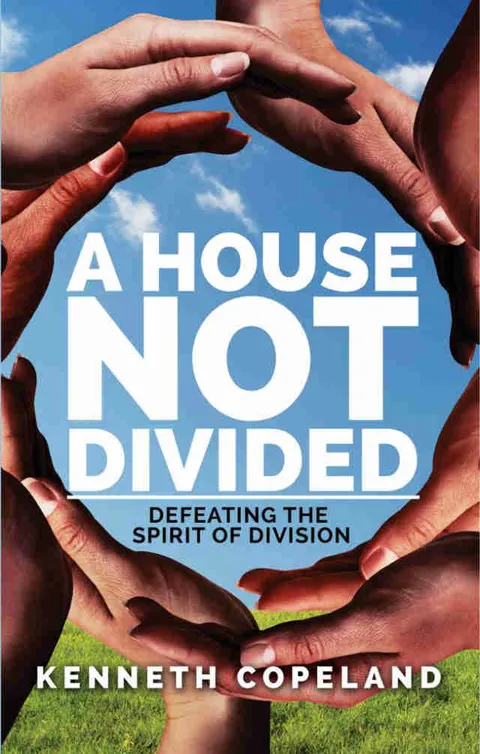
"A House not Divided" by Kenneth Copeland explores the power of unity within the family, the church, and society. Copeland emphasizes the importance of coming together and standing united in faith to overcome division and fulfill God's purpose for our lives. Through biblical teachings and personal anecdotes, he offers practical advice on how to cultivate harmony and oneness in all areas of life.
Kenneth E. Hagin
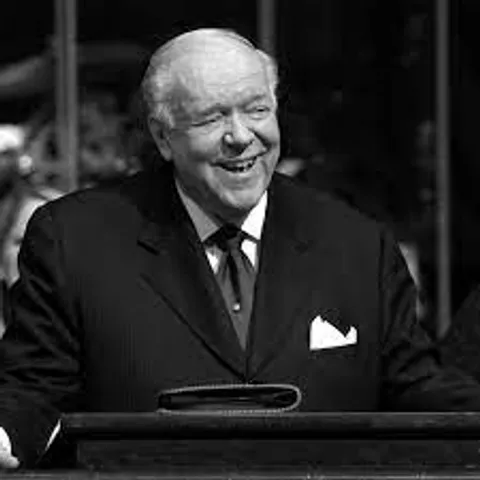 Rev. Kenneth Erwin Hagin was born on Aug. 20, 1917, in McKinney, Texas. Rev. Hagin was sickly as a child, suffering from a deformed heart and an incurable blood disease. He was not expected to live and became bedfast at age 15. In April 1933 during a dramatic conversion experience, he reported dying three times in 10 minutes, each time seeing the horrors of hell and then returning to life.
In August 1934, Rev. Hagin was miraculously healed, raised off a deathbed by the power of God and the revelation of faith in God’s Word. Jesus appeared to Rev. Hagin eight times over the next several years in visions that changed the course of his ministry. In 1967, he began a regular radio broadcast that continues today as Rhema for Today.
In 1968 Rev. Hagin published the first issues of The Word of Faith. That magazine, now produced nine times a year, has a circulation of over 200,000. The publishing outreach he founded, Faith Library Publications, has circulated worldwide more than 75 million copies of books by Rev. Hagin, Kenneth W. Hagin, Lynette Hagin, Craig W. Hagin, and several other authors. Faith Library Publications also has produced millions of audio and video teachings.
Other outreaches of Kenneth Hagin Ministries include Rhema Praise, a weekly television broadcast hosted by Revs. Kenneth and Lynette Hagin; Rhema Correspondence Bible School; Rhema Alumni Association; Rhema Ministerial Association International; the Rhema Prayer and Healing Center; and the Rhema prison ministry.
In 1974 Rev. Hagin founded what is now Rhema Bible Training College. The school has campuses all over the world and continues to expand.
Until shortly before his death, Rev. Hagin continued to travel and teach throughout the United States and into Canada conducting All Faiths’ Crusades and other special meetings.
Known as the “father of the modern faith movement,” Rev. Hagin was a dynamic preacher, teacher, and prophet. His teachings and books are filled with vivid stories that show God’s power and truth working in his life and the lives of others. He will be remembered not only as a great minister but as a great family man—for his family was his heart. He was there at every milestone ready to talk, to answer, to pray. He was a man whose belly laugh filled the room at the sight of one of his grandchildren or great-grandchildren.
Rev. Kenneth Erwin Hagin was born on Aug. 20, 1917, in McKinney, Texas. Rev. Hagin was sickly as a child, suffering from a deformed heart and an incurable blood disease. He was not expected to live and became bedfast at age 15. In April 1933 during a dramatic conversion experience, he reported dying three times in 10 minutes, each time seeing the horrors of hell and then returning to life.
In August 1934, Rev. Hagin was miraculously healed, raised off a deathbed by the power of God and the revelation of faith in God’s Word. Jesus appeared to Rev. Hagin eight times over the next several years in visions that changed the course of his ministry. In 1967, he began a regular radio broadcast that continues today as Rhema for Today.
In 1968 Rev. Hagin published the first issues of The Word of Faith. That magazine, now produced nine times a year, has a circulation of over 200,000. The publishing outreach he founded, Faith Library Publications, has circulated worldwide more than 75 million copies of books by Rev. Hagin, Kenneth W. Hagin, Lynette Hagin, Craig W. Hagin, and several other authors. Faith Library Publications also has produced millions of audio and video teachings.
Other outreaches of Kenneth Hagin Ministries include Rhema Praise, a weekly television broadcast hosted by Revs. Kenneth and Lynette Hagin; Rhema Correspondence Bible School; Rhema Alumni Association; Rhema Ministerial Association International; the Rhema Prayer and Healing Center; and the Rhema prison ministry.
In 1974 Rev. Hagin founded what is now Rhema Bible Training College. The school has campuses all over the world and continues to expand.
Until shortly before his death, Rev. Hagin continued to travel and teach throughout the United States and into Canada conducting All Faiths’ Crusades and other special meetings.
Known as the “father of the modern faith movement,” Rev. Hagin was a dynamic preacher, teacher, and prophet. His teachings and books are filled with vivid stories that show God’s power and truth working in his life and the lives of others. He will be remembered not only as a great minister but as a great family man—for his family was his heart. He was there at every milestone ready to talk, to answer, to pray. He was a man whose belly laugh filled the room at the sight of one of his grandchildren or great-grandchildren.
triune decision-making - how god guides tough choices
When we face a big decision, sometimes the decision-making process can feel more like a game show than a guided path. We can easily slip into the thinking that God is hosting “Let’s Make a Deal,” where we have to choose one of a slew of suitcases, hoping we pick the right one. When we face multiple doors and potential pathways, the freedom to choose can feel like crippling anxiety and pressure. Thankfully, our God does not play games with us, nor does he leave us to our own devices when making decisions. Contrary to popular belief, decisions are not puzzles to solve, but privileges to steward with the guidance of our triune God. Triune Guidance God offers triune guidance to his children as we face the decisions of life, from the minute to the monumental. Rather than stand far off from us, watching as we make decisions in consternation, he comes near to us, offering to guide us gently through a process that ultimately leads to more of himself. “Contrary to popular belief, decisions are not puzzles to solve, but privileges to steward.” As the Father who stands outside of time, God knows all that will happen and assures us that none of his plans will be thwarted (Isaiah 14:27; Job 42:2). He providentially steers all of creation, even the decisions of humans made in his image, working all things according to his everlasting and good purposes (Ephesians 1:11; Romans 8:28). He knows the number of hairs on our heads, the length of our days, and the tears we shed as we wrestle to make decisions (Luke 12:7; Psalm 139:16; Psalm 56:8). As the Son who stepped into time, Jesus is the pioneer and perfecter of our faith (Hebrews 12:1–3). He knows what it feels like to live within the limits of time and space, as he made decisions daily during his time on earth. While the first Adam led the way into disastrous, self-centered decision-making, as the second Adam, Christ always made decisions in light of the goodness of his Father (Romans 6:17–21). His perfect decisions cleared the path so that we can make our present decisions in the presence of the triune God. As the Spirit who makes his home within us, the Holy Spirit guides us into all truth, convicting us of our selfish propensities and pointing us to God’s promises as we make decisions (John 16:12–15). He offers us comfort and peace when we feel dizzied by the sheer amount of decisions we make daily. Triune Perspective In addition to these timeless truths that anchor our souls in the sea of decisions, a Trinitarian perspective can also serve as a practical help in the process. When we face decisions large or small, we are limited by our own perspective as embodied creatures. We simply cannot see or imagine all the possible angles, try as we may. God does not live within these limitations. As John Frame wisely notes, God “sees all things from every possible perspective” ( Theology in Three Dimensions , 4–5). While the Trinity is a unity (meaning all of God does all that God does), Frame’s triperspectivalism creates a framework that helps us approach complex truths from three different angles or perspectives within the Trinity. The normative, the situational, and the existential perspectives (which correlate to Father, Son, and Holy Spirit) can serve as different entry points for considering decisions. The normative perspective relates to God’s authority. God acts as our loving authority, providing principles and revealing truths by which we can understand the normative human experience. As Creator and Father, God sets the standards by which his creatures operate best in his world. When we approach a decision from the normative perspective, we ask, “What does God’s word say about the decision set before me?” The situational perspective relates to God’s control. Through his eternal Word, God perfectly controls and orders the movement of every proton and every person. If God is in complete control over all things (which he is), then we can trust that he has perfectly ordered our present circumstances with their opportunities, challenges, and limitations. When we approach a decision from the situational perspective, we assess the realities and circumstances in which we find ourselves. The existential perspective relates to God’s presence. The triune God has always sought to be close to his people, and by the Holy Spirit, he now lives within every believer. He is closer than even the air we breathe. The Spirit searches and permeates the deep waters of human hearts and personalities (1 Corinthians 2:10–13; Proverbs 20:5). When we approach a decision from the existential perspective, then, we are asking more internal questions about personal desires and feelings. Three Perspectives in Action If we can get past the length of the word triperspectivalism , we will begin to see the depth of practical wisdom we can glean from this approach to decisions. For example, when a couple is praying through a potential marriage, walking through the decision from the normative, the situational, and the existential can provide helpful insight. In Scripture, God is clear that marriage is between a man and a woman and that believers are to be equally yoked spiritually ( normative ). If the couple’s friends and family are not opposed to the union, and present circumstances seem to allow it ( situational ), the couple is then free to consider whether they desire to commit to each other in the covenant of marriage ( existential ). Let’s consider a different example. A young couple is eager to grow their family and has prayed and processed through adoption. They know that physical adoption is one of the most powerful pictures of the spiritual adoption we have received through Christ into the household of God (normative). They have been going through the prerequisite steps of training, they have conducted a home study, and they have even begun to check out agencies. There are countless options in their county, all of which they are able to pursue (situational); however, they both feel especially pulled toward the foster-care system, even though they know it will likely present unique challenges (existential). While God is pleased with all forms of adoption, they plan to forgo international and private adoption after much praying and processing within their local church. “God promises to use the decision-making process as a means to make us more like him and to give us more of him.” Finally, let’s look at a more ordinary, everyday decision through these three perspectives. A child has been invited to play in a sports tournament on a Sunday. The family has already prioritized worship in the local church (normative). The child knows that he will miss the first game because attendance at worship is a high point of the family’s weekly rhythms; however, he really wants to play in the afternoon game (existential). The parent of another player offers a ride to the second game that does not interfere with the rest of the plans for the day (situational). The parents are left to discuss what the child thinks is the best way to serve as a team member (existential). Guided Process to More of God When we are facing a significant decision, it is natural to be overwhelmed at the various paths set before us. But no matter which of the potential pathways you choose, remember that Jesus has opened up the most significant pathway for us already: he has opened up the path to fellowship with God through his own body (John 14:6). He has not left us alone to see how we fare in our decisions, as if he were a game show host. Rather, he takes us by the hand and leads us toward glory (Psalm 73:23–24). And along the way, he promises to use the decision-making process as a means to make us more like him and to give us more of him, who is our great reward (Genesis 15:1).