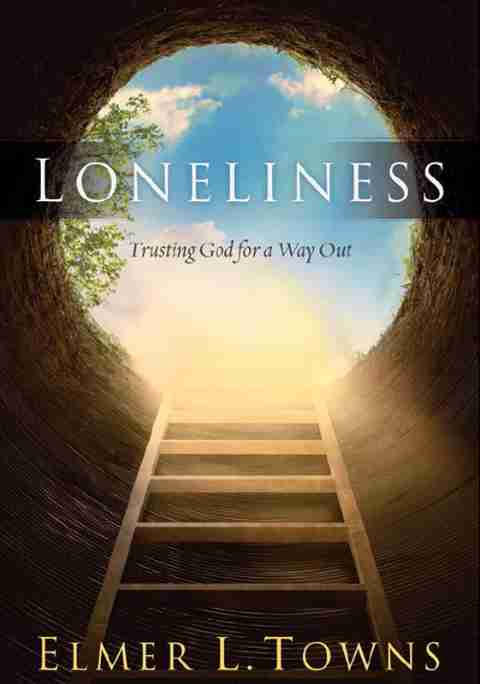

Others like loneliness: trusting god for a way out Features >>




-160.webp)
About the Book
In "Loneliness: Trusting God for a Way Out" by Elmer L. Towns, the author explores the struggles of loneliness and offers a solution through trusting in God. Towns emphasizes the importance of finding strength and fulfillment in God's presence, and provides practical advice for overcoming feelings of isolation and finding true companionship in God. This book offers hope and encouragement to those struggling with loneliness, guiding them towards a deeper relationship with God for ultimate peace and comfort.
Virginia Prodan

Death Is Not the End
“And they lived happily ever after. The end.” That’s a common way to end a story that begins “Once upon a time.” We call those stories fairy tales. Fairy tales are imaginary stories for children, filled with magic and with fanciful people and places. We love a good fairy tale because it echoes the real story of the Bible. God has wired us to love stories that resolve — stories that end with not only justice but with exuberant joy. “God will transform your natural, earthly body into a supernatural, heavenly body.” This conviction was held by two friends who wrote some of the most iconic fiction of the twentieth century: C.S. Lewis and J.R.R. Tolkien. After the great battle at the end of Lewis’s Chronicles of Narnia, the characters discover that the new Narnia has been their real country the whole time, and they have nothing left now but to travel further up and further in. Tolkien, in Lord of the Rings, enlists Sam Gamgee to ask, after the ring has been destroyed, whether everything sad would come untrue. Tolkien even coined a term for a sudden happy turn in the story toward this blissful resolve: eucatastrophe. We can summarize the story line of the Bible as “Kill the dragon, and get the girl.” That joyful resolution is what the final two phrases of the Apostles’ Creed capture: “the resurrection of the body” and “the life everlasting.” Resurrection of the Body God will raise the corpses of Christians. That is the main point of 1 Corinthians 15, the Bible’s most famous passage on the resurrection of believers. “How can some of you say,” Paul asks the Corinthians, “that there is no resurrection of the dead?” (1 Corinthians 15:12). The Corinthians believed that God resurrected Christ (1 Corinthians 15:1–2, 4, 11), but some of them denied that God will resurrect the corpses of Christians. “Resurrection” translates the Greek word anastasis (1 Corinthians 15:12–13, 21, 42), which does not ambiguously refer to “life after death,” as if it could be a non-bodily existence. It specifically refers to bodily life after a person has died. The idea that God would resurrect a human corpse revolted Greco-Roman pagans (Acts 17:32). They believed that the material body has no future beyond the grave and that only the immaterial soul is immortal. They valued the soul over the physical body. Consequently, some applied that philosophy to ethics — namely, that what you do now in your physical body does not matter (1 Corinthians 15:32–34). So, Paul corrects the Corinthians who had adopted worldly assumptions about resurrection from their pagan culture. He asserts that God will certainly resurrect the corpses of believers (1 Corinthians 15:12–34). Such a belief is reasonable given two analogies from nature: seeds that die and rise to life, and different kinds of bodies, like the sun and the moon, heavenly and earthly (1 Corinthians 15:35–44). He argues that the analogy of Adam and Christ proves that resurrecting the corpses of believers is certain (1 Corinthians 15:45–49). Finally, he writes that God must transform the perishable, mortal bodies of dead and living believers into imperishable, immortal bodies to triumphantly defeat death (1 Corinthians 15:50–58). God created a material universe. He created humans with physical bodies. Jesus took on flesh and will have his physical, resurrected body forever. God will transform the current physical earth into a new and better one. And God will transform your natural, earthly body into a supernatural, heavenly body. “‘The life everlasting’ is so glorious and satisfying because we get to enjoy the triune God more and more. Forever!” That is wonderful news for us believers in earthly bodies, because our bodies are deteriorating and groaning (1 Corinthians 15:42–44; Romans 8:18–25). Your earthly body is perishable, but your heavenly body will be “imperishable” (1 Corinthians 15:42, 50, 52–54). Christ’s resurrection guarantees that death will die. So, we look forward to enjoying a supernatural body like Christ’s resurrected body: “Our citizenship is in heaven, and from it we await a Savior, the Lord Jesus Christ, who will transform our lowly body to be like his glorious body, by the power that enables him even to subject all things to himself” (Philippians 3:20–21). Life Everlasting All humans will exist forever, but only some will enjoy what the Apostles’ Creed calls “the life everlasting.” That refers specifically to the resurrection life of the age to come, which believers experience in some measure now (John 3:15; 17:3). We will fully experience “the life everlasting” after Jesus says to each of us, “Well done, good and faithful servant. . . . Enter into the joy of your master” (Matthew 25:23). In his book God Is the Gospel, John Piper asks a piercing question, If you could have heaven, with no sickness, and with all the friends you ever had on earth, and all the food you ever liked, and all the leisure activities you ever enjoyed, and all the natural beauties you ever saw, all the physical pleasures you ever tasted, and no human conflict or any natural disasters, could you be satisfied with heaven, if Christ were not there? (15) The gospel is good news not merely because God will rescue us from hell and because we can enjoy the pleasures of heaven. It is good news ultimately because we can enjoy God himself like we never could in our shackles of sin. “The life everlasting” is so glorious and satisfying because we get to enjoy the triune God more and more. Forever! We can experience now what David wrote in Psalm 16:11, You make known to me the path of life; in your presence there is fullness of joy; at your right hand are pleasures forevermore. We long for the resurrection of the body and the life everlasting because then we will eternally and increasingly experience Psalm 16:11 like never before. Only the Beginning In C.S. Lewis’s The Last Battle (the seventh and final book of The Chronicles of Narnia), Aslan explains, “The term is over: the holidays have begun. The dream is ended: this is the morning.” Lewis continues, And as He spoke He no longer looked to them like a lion; but the things that began to happen after that were so great and beautiful that I cannot write them. And for us this is the end of all the stories, and we can most truly say that they all lived happily ever after. But for them it was only the beginning of the real story. All their life in this world and all their adventures in Narnia had only been the cover and the title page: now at last they were beginning Chapter One of the Great Story which no one on earth has read: which goes on forever: in which every chapter is better than the one before. (210–11) “The end” of the story of the Bible is “the beginning of a never-ending, ever-increasing happiness in the hearts of the redeemed, as God displays more and more of his infinite and inexhaustible greatness and glory for the enjoyment of his people” (Desiring God: An Affirmation of Faith 14.3). For now, we need not fear death. Indeed, we should be able to say with the apostle Paul, “My desire is to depart and be with Christ, for that is far better” (Philippians 1:23). And if it is far better even now than remaining in a natural, earthly, non-glorified body, it will be far better still to experience the resurrection of the body and the life everlasting with Christ in the new heavens and new earth. So, we pray, “Now to him who is able to keep [us] from stumbling and to present [us] blameless before the presence of his glory with great joy, to the only God, our Savior, through Jesus Christ our Lord, be glory, majesty, dominion, and authority, before all time and now and forever. Amen” (Jude 24–25). Article by Andy Naselli Professor, Bethlehem College & Seminary