

Others like living in the grace of god Features >>
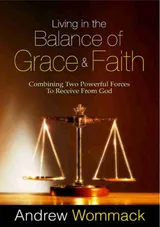
Living In The Balance Of Grace And Faith

Living In The Kingdom Where Grace Rules
Walking In The Newness Of Life
The Price Of God's Miracle Working Power
Favor - The Road To Success

Sinners In The Hands Of An Angry God

Embracing The Love God Wants You To Have

The Grace Of Yielding

The Grace And Truth Paradox
About the Book
"Living in the Grace of God" by Rob Rufus explores the transformative power of God's grace in our lives, emphasizing that we are saved by grace through faith, not by our own works. The book encourages readers to embrace God's unconditional love and walk in freedom, purpose, and joy. Rufus highlights how understanding and living in God's grace can bring about healing, restoration, and transformation in every area of our lives.
Christopher Yuan

take time to be unproductive - how busyness can waste a life
Søren Kierkegaard, a nineteenth-century Danish theologian and social critic, once wrote in his journal, “The result of busyness is that an individual is very seldom permitted to form a heart.” We sense in our souls he is right. Unrelenting busyness — running here and there, late and in haste, always with more to do than we have time for — stifles the life of the heart. Yet I fear that many in the church, especially those of us in various forms of leadership, often pursue that very busyness. We occasionally warn others about burnout and stress, but we are constantly in motion, endlessly feeling harassed by all that clamors to be done and feeling guilty for projects we haven’t completed. And we frequently pass that stress on to others, in subtle but destructive ways — we are busy, so we can act like everyone else should be busy. If they are not, we can treat them as lazy or negligent. But is our problem primarily that we are not more productive, or is it that we have allowed unrealistic expectations to distort our vision of faithfulness? While it’s very likely that we could become better organized and more efficient, pursuing those efforts may feed and hide the true problem rather than helping it. What if the heart of our trouble is not time management, but something else? What if the goal of Christian life isn’t merely to get more done? And if that’s true, why do many of us feel a need to fill every moment either with items we can check off a to-do list or with mindless distraction? Binge-watching television and hours spent on social media may be more symptoms than causes of our problems, signs of a deeper malady. What if God doesn’t expect us to be productive every moment? What if growing comfortable with slowness, with quiet, with not filling every moment can help reconnect us to God, others, and even with our own humanity? That’s at least worth thinking about. Unexamined Expectations While it was Ben Franklin, and not the apostle Paul, who observed that “time is money,” we Americans have baptized that sentiment — not to derive financial benefit from every moment, but because somehow we have the idea that every minute should yield positive measurable results. Don’t just sit around; do something! Of course, diligence, a good work ethic, and innovation typically do make life better for ourselves and others. Sometimes, however, a genuine good can become a horrible master, and when productivity and efficiency become our highest goals, our world and our lives suffer. That’s because God’s highest value is not productivity and efficiency, but love (Matthew 22:37–39; 1 Corinthians 16:14). This sounds too abstract, so let’s turn to more direct questions about our own lives. What do you think God expects of you in any given day? If you are like me, this question can reveal some painful disconnects in our perception of God and the faithful life. I recently spoke with a pastor in the Midwest who told me that, when he was in college, he got so excited about the idea that he should “make every minute count” and “redeem the time” that he and his friends mapped out how they could live on four hours of sleep a night; this way, they could “do so much more for Christ.” Twenty years later, this once strong and zealous servant of Christ was physically, emotionally, psychologically, and relationally broken. His faith, his family, and his ministry were all on the brink of collapse. He certainly wouldn’t trace all of his problems to his early zeal and oversized projects, but he does see how that pattern distorted his life, increasing his expectations not just for how much he should do in a day, but for how much he should accomplish in his life. We may easily dismiss his crazy idea of four hours of sleep per night, but my guess is many of us are living with similar assumptions, and it is hurting us. One sign that unhealthy expectations are running our lives is a constant background frustration in our souls, hiding behind our smiling faces. We are exhausted by the kids, by the church, by the spouse, by the endless demands. We have no margin in life, so when someone says the wrong thing, or a child doesn’t move fast enough, or a neighbor needs help, this anger tries to burst through our kindness. People are keeping us from doing what we need to do! Efficiency and productivity have replaced love as our highest value. Gift of Slow Maybe in order not to waste our lives, you and I need to learn the benefit of “wasting” some time. Let me explain. What we think of as boredom or unproductive time can be a great gift. In the spaces opened by moments of slowness, if we don’t immediately fill them with more tasks or distractions, surprising things often happen: our bodies breathe and relax a bit, our imaginations open up, and our hearts can consider all manner of ideas. We have space to evaluate how we spoke to a colleague that morning or notice a young parent struggling with a child. Only by slowing down, and not immediately filling the space, do we start to sense God’s presence and the complexities of the world — including both its beauties and problems, our wonder and fears. We miss the world when we are constantly busy. Thus Kierkegaard’s insight: the result of busyness is that we are seldom able to form a heart. Compassion, thoughtfulness, repentance, hope, and love all grow in the soil of reflection. And healthy reflection rarely occurs when we don’t slow down. “Compassion, thoughtfulness, repentance, hope, and love all grow in the soil of reflection.” Busyness also stunts our growth. Creativity and wisdom require our internal freedom to reflect, wrestle, and sit with challenges. There is a reason that walks and showers are often places of great insight: the distractions are minimal, so the mind and heart can wonder. Such periods of slowness also enrich our communion with God if we take time for mental, emotional, and even physical engagement that the overly busy life excludes. Life improves if we carve out extended times for solitude and silence. These practices have historically been used and recommended by Christians who saw that busyness made it harder to be present with God and with others. These times of silence and solitude can be difficult, especially at first. But until we grow in our ability to be alone with God — and alone with ourselves — we will have difficulty recognizing the Spirit’s presence in our day. Forming Our Hearts Another reason we like to be busy is that we often don’t like ourselves. Slowing down and creating space for quiet often faces us with matters we prefer to ignore, whether painful memories from our past, undesirable traits in our personality, or actions we wish we hadn’t taken. Busyness can be a way to avoid confronting our sin. It can also be our way of avoiding the wish that we were someone else, or had a different set of abilities or background or temperament. Busyness that enables avoidance can stunt our growth. Busyness makes self-knowledge very difficult. “We miss the world when we are constantly busy.” Rather than being honest with God and ourselves about our hurts, sins, motivations, and disappointments, we dull our sensitivity with busyness. It takes courage to let moments remain unoccupied, but when we are willing to enter open spaces with an open heart, God can bring serious healing and growth. We also gain more courage to enter such spaces when we live in a community of faith that is safe and loving, where others don’t panic or shut down in the face of our pain and shortcomings. When others are comfortable with quiet, mystery, and unfinished work, secure enough in Christ to endure messy situations, that also frees us to face this season in which God is still bringing to completion that which he began (Philippians 1:6): God is comfortable with process, too. We learn to avoid endless busyness when embracing slowness becomes not merely a personal value, but that of our community. Learning to go slower and maybe even “waste” more time together opens up fresh spaces to grow in our awareness of God’s presence and work. We start to become people who can, in the slowness, pray without ceasing (1 Thessalonians 5:17), often without realizing that is what’s happening. Slowing down — not filling every moment with distractions, dropping the compulsion to squeeze productivity out of every moment — allows us to hear God and others. It gives our imagination and creativity oxygen to breathe, and we start to develop a heart. It opens up the path of love. So go ahead, “waste” some time, because this may keep you from wasting your life.