
Letters Of Samuel Rutherford - With A Sketch Of His Life Order Printed Copy
- Author: Rev. Andrew A. Bonar, D.D.
- Size: 1.13MB
- |
Others like letters of samuel rutherford - with a sketch of his life Features >>








-by-james-stuart-bell-160.webp)
About the Book
"Letters of Samuel Rutherford - With a Sketch of his Life" is a collection of letters written by Samuel Rutherford, a prominent Scottish Presbyterian theologian and pastor. These letters offer profound insights into Christian doctrine and practice, as well as personal reflections on Rutherford's own spiritual journey. The book, compiled by Rev. Andrew A. Bonar, provides a glimpse into the life and thoughts of this influential figure in 17th-century Scotland.
George Müller
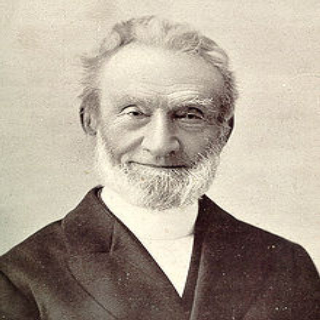 Among the greatest monuments of what can be accomplished through simple faith in God are the great orphanages covering thirteen acres of ground on Ashley Downs, Bristol, England. When God put it into the heart of George Muller to build these orphanages, he had only two shillings (50 cents) in his pocket. Without making his wants known to any man, but to God alone, over a million, four hundred thousand pounds ($7,000,000) were sent to him for the building and maintaining of these orphan homes. When the writer first visited them, near the time of Mr. Muller's death, there were five immense buildings of solid granite, capable of accommodating two thousand orphans. In all the years since the first orphans arrived the Lord had sent food in due time, so that they had never missed a meal for want of food.
Although George Muller became famous as one of the greatest men of prayer known to history, he was not always a saint. He wandered very deep into sin before he was brought to Christ. He was born in the kingdom of Prussia, in 1805. His father was a revenue collector for the government, and was a worldly-minded man. He supplied George and his brother with plenty of money when they were boys, and they spent it very foolishly. George deceived his father about how much money he spent, and also as to how he spent it. He also stole the government money during his father's absence.
At ten years of age, George was sent to the cathedral classical school at Halberstadt. His father wanted to make a Lutheran clergyman of him, not that he might serve God, but that he might have an easy and comfortable living from the State Church. "My time," says he. "was now spent in studying, reading novels, and indulging, though so young, in sinful practices. Thus it continued until I was fourteen years old, when my mother was suddenly removed. The night she was dying, I, not knowing of her illness, was playing cards until two in the morning, and on the next day, being the Lord's day, I went with some of my companions in sin to a tavern, and then, being filled with strong beer, we went about the streets half intoxicated."
"I grew worse and worse," says he. "Three or four days before I was confirmed (and thus admitted to partake of the Lord's supper), I was guilty of gross immorality; and the very day before my confirmation, when I was in the vestry with the clergyman to confess my sins (according to the usual practice), after a formal manner, I defrauded him; for I handed over to him only a twelfth part of the fee which my father had given me for him."
A few solemn thoughts and desires to lead a better life came to him, but he continued to plunge deeper and deeper into sin. Lying, stealing, gambling, novel-reading, licentiousness, extravagance, and almost every form of sin was indulged in by him. No one would have imagined that the sinful youth would ever become eminent for his faith in God and for his power in prayer. He robbed his father of certain rents which his father had entrusted him to collect, falsifying the accounts of what he had received and pocketing the balance. His money was spent on sinful pleasures, and once he was reduced to such poverty that, in order to satisfy his hunger, he stole a piece of coarse bread, the allowance of a soldier who was quartered in the house where he was. In 1821 he set off on an excursion to Magdeburg, where he spent six days in "much sin." He then went to Brunswick, and put up at an expensive hotel until his money was exhausted. He then put up at a fine hotel in a neighboring village, intending to defraud the hotel-keeper. But his best clothes were taken in lieu of what he owed. He then walked six miles to another inn, where he was arrested for trying to defraud the landlord. He was imprisoned for this crime when sixteen years of age.
After his imprisonment young Muller returned to his home and received a severe thrashing from his angry father. He remained as sinful in heart as ever, but in order to regain his father's confidence he began to lead a very exemplary life outwardly, until he had the confidence of all around him. His father decided to send him to the classical school at Halle, where the discipline was very strict, but George had no intention of going there. He went to Nordhausen instead, and by using many lies and entreaties persuaded his father to allow him to remain there for two years and six months, till Easter, 1825. Here he studied diligently, was held up as an example to the other students, and became proficient in Latin, French, History, and his own language (German). "But whilst I was outwardly gaining the esteem of my fellow-creatures," says he, "I did not care in the least about God, but lived secretly in much sin, in consequence of which I was taken ill, and for thirteen weeks confined to my room. All this time I had no real sorrow of heart, yet being under certain natural impressions of religion, I read through Klopstock's works, without weariness. I cared nothing about the Word of God."
"Now and then I felt I ought to become a different person," says he, "and I tried to amend my conduct, particularly when I went to the Lord's supper, as I used to do twice every year, with the other young men. The day previous to attending that ordinance I used to refrain from certain things, and on the day itself I was serious, and also swore once or twice to God with the emblem of the broken body in my mouth, to become better, thinking that for the oath's sake I should be induced to reform. But after one or two days were over, all was forgotten, and I was as bad as before."
He entered the University of Halle as a divinity student, with good testimonials. This qualified him to preach in the Lutheran state church. While at the university he spent all his money in profligate living. "When my money was spent," says he, "I pawned my watch and part of my linen and clothes, or borrowed in other ways. Yet in the midst of all this I had a desire to renounce this wretched life, for I had no enjoyment in it, and had sense enough left to see, that the end one day or other would be miserable; for I should never get a living. But I had no sorrow of heart on account of offending God."
At the University he formed the acquaintance of a miserable backslider, named Beta, who was trying by means of worldly pleasures to drown out his conviction of sin. They plunged into sin together, and in June, 1825, George was again taken sick. After his recovery they forged letters purporting to be from his parents. With these they obtained passports and set out to see Switzerland. Muller stole from the friends who accompanied him and the journey did not cost him so much as it did them. They returned home to finish up the vacation and then went back to the University, Muller having lied to his father about the trip to Switzerland.
At the University of Halle there were about nine hundred divinity students. All of these were allowed to preach, but Muller estimates that not nine of them feared the Lord. "One Saturday afternoon, about the middle of November, 1825," says he, "I had taken a walk with my friend Beta. On our return he said to me, that he was in the habit of going on Saturday evenings to the house of a Christian, where there was a meeting. On further inquiry he told me that they read the Bible, sang, prayed, and read a printed sermon. No sooner had I heard this, but it was to me as if I had found something after which I had been seeking all my life long. I immediately wished to go with my friend, who was not at once willing to take me; for knowing me as a merry young man, he thought I should not like this meeting. At last, however, he said he would call for me."
Describing the meeting, Muller said: "We went together in the evening. As I did not know the manners of the brethren, and the joy they have in seeing poor sinners, even in any measure caring about the things of God, I made an apology for coming. The kind answer of this dear brother I shall never forget. He said: 'Come as often as you please; house and heart are open to you."' After a hymn was sung they fell upon their knees, and a brother, named Kayser, who afterwards became a missionary to Africa, asked God's blessing on the meeting. "This kneeling down made a deep impression upon me," says Muller, "for I had never either seen any one on his knees, nor had I ever myself prayed on my knees. He then read a chapter and a printed sermon; for no regular meetings for expounding the Scriptures were allowed in Prussia, except an ordained clergyman was present. At the close we sang another hymn, and then the master of the house prayed." The meeting made a deep impression upon Muller. "I was happy," says he, "though if I had been asked why I was happy, I could not clearly have explained it."
"When we walked home, I said to Beta, all we have seen on our journey to Switzerland, and all our former pleasures, are as nothing in comparison with this evening. Whether I fell on my knees when I returned home I do not remember; but this I know, that I lay peaceful and happy in my bed. This shows that the Lord may begin his work in different ways. For I have not the least doubt that on that evening He began a work of grace in me, though I obtained joy without any deep sorrow of heart, and with scarcely any knowledge. But that evening was the turning point in my life. The next day, and Monday, and once or twice besides, I went again to the house of this brother, where I read the Scriptures with him and another brother; for it was too long for me to wait until Saturday came again."
"Now my life became very different, though not so, that my sins were all given up at once. My wicked companions were given up; the going to taverns was discontinued; the habitual practice of telling falsehoods was no longer indulged in, but still a few times more I spoke an untruth... I now no longer lived habitually in sin, though I was still often overcome and sometimes even by open sins, though far less frequently than before, and not without sorrow of heart. I read the Scriptures, prayed often, loved the brethren, went to church from right motives and stood on the side of Christ, though laughed at by my fellow students."
For a few weeks after his conversion Muller made rapid advancement in the Christian life, and he was greatly desirous of becoming a missionary. But he fell in love with a Roman Catholic girl, and for some time the Lord was well nigh forgotten. Then Muller saw a young missionary giving up all the luxuries of a beautiful home for Christ. This opened his eyes to his own selfishness and enabled him to give up the girl who had taken the place of Christ in his heart. "It was at this time," says he, "that I began to enjoy the peace of God, which passeth all understanding. In this my joy I wrote to my father and brother, entreating them to seek the Lord, and telling them how happy I was; thinking, that if the way to happiness were set before them, they would gladly embrace it. To my great surprise an angry answer was returned."
George could not enter any German missionary training institution without the consent of his father, and this he could not obtain. His father was deeply grieved that after educating him so that he could obtain a comfortable living as a clergyman he should turn missionary. George felt that he could no longer accept any money from him. The Lord graciously sent him means with which to complete his education. He taught German to some American college professors at the University, and they handsomely remunerated him for his services. He was now the means of winning a number of souls to Christ. He gave away thousands of religious tracts and papers, and spoke to many persons concerning the salvation of their souls.
Although, before his conversion, Muller had written to his father and told him about sermons he had preached, he never really preached a sermon until some time after his conversion. He thought to please his father by making him believe that he was preaching. His first sermon was a printed one which he had memorized for the occasion. He had but little liberty in preaching it. The second time he preached extemporaneously and had some degree of liberty. "I now preached frequently," says he, "both in the churches of the villages and towns, but never had any enjoyment in doing so, except when speaking in a simple way; though the repetition of sermons which had been committed to memory brought more praise from my fellow creatures. But from neither way of preaching did I see any fruit. It may be that the last day will show the benefit even of those feeble endeavors. One reason why the Lord did not permit me to see fruit, seems to me, that I should have been most probably lifted up by success. It may be also because I prayed exceedingly little respecting the ministry of the Word, and because I walked so little with God, and was so rarely a vessel unto honor, sanctified and meet for the Master's use."
The true believers at the University increased from six to about twenty in number before Muller left. They often met in Muller's room to pray, sing and read the Bible. He sometimes walked ten or fifteen miles to hear a really pious minister preach.
In 1827 Muller volunteered to go as a missionary pastor to the Germans at Bucharest, but the war between the Turks and Russians prevented this. In 1828, at the suggestion of their agent, he offered himself to the London Missionary Society as a missionary to the Jews. He was well versed in the Hebrew language and had a great love for it. The Society desired him to come to London that they might see him personally. Through the providence of God he finally secured exemption for life from serving in the Prussian army, and he went to England in 1829, at twenty-four years of age. He was not able to speak the English language for some time after he landed in England and then only in a very broken manner at first.
Soon after coming to England Muller received a deeper Christian experience which entirely revolutionized his life. "I came weak in body to England." says he, "and in consequence of much study, as I suppose, I was taken ill on May 15, and was soon, at least in my own estimation, apparently beyond recovery. The weaker I got in body, the happier I was in spirit. Never in my whole life had I seen myself so vile, so guilty, so altogether what I ought not to have been, as at that time. It was as if every sin of which I had been guilty was brought to my remembrance; but at the same time I could realize that all my sins were completely forgiven -- that I was washed and made clean, completely clean, in the blood of Jesus. The result of this was great peace. I longed exceedingly to depart and to be with Christ..."
"After I had been ill about a fortnight my medical attendant unexpectedly pronounced me better. This, instead of giving me joy, bowed me down, so great was my desire to be with the Lord; though almost immediately afterwards grace was given me to submit myself to the will of God."
That Muller always regarded the above experience as one which deepened his whole spiritual life is clearly shown by a letter of his which appeared in the British Christian, of August 14, 1902. In this letter Muller says: "I became a believer in the Lord Jesus in the beginning of November, 1825, now sixty-nine years and eight months. For the first four years afterwards, it was for a good part in great weakness; but in July, 1829, now sixty-six years since, it came with me to an entire and full surrender of heart. I gave myself fully to the Lord. Honors, pleasures, money, my physical powers, my mental powers, all were laid down at the feet of Jesus, and I became a great lover of the Word of God. I found my all in God, and thus in all my trials of a temporal and spiritual character, it has remained for sixty-six years. My faith is not merely exercised regarding temporal things, but regarding everything, because I cleave to the Word. My knowledge of God and His Word is that which helps me."
Being advised to go into the country for his health, he prayed about it and finally decided to go. He went to Devonshire, where the great blessing he had already received was greatly augmented by his conversations and prayers with a Spirit-filled minister whom he first heard preach at Teignmouth. Through the conversations and sermons of this minister he was led to see as never before "that the Word of God alone is our standard of judgment in spiritual things; that it can be explained only by His Holy Spirit; and that in our day, as well as in former times, He is the teacher of His people. The office of the Holy Spirit I had not experimentally understood before that time," says he. "The result of this was, that the first evening that I shut myself into my room to give myself to prayer and meditation over the Scriptures, I learned more in a few hours than I had done during a period of several months previously." Again, he says: "In addition to these truths, it pleased the Lord to lead me to see a higher standard of devotedness than I had seen before."
On his return to London, Muller sought to lead his brethren in the training seminary into the deeper truths he had been brought to realize. "One brother in particular," says he, "was brought into the same state in which I was; and others, I trust, were more or less benefited. Several times, when I went to my room after family prayer, I found communion with God so sweet that I continued in prayer until after twelve, and then being full of joy, went into the room of the brother just referred to, and finding him also in a similar frame of heart, we continued praying until one or two, and even then I was a few times so full of joy that I could scarcely sleep, and at six in the morning again called the brethren together for prayer."
Muller's health declined in London and his soul was also now on fire for God in such a way that he could not settle down to the routine of daily studies. His newly acquired belief in the near coming of Christ also urged him forward to work for the salvation of souls. He felt that the Lord was leading him to begin at once the Christian work he was longing to do, and as the London Missionary Society did not see proper to send him out without the prescribed course of training, he decided to go at once and trust the Lord for the means of support. Soon after this he became pastor of Ebenezer Chapel, Teignmouth, Devonshire. His marriage to Miss Mary Groves, a Devonshire lady, followed. She was always of the same mind as her husband and their married life was a very happy one. Not long after his marriage he began to have conscientious scruples about receiving a regular salary, and also about the renting of pews in his church. He felt that the latter was giving the "man with the ring on his finger" the best seat, and the poorer brother the footstool, and the former was taking money from those who did not give "cheerfully" or "as the Lord had prospered them." These two customs were discontinued by him. He and his wife told their needs to no one but the Lord. Occasionally reports were spread that they were starving; but though at times their faith was tried, their income was greater than before. He and his wife gave away freely all that they had above their present needs, and trusted the Lord for their "daily bread."
Muller preached in many surrounding towns, and many souls were brought to Christ in his meetings. In 1832 he felt profoundly impressed that, his work was ended in Teignmouth, and when he went to Bristol the same year he was as profoundly impressed that the Lord would have him work there. When the Spirit, the Word, and the providence of God agree, we may be quite certain that the Lord is leading us, for these three are always in harmony and cannot disagree. Not only did Muller feel led of the Lord to work in Bristol, but the providence of God opened the way, and it seemed in harmony with the Word of God.
Muller began his labors in Bristol in 1832, as co-pastor with his friend Mr. Craik, who had been called to that city. Without salaries or rented pews their labors were greatly blessed at Gideon and Bethesda Chapels. The membership more than quadrupled in numbers in a short time. Ten days after the opening of Bethesda there was such a crowd of persons inquiring the way of salvation that it took four hours to minister to them. Subsequently Gideon Chapel was relinquished, and in the course of time two neighboring chapels were secured. These churches, though calling themselves non-sectarian, were usually classed with the people commonly known as "Plymouth Brethren." Muller continued to preach to them as long as he lived, even after he began his great work for the orphans. At the time of his death he had a congregation of about two thousand persons at Bethesda Chapel.
In 1834 Mr. Muller started the Scripture Knowledge Institution for Home and Abroad. Its object was to aid Christian day-schools, to assist missionaries, and to circulate the Scriptures. This institution, without worldly patronage, without asking anyone for help, without contracting debts; without committees, subscribers, or memberships; but through faith in the Lord alone, had obtained and disbursed no less a sum than £1,500,000 ($7,500,000) at the time of Mr. Muller's death. The bulk of this was expended for the orphanage. At the time of Mr. Muller's death 122,000 persons had been taught in the schools supported by these funds; and about 282,000 Bibles and 1,500,000 Testaments had been distributed by means of the same fund. Also 112,000,000 religious books, pamphlets and tracts had been circulated; missionaries had been aided in all parts of the world; and no less than ten thousand orphans had been cared for by means of this same fund.
At the age of seventy, Mr. Muller began to make great evangelistic tours. He traveled 200,000 miles, going around the world and preaching in many lands and in several different languages. He frequently spoke to as many as 4,500 or 5,000 persons. Three times he preached throughout the length and breadth of the United States. He continued his missionary or evangelistic tours until he was ninety years of age. He estimated that during these seventeen years of evangelistic work he addressed three million people. All his expenses were sent in answer to the prayer of faith.
Greatest of all Muller's undertakings was the erection and maintenance of the great orphanages at Bristol. He began the undertaking with only two shillings (50 cents) in his pocket; but in answer to prayer and without making his needs known to human beings, he received the means necessary to erect the great buildings and to feed the orphans day by day for sixty years. In all that time the children did not have to go without a meal, and Mr. Muller said that if they ever had to go without a meal he would take it as evidence that the Lord did not will the work to continue. Sometimes the meal time was almost at hand and they did not know where the food would come from, but the Lord always sent it in due time, during the twenty thousand or more days that Mr. Muller had charge of the homes.
From Deeper Experiences of Famous Christians... by J. Gilchrist Lawson. Anderson, Ind.: Warner Press, 1911.
Among the greatest monuments of what can be accomplished through simple faith in God are the great orphanages covering thirteen acres of ground on Ashley Downs, Bristol, England. When God put it into the heart of George Muller to build these orphanages, he had only two shillings (50 cents) in his pocket. Without making his wants known to any man, but to God alone, over a million, four hundred thousand pounds ($7,000,000) were sent to him for the building and maintaining of these orphan homes. When the writer first visited them, near the time of Mr. Muller's death, there were five immense buildings of solid granite, capable of accommodating two thousand orphans. In all the years since the first orphans arrived the Lord had sent food in due time, so that they had never missed a meal for want of food.
Although George Muller became famous as one of the greatest men of prayer known to history, he was not always a saint. He wandered very deep into sin before he was brought to Christ. He was born in the kingdom of Prussia, in 1805. His father was a revenue collector for the government, and was a worldly-minded man. He supplied George and his brother with plenty of money when they were boys, and they spent it very foolishly. George deceived his father about how much money he spent, and also as to how he spent it. He also stole the government money during his father's absence.
At ten years of age, George was sent to the cathedral classical school at Halberstadt. His father wanted to make a Lutheran clergyman of him, not that he might serve God, but that he might have an easy and comfortable living from the State Church. "My time," says he. "was now spent in studying, reading novels, and indulging, though so young, in sinful practices. Thus it continued until I was fourteen years old, when my mother was suddenly removed. The night she was dying, I, not knowing of her illness, was playing cards until two in the morning, and on the next day, being the Lord's day, I went with some of my companions in sin to a tavern, and then, being filled with strong beer, we went about the streets half intoxicated."
"I grew worse and worse," says he. "Three or four days before I was confirmed (and thus admitted to partake of the Lord's supper), I was guilty of gross immorality; and the very day before my confirmation, when I was in the vestry with the clergyman to confess my sins (according to the usual practice), after a formal manner, I defrauded him; for I handed over to him only a twelfth part of the fee which my father had given me for him."
A few solemn thoughts and desires to lead a better life came to him, but he continued to plunge deeper and deeper into sin. Lying, stealing, gambling, novel-reading, licentiousness, extravagance, and almost every form of sin was indulged in by him. No one would have imagined that the sinful youth would ever become eminent for his faith in God and for his power in prayer. He robbed his father of certain rents which his father had entrusted him to collect, falsifying the accounts of what he had received and pocketing the balance. His money was spent on sinful pleasures, and once he was reduced to such poverty that, in order to satisfy his hunger, he stole a piece of coarse bread, the allowance of a soldier who was quartered in the house where he was. In 1821 he set off on an excursion to Magdeburg, where he spent six days in "much sin." He then went to Brunswick, and put up at an expensive hotel until his money was exhausted. He then put up at a fine hotel in a neighboring village, intending to defraud the hotel-keeper. But his best clothes were taken in lieu of what he owed. He then walked six miles to another inn, where he was arrested for trying to defraud the landlord. He was imprisoned for this crime when sixteen years of age.
After his imprisonment young Muller returned to his home and received a severe thrashing from his angry father. He remained as sinful in heart as ever, but in order to regain his father's confidence he began to lead a very exemplary life outwardly, until he had the confidence of all around him. His father decided to send him to the classical school at Halle, where the discipline was very strict, but George had no intention of going there. He went to Nordhausen instead, and by using many lies and entreaties persuaded his father to allow him to remain there for two years and six months, till Easter, 1825. Here he studied diligently, was held up as an example to the other students, and became proficient in Latin, French, History, and his own language (German). "But whilst I was outwardly gaining the esteem of my fellow-creatures," says he, "I did not care in the least about God, but lived secretly in much sin, in consequence of which I was taken ill, and for thirteen weeks confined to my room. All this time I had no real sorrow of heart, yet being under certain natural impressions of religion, I read through Klopstock's works, without weariness. I cared nothing about the Word of God."
"Now and then I felt I ought to become a different person," says he, "and I tried to amend my conduct, particularly when I went to the Lord's supper, as I used to do twice every year, with the other young men. The day previous to attending that ordinance I used to refrain from certain things, and on the day itself I was serious, and also swore once or twice to God with the emblem of the broken body in my mouth, to become better, thinking that for the oath's sake I should be induced to reform. But after one or two days were over, all was forgotten, and I was as bad as before."
He entered the University of Halle as a divinity student, with good testimonials. This qualified him to preach in the Lutheran state church. While at the university he spent all his money in profligate living. "When my money was spent," says he, "I pawned my watch and part of my linen and clothes, or borrowed in other ways. Yet in the midst of all this I had a desire to renounce this wretched life, for I had no enjoyment in it, and had sense enough left to see, that the end one day or other would be miserable; for I should never get a living. But I had no sorrow of heart on account of offending God."
At the University he formed the acquaintance of a miserable backslider, named Beta, who was trying by means of worldly pleasures to drown out his conviction of sin. They plunged into sin together, and in June, 1825, George was again taken sick. After his recovery they forged letters purporting to be from his parents. With these they obtained passports and set out to see Switzerland. Muller stole from the friends who accompanied him and the journey did not cost him so much as it did them. They returned home to finish up the vacation and then went back to the University, Muller having lied to his father about the trip to Switzerland.
At the University of Halle there were about nine hundred divinity students. All of these were allowed to preach, but Muller estimates that not nine of them feared the Lord. "One Saturday afternoon, about the middle of November, 1825," says he, "I had taken a walk with my friend Beta. On our return he said to me, that he was in the habit of going on Saturday evenings to the house of a Christian, where there was a meeting. On further inquiry he told me that they read the Bible, sang, prayed, and read a printed sermon. No sooner had I heard this, but it was to me as if I had found something after which I had been seeking all my life long. I immediately wished to go with my friend, who was not at once willing to take me; for knowing me as a merry young man, he thought I should not like this meeting. At last, however, he said he would call for me."
Describing the meeting, Muller said: "We went together in the evening. As I did not know the manners of the brethren, and the joy they have in seeing poor sinners, even in any measure caring about the things of God, I made an apology for coming. The kind answer of this dear brother I shall never forget. He said: 'Come as often as you please; house and heart are open to you."' After a hymn was sung they fell upon their knees, and a brother, named Kayser, who afterwards became a missionary to Africa, asked God's blessing on the meeting. "This kneeling down made a deep impression upon me," says Muller, "for I had never either seen any one on his knees, nor had I ever myself prayed on my knees. He then read a chapter and a printed sermon; for no regular meetings for expounding the Scriptures were allowed in Prussia, except an ordained clergyman was present. At the close we sang another hymn, and then the master of the house prayed." The meeting made a deep impression upon Muller. "I was happy," says he, "though if I had been asked why I was happy, I could not clearly have explained it."
"When we walked home, I said to Beta, all we have seen on our journey to Switzerland, and all our former pleasures, are as nothing in comparison with this evening. Whether I fell on my knees when I returned home I do not remember; but this I know, that I lay peaceful and happy in my bed. This shows that the Lord may begin his work in different ways. For I have not the least doubt that on that evening He began a work of grace in me, though I obtained joy without any deep sorrow of heart, and with scarcely any knowledge. But that evening was the turning point in my life. The next day, and Monday, and once or twice besides, I went again to the house of this brother, where I read the Scriptures with him and another brother; for it was too long for me to wait until Saturday came again."
"Now my life became very different, though not so, that my sins were all given up at once. My wicked companions were given up; the going to taverns was discontinued; the habitual practice of telling falsehoods was no longer indulged in, but still a few times more I spoke an untruth... I now no longer lived habitually in sin, though I was still often overcome and sometimes even by open sins, though far less frequently than before, and not without sorrow of heart. I read the Scriptures, prayed often, loved the brethren, went to church from right motives and stood on the side of Christ, though laughed at by my fellow students."
For a few weeks after his conversion Muller made rapid advancement in the Christian life, and he was greatly desirous of becoming a missionary. But he fell in love with a Roman Catholic girl, and for some time the Lord was well nigh forgotten. Then Muller saw a young missionary giving up all the luxuries of a beautiful home for Christ. This opened his eyes to his own selfishness and enabled him to give up the girl who had taken the place of Christ in his heart. "It was at this time," says he, "that I began to enjoy the peace of God, which passeth all understanding. In this my joy I wrote to my father and brother, entreating them to seek the Lord, and telling them how happy I was; thinking, that if the way to happiness were set before them, they would gladly embrace it. To my great surprise an angry answer was returned."
George could not enter any German missionary training institution without the consent of his father, and this he could not obtain. His father was deeply grieved that after educating him so that he could obtain a comfortable living as a clergyman he should turn missionary. George felt that he could no longer accept any money from him. The Lord graciously sent him means with which to complete his education. He taught German to some American college professors at the University, and they handsomely remunerated him for his services. He was now the means of winning a number of souls to Christ. He gave away thousands of religious tracts and papers, and spoke to many persons concerning the salvation of their souls.
Although, before his conversion, Muller had written to his father and told him about sermons he had preached, he never really preached a sermon until some time after his conversion. He thought to please his father by making him believe that he was preaching. His first sermon was a printed one which he had memorized for the occasion. He had but little liberty in preaching it. The second time he preached extemporaneously and had some degree of liberty. "I now preached frequently," says he, "both in the churches of the villages and towns, but never had any enjoyment in doing so, except when speaking in a simple way; though the repetition of sermons which had been committed to memory brought more praise from my fellow creatures. But from neither way of preaching did I see any fruit. It may be that the last day will show the benefit even of those feeble endeavors. One reason why the Lord did not permit me to see fruit, seems to me, that I should have been most probably lifted up by success. It may be also because I prayed exceedingly little respecting the ministry of the Word, and because I walked so little with God, and was so rarely a vessel unto honor, sanctified and meet for the Master's use."
The true believers at the University increased from six to about twenty in number before Muller left. They often met in Muller's room to pray, sing and read the Bible. He sometimes walked ten or fifteen miles to hear a really pious minister preach.
In 1827 Muller volunteered to go as a missionary pastor to the Germans at Bucharest, but the war between the Turks and Russians prevented this. In 1828, at the suggestion of their agent, he offered himself to the London Missionary Society as a missionary to the Jews. He was well versed in the Hebrew language and had a great love for it. The Society desired him to come to London that they might see him personally. Through the providence of God he finally secured exemption for life from serving in the Prussian army, and he went to England in 1829, at twenty-four years of age. He was not able to speak the English language for some time after he landed in England and then only in a very broken manner at first.
Soon after coming to England Muller received a deeper Christian experience which entirely revolutionized his life. "I came weak in body to England." says he, "and in consequence of much study, as I suppose, I was taken ill on May 15, and was soon, at least in my own estimation, apparently beyond recovery. The weaker I got in body, the happier I was in spirit. Never in my whole life had I seen myself so vile, so guilty, so altogether what I ought not to have been, as at that time. It was as if every sin of which I had been guilty was brought to my remembrance; but at the same time I could realize that all my sins were completely forgiven -- that I was washed and made clean, completely clean, in the blood of Jesus. The result of this was great peace. I longed exceedingly to depart and to be with Christ..."
"After I had been ill about a fortnight my medical attendant unexpectedly pronounced me better. This, instead of giving me joy, bowed me down, so great was my desire to be with the Lord; though almost immediately afterwards grace was given me to submit myself to the will of God."
That Muller always regarded the above experience as one which deepened his whole spiritual life is clearly shown by a letter of his which appeared in the British Christian, of August 14, 1902. In this letter Muller says: "I became a believer in the Lord Jesus in the beginning of November, 1825, now sixty-nine years and eight months. For the first four years afterwards, it was for a good part in great weakness; but in July, 1829, now sixty-six years since, it came with me to an entire and full surrender of heart. I gave myself fully to the Lord. Honors, pleasures, money, my physical powers, my mental powers, all were laid down at the feet of Jesus, and I became a great lover of the Word of God. I found my all in God, and thus in all my trials of a temporal and spiritual character, it has remained for sixty-six years. My faith is not merely exercised regarding temporal things, but regarding everything, because I cleave to the Word. My knowledge of God and His Word is that which helps me."
Being advised to go into the country for his health, he prayed about it and finally decided to go. He went to Devonshire, where the great blessing he had already received was greatly augmented by his conversations and prayers with a Spirit-filled minister whom he first heard preach at Teignmouth. Through the conversations and sermons of this minister he was led to see as never before "that the Word of God alone is our standard of judgment in spiritual things; that it can be explained only by His Holy Spirit; and that in our day, as well as in former times, He is the teacher of His people. The office of the Holy Spirit I had not experimentally understood before that time," says he. "The result of this was, that the first evening that I shut myself into my room to give myself to prayer and meditation over the Scriptures, I learned more in a few hours than I had done during a period of several months previously." Again, he says: "In addition to these truths, it pleased the Lord to lead me to see a higher standard of devotedness than I had seen before."
On his return to London, Muller sought to lead his brethren in the training seminary into the deeper truths he had been brought to realize. "One brother in particular," says he, "was brought into the same state in which I was; and others, I trust, were more or less benefited. Several times, when I went to my room after family prayer, I found communion with God so sweet that I continued in prayer until after twelve, and then being full of joy, went into the room of the brother just referred to, and finding him also in a similar frame of heart, we continued praying until one or two, and even then I was a few times so full of joy that I could scarcely sleep, and at six in the morning again called the brethren together for prayer."
Muller's health declined in London and his soul was also now on fire for God in such a way that he could not settle down to the routine of daily studies. His newly acquired belief in the near coming of Christ also urged him forward to work for the salvation of souls. He felt that the Lord was leading him to begin at once the Christian work he was longing to do, and as the London Missionary Society did not see proper to send him out without the prescribed course of training, he decided to go at once and trust the Lord for the means of support. Soon after this he became pastor of Ebenezer Chapel, Teignmouth, Devonshire. His marriage to Miss Mary Groves, a Devonshire lady, followed. She was always of the same mind as her husband and their married life was a very happy one. Not long after his marriage he began to have conscientious scruples about receiving a regular salary, and also about the renting of pews in his church. He felt that the latter was giving the "man with the ring on his finger" the best seat, and the poorer brother the footstool, and the former was taking money from those who did not give "cheerfully" or "as the Lord had prospered them." These two customs were discontinued by him. He and his wife told their needs to no one but the Lord. Occasionally reports were spread that they were starving; but though at times their faith was tried, their income was greater than before. He and his wife gave away freely all that they had above their present needs, and trusted the Lord for their "daily bread."
Muller preached in many surrounding towns, and many souls were brought to Christ in his meetings. In 1832 he felt profoundly impressed that, his work was ended in Teignmouth, and when he went to Bristol the same year he was as profoundly impressed that the Lord would have him work there. When the Spirit, the Word, and the providence of God agree, we may be quite certain that the Lord is leading us, for these three are always in harmony and cannot disagree. Not only did Muller feel led of the Lord to work in Bristol, but the providence of God opened the way, and it seemed in harmony with the Word of God.
Muller began his labors in Bristol in 1832, as co-pastor with his friend Mr. Craik, who had been called to that city. Without salaries or rented pews their labors were greatly blessed at Gideon and Bethesda Chapels. The membership more than quadrupled in numbers in a short time. Ten days after the opening of Bethesda there was such a crowd of persons inquiring the way of salvation that it took four hours to minister to them. Subsequently Gideon Chapel was relinquished, and in the course of time two neighboring chapels were secured. These churches, though calling themselves non-sectarian, were usually classed with the people commonly known as "Plymouth Brethren." Muller continued to preach to them as long as he lived, even after he began his great work for the orphans. At the time of his death he had a congregation of about two thousand persons at Bethesda Chapel.
In 1834 Mr. Muller started the Scripture Knowledge Institution for Home and Abroad. Its object was to aid Christian day-schools, to assist missionaries, and to circulate the Scriptures. This institution, without worldly patronage, without asking anyone for help, without contracting debts; without committees, subscribers, or memberships; but through faith in the Lord alone, had obtained and disbursed no less a sum than £1,500,000 ($7,500,000) at the time of Mr. Muller's death. The bulk of this was expended for the orphanage. At the time of Mr. Muller's death 122,000 persons had been taught in the schools supported by these funds; and about 282,000 Bibles and 1,500,000 Testaments had been distributed by means of the same fund. Also 112,000,000 religious books, pamphlets and tracts had been circulated; missionaries had been aided in all parts of the world; and no less than ten thousand orphans had been cared for by means of this same fund.
At the age of seventy, Mr. Muller began to make great evangelistic tours. He traveled 200,000 miles, going around the world and preaching in many lands and in several different languages. He frequently spoke to as many as 4,500 or 5,000 persons. Three times he preached throughout the length and breadth of the United States. He continued his missionary or evangelistic tours until he was ninety years of age. He estimated that during these seventeen years of evangelistic work he addressed three million people. All his expenses were sent in answer to the prayer of faith.
Greatest of all Muller's undertakings was the erection and maintenance of the great orphanages at Bristol. He began the undertaking with only two shillings (50 cents) in his pocket; but in answer to prayer and without making his needs known to human beings, he received the means necessary to erect the great buildings and to feed the orphans day by day for sixty years. In all that time the children did not have to go without a meal, and Mr. Muller said that if they ever had to go without a meal he would take it as evidence that the Lord did not will the work to continue. Sometimes the meal time was almost at hand and they did not know where the food would come from, but the Lord always sent it in due time, during the twenty thousand or more days that Mr. Muller had charge of the homes.
From Deeper Experiences of Famous Christians... by J. Gilchrist Lawson. Anderson, Ind.: Warner Press, 1911.
Did We Kiss Purity Goodbye
Not long ago, purity was something all Christians seemed to admire, and want, without qualification. Now, many professing believers associate the pursuit of personal purity with the scandal of “purity culture.” Christian pleas for purity, some claim, have spread fear, guilt, and shame instead. I encountered these concerns again as I researched and published a fresh plea for sexual purity. Some reformation was warranted. In some circles, the concerted effort for sexual purity in the nineties was a desperate effort to stem the tide of teenage pregnancy, AIDS and other sexually transmitted diseases, and abortion. In the eyes of many, sexual sin and temptation were the hordes outside the gate, and we needed extraordinary measures to hold them back. So they held rallies, published books, printed cards, and fashioned rings. And also (in the eyes of some, anyway) mass-produced shame, even as untold numbers made admirable resolves and were spared great miseries. Some, it seems, came away thinking of purity mainly as a means to marriage, to health, to earthly happiness, even to salvation, and not mainly as fruit of knowing and enjoying Jesus. Purity was not the final solution to AIDS, pornography, or teenage pregnancy; worship was. Purity wasn’t the ultimate key to a better marriage or better sex; worship was. But teenagers weren’t angsty about worship; they were angsty about marriage, sex, pregnancy, and disease, so that’s where the messaging often went (or at least what many kids came away with). Therefore, while teenage pregnancy and STDs did decline over the next couple decades (truly amazing when you think about it), many testified to experiencing more shame than freedom, more disillusionment than worship, more self than Jesus. And, in the process, some (certainly not all) missed the gift and peace of true purity. They may not have dated young or kissed someone before marriage, but they didn’t get to taste what God means by purity either. Lies That Spread in Purity Culture Calls for sexual purity were (and are) biblical and needed. Even in the midst of the good that was done through lots of preaching and discipleship during those years, several lies seemed to spread in the renewed emphasis on purity — each laced with enough truth to be taken seriously and yet with enough deceit to lead some astray. Lie 1: Sexual purity guarantees a happy marriage. Some heard, If you want to get married to a great guy (or girl), have a great marriage, and enjoy a great sex life, then abstain from any sexual sin. One commentator has called this “the sexual prosperity gospel.” It is true that sexual purity before marriage does guard and bless our future marriage, and it may improve our chances of marrying well and enjoying a healthy and happy sex life. But it doesn’t guarantee a great marriage. Sexual purity does not guarantee we will marry, or that our spouse will be wonderful and faithful, or that sex will easy or satisfying. Marriage is not a reward for purity in singleness, and prolonged singleness is not a curse for sexual sin. Sexual purity before marriage is a profound way to love your future spouse (if God brings you a spouse). More than that, though, it’s a profound way to honor God and experience more of his presence and power. “Blessed are the pure in heart,” Jesus says, “for they shall see God” (Matthew 5:8). Lie 2: Virginity is what makes someone desirable. Some heard, If I want a godly guy (or girl) to want to marry me, then I should abstain from sexual sin. They went away thinking that virginity was the greatest gift anyone could give a future spouse and that those who kept their virginity would, again, receive marriage as a reward for their waiting. “Virginity is not the greatest gift anyone can give a future spouse; a genuine faith in Jesus is.” Virginity is a precious gift to give a spouse. Perhaps my greatest regret as a husband, a father, as a man, is that I did not practice the love and self-control of waiting for the marriage bed. Virginity, however, is not the greatest gift anyone can give a future spouse; a genuine faith in Jesus is. Make no mistake, your sexual history (or lack thereof) will affect your marriage for better or worse, if God gives you a spouse, but the effect will not compare to your lived-out love for Christ (or lack thereof). Virginity is not at the top of a godly man’s or woman’s priorities; Jesus is. Whatever the history, he or she is now most committed to marrying in the Lord (1 Corinthians 7:39). That means sexual sinners are not ruined for happy marriages if we turn from our sin and commit to pursuing purity in Christ. Lie 3: Girls are why men sin. Some pushback against “purity culture” has come from women who felt the burden was unfairly laid on them to keep men from sinning. Lust is every young man’s battle, and they’re tempted and fall because women dress and act immodestly. As a result, some women may have carried shame and guilt over the sins of their brothers — and some men may have left thinking they experienced lust mainly because women dressed inappropriately. Jesus did not diagnose lust this way. He pointed first to our own hearts: “For out of the heart come evil thoughts, murder, adultery, sexual immorality, theft, false witness, slander. These are what defile a person” (Matthew 15:19–20). This doesn’t discount God’s real call to modesty, that women “adorn themselves in respectable apparel, with modesty and self-control” (1 Timothy 2:9); nor does it dismiss that immodesty can feed sexual temptation and lust. But Jesus does not lay a man’s sin chiefly at the feet of women. A man’s sexual immorality comes first and foremost from within him. How Does God Motivate Sexual Purity? If these untruths compromised the cause for purity, how does God inspire purity? What kinds of realities does he rely on to kindle a grace-filled, Christ-exalting, joyful pursuit of purity, especially sexual purity? A good place to start would be 1 Thessalonians 4:1–8, and especially verse 3: >This is the will of God, your sanctification: that you abstain from sexual immorality. Do you want to know God’s will for you? (Everyone, of course, does, and especially young people trying to figure out their lives.) This verse says God’s will for you is your sexual purity. In the wrong hands, the verse could become a prooftext for distorted teaching on purity, but I believe this passage still holds the cure for an ailing purity culture — and the catalyst for a new one. So how does Paul motivate sexual purity in 1 Thessalonians 4? In at least five profound ways. 1. Do you want to be free from lust? Again, beginning in verse 3, “This is the will of God, your sanctification: that you abstain from sexual immorality; that each one of you know how to control his own body in holiness and honor, not in the passion of lust like the Gentiles who do not know God” (1 Thessalonians 4:3–5). Paul is preaching freedom from the tyranny of the passions of the flesh. Those who don’t know God are enslaved to their cravings. They do what their body tells them to do — and their body consistently tells them to defy the living God. And so they forfeit fullness of joy and pleasures forevermore — and their very lives — for fractions of joy and moments of pleasure. But those who know God realize that sexual immorality is not freedom; it is slavery. And sexual purity is not slavery; it is a truer, longer-lasting freedom (Romans 6:6–7). 2. Do you want to experience the power of God? God not only calls us to sexual purity; he promises to work that purity in us. “God has not called us for impurity, but in holiness. Therefore whoever disregards this, disregards not man but God, who gives his Holy Spirit to you” (1 Thessalonians 4:7–8). With the command — abstain from sexual immorality — he also gives himself. I will work in you that which is pleasing in my sight, God says, as you work out your salvation with fear and trembling (Philippians 2:13–14). The soul successfully pursuing sexual purity in Christ is a soul coursing with the power of God — with the presence and help of the Holy Spirit. 3. Do you want to avoid the wrath to come? First Thessalonians 4:1–8 is a weighty passage. It’s not “Come as you are, and stay as you are.” It’s filled with warning. The Lord is an avenger in all these things, as we told you beforehand and solemnly warned you. For God has not called us for impurity, but in holiness. Therefore whoever disregards this, disregards not man but God. (1 Thessalonians 4:6–8) Faithful teaching on sexual purity will sound severe warnings. Those warnings, however, will harmonize with the melody of God’s grace to sinners — and they will focus most not on temporary, earthly consequences, but on spiritual, eternal ones. To be sure, there’s a place to warn about sexually transmitted diseases, teenage pregnancy, unwanted singleness, and marital dysfunction, but the weight of the church’s warnings about sex should land on God. And God makes himself clear: Do not be deceived: neither the sexually immoral, nor idolaters, nor adulterers, nor men who practice homosexuality, nor thieves, nor the greedy, nor drunkards, nor revilers, nor swindlers will inherit the kingdom of God. (1 Corinthians 6:9–10) 4. Do you want to guard the ones you love? Satan wants us to think that sexual sin is secret and private. That no one has to know. That we’re the only ones who suffer for our lack of self-control. The testimony of Scripture, however, is that our sexual sin always harms more than ourselves. That means sexual purity is an act of love. “This is the will of God, your sanctification: that you abstain from sexual immorality . . . that no one transgress and wrong his brother in this matter” (1 Thessalonians 4:3–6). “The consequences of sexual sin always injure others, and especially those we love.” There may have been particular ways the Thessalonians were using sex against one another, but the principle applies much more broadly: the consequences of sexual sin always injure others, and especially those we love. Sexual sin treats people as objects, and fuels sex slavery around the world. Sexual sin corrupts leadership, in the home and in the church, and it ruins ministries. Sexual sin destroys marriages and wounds children. Because God has given sex such unusual power for good in marriage, it has unusual power for destruction everywhere else. So, abstain from sexual immorality as an act of earnest love. 5. Do you want to feel the smile of God? Finally, a great reason to practice sexual purity in our pornographic age is that our purity pleases God. In Christ, by the power of the Spirit, we now have the profound ability to make the King of heaven smile. Finally, then, brothers, we ask and urge you in the Lord Jesus, that as you received from us how you ought to walk and to please God, just as you are doing, that you do so more and more. (1 Thessalonians 4:1) This does not mean God only loves those who kept their virginity before marriage. It does mean that when his chosen, forgiven, imperfect children choose purity, it pleases him. It makes him happy. Paul prays elsewhere, “that you may be filled with the knowledge of his will in all spiritual wisdom and understanding, so as to walk in a manner worthy of the Lord, fully pleasing to him, bearing fruit in every good work and increasing in the knowledge of God” (Colossians 1:9–10). Our God is the happiest being in the universe (1 Timothy 1:11), and one of his great pleasures is seeing his people overcome sin and temptation by his grace. Do you want a reason to resist sexual sin? Your purity pleases the Father. And your purity allows you to see and enjoy more of God (Matthew 5:8). Those who live to please him experience deeper, more enduring pleasure than this world can offer. Purity Is Greater Than Sex We likely won’t get to read many articles about the men and women who signed cards and wore rings out of a real, burning love for Jesus. The New York Times likely won’t cover the countless stories of those who credit the movement for helping them make Christian resolves against peer pressure and fight the good fight for purity in days when many weren’t. Where purity culture erred or was unclear, it wasn’t because Christian leaders called for sexual purity, but because sex and marriage threatened to become bigger than God. Wherever the messaging downplayed grace, or relied disproportionately on fear, or reduced purity to sexual ethics, it plundered the riveting and appealing beauty of purity in Christ — and, ironically, robbed purity of its power to overcome temptation. As purity becomes smaller and more human, it also becomes more burdensome — and less Christian. Christian purity is rooted in the bigness and goodness of God — his grace, his power, his love, his worth. The pursuit of purity (then and now) is not mainly about rejecting sexual temptation, but about receiving and embracing the heart of God. Yes, God calls us to walk in purity, but the only path to true purity is covered in blood and leads us to him.