

Others like let us alone! the cry of demons Features >>
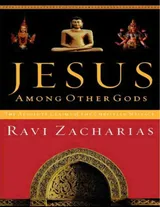
Jesus Among Other Gods

They Shall Expel Demons

The Lotus And The Cross
-160.webp)
Stealing From God: Why Atheists Need God To Make Their Case

Revival Fires And Awakenings, Thirty-Six Visitations Of The Holy Spirit

The Fire That Could Not Die

Increase Of The Kingdom
-160.webp)
Out Of Commission (Getting Every Christian Back To The Great Commission)

Jeshua Hamashiah

The Most Important Decision You Will Ever Make
About the Book
"Let Us Alone! The Cry Of Demons" by John Eckhardt explores the spiritual realm and the battle between good and evil forces. The book delves into the tactics demons use to influence and control individuals, and provides insights on how to overcome these dark forces through faith, prayer, and spiritual warfare. It offers practical advice and guidance for believers to stand strong in their faith and resist the schemes of the enemy.
John Knox

how to find joy in your work
“In the beginning, God created the heavens and the earth” (Genesis 1:1). One of the sadder experiences in our fallen states is so easily losing our sense of wonder in the most familiar things — like the first verse in the Bible, as laden with glory as it is. We easily stop pondering it because we think we understand it, even though we may have only scratched the surface of its meaning. Has it ever hit you that the first verse in the Bible is about work — what God calls his creative activity (Genesis 2:2)? Or that the very first work undertaken is described as creative — not drudgery to avoid? Or that God really enjoyed his work? The more we think about the whole first chapter of Genesis, the more glorious things we see regarding how God views his work, and the wonderful, liberating implications it has on how we are to view our work. God Works for Joy So where do we get the idea that God enjoys his work? From the last verse of the first chapter in the Bible: And God saw everything that he had made, and behold, it was very good. (Genesis 1:31) No, the word “joy” isn’t explicitly there, but it’s there. God doesn’t have sin-disordered affections and emotions like we do. God always experiences the appropriate joy from good work (Philippians 2:13) — even his brutal work on the cross (Hebrews 12:2). And being made in his image, we also receive joy from his work (Psalm 92:4). It’s amazing to think about: the very first thing the Bible teaches us about God is that he engaged in incredibly vigorous, prolonged, creative work, and he enjoyed it— both the work itself and the fruit of his work. God never works just to get a paycheck. God never works to prove himself out of some kind of internal insecurity. He never works to get something he needs, for he provides everything for his creation out of his abundance (Acts 17:25). God’s work is always the overflow of his joy in being the triune God. And as Jonathan Edwards said, “It is no argument of the emptiness or deficiency of a fountain that it is inclined to overflow” (God’s Passion for His Glory, 165). God works for the immediate and ultimate joy of it! We’re Designed to Work for Joy And here’s where the wonderful, liberating implications for us come in. God made us in his image and gives us work to do — work that’s like his: So God created man in his own image, in the image of God he created him; male and female he created them. And God blessed them. And God said to them, “Be fruitful and multiply and fill the earth and subdue it, and have dominion over the fish of the sea and over the birds of the heavens and over every living thing that moves on the earth.” (Genesis 1:27–28) God created us to do work similar to his work and to experience from work similar benefits, appropriate to our capacities. Our work is to be creative (“be fruitful and multiply”), vigorous (“have dominion . . . subdue”), and give us joy (God “blessed” us with his mandate). God always meant for our work to be sharing with him in his work, and sharing his joy. We aren’t meant to work just to get a paycheck, or to prove our worth, or to gain our identity because we’re insecure or prideful. God didn’t design work to be a drudgery, or a necessary evil. That disease infected our work when we fell from grace. What Destroys Our Joy in Work A curse infected our work the day our original forebears trusted the viper’s promise over God’s: “Because you have . . . eaten of the tree of which I commanded you, ‘You shall not eat of it,’ cursed is the ground because of you; in pain you shall eat of it all the days of your life; thorns and thistles it shall bring forth for you; and you shall eat the plants of the field. By the sweat of your face you shall eat bread, till you return to the ground, for out of it you were taken; for you are dust, and to dust you shall return.” (Genesis 3:17–19) This is work as we experience it in this age: lots of sweat-producing effort yielding lots of thorns and thistles. The ground (or its equivalent for us) fights us, our tools fail us, our indwelling, prideful or slothful sin inhibits us, our frail bodies weaken us, other sinners impede us, demons assail us. Like all of creation, our work is subjected to futility by God (Romans 8:20). This is why we often resent or even hate work: our sin and the curse make it so hard. So we avoid work, or we turn it into a pragmatic, mercenary enterprise to buy something or to give us an identity we believe will bring us joy. But that’s not what work is for. We are not meant to prostitute our work to get money or status. God meant our work to creatively and vigorously steward some part of his creation, to be a means of providing for our needs and serve others, and to bring us joy. And God has made that possible, even in this futile age, no matter our circumstances. What Restores Our Joy in Work Here is stunning good news, which brings unconquerable hope, for every worker who will believe it: Therefore, my beloved brothers, be steadfast, immovable, always abounding in the work of the Lord, knowing that in the Lord your labor is not in vain. (1 Corinthians 15:58) Wait, our labor is not in vain? Isn’t that what futility is? Yes! And part of the gospel is that labor done “in the Lord” is not in vain because it cannot ultimately be derailed by the curse of sin. What is labor done “in the Lord”? Does that only apply to “kingdom work”? Yes. But “kingdom work” encompasses everything Christians do: Whatever you do , work heartily, as for the Lord and not for men, knowing that from the Lord you will receive the inheritance as your reward. You are serving the Lord Christ. (Colossians 3:23–24) This means God wants every work we undertake, no matter who we are or what we do, to be a “work of faith” (2 Thessalonians 1:11), done in the strength he supplies (1 Peter 4:11). We give ourselves wholly to God, knowing he bought us with a price (1 Corinthians 6:20), and we do the work he gives our hands to do for his sake. For we serve the Lord Christ, not men and not money. Wherever You Work Even though we still suffer the effects of the curse, the death and resurrection of Jesus, which redeems all things for Christians, liberates our faith-fueled labors from being in vain, and causes them to work for our eternal good and joy (Romans 8:28). He restores our joy in our work. Therefore, my beloved brothers and sisters, whatever God gives your hands to do today, be steadfast, immovable, always abounding in the creative, vigorous, joy-producing work of the Lord.