Richard Sibbes
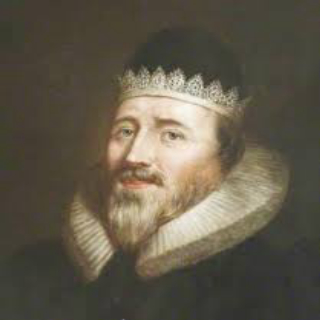 Richard Sibbes was born in Tostock, Suffolk, four miles from Bury St. Edmunds, in 1577.[1] He is the eldest son of Paul Sibbes and Joane. His father was a wheelwright who hoped Sibbes would be in the same field of occupation. Instead of following the footsteps of his father, young Sibbes, out of love for reading, would choose books over wooden wheels.[2] Truly enough, throughout his lifetime, books were part of Sibbes’ life.[3] Proof of this interest to books is his accomplishments as a lecturer [pastor], fellow tutor, vicar, and for obtaining various degrees in his academic education.
Sibbes’ legacy of his seven-volume work was collected by A. B. Grosart which was published from 1862 to 1864.[4] Sibbes’ ministries and his works spread throughout England even after his death. However, he was never married.
Sibbes died on July 5, 1635, in his chambers at Gray’s Inn.[5] J. I. Packer noted that Sibbes’ left more than two million words on paper after his death.[6]
Educational Background
Sibbes’ started studying at St. John’s College, Cambridge when he was eighteen, in 1595. He then proceeded to finish a Bachelor of Arts in 1599. He received a fellowship grant in 1601. Sibbes continued studying, finishing a Master of Arts degree by 1602.
Sibbes became a prominent preacher in Cambridge and got the endorsement to apply for a Bachelor of Divinity. After his defense and fulfilling the requirements, he earned this degree in 1610.[7] Furthermore, in almost two decades, Sibbes received his Doctor of Divinity in 1627 after returning from London for his mastership at St. Katherine.[8]
Ministerial Experience and Vocation
Sibbes’ conversion happened after hearing Paul Bayne’s sermon in 1603. Bayne succeeded William Perkins at St. Andrews, Cambridge.[9] During Sibbes’ stay in Cambridge, as a fellow, he handled and supervised five to six students for a tutorial.[10] Sibbes held various vocations such as being chaplain, lecturer, and got a promotion from mere fellow to senior fellowship. After being a senior dean at St. John, Sibbes became the master of St. Katherine’s College in 1626.[11]
As a preacher, Sibbes received his ordination in Norwich, in 1607. He became the minister of Thurston in 1608. Later, in 1610, Sibbes accepted the offer as a lecturer of Holy Trinity Church, Cambridge until he was called to be a lecturer at Gray’s Inn, London, in 1617.[12] This lectureship lasts until his death.
Even during Sibbes’ mastership at St. Katherine, he remained a lecturer at Gray’s Inn. In 1633, through the appointment of King Charles I, Sibbes became the vicar of Holy Trinity Church, Cambridge. The positions held by Sibbes were mastership at St. Katherine, a lecturer at Gray’s Inn, and vicar of Holy Trinity Church.
Influence of the Heavenly Doctor
Throughout Sibbes ministries, prominence followed as he influenced many Puritan ministers. Sibbes, as an influencer, is known to be the “pastor of pastors,” not just in the Church of England but even to Presbyterians and Independent Congregationalists.[13] Sibbes was responsible for John Cotton’s conversion in 1612.[14]
Moreover, he persuaded John Preston’s style in preaching, transforming from witty sermons to more plain but spiritual preaching.[15] Sibbes’ book, The Bruised Reed, encouraged Richard Baxter to gain settled-conviction on his conversion.[16] Likewise, Sibbes helped Thomas Goodwin, the chief editor of most of his works, to keep away from Arminianism.[17]
Sibbes’ ministry extends even to common people. Humphrey Mills, a layman, shared his testimony about Sibbes’ ministry. Mills was spiritually refreshed and brought to peace and joy after hearing Sibbes’ “sweet soul-melting Gospel-sermons.”[18] Sibbes’ encouragement did not end in the days of Puritans. Martyn Lloyd-Jones, one of the greatest preachers in the twentieth century, was grateful for Sibbes’ works. Lloyd-Jones, in his spiritual dryness, said that Sibbes’ books “quietened, soothed, comforted, encouraged, and healed [him].”[19]
Sibbes was a renowned Puritan throughout Cambridge, London, and even to Amsterdam. Mainly because of his various offices plus broad networks outside the church. He remained a moderate Puritan perceiving the Church of England as the true church. Sibbes encouraged other Separatists to return and warned the moderates not to dissent.
Yet many historians and scholars misinterpreted Sibbes in his theology and ministry. Thankfully, Mark Dever, in his recent work, argues contrary to many historians that Sibbes was dismissed in his ministry. Dever also concludes that Sibbes did not drift away from Calvinism, claiming that he was a thoroughly Reformed preacher and never became non-conformist, rather a moderate puritan.[20]
Sibbes, through his works, are still penetrating churches and seminaries up to this day. Recently, his seven-volume set was published by The Banner of Truth Trust in 2001. The best introduction for Sibbes’ works, personally, is his The Bruised Reed and the Smoking Flax. For Michael Reeves’ opinion, Sibbes is “the best introduction to the Puritans…. Reading him is like sitting in the sunshine: he gets into your heart and warms it to Christ.”[21]
References
[1] Alexander B. Grosart, “Memoir of Richard Sibbes, D.D.,” in Richard Sibbes, The Works of Richard Sibbes, ed. Alexander Grosart, 7 vols. (1862-1864; reprint, Carlisle, Pennsylvania: The Banner of Truth Trust, 2001), 1:xxvii.
[2] Joel Beeke, “Richard Sibbes on Entertaining the Holy Spirit,” in The Beauty and Glory of the Holy Spirit, ed. Joel Beeke and Joseph Pipa Jr. (Grand Rapids, Michigan: Reformation Heritage Books, 2012), 228. Cf. Joel Beeke and Mark Jones, A Puritan Theology: Doctrine for Life (Grand Rapids, MI: Reformation Heritage Books, 2012), chap. 36, Kindle.
[3] Joel Beeke and Randall Pederson, Meet the Puritans (Grand Rapids, MI: Reformation Heritage Books, 2006), 534-5.
[4] Mark Dever, “The Works of Richard Sibbes,” in You Must Read: Books that Have Shaped Our Lives (Carlisle, PA: The Banner of Truth Trust, 2015), 154.
[5] Grosart, “Memoir,” in Sibbes, Works, 1:cxxxi.
[6] J. I. Packer, foreword to Richard Sibbes: Puritanism and Calvinism in Late Elizabethan and Early Stuart England, by Mark E. Dever (Macon, Georgia: Mercer University Press, 2000), ix.
[7] Dever, Richard Sibbes, 37-38. Bachelor of Divinity, according to Dr. Shawn Wright is equivalent with Master of Divinity today, “Lectures in English Puritanism” (The Southern Baptist Theological Seminary, Louisville, KY, Spring 2020), but the process is different. Dever noted in his work that Sibbes undergone two public preaching, one in English and another in Latin, and two defense topics chosen by the panelists.
[8] Grosart, “Memoir,” in Sibbes, Works, 1:cxi.
[9] Beeke and Pederson, Meet the Puritans, 534-5.
[10] Dever, Richard Sibbes, 30-31.
[11] Dever, 31-34, 46.
[12] Beeke and Pederson, Meet the Puritans, 534-6.
[13] Beeke, “Richard Sibbes on Entertaining the Holy Spirit,” 230.
[14] Dever, Richard Sibbes, 40.
[15] Beeke and Pederson, Meet the Puritans, 535-7.
[16] Richard Baxter, The Autobiography of Richard Baxter (Bedford St., London: J.M. Dent & Sons Ltd., 1931), 7. Baxter’s father bought Sibbes’ book from a peddler and gave it to Richard Baxter. Cf. Timothy K. Beougher, Richard Baxter and Conversion: A Study of the Puritan Concept of Becoming a Christian (Scotland, UK: Christian Focus Publications, 2007), 21.
[17] Dever, Richard Sibbes, 41.
[18] Ronald Frost, “The Bruised Reed by Richard Sibbes (1577-1635)” in Kelly M. Kapic and Randal C. Gleason, The Devoted Life: An Invitation to the Puritan Classics (Downers Grove, IL: Intervarsity Press, 2004), 80-81. Quoting from a collection of Puritan testimonials by John Rogers, Ohel or Bethshemesh, A Tarbernacle for the Sun (London, n.p., 1653), 410.
[19] D. Martyn Lloyd-Jones, Preaching and Preachers (Grand Rapids, Michigan: Zondervan Publishing House, 1972), 175. Cf. Publisher’s Foreword to The Bruised Reed, by Richard Sibbes, x.
[20] Dever, Richard Sibbes, 211-8.
[21] Michael Reeves, “A Short Biography of Richard Sibbes,” in Richard Sibbes, Christ it Best; or, St. Paul’s Strait (Carlisle, PA: Banner of Truth Trust, 2012), 66.
Richard Sibbes was born in Tostock, Suffolk, four miles from Bury St. Edmunds, in 1577.[1] He is the eldest son of Paul Sibbes and Joane. His father was a wheelwright who hoped Sibbes would be in the same field of occupation. Instead of following the footsteps of his father, young Sibbes, out of love for reading, would choose books over wooden wheels.[2] Truly enough, throughout his lifetime, books were part of Sibbes’ life.[3] Proof of this interest to books is his accomplishments as a lecturer [pastor], fellow tutor, vicar, and for obtaining various degrees in his academic education.
Sibbes’ legacy of his seven-volume work was collected by A. B. Grosart which was published from 1862 to 1864.[4] Sibbes’ ministries and his works spread throughout England even after his death. However, he was never married.
Sibbes died on July 5, 1635, in his chambers at Gray’s Inn.[5] J. I. Packer noted that Sibbes’ left more than two million words on paper after his death.[6]
Educational Background
Sibbes’ started studying at St. John’s College, Cambridge when he was eighteen, in 1595. He then proceeded to finish a Bachelor of Arts in 1599. He received a fellowship grant in 1601. Sibbes continued studying, finishing a Master of Arts degree by 1602.
Sibbes became a prominent preacher in Cambridge and got the endorsement to apply for a Bachelor of Divinity. After his defense and fulfilling the requirements, he earned this degree in 1610.[7] Furthermore, in almost two decades, Sibbes received his Doctor of Divinity in 1627 after returning from London for his mastership at St. Katherine.[8]
Ministerial Experience and Vocation
Sibbes’ conversion happened after hearing Paul Bayne’s sermon in 1603. Bayne succeeded William Perkins at St. Andrews, Cambridge.[9] During Sibbes’ stay in Cambridge, as a fellow, he handled and supervised five to six students for a tutorial.[10] Sibbes held various vocations such as being chaplain, lecturer, and got a promotion from mere fellow to senior fellowship. After being a senior dean at St. John, Sibbes became the master of St. Katherine’s College in 1626.[11]
As a preacher, Sibbes received his ordination in Norwich, in 1607. He became the minister of Thurston in 1608. Later, in 1610, Sibbes accepted the offer as a lecturer of Holy Trinity Church, Cambridge until he was called to be a lecturer at Gray’s Inn, London, in 1617.[12] This lectureship lasts until his death.
Even during Sibbes’ mastership at St. Katherine, he remained a lecturer at Gray’s Inn. In 1633, through the appointment of King Charles I, Sibbes became the vicar of Holy Trinity Church, Cambridge. The positions held by Sibbes were mastership at St. Katherine, a lecturer at Gray’s Inn, and vicar of Holy Trinity Church.
Influence of the Heavenly Doctor
Throughout Sibbes ministries, prominence followed as he influenced many Puritan ministers. Sibbes, as an influencer, is known to be the “pastor of pastors,” not just in the Church of England but even to Presbyterians and Independent Congregationalists.[13] Sibbes was responsible for John Cotton’s conversion in 1612.[14]
Moreover, he persuaded John Preston’s style in preaching, transforming from witty sermons to more plain but spiritual preaching.[15] Sibbes’ book, The Bruised Reed, encouraged Richard Baxter to gain settled-conviction on his conversion.[16] Likewise, Sibbes helped Thomas Goodwin, the chief editor of most of his works, to keep away from Arminianism.[17]
Sibbes’ ministry extends even to common people. Humphrey Mills, a layman, shared his testimony about Sibbes’ ministry. Mills was spiritually refreshed and brought to peace and joy after hearing Sibbes’ “sweet soul-melting Gospel-sermons.”[18] Sibbes’ encouragement did not end in the days of Puritans. Martyn Lloyd-Jones, one of the greatest preachers in the twentieth century, was grateful for Sibbes’ works. Lloyd-Jones, in his spiritual dryness, said that Sibbes’ books “quietened, soothed, comforted, encouraged, and healed [him].”[19]
Sibbes was a renowned Puritan throughout Cambridge, London, and even to Amsterdam. Mainly because of his various offices plus broad networks outside the church. He remained a moderate Puritan perceiving the Church of England as the true church. Sibbes encouraged other Separatists to return and warned the moderates not to dissent.
Yet many historians and scholars misinterpreted Sibbes in his theology and ministry. Thankfully, Mark Dever, in his recent work, argues contrary to many historians that Sibbes was dismissed in his ministry. Dever also concludes that Sibbes did not drift away from Calvinism, claiming that he was a thoroughly Reformed preacher and never became non-conformist, rather a moderate puritan.[20]
Sibbes, through his works, are still penetrating churches and seminaries up to this day. Recently, his seven-volume set was published by The Banner of Truth Trust in 2001. The best introduction for Sibbes’ works, personally, is his The Bruised Reed and the Smoking Flax. For Michael Reeves’ opinion, Sibbes is “the best introduction to the Puritans…. Reading him is like sitting in the sunshine: he gets into your heart and warms it to Christ.”[21]
References
[1] Alexander B. Grosart, “Memoir of Richard Sibbes, D.D.,” in Richard Sibbes, The Works of Richard Sibbes, ed. Alexander Grosart, 7 vols. (1862-1864; reprint, Carlisle, Pennsylvania: The Banner of Truth Trust, 2001), 1:xxvii.
[2] Joel Beeke, “Richard Sibbes on Entertaining the Holy Spirit,” in The Beauty and Glory of the Holy Spirit, ed. Joel Beeke and Joseph Pipa Jr. (Grand Rapids, Michigan: Reformation Heritage Books, 2012), 228. Cf. Joel Beeke and Mark Jones, A Puritan Theology: Doctrine for Life (Grand Rapids, MI: Reformation Heritage Books, 2012), chap. 36, Kindle.
[3] Joel Beeke and Randall Pederson, Meet the Puritans (Grand Rapids, MI: Reformation Heritage Books, 2006), 534-5.
[4] Mark Dever, “The Works of Richard Sibbes,” in You Must Read: Books that Have Shaped Our Lives (Carlisle, PA: The Banner of Truth Trust, 2015), 154.
[5] Grosart, “Memoir,” in Sibbes, Works, 1:cxxxi.
[6] J. I. Packer, foreword to Richard Sibbes: Puritanism and Calvinism in Late Elizabethan and Early Stuart England, by Mark E. Dever (Macon, Georgia: Mercer University Press, 2000), ix.
[7] Dever, Richard Sibbes, 37-38. Bachelor of Divinity, according to Dr. Shawn Wright is equivalent with Master of Divinity today, “Lectures in English Puritanism” (The Southern Baptist Theological Seminary, Louisville, KY, Spring 2020), but the process is different. Dever noted in his work that Sibbes undergone two public preaching, one in English and another in Latin, and two defense topics chosen by the panelists.
[8] Grosart, “Memoir,” in Sibbes, Works, 1:cxi.
[9] Beeke and Pederson, Meet the Puritans, 534-5.
[10] Dever, Richard Sibbes, 30-31.
[11] Dever, 31-34, 46.
[12] Beeke and Pederson, Meet the Puritans, 534-6.
[13] Beeke, “Richard Sibbes on Entertaining the Holy Spirit,” 230.
[14] Dever, Richard Sibbes, 40.
[15] Beeke and Pederson, Meet the Puritans, 535-7.
[16] Richard Baxter, The Autobiography of Richard Baxter (Bedford St., London: J.M. Dent & Sons Ltd., 1931), 7. Baxter’s father bought Sibbes’ book from a peddler and gave it to Richard Baxter. Cf. Timothy K. Beougher, Richard Baxter and Conversion: A Study of the Puritan Concept of Becoming a Christian (Scotland, UK: Christian Focus Publications, 2007), 21.
[17] Dever, Richard Sibbes, 41.
[18] Ronald Frost, “The Bruised Reed by Richard Sibbes (1577-1635)” in Kelly M. Kapic and Randal C. Gleason, The Devoted Life: An Invitation to the Puritan Classics (Downers Grove, IL: Intervarsity Press, 2004), 80-81. Quoting from a collection of Puritan testimonials by John Rogers, Ohel or Bethshemesh, A Tarbernacle for the Sun (London, n.p., 1653), 410.
[19] D. Martyn Lloyd-Jones, Preaching and Preachers (Grand Rapids, Michigan: Zondervan Publishing House, 1972), 175. Cf. Publisher’s Foreword to The Bruised Reed, by Richard Sibbes, x.
[20] Dever, Richard Sibbes, 211-8.
[21] Michael Reeves, “A Short Biography of Richard Sibbes,” in Richard Sibbes, Christ it Best; or, St. Paul’s Strait (Carlisle, PA: Banner of Truth Trust, 2012), 66.


-160.webp)