
GIP Library icon

LOG IN TO REVIEW
About the Book


"Is That You God" by Cindy Jacobs is a book that guides readers on how to discern and understand God's voice in their lives. Jacobs offers practical advice on how to tune in to God's messages, overcome obstacles, and develop a deeper relationship with Him through prayer and faith. The book serves as a helpful resource for those seeking to strengthen their spiritual connection and grow in their faith.

J.C. Ryle

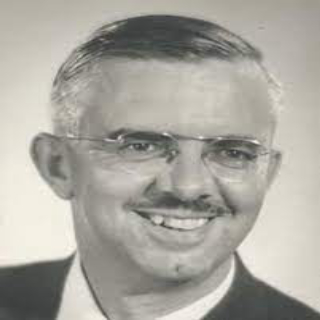
J.C. Ryle ​John Charles Ryle (May 10, 1816 - June 10, 1900) was an evangelical Anglican clergyman and first Bishop of Liverpool. He was renowned for his powerful preaching and extensive tracts. Biography Ryle was born on May 10th, 1816 at Park House, Macclesfield, the eldest son of John Ryle MP and Susannah Ryle. His family had made their money in the silk mills of the Industrial Revolution, and were prominent members of Cheshire society. Accordingly, Ryle was educated at Eton College and then Christ Church, Oxford, where he took a congratulatory First in Greats, and a Blue in cricket. Conversion and ordination Ryle's family were nominal Anglicans, and until his time as an undergraduate Ryle had a similar attitude to Christianity. However, as he was due to sit his final examinations, he became seriously ill with a chest infection, and was confined to his bed. During this time he began to pray and seriously read the Scriptures. However his conversion occurred when he attended an unknown church, and arriving late, he heard the reading Ephesians 2:8-9. The force of these words hit his heart, and from that point on he was assured of his salvation. After leaving Oxford, he returned to Macclesfield to assist his father in business and with the assumption that he would inherit the estate. However in June 1841 Ryle Senior was bankrupted, and the family was left ruined, and forced to leave Macclesfield. With his future now in tatters, Ryle was forced to look for a profession to sustain himself, and as a last resort, he offered himself for ministry in the Church of England. He was duly accepted and ordained in December 1841 by Bishop C.R. Summner of Winchester. Parish ministry Ryle's first charge was as curate of the hamlet of Exbury in Hampshire, an area of a rough but sparse agricultural population, and riddled with disease. After a difficult two years, he became unwell, and was forced to spend several months recuperating. In November 1843 he moved to become the rector of St Thomas', Winchester, where he made a reputation for himself as an energetic and thorough pastor. Over a period of six months the congregation grew to well over six hundred communicants, and the church was forced to consider alternative accommodation. However Ryle was offered the living of Helmingham, Suffolk, and it was to here that he moved in 1844, where he stayed until 1861. With a congregation of some two hundred, it was here that Ryle began to read widely amongst the Reformed theologians, and produce the writings that would make him famous. It was at Helmingham that he began his series of "Expository Thoughts on the Gospels", and started his tract-writing. Though his time at Helmingham was extremely fruitful, Ryle quarreled with the squire John Tollemache, and by 1861 he felt the need to move on. His final parish incumbency was Stradbroke, also in Suffolk, and it was from here that Ryle became nationally famed for his firm preaching and staunch defense of evangelical principles, both from the study and the platform. He wrote several well-known books, mainly based on his tracts and sermons, and often addressing issues of contemporary relevance for the Church from a Biblical standpoint. Of these, perhaps the most enduring are "Holiness" and "Practical Religion", both still in print. Episcopate Ryle's uncompromising evangelicalism in the face of increasing liberal and Tractarian opposition gained him many admirers, and he was fast becoming one of the leading lights of the evangelical party. He was originally recommended for the post of Dean of Salisbury, but before he was appointed the out-going Conservative Prime Minister Benjamin Disraeli offered him the position of Bishop of the newly-created Diocese of Liverpool. Ryle moved to Liverpool in 1880, and would stay until 1900. Despite his previous ministry experience having been almost exclusively exercised within a rural context, his plain speech and distinctive principles made him a favorite amongst Liverpool's largely working-class population. He proved an active bishop, encouraging the building of more churches and missions to reach out to the growing urban communities, and generally seeking to develop the new diocese as best he could. In common with many late Victorian bishops, Ryle was increasingly forced to deal with the tensions caused by the developing Anglo-Catholic wing of the Church of England. Of particular note is the so-called "Bell Cox Case" of 1885. Bell Cox was vicar of St. Margaret's, and a committed Ritualist. His Catholic practices soon came to the attention of several prominent evangelicals in the city, and one of them, James Hakes of the Liverpool Church Association, brought a private prosecution against Bell Cox under the Public Worship and Regulation Act of Despite Ryle's entreaties, Bell Cox refused to moderate his behavior, and thus the case proceeded to the Chancery Court of York, where Bell Cox was found guilty of contempt of court, and imprisoned for seventeen days. Ryle's behavior in particular was criticized for his failure to exercise his legal episcopal veto over the prosecution, and his apparent willingness to allow one of his clergy to be imprisoned over matters of worship. However, an examination of letters written by Ryle from the time suggest that Ryle was by no means a supporter of such practice, yet felt it wrong to come between the law and the defendant, particularly in the case of a private prosecution. In his speech to the Liverpool Diocesan conference the same year he openly declared the imprisonment of clergy over such matters as "barbarous", hardly a note of support. ​ Ryle's tenure as bishop in general is remarkable for his efforts to build churches and mission halls to reach the rapidly expanding urban areas of Liverpool. Though subsequent biographers have criticised this policy, owing to figures which suggest a general decline in church attendance,[[ Link title]] it perhaps says most about Ryle's heart as an evangelist; a desire for all to hear and respond to the Gospel. Ryle served as Bishop until March 1900, where in his eighty-fourth year, a stroke and a general decline in health forced him to retire, despite his desire to die "in harness." He retired to Lowestoft, Suffolk, however passed away on 10th June 1900. He was interred in All Saint's, Childwall, next to his third wife, Henrietta. Bio. Taken from Theopedia

isn’t she beautiful: the role of physical attraction in dating

How significant should physical attraction be in the pursuit of marriage? Or, what role, if any, should physical appearance play in Christian dating? Guys have come to me over the years asking about this. Usually he respects or admires a godly young woman (or, maybe more often, other people in his life think he  should  admire her more), and yet he’s not physically attracted to her. She’s not his “type,” he says. “Should I still pursue her?” What would you say to him? I would say, “No.” Or at least, “Not yet.” Given the common assumptions and practices in our society today, including the church, I do not believe a man (or woman) should begin a dating relationship with someone to whom they are not physically attracted. If he admires other things about her, I’m all for him  befriending  her and getting to know her in safe, unambiguous, non-flirtatious ways (probably in groups). But I believe physical attraction, at least in the vast majority of cases, is one critical piece in discerning whether to date or marry someone. That being said, I also believe that physical attraction is far deeper and more dynamic, even spiritual, than we tend to think. It’s not static or objective. Real, meaningful, durable attraction is far more than physical. A man or woman’s physical appearance only plays one role in what makes them attractive or appealing. Its role is massive initially, say the very first time you see someone, when all you know about them is what you see, before you even know their name or hear their voice. But its role will necessarily evolve the more you learn about someone. After you’ve learned more about them — by asking their friends, or by hearing them talk, or by watching the way they live — you’ll never see them again as just the person you saw at first. The more we learn about them, the more their appearance is filled, for better or for worse, with new and deeper meaning — with their personality, their convictions, their sense of humor, their faith. The once-stunning girl may lose most of her charm, and the easily overlooked girl may become undeniably beautiful. They each look exactly the same as before, and yet they don’t. You see them, even their physical appearance, differently now. Physical (and Flexible) Attraction Don’t believe me? Ask sixty-year-old love birds if they’re still “physically attracted” to each other. Some of them are more attracted to each other than ever, and it’s  not  because they’re gaining weight, losing their hair, or having more trouble getting around. It’s because their appearance, in the eyes of their beloved, is increasingly filled with a deepening appreciation for the beauty in the other. They see something different in each other’s eyes. The hands are worn, but familiar and safe. The wrinkles are the years of faithfulness and bliss spent together. Their love not only looks beyond the surface, but sees the surface with new eyes. “True love not only looks beyond the surface, but sees the surface with new eyes.” On the other side, that celebrity you think is  so  hot right now can lose all of his or her appeal overnight, literally in one headline. The heartthrob guy beats his girlfriend, or the magazine-cover woman sleeps with three more guys. It’s suddenly harder to even look at pictures of them anymore. They each look exactly the same, but they don’t. You see the same pictures differently now — same hair, same eyes, same figure — all suddenly unappealing, unattractive. Physical attraction is real, but flexible. God has wired us to appreciate beauty in his design — to find men (for women) or women (for men) physically appealing — and that is a real and important element in our pursuit of marriage, and eventually in our flourishing within the covenant. God gave us physical senses and desires for our good. But that’s only one piece of what makes people attractive, and it is not the main piece — nowhere close. Mutual faith in Jesus Christ should be the most arrestingly attractive thing about any potential spouse. Beauty Is Vain This may be the most important thing to learn about physical (or sexual) attraction: that at its richest and fullest, it is not only or even mainly physical (eyes, hair, and figure). “Charm is deceitful, and beauty is vain, but a woman who fears the Lord is to be praised” (Proverbs 31:30). Why does Solomon even need to say that? Because physical beauty and charm are naturally appealing. But without faith, they’re fading, and fast. You can look at a picture in an ad or on an app and decide whether someone’s physical appearance is appealing to you, but that’s like buying a house based on a picture from the front yard. Most people want to enjoy how the front of their house looks, but that doesn’t typically break the list of the top ten or fifteen things they’re looking for in a home. How many bedrooms and bathrooms? Have the appliances been updated in the last five or ten years? What kind of shape is the foundation in? The outside may be most important to some people, but they’re probably people who haven’t owned a home before. The inside of a house — space, appliances, interior design — can cover a multitude of sins outside. But no amount of paint and creativity outside can fix serious issues inside. “Godliness should be the most attractive thing about the most attractive people.” So, let’s ask the question another way. Should a Christian man pursue a Christian woman to whom he  is  physically attracted? I might say, “No.” That is, if all you know or like about her is what you see. I would encourage you to befriend her and get to know her in safe, unambiguous, non-flirtatious ways (probably in groups), until you know whether there is real beauty behind her face and everything else anyone can see. Have you seen enough of her faith, her spiritual strength and maturity, her Christlikeness to know if her beauty is real and durable, or superficial and fading? Better with Age I would not encourage a man to pursue a godly woman whom he’s not attracted to physically, but I won’t let the conversation end there, either. I’ll give him a few other questions to ask himself. For instance, if she really is a godly woman, why might you be more attracted to the unbelieving girl in your algebra class? Or (for the women), if he really is a godly man, why might you be more attracted to the ungodly guy at work? As godly men and women, we should find godliness incredibly attractive. In fact, in our eyes and hearts, it should be the most attractive thing about the most attractive people. That doesn’t mean that if you’re a Christian, you should find every Christian man or woman attractive. But it should mean there’s a theme or trend in your attractions. In our day, it seems wise, in general, for men and women to date someone to whom they are attracted.  And  Christian men and women should be cultivating hearts that are more attracted to faith and character than anything else. The world around us will preach that physical beauty is everything, but we know and desire better. Of all the people in the world, we should be the most free from enslavement to physical appearances and sexual titillation. Our eyes should be increasingly drawn to modesty, not immodesty. As we put on the eyes and heart of Christ, we should increasingly be able to see through all the temporary and fading appearances to the things that are truly beautiful — the qualities in each other that imitate Jesus and anticipate heaven. The qualities that get better with age. My Hope for Men What’s my hope for Christian men? “It is my prayer that your love may abound more and more, with knowledge and all discernment, so that you may approve what is excellent, and so be pure and blameless for the day of Christ, filled with the fruit of righteousness that comes through Jesus Christ, to the glory and praise of God” (Philippians 1:9–11). I want our men (and women) to be known for recognizing and approving what is truly excellent and beautiful, that there would be a strange and durable purity to our pursuits of marriage. What an awesome thing it would be if the world was confused today by your interest in a Christian woman whom they find less physically attractive, only to have it make  perfect sense  twenty-five years later when you’re happily married (and more attracted to each other than ever) — and they’re five months into their fifth marriage. “Christians should be cultivating hearts that are more attracted to faith and character than anything else.” If you’re a Christian, and you’re not as attracted to godliness as you want to be, or if you feel yourself fixated on physical beauty, what should you do? Confess that to a brother. Bring someone in to sift through those desires with you, someone who can help you apply the gospel with grace and truth. And then start looking for evidences of grace in godly women. It’s easy to notice physical features — almost any man in the world is capable of that — but discipline yourself to notice and appreciate true beauty, which is not flaunted, but buried in a woman’s heart and expressed in things like patience, kindness, and selflessness. Say a prayer of thanks for what you see in women like that, and then share it with your friend. Turn the world’s crude locker-room conversations on their head by commending true and lasting beauty with humility and respect. Learn the vanity of physical beauty (by itself) and the lies lacing flirtatious charm and flattery, and train your heart and mind to praise and desire the woman whose heart is hot for Jesus.

Feedback
Suggestionsuggestion box
x