
-480.webp)

Invisible Supply (Finding The Gifts Of The Spirit Within) Order Printed Copy
- Author: Joel S. Goldsmith
- Size: 1.08MB | 140 pages
- |
Others like invisible supply (finding the gifts of the spirit within) Features >>

-160.webp)
-160.webp)



About the Book
"Invisible Supply" by Joel S. Goldsmith explores the idea of abundance and the spiritual gifts within us. Goldsmith argues that by connecting with our inner spirit, we can tap into an infinite supply of love, joy, peace, and prosperity. He emphasizes the importance of mindfulness, prayer, and meditation in order to access this invisible supply and experience true fulfillment in life.
William Chalmers Burns
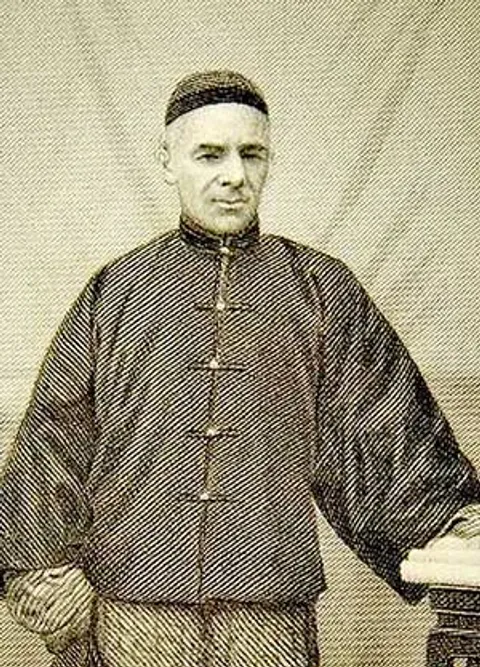 William Chalmers Burns was born in the Manse of Dun, in Angus, on April Ist, 1815. He was the third son of the Parish Church minister there. After leaving school, he went to Edinburgh to be apprenticed with an uncle to the legal profession. His eldest sister, a gay young lady, was converted to God, and became a bright witness for the Lord Jesus in 1831, and it was by means of her decided testimony that William was first awakened to a sense of his need of salvation, and led to put his trust in the Son of God, as his Redeemer and Saviour.
It was shortly after his conversion that he walked into the manse of Kilsyth, where the family then resided, having walked on foot the thirty-six miles from Edinburgh, to tell his mother and his sisters the glad news of his conversion, and to say that his desire now was to relinquish his study of law, and devote himself entirely to the preaching of the Gospel of God’s grace to his fellowmen.
And this he did heartily and with all his might, first in the neglected Parts of Scotland, and latterly among many heathen millions of the great Chinese Empire, then scarcely touched by the feet of God’s messengers of peace.
Mr. Burns’s name came into prominence in connection with a wonderful work of grace in Dundee, while he was preaching for Robert Murray M’Cheyne, then on a visit to Palestine, for the evangelization of the Jews. During Mr. Burns’s preaching in Dundee, a remarkable awakening took place; thousands were aroused to their condition in the sight of God, truly converted, and set on the heavenward way.
Remarkable scenes were witnessed in the old church of St. Peter’s, near to which M’Cheyne’s body now lies, awaiting the first resurrection. It was on the evening of a Lord’s Day in Kilsyth, after preaching to a crowded congregation, that Mr. Burns felt constrained to intimate to the people that he would preach to the people in the open air, before returning to Dundee the following day.
Deeply burdened with the souls of the people, he went into the village and invited the people, who thronged into the old church, until every seat and passage was filled. And the Lord helped His servant to preach straight to the people with great power, with the result that the whole congregation became melted under the message, many weeping aloud and crying to God for mercy. A glorious work of conversion followed.
Meetings for prayer and preaching of the Gospel continued in the churchyard, the market-place and elsewhere for weeks, while Mr. Burns returned to Dundee to resume his ministry. The work progressed in Dundee with increased interest, until the return of Mr. M’Cheyne, who greatly rejoiced in all that the Lord had done during his absence, through the ministry of His servant.
There was no jealousy, but the deepest gratitude, and these two true ministers of Christ rejoiced together over the Lord’s doings, which were indeed marvellous in their eyes.
From that time onward, until the Lord’s call came to go to China, Mr. Burns gave himself almost wholly to itinerant Gospel preaching, through Perthshire, up as far north as Aberdeen, preaching in barns, on market-places, and wherever the people could be gathered together to hear the Word. His message was plain, and to the point; thousands were awakened and many saved. But the adversary opposed. Time and again Mr. Burns was stoned, and bore the marks of these brands of the enemy for many days.
Believing it to be the call of the Lord, he went forth to China as the first missionary of the Presbyterian Church of England, in June, 1847. When questioned by those interested in his out-going, how long it would take him to prepare for the voyage, he replied with all simplicity, “I will be ready to go to-morrow.”
On a brief visit to his home, to take farewell of his sister, he silently wrung her hand, took a last glance around their old home, and with a small bag in his hand and his mother’s plaid across his arm, went forth, in the Name of the Lord with the Gospel to China’s benighted people, of whom it was said “a million a month” were dying without having once heard the Gospel.
For years this solitary witness toiled alone, at times with a few helpers, in the great heathen land, amid overwhelming hindrances, but his faith in God never faltered. On and on he went, sowing the seed which others would reap, until he reached the borders of the great kingdom of Manchuria, where, in a small, comfortless room in Nieu-chang, wearied and worn in labours abundant, he fell asleep on April 4th, 1868, his last audible words being, “For Thine is the Kingdom and the Power and the Glory.”
It is of this great land that the story of grace related in the following pages is told, and those who saw and shared in its joyful results, say that it was no doubt part of the result of William Burns’s sowing, in his earlier years in China.
William Chalmers Burns was born in the Manse of Dun, in Angus, on April Ist, 1815. He was the third son of the Parish Church minister there. After leaving school, he went to Edinburgh to be apprenticed with an uncle to the legal profession. His eldest sister, a gay young lady, was converted to God, and became a bright witness for the Lord Jesus in 1831, and it was by means of her decided testimony that William was first awakened to a sense of his need of salvation, and led to put his trust in the Son of God, as his Redeemer and Saviour.
It was shortly after his conversion that he walked into the manse of Kilsyth, where the family then resided, having walked on foot the thirty-six miles from Edinburgh, to tell his mother and his sisters the glad news of his conversion, and to say that his desire now was to relinquish his study of law, and devote himself entirely to the preaching of the Gospel of God’s grace to his fellowmen.
And this he did heartily and with all his might, first in the neglected Parts of Scotland, and latterly among many heathen millions of the great Chinese Empire, then scarcely touched by the feet of God’s messengers of peace.
Mr. Burns’s name came into prominence in connection with a wonderful work of grace in Dundee, while he was preaching for Robert Murray M’Cheyne, then on a visit to Palestine, for the evangelization of the Jews. During Mr. Burns’s preaching in Dundee, a remarkable awakening took place; thousands were aroused to their condition in the sight of God, truly converted, and set on the heavenward way.
Remarkable scenes were witnessed in the old church of St. Peter’s, near to which M’Cheyne’s body now lies, awaiting the first resurrection. It was on the evening of a Lord’s Day in Kilsyth, after preaching to a crowded congregation, that Mr. Burns felt constrained to intimate to the people that he would preach to the people in the open air, before returning to Dundee the following day.
Deeply burdened with the souls of the people, he went into the village and invited the people, who thronged into the old church, until every seat and passage was filled. And the Lord helped His servant to preach straight to the people with great power, with the result that the whole congregation became melted under the message, many weeping aloud and crying to God for mercy. A glorious work of conversion followed.
Meetings for prayer and preaching of the Gospel continued in the churchyard, the market-place and elsewhere for weeks, while Mr. Burns returned to Dundee to resume his ministry. The work progressed in Dundee with increased interest, until the return of Mr. M’Cheyne, who greatly rejoiced in all that the Lord had done during his absence, through the ministry of His servant.
There was no jealousy, but the deepest gratitude, and these two true ministers of Christ rejoiced together over the Lord’s doings, which were indeed marvellous in their eyes.
From that time onward, until the Lord’s call came to go to China, Mr. Burns gave himself almost wholly to itinerant Gospel preaching, through Perthshire, up as far north as Aberdeen, preaching in barns, on market-places, and wherever the people could be gathered together to hear the Word. His message was plain, and to the point; thousands were awakened and many saved. But the adversary opposed. Time and again Mr. Burns was stoned, and bore the marks of these brands of the enemy for many days.
Believing it to be the call of the Lord, he went forth to China as the first missionary of the Presbyterian Church of England, in June, 1847. When questioned by those interested in his out-going, how long it would take him to prepare for the voyage, he replied with all simplicity, “I will be ready to go to-morrow.”
On a brief visit to his home, to take farewell of his sister, he silently wrung her hand, took a last glance around their old home, and with a small bag in his hand and his mother’s plaid across his arm, went forth, in the Name of the Lord with the Gospel to China’s benighted people, of whom it was said “a million a month” were dying without having once heard the Gospel.
For years this solitary witness toiled alone, at times with a few helpers, in the great heathen land, amid overwhelming hindrances, but his faith in God never faltered. On and on he went, sowing the seed which others would reap, until he reached the borders of the great kingdom of Manchuria, where, in a small, comfortless room in Nieu-chang, wearied and worn in labours abundant, he fell asleep on April 4th, 1868, his last audible words being, “For Thine is the Kingdom and the Power and the Glory.”
It is of this great land that the story of grace related in the following pages is told, and those who saw and shared in its joyful results, say that it was no doubt part of the result of William Burns’s sowing, in his earlier years in China.
Can Cancer Be God’s Servant
In March, my beloved wife, Nanci, lost her four-year battle with colon cancer. All 54 years I’ve known her, Nanci loved Jesus. But from a front-row seat, I watched a wonderful — and supernatural — change in those last four years. In 2019, Nanci wrote to a friend and fellow cancer sufferer, The cancer battle has been tough. However, my time with the Ancient of Days (one of my favorite names for God) has been epic! He has met me in ways I never knew were possible. I have experienced His sovereignty, mercy, and steadfast love in tangible ways. I now trust Him at a level I never knew I could. I saw Nanci meditate on Scripture daily, read great books about God, and journal — writing out verses, powerful quotations from Spurgeon and many others, and personal reflections. One unforgettable morning, after meditating on Psalm 119:91, “All things are your servants,” she shared with me what she’d just written: My cancer is God’s servant in my life. He is using it in ways He has revealed to me and in many more I have yet to understand. I can rest knowing my cancer is under the control of a sovereign God who is good and does good. Brokenhearted and Thankful Nine months later, at Nanci’s request and on short notice, our daughters and their families gathered to hear her speak final words of overflowing love for us and unswerving trust in her sovereign King. As one of our grandsons sat beside her, listening to her struggling to speak and to me reading powerful words from her journals, he said, “Grams, if you can trust God in this, I know I can trust Him in whatever I’ll go through.” Another grandson told her, “I will never forget what you said to us today.” Exactly one week later, I held her hand and watched her take her last breath in this world under the curse. Every day during those four years, I witnessed God’s sanctifying and happy-making work in my wife: “We rejoice in our sufferings, knowing that suffering produces endurance, and endurance produces character, and character produces hope . . . because God’s love has been poured into our hearts through the Holy Spirit” (Romans 5:3–5). Nanci and I — and thousands worldwide — prayed daily for her healing. God’s final answer was to rescue her from suffering and bring her into his presence where it’s “better by far” (Philippians 1:23). Through her afflictions, he achieved in her an eternal weight of glory that far outweighs them all (2 Corinthians 4:17). She praised Jesus for it, and I will forever do the same, though I miss her immensely. Why God Permits What He Does When our ministry posted Nanci’s words, “My cancer is God’s servant,” someone responded, “WHAT? God does NOT give people cancer. Jesus bore our sicknesses and carried our pains on the cross.” “Everything God does flows from his wisdom and ultimately serves both his holiness and love.” That reader is not alone in trying to distance God from suffering. But by saying sickness comes only from Satan and the fall, not from God, we disconnect him from our suffering and his deeper purposes. God is sovereign. He never permits or uses evil arbitrarily; everything he does flows from his wisdom and ultimately serves both his holiness and love. Joni Eareckson Tada often shares the words of her friend Steve Estes: “God permits what he hates to accomplish what he loves.” God’s “permitting” something is far stronger than it may sound. After all, whatever God permits actually happens; what he doesn’t permit doesn’t happen. In the final chapter of Job, God reveals that Job’s family and friends “showed him sympathy and comforted him for all the evil that the Lord had brought upon him” (Job 42:11). The author told us from the beginning that Job’s troubles were Satan’s idea and actions. Yet the inspired wording indicates Satan’s efforts were, indirectly by sovereign permission, God’s own doing. Many find this truth disturbing, but properly understood, it should be comforting. What should be profoundly disturbing is the notion that God stands by passively while Satan, evildoers, diseases, and random accidents ruin the lives of his beloved children. Charles Spurgeon suffered terribly from depression, gout, rheumatism, neuritis, and a burning kidney inflammation. Yet he said, “It would be a very sharp and trying experience for me to think that I have an affliction which God never sent me . . . that my trials were never measured out by him, nor sent to me by his arrangement of their weight and quantity.” Mercy Outstrips Hardship Nanci and I experienced many glimpses of God’s sovereign purposes for years before her cancer diagnosis. We saw that my becoming an insulin-dependent diabetic 35 years ago was God’s plan to increase my dependence on him. And we saw, 30 years ago, that a lawsuit by an abortion clinic for $8.2 million was his way of moving me from pastoring a church we loved into a ministry that reaches further than we ever imagined. God’s hands were not tied by my genetic propensity for type-1 diabetes (the result of the curse), or by the vengeance of child-killers (the result of human sin and demonic strategy). He didn’t merely “make the best of bad situations.” He took bad situations and used them for his glory and our highest good. His sovereign grace far outstripped our hardships. If this were not true, anyone facing a terminal illness would have to believe they experienced bad luck, and that God is either not as powerful or not as loving as he claims to be. Parents who have lost a child would have to believe the death was a meaningless accident, and that it wouldn’t have happened if only the child hadn’t been at that place at that time, or if that man hadn’t been driving drunk, or if a thousand other circumstances had been different. If onlys and what ifs can rule our lives and drive us crazy. Instead, embracing God’s higher purposes — even when invisible to us in painful and tragic events — affirms God’s greatness. This is not fatalism. It is trust in the character and promises of our faithful, all-wise God. My friend David O’Brien told me, with his slurred and laboring voice, that God used cerebral palsy to deepen his dependence on Christ. Was he better off? He lived convinced that his 81 years of suffering were no cosmic accident or satanic victory, but a severe mercy from the good hand of almighty God. Reasons Outside Our Sight Lines By God’s grace, Nanci fixed her attention on his attributes. Only eight months into her cancer journey, she wrote, I honestly would not trade this cancer experience to go back to where I was. These last months have been used by God to propel me into a deeper understanding and experience of his sovereignty, wisdom, steadfast love, mercy, grace, faithfulness, immanency, trustworthiness, and omnipotence. Psalm 119:71 says, “It was good for me that I was afflicted, that I might learn your statutes.” If affliction was good for the psalmist, then withholding that affliction would have meant withholding good. The universe is first and foremost about the purposes, plans, and glory of God. God sees eternal purposes and plans and knows ultimate good in ways we cannot. Our sovereign God weaves millions of details into our lives. He may have one big reason, or a thousand little ones, for bringing a certain person or success or failure or disease or accident into our lives. His reasons often fall outside our present lines of sight. If God uses cancer or a car accident to conform us to himself, then regardless of the human, demonic, or natural forces involved, he will be glorified. “God is at work behind the scenes, and one day we will understand our suffering’s hidden purposes.” “O great and mighty God, whose name is the Lord of hosts, great in counsel and mighty in deed” (Jeremiah 32:18–19). God is at work behind the scenes, and one day we will understand our suffering’s hidden purposes. Will You See What She Saw? Without a doubt, as I saw so clearly even when my tears overflowed, cancer served God’s purposes in Nanci’s life. I said at her service, “The most conspicuous thing about Nanci in her cancer years was her wonderfully big view of God, which she fed from Scripture and great books. The more she contemplated God’s love and grace and sovereignty, the more her trust in him grew.” So I said to our gathered family, friends, and church members — many of them facing their own painful trials — what I sensed God saying to me: “That huge, beautiful, and transforming view of God is yours for the taking. So why not spend the rest of your life pursuing it?”

-480.webp)