-480.webp)

If Satan Cant Steal Your Dreams... He Cant Control Your Destiny Order Printed Copy
- Author: Jerry Savelle
- Size: 260KB | 128 pages
- |
Others like if satan cant steal your dreams... he cant control your destiny Features >>

-160.webp)






About the Book
"If Satan Can't Steal Your Dreams... He Can't Control Your Destiny" by Jerry Savelle is a motivational book that urges readers to pursue their dreams and goals despite facing challenges and opposition. Savelle emphasizes the importance of faith, perseverance, and determination in overcoming obstacles and achieving success. He argues that as long as individuals stay committed to their dreams and trust in God, they can ultimately fulfill their destiny and experience fulfillment in life.
William Wilberforce
 William Wilberforce was born in 1759 in Hull, East Yorkshire. He graduated from Cambridge University with the intention of following a political career, and became Member of Parliament (MP) for Hull in 1780, aged 21. Four years later he became MP for the whole of Yorkshire. It was at this time that he began to work for the abolition of the British trade in enslaved people.
Wilberforce was a deeply spiritual man and later became an Evangelical Christian. He was a popular figure and was known to be charming and witty and a great public speaker. He campaigned for a number of causes: for legislation to improve the lives of the poor, education reform, prison reforms and ending child labour. He was also one of the founders of the Royal Society of the Prevention of Cruelty to Animals (RSPCA).
A Committed Abolitionist
With the backing of his friend William Pitt, who became Prime Minister, Wilberforce became leader of The Society for the Abolition of Slavery. The society campaigned for almost 20 years to bring an end to British involvement in the Transatlantic Slave Trade. The abolition campaign made them many enemies, especially among those who had made huge profits from the trade in enlsaved African people.
Wilberforce left Hull in 1792 and moved to Clapham, London to be closer to his work in Westminster. Within the local community he found friends who shared his interests in religion and politics. They became known as the Clapham Sect and they actively supported the anti-slavery abolitionists.
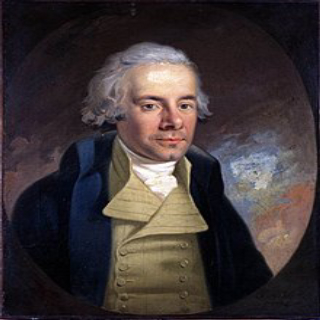
William Wilberforce, oil painting by Karl Anton Hickel, 1793 . Willima has a white scarf tied at his neck and wearing a dark blue coat with a folded collar.
William Wilberforce by Karl Anton Hickel, 1793
Wilberforce married Barbara Spooner in 1797 and they had six children. Historical acounts show that he was a loving and devoted husband and father, and was proud that three of his sons became clergyman.
The Slavery Abolition Bill
Wilberforce attempted several times to bring private members' bills before Parliament to end Britain’s involvement in the slave trade, but the Bill was defeated many times. It was finally passed on 25 March, 1807. However, this only went as far as banning British people from engaging in the slave trade, it did not ban slavery itself. Wilberforce retired from politics in 1825 due to ill health, but he continued to campaign for the abolition of slavery.
Finally, on 26 July 1833, as Wilberforce lay on his deathbed, he was told that the Slavery Abolition Bill, granting freedom to all enslaved people within the British Empire, had been passed by Parliament. He died three days later. As a mark of respect for his achievements, his body was buried in Westminster Abbey.
Childhood and Education
William Wilberforce was born on 24 August, 1759, at 25 High Street, Hull (which is now known as Wilberforce House) to Robert and Elizabeth Wilberforce. He had three sisters, Elizabeth, Ann and Sarah (known as Sally). Of the four children, only William and Sally survived to adulthood.
The Wilberforce family were successful merchants, who traded in imported goods, like wood and cloth, from northern Europe and the Baltic states. The family home reflected the family's wealth and was decorated with fashionable architecture of the day.
William was a small, sickly child with poor eyesight, but this did not stop him from attending Hull Grammar School or taking part in musical activities or sports. William was known to have a beautiful singing voice and had a reputation for telling funny stories and playing practical jokes.
When William was only eight years old, his father died. William's mother then became ill and so she sent him to live with his aunt and uncle, Hannah and William Wilberforce, in London. They sent him to study at a small boarding school in Putney, which he disliked, complaining about the food. Hannah and William were Evangelical Methodists and they took William to church regularly, where he enjoyed listening to bible stories and sermons by prominent figures within the Methodist movement.
William's mother worried about his exposure to such a strong religious influence and arranged for him to come home to Hull. William was sent to board at Pocklington Grammar School, where he studied hard and did well at Latin, English and History. Aged 17 he went to Cambridge University, where he met William Pitt the Younger, who became a lifelong friend. Wilberforce took full advantage of the social life on offer at university, and was well known for attending dinners, gambling, and playing cards. Despite his busy social life, Wilberforce managed to graduate from Cambridge in 1781, determined to have a career as a Member of Parliament.
Religious Beliefs and Influences
William Wilberforce became a deeply religious man who dedicated his life and his work to acting on his beliefs. He had many religious and political influences during his lifetime.
His mother was staunchly Church of England. However, after the death of his father, William spent two years living with his aunt and uncle in London, who were keen Methodists.
They took the young William to church regularly, where he heard important figures like George Whitefield preach. At that time, Methodism was known as a branch within the Church of England that was particularly concerned with social welfare. However, his mother became alarmed at his growing interest in evangelical Christianity, and she brought the young William home again.
Wilberforce's second major religious influence was Isaac Milner, who was a young teacher when Wilberforce attended Hull Grammar School. They were to become lifelong friends and in 1784 they travelled together through Europe.
During the months they spent together, Milner introduced William to his own religious beliefs and encouraged him to read an essay entitled 'The Rise and Progress of Religion in the Soul'. The whole experience had a profound affect on William and he returned home to England a changed man and devout Methodist.
Another influence on William was John Newton, his Aunt Hannah’s half-brother who had previously been involved in the slave trade. Newton was one of the wealthiest men in Europe and a great humanitarian and philanthropist, and gave many gifts to the Evangelical church. Following William's tour of Europe with Milner, he met up with John Newton to discuss his new-found faith.
William wrote in secret to Newton:
Sir, there is no need of apology for intruding on you, when the errand is religion. I wish to have some serious conversation with you… the earlier the more agreeable to me. I have ten thousand doubts within myself, whether or not I should discover myself to you; but every argument against doing it has its foundation in pride. I am sure you will hold yourself bound to let no one living know of this application, or of my visit, till I release you for the obligation…
P.S. Remember that I must be secret, and that the gallery of the House is now so universally attended, that the face of a member of Parliament is pretty well known.
William stuck with his conversion to Methodism and wrote a best-selling book A Practical View of Christianity thirteen years later.
Early Political Life and Influences
After graduating from Cambridge University, William Wilberforce chose to follow a career in politics and stood as Independent candidate, in an election for Hull's Member of Parliament. He won by an overwhelming majority and was elected to represent the citizens of Hull, at the age of just 21.
The young Wilberforce was a natural politician. Following the deaths of his father and his uncle he had inherited enough money to financially support his political career. He was also well liked among Hull's merchant families, who hoped that he would represent their business interests in parliament.
Two of Wilberforce's most appealing qualities were his engaging personality and his eloquent speaking voice - useful traits for a politician. He was so famous for his public speaking that he was nicknamed the 'Nightingale of the Commons'.
On taking up his seat in the House of Commons, Wilberforce met up with his university friend, William Pitt the Younger, who had also chosen a political career. Pitt and Wilberforce spent much time studying the more experienced Members of Parliament from the Commons gallery, and listening to heated political debates of the day.
Pitt enjoyed a very sucessful political career, becoming Prime Minister and the new Tory party leader in 1783, aged just 24. Although not quite as ambitious as Pitt, Wilberforce took the decision to stand as candidate for Member of Parliament for Yorkshire. This was one of only two county seats and on winning it, Wilberforce became a more influential politician.
Following his conversion to Methodism in 1785, Wilberforce considered leaving politics. Yet, Pitt and John Newton convinced him to persevere and use his political work as a way of serving God. Wilberforce saw the campaign to abolish the Transatlantic Slave Trade as a way of following his religious and humanitarian beliefs, as well as his moral conscience.
William Wilberforce was born in 1759 in Hull, East Yorkshire. He graduated from Cambridge University with the intention of following a political career, and became Member of Parliament (MP) for Hull in 1780, aged 21. Four years later he became MP for the whole of Yorkshire. It was at this time that he began to work for the abolition of the British trade in enslaved people.
Wilberforce was a deeply spiritual man and later became an Evangelical Christian. He was a popular figure and was known to be charming and witty and a great public speaker. He campaigned for a number of causes: for legislation to improve the lives of the poor, education reform, prison reforms and ending child labour. He was also one of the founders of the Royal Society of the Prevention of Cruelty to Animals (RSPCA).
A Committed Abolitionist
With the backing of his friend William Pitt, who became Prime Minister, Wilberforce became leader of The Society for the Abolition of Slavery. The society campaigned for almost 20 years to bring an end to British involvement in the Transatlantic Slave Trade. The abolition campaign made them many enemies, especially among those who had made huge profits from the trade in enlsaved African people.
Wilberforce left Hull in 1792 and moved to Clapham, London to be closer to his work in Westminster. Within the local community he found friends who shared his interests in religion and politics. They became known as the Clapham Sect and they actively supported the anti-slavery abolitionists.
William Wilberforce, oil painting by Karl Anton Hickel, 1793 . Willima has a white scarf tied at his neck and wearing a dark blue coat with a folded collar.
William Wilberforce by Karl Anton Hickel, 1793
Wilberforce married Barbara Spooner in 1797 and they had six children. Historical acounts show that he was a loving and devoted husband and father, and was proud that three of his sons became clergyman.
The Slavery Abolition Bill
Wilberforce attempted several times to bring private members' bills before Parliament to end Britain’s involvement in the slave trade, but the Bill was defeated many times. It was finally passed on 25 March, 1807. However, this only went as far as banning British people from engaging in the slave trade, it did not ban slavery itself. Wilberforce retired from politics in 1825 due to ill health, but he continued to campaign for the abolition of slavery.
Finally, on 26 July 1833, as Wilberforce lay on his deathbed, he was told that the Slavery Abolition Bill, granting freedom to all enslaved people within the British Empire, had been passed by Parliament. He died three days later. As a mark of respect for his achievements, his body was buried in Westminster Abbey.
Childhood and Education
William Wilberforce was born on 24 August, 1759, at 25 High Street, Hull (which is now known as Wilberforce House) to Robert and Elizabeth Wilberforce. He had three sisters, Elizabeth, Ann and Sarah (known as Sally). Of the four children, only William and Sally survived to adulthood.
The Wilberforce family were successful merchants, who traded in imported goods, like wood and cloth, from northern Europe and the Baltic states. The family home reflected the family's wealth and was decorated with fashionable architecture of the day.
William was a small, sickly child with poor eyesight, but this did not stop him from attending Hull Grammar School or taking part in musical activities or sports. William was known to have a beautiful singing voice and had a reputation for telling funny stories and playing practical jokes.
When William was only eight years old, his father died. William's mother then became ill and so she sent him to live with his aunt and uncle, Hannah and William Wilberforce, in London. They sent him to study at a small boarding school in Putney, which he disliked, complaining about the food. Hannah and William were Evangelical Methodists and they took William to church regularly, where he enjoyed listening to bible stories and sermons by prominent figures within the Methodist movement.
William's mother worried about his exposure to such a strong religious influence and arranged for him to come home to Hull. William was sent to board at Pocklington Grammar School, where he studied hard and did well at Latin, English and History. Aged 17 he went to Cambridge University, where he met William Pitt the Younger, who became a lifelong friend. Wilberforce took full advantage of the social life on offer at university, and was well known for attending dinners, gambling, and playing cards. Despite his busy social life, Wilberforce managed to graduate from Cambridge in 1781, determined to have a career as a Member of Parliament.
Religious Beliefs and Influences
William Wilberforce became a deeply religious man who dedicated his life and his work to acting on his beliefs. He had many religious and political influences during his lifetime.
His mother was staunchly Church of England. However, after the death of his father, William spent two years living with his aunt and uncle in London, who were keen Methodists.
They took the young William to church regularly, where he heard important figures like George Whitefield preach. At that time, Methodism was known as a branch within the Church of England that was particularly concerned with social welfare. However, his mother became alarmed at his growing interest in evangelical Christianity, and she brought the young William home again.
Wilberforce's second major religious influence was Isaac Milner, who was a young teacher when Wilberforce attended Hull Grammar School. They were to become lifelong friends and in 1784 they travelled together through Europe.
During the months they spent together, Milner introduced William to his own religious beliefs and encouraged him to read an essay entitled 'The Rise and Progress of Religion in the Soul'. The whole experience had a profound affect on William and he returned home to England a changed man and devout Methodist.
Another influence on William was John Newton, his Aunt Hannah’s half-brother who had previously been involved in the slave trade. Newton was one of the wealthiest men in Europe and a great humanitarian and philanthropist, and gave many gifts to the Evangelical church. Following William's tour of Europe with Milner, he met up with John Newton to discuss his new-found faith.
William wrote in secret to Newton:
Sir, there is no need of apology for intruding on you, when the errand is religion. I wish to have some serious conversation with you… the earlier the more agreeable to me. I have ten thousand doubts within myself, whether or not I should discover myself to you; but every argument against doing it has its foundation in pride. I am sure you will hold yourself bound to let no one living know of this application, or of my visit, till I release you for the obligation…
P.S. Remember that I must be secret, and that the gallery of the House is now so universally attended, that the face of a member of Parliament is pretty well known.
William stuck with his conversion to Methodism and wrote a best-selling book A Practical View of Christianity thirteen years later.
Early Political Life and Influences
After graduating from Cambridge University, William Wilberforce chose to follow a career in politics and stood as Independent candidate, in an election for Hull's Member of Parliament. He won by an overwhelming majority and was elected to represent the citizens of Hull, at the age of just 21.
The young Wilberforce was a natural politician. Following the deaths of his father and his uncle he had inherited enough money to financially support his political career. He was also well liked among Hull's merchant families, who hoped that he would represent their business interests in parliament.
Two of Wilberforce's most appealing qualities were his engaging personality and his eloquent speaking voice - useful traits for a politician. He was so famous for his public speaking that he was nicknamed the 'Nightingale of the Commons'.
On taking up his seat in the House of Commons, Wilberforce met up with his university friend, William Pitt the Younger, who had also chosen a political career. Pitt and Wilberforce spent much time studying the more experienced Members of Parliament from the Commons gallery, and listening to heated political debates of the day.
Pitt enjoyed a very sucessful political career, becoming Prime Minister and the new Tory party leader in 1783, aged just 24. Although not quite as ambitious as Pitt, Wilberforce took the decision to stand as candidate for Member of Parliament for Yorkshire. This was one of only two county seats and on winning it, Wilberforce became a more influential politician.
Following his conversion to Methodism in 1785, Wilberforce considered leaving politics. Yet, Pitt and John Newton convinced him to persevere and use his political work as a way of serving God. Wilberforce saw the campaign to abolish the Transatlantic Slave Trade as a way of following his religious and humanitarian beliefs, as well as his moral conscience.
single is never second best: enjoying god’s gift at midlife
Marriage is good — it was God’s idea, after all! So, why doesn’t he bring me a spouse? That question, so perplexing in our twenties and thirties, can become downright painful as the decades march us into middle age and our marital prospects diminish. After all, we know the statistics — there’s a better chance of [insert extraordinary random occurrence] than of getting married after [insert any age over 39]. “A solitary life is not his plan for us whether we get married or not.” Does that mean we over-40 singles are doomed to lives of miserable loneliness? Most definitely not. First of all, we can forget about the statistics because, ultimately, only God determines who marries and who doesn’t. If marriage is God’s plan for us, sooner or later we’re going to get married. Even more importantly, we can be sure that a solitary life is not his plan for us whether we get married or not. God has designed us to live in community, in a family of believers, and his work in our lives aims to get us there: “God settles the solitary in a home” (Psalm 68:6). The real question, therefore, isn’t whether we will wind up alone; it’s whether we’re willing for God’s provision of companionship to be something other than marriage. Do We Trust Him? Trusting God’s provision doesn’t mean, of course, that we won’t ever feel lonely. Just as there is a loneliness unique to marriage — in fact, the loneliest people I know aren’t the single ones, but those in a difficult marriage — there are aspects of loneliness unique to singleness: It’s what a young, single woman feels among friends whose conversations revolve around wedding plans. It’s what a 30-something single feels when his maturity is measured by his marital status. It’s what 40-year-olds feel when others make an erroneous link between their singleness and their sexual orientation. Singles’ loneliness is also fueled by the marital happiness we perceive (or imagine) others are enjoying. Trusting God in the midst of all this pain isn’t about looking harder for a mate or even praying for greater patience. It’s about leaning more deeply into Christ and finding in the process all the blessings of union with him — a deeper, more joy-filled union than that of any human marriage. That’s why relief from the pain of unwanted singleness begins as we ask, Do I trust God ? We won’t trust him if we don’t believe he is good in the way he governs the details of our individual lives — including our marital status. If we are single today, that is God’s goodness to us today. Singleness Showcases What Marriage Can’t As we rest in Christ and trust in the goodness of God, the loneliness of being single is transformed into an opportunity to build up the whole body of Christ. In other words, we can serve and glorify God not despite our singleness, but by virtue of it. “The loneliest people I know aren’t the single ones, but those in a difficult marriage.” As we trust God’s good plans for us, we demonstrate, both to ourselves and to the people around us, that singles aren’t to be pitied. And as we abide in Christ, we stop viewing singleness as a problem to be solved. Since there will be no marriage in heaven except the marriage between Christ and the church (Matthew 22:30; Revelation 19:7), singles are uniquely equipped to show others a preview of what heaven will be like. This is why singleness is actually a sign of hope rather than despair. We can showcase this hope to our married brothers and sisters by how we handle our singleness, and we can also display the compassion of Christ to other people who feel lonely. Part of a Greater Family As we watch our friends raise families, there is no need to feel robbed or shut out, because in the new-covenant era — our era — the family emphasis in Scripture is not mom, dad, and three kids. It’s the church family. When the biblical priority gets reversed, it hinders rather than helps the growth of God’s people. Of course, we must seek to uphold the importance of the nuclear family, but we don’t want to make an idol of it. If we consider what the apostles emphasized, we see that their focus was much more on the Great Commission, personal holiness, and growing the church family. And it is this family from which no single Christian is to be left out. Privileged Calling As singles abide in Christ, we discover, often much to our surprise, that there are unique blessings that come with being single. At a purely practical level, we have more control over our time than our married friends. (I say “more control over” to correct the mistaken view that singles always have more time in general.) And the unmarried can more readily live out their personal preferences in planning social activities, vacations, and areas of service in the church and community. Singles encourage one another and glorify God as they identify their unique blessings, willingly embrace them, and put them to good use. The best privilege of being single is far and away the enhanced opportunity for discipleship and serving Jesus. This, more than anything else — including marriage — is how God remedies loneliness. And there is a satisfaction that comes from living out these unique advantages that our married brothers and sisters can’t fully know. If we are willing — if we trust God — we will surely experience the value and rewards of singleness. “The best privilege of being single is far and away the enhanced opportunity for discipleship and serving Jesus.” As we do, we come to value our lives — not despite our singleness, but actually because of it. Women who have rarely or never been pursued by men, or men whose pursuit of women has been rejected (once or many times), often question their worth. It is to such that Christ comes, not to shore up their self-esteem, but to drive them to find him as their worth. As we value Christ, our own value becomes clearer, and as that happens, we discover that somewhere along the way, we’ve stopped defining our personhood and our well-being by our marital status. Singleness isn’t second best. To the contrary, it’s a privileged calling with unique blessings to enjoy and to pour out for others. Are we willing to embrace it unless or until God calls us to marriage? That’s the real question. And those who say yes will never be disappointed.