

Others like how to know the will of god Features >>

How To Pass God's Test

What Is The Fear Of The Lord

Staying Full Of God

How Can I Be Filled With The Holy Spirit

Victory In The Wilderness
Holding To The Word Of The Lord

How To Take The Limits Off God
-160.webp)
God Is Watching You: How The Fear Of God Makes Us Human
How To Keep Your Healing

How To Live A Holy Life
About the Book
"How to Know the Will of God" by Lester Sumrall is a practical guide for Christians seeking to understand and follow God's plan for their lives. Sumrall outlines principles and strategies for discerning God's will through prayer, studying the Bible, seeking wise counsel, and listening for God's prompting. The book emphasizes the importance of surrendering to God's authority and trusting in His guidance.
Warren Wiersbe
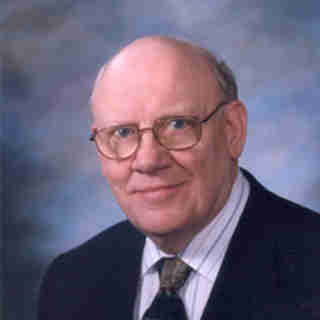 Dr. Warren Wiersbe once described Heaven as “not only a destination, but also a motivation. When you and I are truly motivated by the promise of eternity with God in heaven, it makes a difference in our lives.”
For Wiersbe, the promise of eternity became the motivation for his long ministry as a pastor, author, and radio speaker. Beloved for his biblical insight and practical teaching, he was called “one of the greatest Bible expositors of our generation” by the late Billy Graham.
Warren W. Wiersbe died on May 2, 2019, in Lincoln, Nebraska, just a few weeks shy of his 90th birthday.
“He was a longtime, cherished friend of Moody Bible Institute, a faithful servant of the Word, and a pastor to younger pastors like me,” said Dr. Mark Jobe, president of Moody Bible Institute. “We are lifting up pastor Wiersbe’s family in prayer at this time and rejoicing in the blessed hope that believers share together.”
Wiersbe grew up in East Chicago, Indiana, a town known for its steel mills and hard-working blue-collar families. In his autobiography, he connected some of his earliest childhood memories to Moody Bible Institute; his home church pastor was a 1937 graduate, Dr. William H. Taylor. After volunteering to usher at a 1945 Youth for Christ rally, Wiersbe found himself listening with rapt attention to Billy Graham’s sermon, and responded with a personal prayer of dedication.
In a precocious turn of events, the young Wiersbe was already a published author, having written a book of card tricks for the L. L. Ireland Magic Co. of Chicago. He quickly learned to liven up Sunday school lessons with magic tricks as object lessons (“not the cards!” he would say). After his high school graduation in 1947 (he was valedictorian), he spent a year at Indiana University before transferring to Northern Baptist Seminary in Chicago, where he earned a bachelor of theology degree. His future wife, Betty, worked in the school library, and Wiersbe was a frequent visitor.
While in seminary he became pastor of Central Baptist Church in East Chicago, serving until 1957. During those years he became a popular YFC speaker, which led to a full-time position with Youth for Christ International in Wheaton. He published his first article for Moody Monthly magazine in 1956, about Bible study methods, and seemed to outline his ongoing writing philosophy. “This is more of a personal testimony,” he said, “because I want to share these blessings with you, rather than write some scholarly essay, which I am sure I could not do anyway.”
At a 1957 YFC convention in Winona Lake, Indiana, Wiersbe preached a sermon that was broadcast live over WMBI, his first connection to Moody Radio. “I wish every preacher could have at least six months’ experience as a radio preacher,” he said later (because they would preach shorter).
While working with Youth for Christ, Wiersbe got a call from Pete Gunther at Moody Publishers, asking about possible book projects. First came Byways of Blessing (1961), an adult devotional; then two more books in 1962, A Guidebook for Teens and Teens Triumphant. He would eventually publish 14 titles with Moody, including William Culbertson: A Man of God (1974), Live Like a King (1976), The Annotated Pilgrim’s Progress (1980), and Ministering to the Mourning (2006), written with his son, David Wiersbe.
In 1961, D. B. Eastep invited Wiersbe to join the staff of Calvary Baptist Church in Covington, Kentucky. forming a succession plan that was hastened by Eastep’s sudden death in 1962. Warren and Betty Wiersbe remained at the church for 10 years, until they were surprised by a phone call from The Moody Church. The pastor, Dr. George Sweeting, had just resigned to become president of Moody Bible Institute. Would Wiersbe fill the pulpit, and pray about becoming a candidate?
He was already well known to the Chicago church—and to the MBI community. He continued to write for Moody Monthly and had just started a new column, “Insights for the Pastor.” The monthly feature continued to run during the years Wiersbe served at The Moody Church. Wiersbe would become one of the magazine’s most prolific writers—200 articles during a 40-year span. Meanwhile he also started work on the BE series of exegetical commentaries, books that soon found a place on the shelf of every evangelical pastor.
His ministry to pastors continued as he spoke at Moody Founder’s Week, Pastors’ Conference, and numerous campus events. He also inherited George Sweeting’s role as host of the popular Songs in the Night radio broadcast, produced by Moody Radio’s Bob Neff and distributed on Moody’s growing network of radio stations.
Later in life he would move to Lincoln, Nebraska, where he served as host of the Back to the Bible radio broadcast. He also taught courses on preaching at Trinity Evangelical Divinity School and Grand Rapids Baptist Seminary. He kept writing, eventually publishing more than 150 books and losing track of how many (“I can’t remember them all, and I didn’t save copies of everything,” he said.)
Throughout his ministry, Warren Wiersbe described himself as a bridge builder, a reference to his homiletical method of moving “from the world of the Bible to the world of today so that we could get to the other side of glory in Jesus.” As explained by his grandson, Dan Jacobson, “His preferred tools were words, his blueprints were the Scriptures, and his workspace was a self-assembled library.”
Several of Wiersbe’s extended family are Moody alums, including a son, David Wiersbe ’76; grandson Dan Jacobsen ’09 and his wife, Kristin (Shirk) Jacobsen ’09; and great-nephew Ryan Smith, a current student.
During his long ministry and writing career, Warren Wiersbe covered pretty much every topic, including the inevitability of death. These words from Ministering to the Mourning offer a fitting tribute to his own ministry:
We who are in Christ know that if He returns before our time comes to die, we shall be privileged to follow Him home. God’s people are always encouraged by that blessed hope. Yet we must still live each day soberly, realizing that we are mortal and that death may come to us at any time. We pray, “Teach us to number our days aright, that we may gain a heart of wisdom” (Psalm 90:12).
Dr. Warren Wiersbe once described Heaven as “not only a destination, but also a motivation. When you and I are truly motivated by the promise of eternity with God in heaven, it makes a difference in our lives.”
For Wiersbe, the promise of eternity became the motivation for his long ministry as a pastor, author, and radio speaker. Beloved for his biblical insight and practical teaching, he was called “one of the greatest Bible expositors of our generation” by the late Billy Graham.
Warren W. Wiersbe died on May 2, 2019, in Lincoln, Nebraska, just a few weeks shy of his 90th birthday.
“He was a longtime, cherished friend of Moody Bible Institute, a faithful servant of the Word, and a pastor to younger pastors like me,” said Dr. Mark Jobe, president of Moody Bible Institute. “We are lifting up pastor Wiersbe’s family in prayer at this time and rejoicing in the blessed hope that believers share together.”
Wiersbe grew up in East Chicago, Indiana, a town known for its steel mills and hard-working blue-collar families. In his autobiography, he connected some of his earliest childhood memories to Moody Bible Institute; his home church pastor was a 1937 graduate, Dr. William H. Taylor. After volunteering to usher at a 1945 Youth for Christ rally, Wiersbe found himself listening with rapt attention to Billy Graham’s sermon, and responded with a personal prayer of dedication.
In a precocious turn of events, the young Wiersbe was already a published author, having written a book of card tricks for the L. L. Ireland Magic Co. of Chicago. He quickly learned to liven up Sunday school lessons with magic tricks as object lessons (“not the cards!” he would say). After his high school graduation in 1947 (he was valedictorian), he spent a year at Indiana University before transferring to Northern Baptist Seminary in Chicago, where he earned a bachelor of theology degree. His future wife, Betty, worked in the school library, and Wiersbe was a frequent visitor.
While in seminary he became pastor of Central Baptist Church in East Chicago, serving until 1957. During those years he became a popular YFC speaker, which led to a full-time position with Youth for Christ International in Wheaton. He published his first article for Moody Monthly magazine in 1956, about Bible study methods, and seemed to outline his ongoing writing philosophy. “This is more of a personal testimony,” he said, “because I want to share these blessings with you, rather than write some scholarly essay, which I am sure I could not do anyway.”
At a 1957 YFC convention in Winona Lake, Indiana, Wiersbe preached a sermon that was broadcast live over WMBI, his first connection to Moody Radio. “I wish every preacher could have at least six months’ experience as a radio preacher,” he said later (because they would preach shorter).
While working with Youth for Christ, Wiersbe got a call from Pete Gunther at Moody Publishers, asking about possible book projects. First came Byways of Blessing (1961), an adult devotional; then two more books in 1962, A Guidebook for Teens and Teens Triumphant. He would eventually publish 14 titles with Moody, including William Culbertson: A Man of God (1974), Live Like a King (1976), The Annotated Pilgrim’s Progress (1980), and Ministering to the Mourning (2006), written with his son, David Wiersbe.
In 1961, D. B. Eastep invited Wiersbe to join the staff of Calvary Baptist Church in Covington, Kentucky. forming a succession plan that was hastened by Eastep’s sudden death in 1962. Warren and Betty Wiersbe remained at the church for 10 years, until they were surprised by a phone call from The Moody Church. The pastor, Dr. George Sweeting, had just resigned to become president of Moody Bible Institute. Would Wiersbe fill the pulpit, and pray about becoming a candidate?
He was already well known to the Chicago church—and to the MBI community. He continued to write for Moody Monthly and had just started a new column, “Insights for the Pastor.” The monthly feature continued to run during the years Wiersbe served at The Moody Church. Wiersbe would become one of the magazine’s most prolific writers—200 articles during a 40-year span. Meanwhile he also started work on the BE series of exegetical commentaries, books that soon found a place on the shelf of every evangelical pastor.
His ministry to pastors continued as he spoke at Moody Founder’s Week, Pastors’ Conference, and numerous campus events. He also inherited George Sweeting’s role as host of the popular Songs in the Night radio broadcast, produced by Moody Radio’s Bob Neff and distributed on Moody’s growing network of radio stations.
Later in life he would move to Lincoln, Nebraska, where he served as host of the Back to the Bible radio broadcast. He also taught courses on preaching at Trinity Evangelical Divinity School and Grand Rapids Baptist Seminary. He kept writing, eventually publishing more than 150 books and losing track of how many (“I can’t remember them all, and I didn’t save copies of everything,” he said.)
Throughout his ministry, Warren Wiersbe described himself as a bridge builder, a reference to his homiletical method of moving “from the world of the Bible to the world of today so that we could get to the other side of glory in Jesus.” As explained by his grandson, Dan Jacobson, “His preferred tools were words, his blueprints were the Scriptures, and his workspace was a self-assembled library.”
Several of Wiersbe’s extended family are Moody alums, including a son, David Wiersbe ’76; grandson Dan Jacobsen ’09 and his wife, Kristin (Shirk) Jacobsen ’09; and great-nephew Ryan Smith, a current student.
During his long ministry and writing career, Warren Wiersbe covered pretty much every topic, including the inevitability of death. These words from Ministering to the Mourning offer a fitting tribute to his own ministry:
We who are in Christ know that if He returns before our time comes to die, we shall be privileged to follow Him home. God’s people are always encouraged by that blessed hope. Yet we must still live each day soberly, realizing that we are mortal and that death may come to us at any time. We pray, “Teach us to number our days aright, that we may gain a heart of wisdom” (Psalm 90:12).
Fatherhood for Imperfect Dads
My wife and I raised perfect children. By the time they were ten years old, they had memorized the New Testament. They came each morning to the family breakfast table with cheerful songs on their tongues, the melodies caressing their freshly brushed teeth. At an early age, they volunteered to launder their own clothes and never once complained about their studies. They never used a whiny tone of voice with their mother, and they affectionately call me “dearest father” to this very day. I can’t recall correcting them. They were thrilled to share their belongings with each other. We never heard a mumbling word. Yeah, right. There are no perfect children. Vicki and I didn’t raise any, and my parents didn’t raise any either. Neither did yours. We live on a fallen and cursed planet. You are a sinner, and your children are too. They not only fall short of the glory of God, but they fall short of the expectations of their inglorious dads. “Don’t give up on fatherhood just because perfection seems continually out of reach.” But all is not lost. Fathers, don’t give up on fatherhood just because perfection seems continually out of reach. God extends more than enough grace to compensate for our shortcomings as dads. Children of defective parents — your children — can end up relishing God. When Dreams Hit Reality Expectations breed strong emotions, and unmet expectations even stronger ones. When our expectations collide with real life, the mismatch can erupt in a whole range of emotions — from dismay to sorrow to fuming anger. Mostly fuming anger. That’s what happens when people do what you don’t expect them to, or don’t do what you do expect them to. Desires launch assumptions, which are then fueled by narratives we have subtly adopted. Such as: Unlike other children, my children will never make a big mess or be fussy in church. I will lose standing in the community if my kids don’t go to college. My children will replicate only my good traits and not my flaws and sinful attitudes. My kids will be spiritually advanced for their age. Acting wisely and avoiding emotional hijacks requires winning the crucial battle — an unceasingly ongoing one — to align your expectations with reality. Those children you love dearly will sin dreadfully. As you have. Observe the one reality you cannot avoid in your parenting: you and your sinful nature. Your children not only live with your sin — they inherit it. “Those children you love dearly will sin dreadfully. As you have.” But parenting is not to be dreaded. To dread parenting exposes a misplaced love that you perceive to be in danger — like a love for your reputation if your kids mess up, or a love for your schedule if your kids make a mess when you’re already running late. The steadfast love of God is never in danger, and if your aim in parenting is to draw attention to his love, you have nothing to dread on that score. Safe Expectations Some expectations, however, will certainly come to pass. You can plan on the fact that your parenting will never go exactly according to your plan. Your parenting plan isn’t perfectly wise, because you are not perfectly wise. My wife has a placard that says, “Man plans. God laughs.” In contrast to our plans, God’s plan for your parenting is perfectly wise. You are not sovereign. He is. And in his perfection, he assigned your children their father — namely, you. Parenting is nevertheless a humbling experience. Your parenting won’t be flawless any more than your marriage has been without disappointments. You will face regret — regret that you weren’t a better parent, that you passed on your imperfections to your children, that you displayed anger at them for being like you, that you didn’t know as much as you had hoped you would. My kids are now middle-aged themselves, all of them parenting their own unique God-given brood. And one of the disappointments I didn’t expect early on is that they haven’t passed along to their own children some of the lessons I insisted on giving to them. For example, when my children were still living at home, I led family discussions about everything from Charles Finney’s approach to confessing sin, to how eye traps work (seductive clothing), to the value of singing together. As a grandparent, I don’t hear those lessons emphasized in the same ways in their homes. Meanwhile, they love their children deeply, and point them to Jesus in other ways I never did. So there’s another side to this expectation coin. God provides occasions when your children exceed your expectations, times when you wish you were like them. Some of our children treat every day as a new day, forgiving yesterday’s offenses. Some are generous to a fault. Some seem impervious to peer pressure. In a crucial sense, your children grow you. That is, they are God-sent instruments for your growth in maturity, your sanctification, your alignment with God’s plan for your Christlikeness. Questions for Fathers With some safe expectations in place, what steps might dads take to remove some of the imperfections from their imperfect parenting? Fathers who rightly relate to God are on firm footing for rightly relating to their children. So how is your own relationship with your heavenly Father? Do you “seek first the kingdom of God and his righteousness,” trusting that “all these things will be added to you” (Matthew 6:33)? Would people who know you best say that you truly want what God wants for your children? Would you say it about yourself? Would God say it about you? How do you parent today in relation to how you were parented? Are you replicating the errors of your own mom or dad? Are you motivated to avoid repeating the same errors? Once grace enables you to become aware of their errors, that same grace can enable you to break from those errors in your own parenting. Generational sins can be broken: “Now suppose this man fathers a son who sees all the sins that his father has done; he sees, and does not do likewise” (Ezekiel 18:14). Ask God to help you seek his kingdom first in your family, especially in those places where you are tempted to repeat the errors of the past. Humble Fatherhood Perhaps most of all, however, we dads need humility. Even if your way of raising children is a good way, beware of concluding your way is the best way, much less the only way. In other words, remain teachable. One day it dawned on me that my small children could teach me a few lessons about my parenting. That was God whispering to me through my children. Fathers, your offspring won’t admire everything about you. They’ll learn stuff you didn’t teach them. They’ll be better than you at some skills and more developed in certain character qualities. Your personal flaws will exert lingering influence on them. Pray for mercy. They may or may not follow your preferred career for them. They will not develop uniformly without setbacks, nor be identical to their siblings. Recognize individuality. Even though you work at it — and you are wise to do so — you will not always have your wife’s enthusiastic support in every aspect of parenting, from bedtimes to how much should be spent on gifts. Be gentle. Be humble. Seek God for more grace. Although not all of your expectations will be fulfilled in fathering, you can continue to grow and step into God’s great privilege of being their dad. Article by Sam Crabtree