


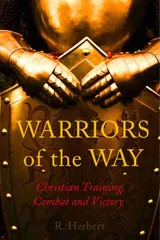
About the Book
"How God Makes Men" by Patrick Morley explores the spiritual and practical aspects of manhood, drawing on biblical principles and personal experiences to guide men on their journey towards becoming the men God intended them to be. With a focus on character development, leadership, and relationships, Morley offers insights and challenges to help men grow in their faith and fulfill their God-given purpose.
Richard Wurmbrand
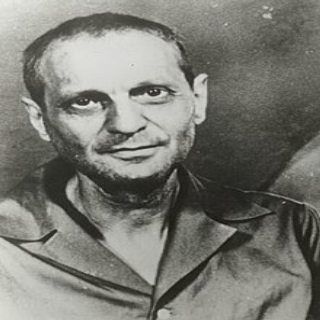 Richard Wurmbrand (1909 – 2001) was born in 1909 in Bucharist in the country of Romania. He was the youngest of four boys born in a Jewish family. He lived with his family in Istanbul for a short time. When he was 9, his father died and the Wurmbrands returned to Romania when he was 15.
He was sent to study Marxism in Moscow. When he returned, he was already a Comintern Agent. A Comintern Agent was a member of the Communist International Organisation which intended to fight:
Like other Romanian Communists, he was arrested and released several times.
He married Sabina Oster on 26th October 1936. Wurmbrand and his wife went to live in an isolated village high in the mountains of Romania. But, as a athiest there was no peace to be found in his heart. So one day, when his heart was in a state of turmoil he cried out:
“God, if perchance you exist, it is Your duty to reveal yourself to me.”
Shorthly after he prayed that prayer, he met a German carpenter in his village who gave him a bible. The carpenter and his wife had been praying earnestly that God would bring a Jew to his village, because the carpenter wanted to bring a Jew to Christ, because Jesus was a Jew. So the carpenter gave him a Bible to read. Wurmbrand said, when he opened that Bible he could not stop weeping. He had read the Bible before but it had meant nothing to him. This time when he opened the Bible he could barely read it because of the copious amount of tears that filled his eyes. Sometime later he found out the carpenter and his wife had been praying earnestly for him. Wurnbrand said that every word that he read were like flames of love burning in his heart. He realized for the first ime in his life that there was a God of love who loved him, even though he had beeen living a bad life and had nurtured a hated towards the concept of a ‘loving’ God.
The Power of Intercessory Prayer
But now for the first time he knew that Jesus had suffered at the cross of Calvary for his sins and he was loved and accepted of God. Richard and his wife became believers in Jesus the Messiah. All the hatred that he had formerly held toward God was washed away under the blood of Christ and Richard and his wife Sabrina were born of the Spirit. That is the power of intercessory prayer!
Richard prepared himself for the ministry. He was ordained as an Anglican minister in 1938 at the start of world war 2. Both Richard and his wife were arrested several times. They were beaten and hauled before a Nazi court. They suffered under the Nazi regime throughout world war 2. But Richard said, it was only a taste of what was to come.
Russian Troups Enter Romania
Towards the end of world war 2, Richard Wurmbrand became a Lutheran and he pastored a Lutheran church in Romania. But, the same year, 1 million Russian troups entered and occupied the entire territory of Romania.
Within a very short space of time the Communists took over Romania. The reign of terror began. Out of fear 4,000 priests, pastors & ministers became Communists overnight. They confessed their allegience and loyalty to the new Communist Government because they all feared for their survival.
Romania’s Resistance
Harsh persecutions of any enemies of the Communist government started with the Soviet occupation in 1945. The Soviet army behaved as an occupation force (although theoretically it was an ally against Nazi Germany), and could arrest virtually anyone at will. Shortly after Soviet occupation, ethnic Germans (who were Romanian citizens and had been living as a community in Romania for 800 years) were deported to the Donbas coal mines. Despite the King’s protest, who pointed out that this was against international law, an estimated 70,000 men and women were forced to leave their homes, starting in January 1945, before the war had even ended. They were loaded in cattle cars and put to work in the Soviet mines for up to ten years as “reparations”, where about one in five died from disease, accidents and malnutrition.
Once the Communist government became more entrenched, the number of arrests increased. All strata of society were involved, but particularly targeted were the pre-war elites, such as intellectuals, clerics, teachers, former politicians (even if they had left-leaning views) and anybody who could potentially form the nucleus of anti-Communist resistance. The existing prisons were filled with political prisoners, and a new system of forced labor camps and prisons was created, modeled after the Soviet Gulag. Some of the most notorious prisons included Sighet, Gherla, Piteşti and Aiud, and forced labor camps were set up at lead mines and in the Danube Delta.
Underground Church
Richard and his wife knew that Christianity and Communism were totally opposed to each other. They knew that a true follower of Christ cannot compromise. So they created an “Underground Church” movement to preach the pure gospel of Christ and to reach out to the unsaved people of Romania and secondly to reach out secretly to the Russian soldiers. They secretly printed thousands of Bibles and Christian literature and distributed it to the Russian soldiers. Many of the Russian soldiers were convicted and they gave their life to Christ.
So the underground church grew. But, in 1948 the Secret Police arrested Wurmbrand and he was placed in solitary confinement for 3 years. He was then transferred to a group cell for the next five years. Whilst in prison he continued to win the other prisoners to Christ. After 8 years in prison he was released and he immediately resumed his work with the undergound church. A few years later, 1959, he was arrested again and was sentenced to 25 years in prison. However, after spending 5 years in prison an organisation called the Christian Alliance negotiated with the Communist Government and they managed to secure his release for a fee of $10,000. They quickly got Richard Wurmbrand out of Romania and took him to England, then to the USA.
In 1966, Richard was called to Washington DC to give his testimony before the United States Senate. He took off his shirt to show the Senate the scars and the wounds that he received whilst he served time in prison under the Communist Government in Romania.
The newspapers throughout the USA, Europe and Asia carried his story all across the world. Christian leaders called him the “Voice of the Underground Church.”
In 1967, with a $100 old typewriter and 500 names and addresses, Richard Wurmbrand published the first issue of THE VOICE OF THE MARTYRS newsletter. This newsletter was dedicated to communicating the testimonies and trails facing our brothers and sisters in restricted nations worldwide. Richard wrote:
“The message I bring from the Underground Church is:
“Don’t abandon us!”
“Don’t forget us!”
“Don’t write us off!”
“Give us the tools we need! We will pay the price for using them!”
“This is the message I have been charged to deliver to the free church.”
Richard Wurmbrand and his wife travelled throughout the world to establish a network of over 30 offices. Their primary aim was to call Christians to shoulder their responsibility and to demonstrate the real substance of their faith by supporting their brothers and sisters in Christ who are being persecuted in heathen lands.
The VOICE OF THE MARTYRS newsletter continues to inform, and lead to action, Christians throughout the free world of the plight of those who suffer for their faith in Jesus Christ. Throughout their network of offices around the world, the newsletter is published in over 30 different languages. To this cause, VOICE OF THE MARTYRS presses on, serving in nearly 40 countries around the world where our brothers and sisters are systematically persecuted.
The writer of the Book of Hebrews brings a convicting word to the Christian church:
” Remember them that are in bonds, as bound with them; and them that suffer adversity, as being yourselves also in the body.”
(Hebrews 13:3)
We have a responsibility to those who suffer for their faith in Christ.
Today, there is an estimated 200 million Christians in heathen nations who are suffering persecution for their faith in Christ.
Richard Wurmbrand (1909 – 2001) was born in 1909 in Bucharist in the country of Romania. He was the youngest of four boys born in a Jewish family. He lived with his family in Istanbul for a short time. When he was 9, his father died and the Wurmbrands returned to Romania when he was 15.
He was sent to study Marxism in Moscow. When he returned, he was already a Comintern Agent. A Comintern Agent was a member of the Communist International Organisation which intended to fight:
Like other Romanian Communists, he was arrested and released several times.
He married Sabina Oster on 26th October 1936. Wurmbrand and his wife went to live in an isolated village high in the mountains of Romania. But, as a athiest there was no peace to be found in his heart. So one day, when his heart was in a state of turmoil he cried out:
“God, if perchance you exist, it is Your duty to reveal yourself to me.”
Shorthly after he prayed that prayer, he met a German carpenter in his village who gave him a bible. The carpenter and his wife had been praying earnestly that God would bring a Jew to his village, because the carpenter wanted to bring a Jew to Christ, because Jesus was a Jew. So the carpenter gave him a Bible to read. Wurmbrand said, when he opened that Bible he could not stop weeping. He had read the Bible before but it had meant nothing to him. This time when he opened the Bible he could barely read it because of the copious amount of tears that filled his eyes. Sometime later he found out the carpenter and his wife had been praying earnestly for him. Wurnbrand said that every word that he read were like flames of love burning in his heart. He realized for the first ime in his life that there was a God of love who loved him, even though he had beeen living a bad life and had nurtured a hated towards the concept of a ‘loving’ God.
The Power of Intercessory Prayer
But now for the first time he knew that Jesus had suffered at the cross of Calvary for his sins and he was loved and accepted of God. Richard and his wife became believers in Jesus the Messiah. All the hatred that he had formerly held toward God was washed away under the blood of Christ and Richard and his wife Sabrina were born of the Spirit. That is the power of intercessory prayer!
Richard prepared himself for the ministry. He was ordained as an Anglican minister in 1938 at the start of world war 2. Both Richard and his wife were arrested several times. They were beaten and hauled before a Nazi court. They suffered under the Nazi regime throughout world war 2. But Richard said, it was only a taste of what was to come.
Russian Troups Enter Romania
Towards the end of world war 2, Richard Wurmbrand became a Lutheran and he pastored a Lutheran church in Romania. But, the same year, 1 million Russian troups entered and occupied the entire territory of Romania.
Within a very short space of time the Communists took over Romania. The reign of terror began. Out of fear 4,000 priests, pastors & ministers became Communists overnight. They confessed their allegience and loyalty to the new Communist Government because they all feared for their survival.
Romania’s Resistance
Harsh persecutions of any enemies of the Communist government started with the Soviet occupation in 1945. The Soviet army behaved as an occupation force (although theoretically it was an ally against Nazi Germany), and could arrest virtually anyone at will. Shortly after Soviet occupation, ethnic Germans (who were Romanian citizens and had been living as a community in Romania for 800 years) were deported to the Donbas coal mines. Despite the King’s protest, who pointed out that this was against international law, an estimated 70,000 men and women were forced to leave their homes, starting in January 1945, before the war had even ended. They were loaded in cattle cars and put to work in the Soviet mines for up to ten years as “reparations”, where about one in five died from disease, accidents and malnutrition.
Once the Communist government became more entrenched, the number of arrests increased. All strata of society were involved, but particularly targeted were the pre-war elites, such as intellectuals, clerics, teachers, former politicians (even if they had left-leaning views) and anybody who could potentially form the nucleus of anti-Communist resistance. The existing prisons were filled with political prisoners, and a new system of forced labor camps and prisons was created, modeled after the Soviet Gulag. Some of the most notorious prisons included Sighet, Gherla, Piteşti and Aiud, and forced labor camps were set up at lead mines and in the Danube Delta.
Underground Church
Richard and his wife knew that Christianity and Communism were totally opposed to each other. They knew that a true follower of Christ cannot compromise. So they created an “Underground Church” movement to preach the pure gospel of Christ and to reach out to the unsaved people of Romania and secondly to reach out secretly to the Russian soldiers. They secretly printed thousands of Bibles and Christian literature and distributed it to the Russian soldiers. Many of the Russian soldiers were convicted and they gave their life to Christ.
So the underground church grew. But, in 1948 the Secret Police arrested Wurmbrand and he was placed in solitary confinement for 3 years. He was then transferred to a group cell for the next five years. Whilst in prison he continued to win the other prisoners to Christ. After 8 years in prison he was released and he immediately resumed his work with the undergound church. A few years later, 1959, he was arrested again and was sentenced to 25 years in prison. However, after spending 5 years in prison an organisation called the Christian Alliance negotiated with the Communist Government and they managed to secure his release for a fee of $10,000. They quickly got Richard Wurmbrand out of Romania and took him to England, then to the USA.
In 1966, Richard was called to Washington DC to give his testimony before the United States Senate. He took off his shirt to show the Senate the scars and the wounds that he received whilst he served time in prison under the Communist Government in Romania.
The newspapers throughout the USA, Europe and Asia carried his story all across the world. Christian leaders called him the “Voice of the Underground Church.”
In 1967, with a $100 old typewriter and 500 names and addresses, Richard Wurmbrand published the first issue of THE VOICE OF THE MARTYRS newsletter. This newsletter was dedicated to communicating the testimonies and trails facing our brothers and sisters in restricted nations worldwide. Richard wrote:
“The message I bring from the Underground Church is:
“Don’t abandon us!”
“Don’t forget us!”
“Don’t write us off!”
“Give us the tools we need! We will pay the price for using them!”
“This is the message I have been charged to deliver to the free church.”
Richard Wurmbrand and his wife travelled throughout the world to establish a network of over 30 offices. Their primary aim was to call Christians to shoulder their responsibility and to demonstrate the real substance of their faith by supporting their brothers and sisters in Christ who are being persecuted in heathen lands.
The VOICE OF THE MARTYRS newsletter continues to inform, and lead to action, Christians throughout the free world of the plight of those who suffer for their faith in Jesus Christ. Throughout their network of offices around the world, the newsletter is published in over 30 different languages. To this cause, VOICE OF THE MARTYRS presses on, serving in nearly 40 countries around the world where our brothers and sisters are systematically persecuted.
The writer of the Book of Hebrews brings a convicting word to the Christian church:
” Remember them that are in bonds, as bound with them; and them that suffer adversity, as being yourselves also in the body.”
(Hebrews 13:3)
We have a responsibility to those who suffer for their faith in Christ.
Today, there is an estimated 200 million Christians in heathen nations who are suffering persecution for their faith in Christ.
my times are in your hand - learning to trust the speed of god
Did you know your head ages faster than your feet? Scientists have confirmed this, proving again that Albert Einstein was spot-on in his theories of relativity: the speed of time is relative to a particular frame of reference. For us terrestrials, that frame of reference is earth’s gravitational force. The higher up from the earth something is, the weaker the gravitational pull and the faster time moves. An implication of this is that we frequently put our trust in a frame of reference on time different from the one we experience. For instance, the Global Positioning System (GPS) we rely on to accurately and safely guide us as we pilot our cars, ships, planes, and spaceships only works because it’s programmed, based on Einstein’s theories of relativity, to compensate for the distance between earth and space. Without those formulas, our computers and smartphones would soon get disastrously out of sync with the GPS satellites, which orbit in a different time. Stick with me; I am going somewhere with this. How we experience time depends on our frame of reference. And our particular frame of reference is not always the one we should trust. In fact, sometimes it’s critically important that we trust another framing more than our own. One Day with the Lord For Christians, this concept is nothing new. Over three millennia ago, Moses wrote, A thousand years in your sight are but as yesterday when it is past, or as a watch in the night. (Psalm 90:4) And some two millennia ago, Peter wrote, Do not overlook this one fact, beloved, that with the Lord one day is as a thousand years, and a thousand years as one day. (2 Peter 3:8) In other words, time in God’s eyes moves at different speeds from time in our ours. And in the life of faith, it’s critically important that we learn to rely on God’s timing more than our own — to learn to trust the speed of God. How Long, O Lord? Learning to trust God’s timing is not easy, to say the least. This is partly due to our sin and unbelief. But it’s also because trusting a frame of reference different from ours is, by definition, counterintuitive. Since we can’t calculate God’s time, his timing often doesn’t make sense to us. That’s why after Peter described one God-day as being like a thousand years for us, he went on to say, “The Lord is not slow . . . as some count slowness” (2 Peter 3:9). The “some” he referred to were “scoffers” who mocked Christians’ hope in the return of Christ (2 Peter 3:3–4). But the truth is that all of us fit into the “some” category at times. I don’t mean as scoffers, but as children of God painfully perplexed by our heavenly Father’s apparent slowness. We cry out, “How long, O Lord?” (Psalm 13:1), wondering when he will finally fulfill some promise to which we’re clinging. So, Peter exhorts us, the “beloved” of God, not to “overlook” the fact that God-time is not man-time; therefore, God “is not slow” as man counts slowness (2 Peter 3:8–9) — as I sometimes count slowness. Indeed, he is not. God Is Not Slow Someone who has created such a thing as light speed, and who knows what’s happening in every part of a universe spanning some 93 billion light-years across, is clearly not slow. “It’s critically important that we learn to rely on God’s timing more than our own.” It’s also clear, however, that such a being as God operates on a very different timeline than we do — if timeline is even the right word. For God is not constrained by time. He is the Father of time (Genesis 1:1; Colossians 1:16). He is “the Ancient of Days” (Daniel 7:9), existing “from everlasting to everlasting” (Psalm 90:2). God is not in time ; time is in God (Acts 17:28; Colossians 1:17). The “thousand years” of Psalm 90:4 and 2 Peter 3:8 is just a metaphor, using a timeframe we can somewhat comprehend to communicate a reality we can’t. So, when the speed of God seems slow to us, or when his timing doesn’t make sense, we must “not overlook this one fact”: God-time is different from man-time. God-time is relative to his purposes, which is his frame of reference. And God, according to his wise purposes, makes everything beautiful in its time — the time he purposefully chooses for it. Time for Everything Everything beautiful in its time . I get that from Ecclesiastes 3:11: [God] has made everything beautiful in its time. Also, he has put eternity into man’s heart, yet so that he cannot find out what God has done from the beginning to the end. This verse captures like no other both the mysterious nature of our experience of time, and the pointers God has placed within our frame of reference to help us trust the wisdom of his timing. In designing us with eternity in our hearts, the “eternal God” made us to know him (Deuteronomy 33:27). But in limiting the scope of our perspective and comprehension, he also made us to fundamentally trust him and not ourselves (Proverbs 3:5–6). This is how he means for us to know him: I am God, and there is no other; I am God, and there is none like me, declaring the end from the beginning and from ancient times things not yet done, saying, “My counsel shall stand, and I will accomplish all my purpose.” (Isaiah 46:9–10) He is “the everlasting God” (Isaiah 40:28), “who works all things,” including all time everywhere, “according to the counsel of his will” (Ephesians 1:11). One clear way he reveals the wisdom of his purposes is how he has created, in our frame of reference, “a time for every matter under heaven” (Ecclesiastes 3:1): a time to be born, and a time to die; a time to plant, and a time to pluck up what is planted; a time to kill, and a time to heal; a time to break down, and a time to build up; a time to weep, and a time to laugh; a time to mourn, and a time to dance. (Ecclesiastes 3:2–4) God “made everything beautiful in its time.” The Hebrew word translated “beautiful” means appropriate , fitting , right . God’s “invisible attributes” can be “clearly perceived” in the created order we observe and experience (Romans 1:20). They reveal the wisdom of his purposes — a wisdom far beyond ours. And God intends them to teach us that his “beautiful” timing can be trusted, even when we don’t understand it. In the Fullness of Time God did not merely leave us to deduce his character and wisdom from nature. For “when the fullness of time had come, God sent forth his Son” (Galatians 4:4). In Jesus, the Creator of all stepped into terrestrial time, into our frame of reference (John 1:2). In fully human form, he “dwelt among us,” directly revealing the divine attributes with a “glory as of the only Son from the Father, full of grace and truth” (John 1:14). “Time in God’s eyes moves at different speeds than time in our ours.” While here, he performed many signs and wonders and proclaimed, “The time is fulfilled, and the kingdom of God is at hand; repent and believe in the gospel” (Mark 1:14–15). As he did so, he displayed the marvelous wisdom of the timing of God, often in ways that surprised and confused his followers (John 4:1–42; 11:1–44). Then, when his time had come (John 12:23), Jesus obeyed his Father to the point of death on a cross, “offer[ing] for all time a single sacrifice for sins.” And then he was raised from the dead and “sat down at the right hand of God, waiting from that time until his enemies should be made a footstool for his feet” (Hebrews 10:12–14). As his followers, we also wait. We wait for the Father to “send the Christ appointed for [us], Jesus, whom heaven must receive until the time for restoring all the things about which God spoke by the mouth of his holy prophets long ago” (Acts 3:20–21). Trust the Speed of God As we wait, two thousand years later (or two God-days), we help each other remember, The Lord is not slow to fulfill his promise as some count slowness, but is patient toward [us], not wishing that any should perish, but that all should reach repentance. (2 Peter 3:9) Yes, we must frequently help each other remember: God-time moves at different speeds than ours. God works all things, at all times, in all places, in all dimensions, after the counsel of his will to accomplish all his purpose. God has a purposeful time for everything, and he makes everything beautiful in its time. However God chooses to use our times, it’s critically important that we learn to trust his timing over the relative and unreliable earthbound perspective that shapes our expectations. Our times, like all times, are in God’s hand (Psalm 31:15). This is what it means to live by faith in relation to time. In choosing to trust the speed of God, we humble ourselves under his mighty, time-holding hand. According to 1 Peter 5:6–7, the amazing reward of choosing to embrace such joyful, peaceful, childlike trust in God is that he will exalt us at the proper time.