








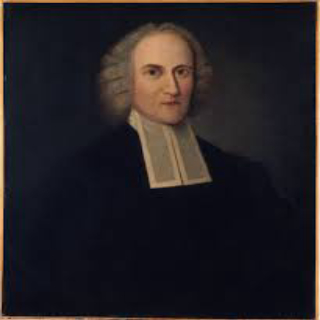
Jonathan Edwards
Jonathan Edwards (1703-1758), colonial New England minister and missionary, was one of the greatest preachers and theologians in American history.
At the close of the 17th century, the science of Isaac Newton and the philosophy of John Locke had significantly changed man's view of his relationship to God. Man's natural ability to discover the laws of creation seemed to demonstrate that supernatural revelation was not a necessary prelude to understanding creation and the creator. God was no longer mysterious; He had endowed men with the power to comprehend His nature and with a will free to choose between good and evil.
It was Jonathan Edwards's genius that he could make full use of Locke's philosophy and Newton's discoveries to reinterpret man's relationship to God in such a way that the experience of supernatural grace became available to people living in an intellectual and cultural climate very different from that of 17th-century England. In so doing, Edwards helped transmit to later generations the richest aspect of American Puritanism: the individual heart's experience of spiritual and emotional rebirth. Further, by his leadership in the religious revivals of the early 18th century, Edwards helped make the experience an integral part of American life for his own time and for the following century.
Jonathan Edwards was born on Oct. 5, 1703, in East Windsor, Conn., where his father was a minister. Jonathan's grandfather was pastor to the church in Northampton, Mass. Jonathan was the only boy in the family; he had 10 sisters. He graduated from Yale College in 1720, staying on there as a theology student until 1722, when, though not yet 19 years old, he was called as minister to a church in New York. Edwards served there for 8 months. In 1723, though called to a church in Connecticut, he decided to try teaching. He taught at Yale from 1724 to 1726.
Early Writings
At an early age Edwards showed a talent for science. At Yale he studied Newton's new science and read Locke with more interest "than the most greedy miser" gathering up "handfuls of silver and gold, from some newly discovered treasure." During these years he also began recording his meditations on the Bible and his observations of the natural world. Edward's central purpose was not to become a scientist but to lead a life of intense holiness.
Edwards's "Personal Narrative" (written ca. 1740) and his letters and diaries show a young man whose religious experience was of great power and beauty. As Edwards tells it, after several "seasons of awakenings," at the age of 17 he had a profound religious experience in which "there came into my mind so sweet a sense of the glorious majesty and grace of God, that I know not how to express. I seemed to see them both in a sweet conjunction; majesty and meekness joined together; it was a sweet, and gentle, and holy majesty; and also a majestic meekness; an awful sweetness; a high, and great, and holy gentleness." Adapting Locke's philosophy to his own purposes, Edwards interpreted the "sweet" sense of God's majesty and grace as a sixth and new sense, created supernaturally by the Holy Spirit. As he wrote later in A Treatise of Religious Affections (1746), the new sense is not "a new faculty of understanding, but it is a new foundation laid in the nature of the soul, for a new kind of exercises of the same faculty of understanding."
Edwards's perception of ultimate reality as supernatural is further evidenced in his statement that "the world is ⊠an ideal one." He wrote in his youthful "Notes on the Mind": "The secret lies here: That, which truly is the Substance of all Bodies, is the infinitely exact, and precise, and perfectly stable Idea, in God's mind, together with his stable Will, that the same shall gradually be communicated to us, and to other minds, according to certain fixed and exact Methods and Laws."
In 1726 Edwards was called from Yale to the Northampton church to assist his grandfather; when his grandfather died in 1729, Edwards became pastor of the church. In 1727 he married the beautiful and remarkable Sarah Pier-repont of New Haven.
Early Revivals
Religious revivals had been spreading through New England for 100 years. In his youth Edwards had seen "awakenings" of his father's congregation, and his grandfather's revivals had made his Northampton church second only to Boston. In early New England Congregationalism, church membership had been open only to those who could give public profession of their experience of grace. The Halfway Covenant of 1662 modified this policy, but when Edwards's grandfather allowed all to partake of the Sacraments (including those who could not give profession of conversion), he greatly increased the number of communicants at the Lord's Supper.
Edwards's first revival took place in 1734-1735. Beginning as prayer meetings among the young in Northampton, the revivals soon spread to other towns, and Edwards's reputation as a preacher of extraordinary power grew. Standing before his congregation in his ministerial robe, he was an imposing figure, 6 feet tall, with a high forehead and intense eyes. A contemporary wrote that Edwards had "the power of presenting an important Truth before an audience, with overwhelming weight of argument, and with such intenseness of feeling, that the whole soul of the speaker is thrown into every part of the conception and delivery⊠Mr. Edwards was the most eloquent man I ever heard speak."
Edwards endeavored to convey as directly as possible the meaning of Christ's Crucifixion and Resurrection. His words, he hoped, would lead his listeners to a conviction of their sinful state and then through the infusion of divine grace to a profound experience of joy, freedom, and beauty. Edwards's A Faithful Narrative of the Surprising Work of God in the Conversion of Many Hundred Souls in Northampton, and the Neighboring Towns and Villages (1737) relates the history of the 1734-1735 revival and includes careful analyses of the conversions of a 4-year old child and an adolescent girl.
Edwards's preaching and writings about the nature and process of the religious experience created powerful enemies. In western Massachusetts the opposition to Edwards was led by his relatives Israel and Solomon Williams, who maintained that a man's assurance of salvation does not lie in a direct and overpowering experience of the infusion of grace and that he may judge himself saved when he obeys the biblical injunctions to lead a virtuous life. Edwards too believed that a Christian expresses the new life within him in virtuous behavior, but he denied that a man is in a state of salvation simply because he behaves virtuously. For him, good works without the experience of grace brought neither freedom nor joy.
In 1739 Edwards preached sermons on the history of redemption. He clearly thought the biblical promises of Christ's kingdom on earth would be fulfilled soon. His interest in the history of redemption is further evidenced in the many notes he made on the prophecies he found in the Bible and in natural events.
Great Awakening
In 1740 the arrival in America of George Whitefield, the famous English revivalist, touched off the Great Awakening. Revivals now swept through the Colonies, and thousands of people experienced the infusion of grace. The emotional intensity of the revivals soon brought attacks from ministers who believed that Whitefield, Edwards, and other "evangelical" preachers were stirring up religious fanaticism. The most famous attack was made by Charles Chauncy in Seasonable Thoughts on the State of Religion in New England (1743).
Edwards defended the Great Awakening in several books. He acknowledged that there had been emotional excesses, but on the whole he believed the revivals were remarkable outpourings of the Holy Spirit. His works of defense include The Distinguishing Marks of a Work of the Spirit of God (1741), Some Thoughts Concerning the Present Revival of Religion in New England (1742), and A Treatise Concerning Religious Affections (1746), the last a classic in religious psychology. He also wrote a biography of his daughter's fiancé the Native American missionary David Brainer.
The Great Awakening intensified Edward's expectations of Christ's kingdom. With English and Scottish ministers, he began a Concert of United Prayer for the Coming of Christ's Kingdom. To engage people in the concert, he wrote An Humble Attempt to Promote Visible Union of God's People in Extraordinary Prayer for the Revival of Religion (1747).
Edward's Dismissal
The troubles that culminated in Edwards's dismissal from Northampton began in the 1740s. Considerable opposition to Edwards had remained from his revivals. Animosity between him and members of his congregation was increased by an embarrassing salary dispute and an incident in 1744 when Edwards discovered that some children had been secretly reading a book on midwifery. Many children of influential families were implicated; Edwards's reading of their names publicly from the pulpit was resented. But the most important factor in Edwards's dismissal was his decision, announced in 1748, that henceforth only those who publicly professed their conversion experience would be admitted to the Lord's Supper. His decision reversed his grandfather's policy, which Edwards himself had been following for 20 years.
Edwards was denied the privilege of explaining his views from the pulpit, and his written defense, An Humble Inquiry into the Rules of the Word of God, Concerning the Qualifications Requisite to a Complete Standing and Full Communion with the Visible Christian Church (1749), went largely unread. After a bitter struggle, the church voted 200 to 23 against Edwards, and on July 1, 1750, he preached his farewell sermon.
Late Works
In August 1751 Edwards and his large family went to Stockbridge, Mass., where he had been called as pastor to the church and missionary to the Native Americans. As a missionary, he defended the Native Americans against the greed and mismanagement of a local merchant. These struggles consumed much of his time, but he still managed to write extensively. Among the most important works are A Careful and Strict Enquiry into the Modern Prevailing Notions of That Freedom of Will ⊠(1754) and The Great Christian Doctrine of Original Sin Defended (1758). In the first, he asserted that a man has freedom to choose but freedom of choice is not the same as freedom of will. The power which decides what a man will chooseâhis willingâis in the hands of God and beyond his personal control. In Original Sin Edwards maintained that all men live in the same unregenerate state as Adam after the fall.
Two other works show that Edwards had not become embittered by his dismissal. In The Nature of True Virtue (1756) he defines virtue as benevolence to "being" in general. Concerning the End for Which God Created the World (1756) is a prose poem, a praise to God Who is love, and Whose universe is the expression of God's desire to glorify Himself.
In January 1758 Edwards became president of the College of New Jersey (now Princeton). Two months later he died of fever resulting from a smallpox inoculation. He was buried in Princeton.
âobedience will make you miserableâ - the tired lie satan loves to tell
There are at least two ways to please the devil when it comes to the pursuit of holiness. The first way, of course, is to run from holiness altogether â to flee, with the prodigal, to the far country of this world, away from the Fatherâs home (Luke 15:11â13). The second way, perhaps even more dangerous than the first, is to pursue holiness (or what we imagine holiness to be), and yet not be happy about it. We may call this second way older-brother Christianity. Like the elder son in Jesusâs parable, such people follow the Fatherâs rules with a sigh (Luke 15:29). Their holiness is all pursed lips and sober glances. âSuch is the cost of righteousness,â they remind themselves. âWe must relinquish pleasure on the path to heaven, you know. Holiness, not happiness, is the true good.â âWhat virtue!â some may exclaim. âWhat uprightness! What self-denial!â What a sham.  Older brothers, for all their outward purity, are still in the grip of the serpentâs ancient lie. They have been deceived, along with our first parents, to live in a world of the devilâs own making: a world where our Father wears a frown, where heaven has no laughter, and where holiness is ultimately a sacrifice. As long as we live in such a world, we will miss the feast that our Father has prepared (Luke 15:22â28). If we want to rid ourselves of older-brother instincts, and pursue holiness in a way that shames the devil, we would do well to return to the garden and listen again to that first lie. Song of the Morning Stars When the serpent approached Adam and Eve in the garden, he knew that only a lie could put the forbidden fruit into their hands. Only a lie could somehow convince them that they were the slaves of a stingy God. Only a lie could do the trick because reality, as always, was not on Satanâs side. For when God first breathed the oceans into being, and lit the stars like candles, and filled mountain fields with wildflowers, no sigh could be heard in all heaven and earth. Rather, all creation joined to praise their glorious Maker. From heavenâs lofty balconies, the morning stars raised their song, the sons of God shouted for joy, and Wisdom delighted in Godâs handiwork (Job 38:7; Proverbs 8:30â31). From âLet there be lightâ onward, the heavens have declared his glory (Psalm 19:1). And how shall we hear their declaration? As an apathetic exhale? As a monotonous lecture? As a distracted recitation? No, as the very pitch of delight: âYou make the going out of the morning and the evening to shout for joyâ (Psalm 65:8). Adam and Eve, upon hearing the melody of creation, could not help but join the song. As they gazed across Godâs handiwork, they trusted the goodness of their Father. They admired the beauty of their Creator. They enjoyed the fellowship of their Friend. They obeyed the counsel of their King. They had no higher happiness. Life in the Serpentâs World No, the devil knew Adam and Eve would never eat the fruit as long as they worshiped the glorious God in his marvelous world. So what did he do? He invited the couple to imagine a different world and a different god. He shuttered their eyes to sunsets and tulips, blocked their ears to the chirping of the robins, and calloused their skin to spring breezes. In short, he shrunk creation to the size of an apple, and gave them eyes for Edenâs only âNo.â In the world of the serpent, the morning stars sing a dirge, the hosts of heaven murmur, and creation only groans beneath the dictatorship of the Almighty Ruler. In such a world, Adam and Eve had only two options. They could, like the prodigal, disobey their God and run from their Fatherâs garden. Or they could, like the older brother, sacrifice their pleasure on the noble altar of obedience. âEither rebel and be happy â or obey and be miserable.â This was the serpentâs offer (Genesis 3:4â5). Adam and Eve took the fruit and fled into the far country. Many today do the same. Many others, however, refuse the fruit â but only on the serpentâs terms. Like older brothers, we aim to keep our Fatherâs rules. We do so, however, not because his rules are satisfying, but only because theyâre right; not because holiness is glorious, but only because itâs obedient; not because fellowship with God is happifying (as Jonathan Edwards used to say), but just because he says so. Which brother we become matters little to the devil. As long as we live within his world â a world where the gifts are scarce and the God is stingy â he is happy whether we rebel or âobey.â As long as we cease to hear and sing creationâs song of praise, the serpent is pleased. Deeper Than Self-Denial If humanityâs first sin arose when we believed the serpentâs lie, then our repentance must go deeper than rule-keeping or self-denial. After all, some of this worldâs most marvelous rule-keepers are still tenants in the serpentâs world. No, our repentance requires more: we must break free from his spell altogether, and return to the real God in the real world. We must bend our ears upward once again to hear the heavens sing, âGlory!â We must feel again that heaven and earth, though fallen now, still pulse with Godâs pleasure (Psalm 104:31). We must wade again in this delicious stream called creation, remembering that God himself is the fountain (James 1:17). In other words, we must step past the ancient lie and believe once again that God created us to be happy in him. As soon as we âtaste and see that the Lord is goodâ (Psalm 34:8), and that he himself is our âexceeding joyâ (Psalm 43:4), everything about our pursuit of holiness will change. We will still deny ourselves, practice obedience, and kill our sin, to be sure. But we will not dare for a moment to think that we are exchanging happiness for holiness. We will trade away our sin because we have seen the treasure to be found (Matthew 13:44). We will forsake the lusts of our flesh because, as Jesus promised, âwhoever loses his life for my sake will find itâ (Matthew 16:25). And even when we must sacrifice something precious to follow Christ, we trust that we will âreceive a hundredfold now in this time . . . and in the age to come, eternal lifeâ (Mark 10:30). The Holy Spirit teaches us not only to obey God, but to enjoy him â indeed, to obey him by  enjoying him. He teaches us not only to withstand the devilâs temptations, but as Martin Luther put it, to laugh our adversary to scorn. He teaches us not only to wonder at the mercy of Christ, but to breathe a grand sigh of relief, amazed that joy has been so near at hand all this time. Discipline does not defeat the devil â happiness does. Join the Fatherâs Feast From where we stand now, of course, we can look to more than creation to see the happiness of God, and to nurture our happiness in him. We now have seen wonders that the morning stars could never have imagined. We have seen a God so happy that he could bear up under a world of sorrows without breaking (Isaiah 53:3). A God who recognized the joy set before him so luminously that he could endure the darkest shame (Hebrews 12:2). A God who runs to meet his prodigal children, too delighted to be dignified (Luke 15:20). A God who even now holds out his own joy to every older brother who will come in from the cold and join the celebration (Luke 15:31â32). Come now, older brother, put up your ear to the door. Can you hear the saintsâ laughter? Can you hear the angelsâ praise? Can you hear the Father singing over his children whoâve returned? Whatever we must forsake to walk inside this door, there is always more ahead of us than what we leave behind. So go ahead: Turn again to that serpent in the darkness, and laugh his bruised head to scorn. And then open up the door, and join your Fatherâs feast.