

Others like holy spirit and you Features >>









About the Book
"Holy Spirit and You" by Chris Oyakhilome is a comprehensive guide to understanding the role and importance of the Holy Spirit in the lives of Christians. The book explores how the Holy Spirit can empower believers, provide guidance and wisdom, and strengthen their faith. Oyakhilome emphasizes the importance of developing a personal relationship with the Holy Spirit and offers practical advice on how to cultivate a deeper connection with the divine. Overall, the book serves as a valuable resource for anyone seeking to enhance their spiritual journey and experience the transformative power of the Holy Spirit in their lives.
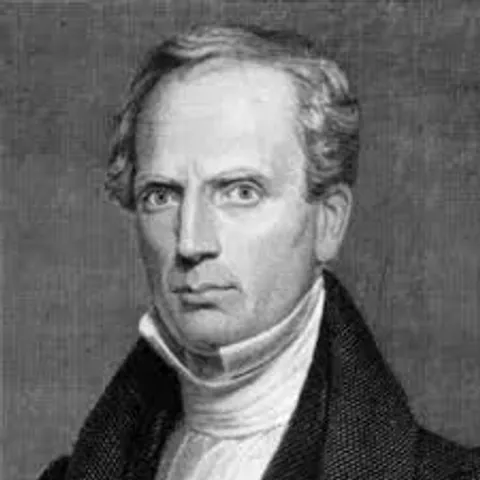
Charles Finney
 Childhood and Teen years
Charles Grandison Finney was born the year after Wesley died on 29th August, 1792 in Warren, Connecticut. In 1794 his family moved to New York state, eventually settling at Henderson, near Lake Ontario. Although he received only a brief formal education he decided to study law and joined the practice of a local lawyer, Benjamin Wright. He was also very musical, played the cello and directed the choir at the local Presbyterian Church pastured by Rev. George Gale.
His conversion
His conversion on October 10th 1821 reads like something out of the book of Acts. Smitten with conviction from Bible reading he decided to ‘settle the question of my soul’s salvation at once, that if it were possible, I would make my peace with God.’ (Autobiography)
This conviction increased to an unbearable level over the next couple of days and came to an head when he was suddenly confronted with an ‘inward voice.’ He was inwardly questioned about his spiritual condition and finally received revelation about the finished work of Christ and his own need to give up his sins and submit to Christ’s righteousness.
As he sought God in a nearby wood he was overwhelmed with an acute sense of his own wickedness and pride but finally submitted his life to Christ. Back at work that afternoon he was filled with a profound sense of tenderness, sweetness and peace. When work was over and he bade his employer goodnight, he then experienced a mighty baptism in the Holy Spirit, which was recorded as vividly as the day he experienced it, though it was penned some fifty years later.
The next morning Finney announced to a customer that he was leaving his law studies to become a preacher of the Gospel.
Charles Finney licensed to preach
He was licensed to preach in 1823 and ordained as an evangelist in 1824. His penetrating preaching was quite different from many local ministers and included an obvious attempt to break away from the traditional and, as he saw it, dead, orthodox Calvinism. He married to Lydia Andrews in October 1824 and was also joined by Daniel Nash (1774-1831), known popularly as ‘Father Nash.’ Undoubtedly Nash’s special ministry of prayer played a great part in Finney’s growing success as an evangelist.
Things really took off when he preached in his old church, where Rev. Gale still ministered. Numerous converts and critics followed! Similar results were experienced in nearby towns of Rome and Utica. Soon newspapers were reporting his campaigns and he began drawing large crowds with dramatic responses.
Soon he was preaching in the largest cities of the north with phenomenal results. Campaign after campaign secured thousands of converts.
The high point of Finney’s revival career was reached at Rochester, New York, during his 1830-1 meetings. Shopkeepers closed their businesses and the whole city seemed to centre on the revivalist. Responding to his irresistible logic and passionate arguments many of his converts were lawyers, merchants and those from a higher income and professional status.
His Preaching
Finney openly preached a modified Calvinism, influenced with his own theology of conversion and used what were perceived to be ‘revivalistic techniques.’
These ‘means’ included the use of the anxious bench (a special place for those under conviction), protracted meetings, women allowed to pray in mixed meetings, publicly naming those present resisting God in meetings and the hurried admission of new converts into church membership. Opponents viewed his preaching of the law as ‘scare tactics’ and his persuasive appeals for sinners to come to Christ for salvation were seen as over-emphasising the responsibility of men and ignoring the sovereignty of God.
His theology and practise soon became known as the ‘New Measures’ and attracted many opponents from the Old School Presbyterians led by Asahel Nettleton (himself no stranger to true revival and , the revivalistic Congregationalists headed by Lyman Beecher.
Pastor at Chatham Street Chapel
Finney accepted an appointment as pastor of Chatham Street Chapel in New York City in 1832 where he remained until 1837. It was during this time that he delivered a series of sermons published in 1835 as ‘Lectures on Revivals of Religion.’ Here he clearly stated his views regarding revivals being products of the correct use of human means. Such was the controversy that he left the Presbyterian denomination and joined the Congregationalists in 1836.
Oberlin College
The next year he became professor of theology at Oberlin College (Ohio) where he taught until his death. He was President here from 1851 until 1866, but still continued regular revival meetings in urban settings (twice in England, 1848, 1851) until 1860. During his stay at Oberlin he produced his, Lectures to Professing Christians (1836), Sermons on Important Subjects (1839) and his famous Memoirs.
The Father of Modern Revivalism
There is no doubt that Charles Grandison Finney well-deserves the title ‘The Father of Modern Revivalism.’ He was an evangelistic pioneer whose model was followed by a long line of revivalists from D. L. Moody to Billy Graham. His writing have made a massive impact on the entire evangelical world and particularly the ‘Lectures on Revivals’ which has, arguably, ignited more fires of revival than any other single piece literature in evangelical history.
This ‘Prince of Revivalists’ passed away peacefully at Oberlin on Sunday, 16th August, 1875 aged almost 83 years.
Bibliography: I Will Pour Out My Spirit, R. E. Davies, 1997; Ed: A. Scott Moreau, Baker Evangelical Dictionary of World Missions, 2000; Dictionary of Evangelical Biography 1730-1860, Vol. 1, 1995.
Tony Cauchi
Childhood and Teen years
Charles Grandison Finney was born the year after Wesley died on 29th August, 1792 in Warren, Connecticut. In 1794 his family moved to New York state, eventually settling at Henderson, near Lake Ontario. Although he received only a brief formal education he decided to study law and joined the practice of a local lawyer, Benjamin Wright. He was also very musical, played the cello and directed the choir at the local Presbyterian Church pastured by Rev. George Gale.
His conversion
His conversion on October 10th 1821 reads like something out of the book of Acts. Smitten with conviction from Bible reading he decided to ‘settle the question of my soul’s salvation at once, that if it were possible, I would make my peace with God.’ (Autobiography)
This conviction increased to an unbearable level over the next couple of days and came to an head when he was suddenly confronted with an ‘inward voice.’ He was inwardly questioned about his spiritual condition and finally received revelation about the finished work of Christ and his own need to give up his sins and submit to Christ’s righteousness.
As he sought God in a nearby wood he was overwhelmed with an acute sense of his own wickedness and pride but finally submitted his life to Christ. Back at work that afternoon he was filled with a profound sense of tenderness, sweetness and peace. When work was over and he bade his employer goodnight, he then experienced a mighty baptism in the Holy Spirit, which was recorded as vividly as the day he experienced it, though it was penned some fifty years later.
The next morning Finney announced to a customer that he was leaving his law studies to become a preacher of the Gospel.
Charles Finney licensed to preach
He was licensed to preach in 1823 and ordained as an evangelist in 1824. His penetrating preaching was quite different from many local ministers and included an obvious attempt to break away from the traditional and, as he saw it, dead, orthodox Calvinism. He married to Lydia Andrews in October 1824 and was also joined by Daniel Nash (1774-1831), known popularly as ‘Father Nash.’ Undoubtedly Nash’s special ministry of prayer played a great part in Finney’s growing success as an evangelist.
Things really took off when he preached in his old church, where Rev. Gale still ministered. Numerous converts and critics followed! Similar results were experienced in nearby towns of Rome and Utica. Soon newspapers were reporting his campaigns and he began drawing large crowds with dramatic responses.
Soon he was preaching in the largest cities of the north with phenomenal results. Campaign after campaign secured thousands of converts.
The high point of Finney’s revival career was reached at Rochester, New York, during his 1830-1 meetings. Shopkeepers closed their businesses and the whole city seemed to centre on the revivalist. Responding to his irresistible logic and passionate arguments many of his converts were lawyers, merchants and those from a higher income and professional status.
His Preaching
Finney openly preached a modified Calvinism, influenced with his own theology of conversion and used what were perceived to be ‘revivalistic techniques.’
These ‘means’ included the use of the anxious bench (a special place for those under conviction), protracted meetings, women allowed to pray in mixed meetings, publicly naming those present resisting God in meetings and the hurried admission of new converts into church membership. Opponents viewed his preaching of the law as ‘scare tactics’ and his persuasive appeals for sinners to come to Christ for salvation were seen as over-emphasising the responsibility of men and ignoring the sovereignty of God.
His theology and practise soon became known as the ‘New Measures’ and attracted many opponents from the Old School Presbyterians led by Asahel Nettleton (himself no stranger to true revival and , the revivalistic Congregationalists headed by Lyman Beecher.
Pastor at Chatham Street Chapel
Finney accepted an appointment as pastor of Chatham Street Chapel in New York City in 1832 where he remained until 1837. It was during this time that he delivered a series of sermons published in 1835 as ‘Lectures on Revivals of Religion.’ Here he clearly stated his views regarding revivals being products of the correct use of human means. Such was the controversy that he left the Presbyterian denomination and joined the Congregationalists in 1836.
Oberlin College
The next year he became professor of theology at Oberlin College (Ohio) where he taught until his death. He was President here from 1851 until 1866, but still continued regular revival meetings in urban settings (twice in England, 1848, 1851) until 1860. During his stay at Oberlin he produced his, Lectures to Professing Christians (1836), Sermons on Important Subjects (1839) and his famous Memoirs.
The Father of Modern Revivalism
There is no doubt that Charles Grandison Finney well-deserves the title ‘The Father of Modern Revivalism.’ He was an evangelistic pioneer whose model was followed by a long line of revivalists from D. L. Moody to Billy Graham. His writing have made a massive impact on the entire evangelical world and particularly the ‘Lectures on Revivals’ which has, arguably, ignited more fires of revival than any other single piece literature in evangelical history.
This ‘Prince of Revivalists’ passed away peacefully at Oberlin on Sunday, 16th August, 1875 aged almost 83 years.
Bibliography: I Will Pour Out My Spirit, R. E. Davies, 1997; Ed: A. Scott Moreau, Baker Evangelical Dictionary of World Missions, 2000; Dictionary of Evangelical Biography 1730-1860, Vol. 1, 1995.
Tony Cauchi
five ways to build stronger relationships
“That used to be nice.” That was the first response when I recently asked a group of men what comes to mind when they think about friendship. Once they entered their upper twenties and thirties, many of them no longer had close friendships. We mostly laughed when joking about Jesus’s “miracle” of having twelve close friends in his thirties. Many factors combine to make friendship difficult for men. Personally, time for friends seems unrealistic in light of work or family responsibilities. Culturally, we don’t have a shared understanding of what friendships among men should look like. We also find ourselves connecting more digitally than deeply. We’ve lost a vision for strong, warm, face-to-face and side-by-side male friendship. But God made us for more. He made us in his own image, the image of a triune God who exists in communal love. Therefore, friendship is not a luxury; it’s a relational necessity. We glorify God by enjoying him and reflecting his relational love with one another. If you are a man who has struggled to go deeper with other men, here are five concrete steps to cultivate deeper friendships. 1. Establish rhythms for your relationships. Without rhythms in our lives, the important priorities don’t get done. If we value communing with God through his word and prayer, we form a habit. If we want to exercise consistently, we create a pattern. Here’s a proposal for cultivating friendship: Build it into your schedule. Establish a regular rhythm for coffee together. Devote a meal each week — say, Monday breakfasts or Wednesday dinners — to share with others. Plan to meet up to take walks together. Reserve an extended weekend each year to get away and enjoy God’s creation together. 2. Drop each conversation one notch deeper. Conversations about sports and daily activities are worthwhile. But if that’s all we talk about, it’s like snorkeling on the surface while missing the deeper wonders of the ocean. But how do we take our conversations deeper? First, ask thoughtful questions. When you’re driving to meet your friend, think about what you want to learn about him. Think about the main aspects of his life right now — his relationship with the Lord, his family, his work — and ask him about how things are going. When he shares about a challenge, ask how his internal life (his heart, his disposition toward God) is doing in the midst of this. From there, stay curious and ask more questions. Second, talk about what you’re each reading. Ask how God’s word has convicted or encouraged him recently. Ask what book he’s recently read that helped him know God or live more faithfully as a disciple. Consider reading through Scripture or a Scripture-saturated book together and meeting to talk about it. 3. Overcome our cultural aversion to expressing affection. “Love one another with brotherly affection” (Romans 12:10). We don’t usually put those last two words next to one another — brotherly feels masculine; affection feels feminine. But there they are together, inviting us to cultivate genuine, non-weird, affectionate brotherhood. We see this affectionate bond with Jonathan and David: “The soul of Jonathan was knit to the soul of David, and Jonathan loved him as his own soul” (1 Samuel 18:1). We see it with Paul and the Ephesian elders: “And there was much weeping on the part of all; they embraced Paul and kissed him” (Acts 20:37). Expressing affection feels uncomfortable to men today because our culture has slowly shifted its understanding of masculinity. Rather than combining strength and tenderness, we view manhood as muscular and aggressive. Our culture has also sexualized love, interpreting affection between men as something other than friendship. But we can build a better way. 4. Oxygenate your friendships with affirmation. What happens without oxygen? We become sluggish and lethargic. This is what relationships feel like without affirmation. This may be why some of your relationships feel withered, thin, or tired. Affirmation is relational oxygen. One of the most powerful tools for cultivating true friendship is Romans 12:10: “Outdo one another in showing honor.” Men find it hard to give and receive honor and affirmation. It feels uncomfortable at first to tell someone why you thank God for him or why you respect him. But only at first. I’ve seen many men work through their initial hesitations and start cultivating a culture of sincere encouragement around them. And I’ve seen the other men flourish because of it. 5. Invite friends into what you’re already doing. Our schedules are full and we rush from one thing to the next. We don’t see how we can find time for friends. But what if you don’t need to open up your schedule? What if you can include friends into the activities you already do? Here are a few suggestions I’ve seen work: When you plan to watch a sports game or weekly show, find out who else would want to watch it and invite them to join you. If you exercise a few times each week, do it with a friend. Invite friends or family members to join you for dinner or dessert. If you have young kids, let your guests participate in the bedtime routine and then stay around afterward. If you have young kids, invite someone to join your family at the park. Put a few friends on speed dial and call them on your daily commute home. If you have a home project to complete, invite someone to help you and offer to help him with his. Hope and Help for Forging Friendship Jesus is our greatest model of male friendship. He initiated relationships and he invited men to be with him (Mark 3:14). He continually asked thought-provoking questions. He loved his disciples with brotherly affection (John 13:1). He calls us his friends (John 15:13–15). He also gives us the great privilege of reflecting and enjoying this kind of true friendship to other men. Maybe as you consider taking these steps, you look ahead with both hope and hesitancy. Maybe you think back to when you experienced deeper community and think you won’t find that again. Or maybe you still feel pain from failed attempts at connecting with others. You wonder if forging friendship is harder, even impossible, for you. Before you give up, remember two truths: First, Jesus isn’t just the model for true friendship; he is himself our truest friend. He initiates friendship with us, and we receive it on terms of grace. Now “no one need ever say I have no ‘friend’ to turn to, so long as Christ is in heaven” (J.C. Ryle, Expository Thoughts , 3:114). And second, he delights for us to ask for true community in his name. God alone is able to create, renew, and strengthen the deepest human relationships. So, pray. Ask God to make your efforts at friendship fruitful. Then trust him, stay patient, and keep taking steps toward others in the strength he provides.