


Others like holy spirit, your helper Features >>

Let Not Your Heart Be Troubled

Holy Spirit Power: Knowing The Voice, Guidance And Person Of The Holy Spirit

The Beginner's Guide To Intercessory Prayer
-160.webp)
Clean House, Strong House (Spiritual Warfare)

The Prayer Of Jabez
30 Days To Becoming A Woman Of Prayer

Ten Ways God Speaks

Command The Morning
ive.com%20)-160.webp)
Shaping History Through Prayer And Fasting

The Healing Balm
About the Book
"Holy Spirit, Your Helper" by Faith A. Oyedepo is a Christian book that explores the role of the Holy Spirit in the lives of believers. The book delves into how the Holy Spirit can provide guidance, comfort, and empowerment to Christians who seek to deepen their relationship with God. Oyedepo provides practical insights and biblical wisdom to help readers connect with the Holy Spirit and experience the fullness of His power in their daily lives.
William Carey
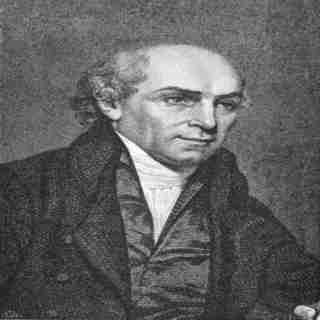 "Expect great things; attempt great things."
At a meeting of Baptist leaders in the late 1700s, a newly ordained minister stood to argue for the value of overseas missions. He was abruptly interrupted by an older minister who said, "Young man, sit down! You are an enthusiast. When God pleases to convert the heathen, he'll do it without consulting you or me."
That such an attitude is inconceivable today is largely due to the subsequent efforts of that young man, William Carey.
Plodder Carey was raised in the obscure, rural village of Paulerpury, in the middle of England. He apprenticed in a local cobbler's shop, where the nominal Anglican was converted. He enthusiastically took up the faith, and though little educated, the young convert borrowed a Greek grammar and proceeded to teach himself New Testament Greek.
When his master died, he took up shoemaking in nearby Hackleton, where he met and married Dorothy Plackett, who soon gave birth to a daughter. But the apprentice cobbler's life was hard—the child died at age 2—and his pay was insufficient. Carey's family sunk into poverty and stayed there even after he took over the business.
"I can plod," he wrote later, "I can persevere to any definite pursuit." All the while, he continued his language studies, adding Hebrew and Latin, and became a preacher with the Particular Baptists. He also continued pursuing his lifelong interest in international affairs, especially the religious life of other cultures.
Carey was impressed with early Moravian missionaries and was increasingly dismayed at his fellow Protestants' lack of missions interest. In response, he penned An Enquiry into the Obligations of Christians to Use Means for the Conversion of the Heathens. He argued that Jesus' Great Commission applied to all Christians of all times, and he castigated fellow believers of his day for ignoring it: "Multitudes sit at ease and give themselves no concern about the far greater part of their fellow sinners, who to this day, are lost in ignorance and idolatry."
Carey didn't stop there: in 1792 he organized a missionary society, and at its inaugural meeting preached a sermon with the call, "Expect great things from God; attempt great things for God!" Within a year, Carey, John Thomas (a former surgeon), and Carey's family (which now included three boys, and another child on the way) were on a ship headed for India.
Stranger in a strange land
Thomas and Carey had grossly underestimated what it would cost to live in India, and Carey's early years there were miserable. When Thomas deserted the enterprise, Carey was forced to move his family repeatedly as he sought employment that could sustain them. Illness racked the family, and loneliness and regret set it: "I am in a strange land," he wrote, "no Christian friend, a large family, and nothing to supply their wants." But he also retained hope: "Well, I have God, and his word is sure."
He learned Bengali with the help of a pundit, and in a few weeks began translating the Bible into Bengali and preaching to small gatherings.
When Carey himself contracted malaria, and then his 5-year-old Peter died of dysentery, it became too much for his wife, Dorothy, whose mental health deteriorated rapidly. She suffered delusions, accusing Carey of adultery and threatening him with a knife. She eventually had to be confined to a room and physically restrained.
"This is indeed the valley of the shadow of death to me," Carey wrote, though characteristically added, "But I rejoice that I am here notwithstanding; and God is here."
Gift of tongues
In October 1799, things finally turned. He was invited to locate in a Danish settlement in Serampore, near Calcutta. He was now under the protection of the Danes, who permitted him to preach legally (in the British-controlled areas of India, all of Carey's missionary work had been illegal).
Carey was joined by William Ward, a printer, and Joshua and Hanna Marshman, teachers. Mission finances increased considerably as Ward began securing government printing contracts, the Marshmans opened schools for children, and Carey began teaching at Fort William College in Calcutta.
In December 1800, after seven years of missionary labor, Carey baptized his first convert, Krishna Pal, and two months later, he published his first Bengali New Testament. With this and subsequent editions, Carey and his colleagues laid the foundation for the study of modern Bengali, which up to this time had been an "unsettled dialect."
Carey continued to expect great things; over the next 28 years, he and his pundits translated the entire Bible into India's major languages: Bengali, Oriya, Marathi, Hindi, Assamese, and Sanskrit and parts of 209 other languages and dialects.
He also sought social reform in India, including the abolition of infanticide, widow burning (sati), and assisted suicide. He and the Marshmans founded Serampore College in 1818, a divinity school for Indians, which today offers theological and liberal arts education for some 2,500 students.
By the time Carey died, he had spent 41 years in India without a furlough. His mission could count only some 700 converts in a nation of millions, but he had laid an impressive foundation of Bible translations, education, and social reform.
His greatest legacy was in the worldwide missionary movement of the nineteenth century that he inspired. Missionaries like Adoniram Judson, Hudson Taylor, and David Livingstone, among thousands of others, were impressed not only by Carey's example, but by his words "Expect great things; attempt great things." The history of nineteenth-century Protestant missions is in many ways an extended commentary on the phrase.
"Expect great things; attempt great things."
At a meeting of Baptist leaders in the late 1700s, a newly ordained minister stood to argue for the value of overseas missions. He was abruptly interrupted by an older minister who said, "Young man, sit down! You are an enthusiast. When God pleases to convert the heathen, he'll do it without consulting you or me."
That such an attitude is inconceivable today is largely due to the subsequent efforts of that young man, William Carey.
Plodder Carey was raised in the obscure, rural village of Paulerpury, in the middle of England. He apprenticed in a local cobbler's shop, where the nominal Anglican was converted. He enthusiastically took up the faith, and though little educated, the young convert borrowed a Greek grammar and proceeded to teach himself New Testament Greek.
When his master died, he took up shoemaking in nearby Hackleton, where he met and married Dorothy Plackett, who soon gave birth to a daughter. But the apprentice cobbler's life was hard—the child died at age 2—and his pay was insufficient. Carey's family sunk into poverty and stayed there even after he took over the business.
"I can plod," he wrote later, "I can persevere to any definite pursuit." All the while, he continued his language studies, adding Hebrew and Latin, and became a preacher with the Particular Baptists. He also continued pursuing his lifelong interest in international affairs, especially the religious life of other cultures.
Carey was impressed with early Moravian missionaries and was increasingly dismayed at his fellow Protestants' lack of missions interest. In response, he penned An Enquiry into the Obligations of Christians to Use Means for the Conversion of the Heathens. He argued that Jesus' Great Commission applied to all Christians of all times, and he castigated fellow believers of his day for ignoring it: "Multitudes sit at ease and give themselves no concern about the far greater part of their fellow sinners, who to this day, are lost in ignorance and idolatry."
Carey didn't stop there: in 1792 he organized a missionary society, and at its inaugural meeting preached a sermon with the call, "Expect great things from God; attempt great things for God!" Within a year, Carey, John Thomas (a former surgeon), and Carey's family (which now included three boys, and another child on the way) were on a ship headed for India.
Stranger in a strange land
Thomas and Carey had grossly underestimated what it would cost to live in India, and Carey's early years there were miserable. When Thomas deserted the enterprise, Carey was forced to move his family repeatedly as he sought employment that could sustain them. Illness racked the family, and loneliness and regret set it: "I am in a strange land," he wrote, "no Christian friend, a large family, and nothing to supply their wants." But he also retained hope: "Well, I have God, and his word is sure."
He learned Bengali with the help of a pundit, and in a few weeks began translating the Bible into Bengali and preaching to small gatherings.
When Carey himself contracted malaria, and then his 5-year-old Peter died of dysentery, it became too much for his wife, Dorothy, whose mental health deteriorated rapidly. She suffered delusions, accusing Carey of adultery and threatening him with a knife. She eventually had to be confined to a room and physically restrained.
"This is indeed the valley of the shadow of death to me," Carey wrote, though characteristically added, "But I rejoice that I am here notwithstanding; and God is here."
Gift of tongues
In October 1799, things finally turned. He was invited to locate in a Danish settlement in Serampore, near Calcutta. He was now under the protection of the Danes, who permitted him to preach legally (in the British-controlled areas of India, all of Carey's missionary work had been illegal).
Carey was joined by William Ward, a printer, and Joshua and Hanna Marshman, teachers. Mission finances increased considerably as Ward began securing government printing contracts, the Marshmans opened schools for children, and Carey began teaching at Fort William College in Calcutta.
In December 1800, after seven years of missionary labor, Carey baptized his first convert, Krishna Pal, and two months later, he published his first Bengali New Testament. With this and subsequent editions, Carey and his colleagues laid the foundation for the study of modern Bengali, which up to this time had been an "unsettled dialect."
Carey continued to expect great things; over the next 28 years, he and his pundits translated the entire Bible into India's major languages: Bengali, Oriya, Marathi, Hindi, Assamese, and Sanskrit and parts of 209 other languages and dialects.
He also sought social reform in India, including the abolition of infanticide, widow burning (sati), and assisted suicide. He and the Marshmans founded Serampore College in 1818, a divinity school for Indians, which today offers theological and liberal arts education for some 2,500 students.
By the time Carey died, he had spent 41 years in India without a furlough. His mission could count only some 700 converts in a nation of millions, but he had laid an impressive foundation of Bible translations, education, and social reform.
His greatest legacy was in the worldwide missionary movement of the nineteenth century that he inspired. Missionaries like Adoniram Judson, Hudson Taylor, and David Livingstone, among thousands of others, were impressed not only by Carey's example, but by his words "Expect great things; attempt great things." The history of nineteenth-century Protestant missions is in many ways an extended commentary on the phrase.
the quiet power of ordinary devotions
As Christians, we are not interested in merely reading our Bibles. We want to be moved, inspired, changed by what we read. We do not wake up early simply to pass our eyes over the pages of Scripture. We come to meet God (1 Samuel 3:21). We come to taste honey and gather gold (Psalm 19:10). We come to “rejoice with joy that is inexpressible and filled with glory” (1 Peter 1:8). That means days of ordinary devotions, as we’ve all experienced, can be all the more disappointing. As any faithful Bible reader knows, many devotional times come and go without fireworks. We may get alone, ask for God’s help, read attentively, and then rise up feeling — normal. Our time in the living, active, inspired word of God has felt spectacularly ordinary. Sometimes, the ordinariness comes as a result of our lingering blindness to glory. I, for one, feel a kinship with those disciples on the Emmaus road, to whom Jesus said, “O foolish ones, and slow of heart to believe all that the prophets have spoken” (Luke 24:25). God save us from foolish minds and slow hearts, which so often close our eyes to the light of his revelation. “The grace of God sometimes lands on us like lighting, and sometimes falls like dew.” Yet the cause does not always lie in us. If we are reading our Bibles rightly, in fact, we should expect many mornings of ordinary devotions: devotions that do not sparkle with insight or direct-to-life application, but that nevertheless do us good. Just as most meals are ordinary, but still nourish, and just as most conversations with friends are ordinary, but still deepen affection, so most devotions are ordinary, but still grow us in the grace and knowledge of Jesus Christ. Saturated with Scripture As a new Christian in college, I carried in my pocket a packet of Scripture-memory cards from the Navigators. On one of the first cards, I found 2 Timothy 3:16: “All Scripture is breathed out by God and profitable for teaching, for reproof, for correction, and for training in righteousness.” I believed Paul’s words readily, having felt firsthand the profit of books like John and Romans, Philippians and James. Scarcely did I realize then, however, that Paul would have thought first of passages quite different from these — passages from which I struggled then (and still do now) to find the same kind of encouragement. Consider, for example, some of the God-breathed, profitable Scripture Paul had in mind as he wrote 2 Timothy: Solomon’s discussion of wisdom in Proverbs 2:6 (2 Timothy 2:7) Isaiah’s prophecy of the cornerstone in Isaiah 28:16 (2 Timothy 2:19) The story of Korah’s rebellion in Numbers 16 (2 Timothy 2:19) The account of the Egyptian magicians in Exodus 7–9 (2 Timothy 3:8) Few of us would dip into these passages for immediate edification. Few of us would offer them as our first illustrations of God-breathed, profitable Scriptures. Many of us, after stumbling through such pages of God’s word, emerge on the other side feeling unchanged, uninspired — ordinary. We can strive to avoid such experiences, of course, by staying safely in those parts of Scripture where we have felt God’s breath most powerfully. And yet, if we want a soul not merely sprinkled but saturated with God’s words, our only option is to carry on a long, patient acquaintance with passages that seem obscure. With passages that, upon first, second, or even fifth reading, leave us feeling quite ordinary afterward, but that slowly reveal the scope of God’s glory and make us “wise for salvation through faith in Christ Jesus” (2 Timothy 3:15). Devotions Without a Devotional Perhaps our impatience with days of ordinary devotions comes from the expectation that daily devotions should be like devotionals . A devotional gathers perhaps a month’s or a year’s worth of daily readings, each designed to give a boost toward Godward thinking and living. And the best of them do so quite well. Daily devotionals have a place in the Christian life. (I would have to ditch Charles Spurgeon’s Morning and Evening if I thought otherwise.) Yet we do well to remember that, in giving us Scripture, God did not intend to give us a typical daily devotional. If he had, the chronicler might have spared us his genealogies, Ezekiel might have skipped his extended temple vision, and the author of Hebrews might have left out Melchizedek. If a daily devotional is like a photo album, with each page offering a self-contained snapshot of glory, Scripture itself is like a mural, with each day’s reading comprising only a centimeter of the whole. Some days, we happen upon a centimeter bright with glory, perhaps Psalm 23 or Romans 8. Other days, a dark image appears before us, as when we read prophecies or stories of judgment. Still other days, we find a section that simply mystifies us, the kind that we would never find in a daily devotional. Over time, though, we begin to grasp a glory in this mural that a snapshot could never give: a swirl of brightness and darkness, clarity and obscurity that coalesces into a masterpiece. And on those days, we will not wish that we had stayed safely within the snapshots of glory. Grace Like Dew We can rarely judge the value of our daily devotions, then, by considering any day in itself. In fact, initial impressions can deceive. High-octane devotions do not always lead to spiritual growth, and ordinary devotions often yield more fruit than we expect. J.C. Ryle once preached, Do not think you are getting no good from the Bible, merely because you do not see that good day by day. The greatest effects are by no means those which make the most noise, and are the most easily observed. The greatest effects are often silent, quiet, and hard to detect at the time they are being produced. Think of the influence of the moon upon the earth, and of the air upon the human lungs. Remember how silently the dew falls, and how imperceptibly the grass grows. There may be far more doing than you think in your soul by your Bible-reading. “Ordinary devotions are not the enemy. Like the manna in the wilderness, they too are from God.” The grace of God sometimes lands on us like lighting, and sometimes falls like dew. During some devotions, God places us in the cleft of the rock and lets us catch the trailing edge of his glory as he passes by (Exodus 33:18–23). During others, he shrouds us in darkness so that we cannot see (Isaiah 50:10). Yet if we read patiently and faithfully, not trusting in our wisdom but crying out for God’s, then the grace of God, though perhaps hidden in the moment, will in due time reveal its silent working. Sometimes, then, we do well to ask of our morning devotions not “What were my feelings?” but “What, over time, are the effects?” Regardless of what I feel on any given morning, am I coming to treasure more of Christ’s multifaceted glories? Is God’s word making me a more holy husband, wife, brother, sister, friend? Am I growing in my readiness for every good work (2 Timothy 3:17)? Manna and Milk Ordinary devotions, of course, are not the ideal. We do not hope to come to our Bibles and walk away unmoved — or, worse, confused. We hope rather to “behold wondrous things out of your law” (Psalm 119:18) and walk away full of praise. And when this hope is deferred, it too can make the heart sick. Yet neither are ordinary devotions the enemy. Like the manna in the wilderness, they too are from God. They too nourish and sustain us, even if imperceptibly. If we will patiently, faithfully eat the food God provides, ordinary days will give way to the milk and honey we long to taste again. And in the meantime, how good it is for us to be thrown back on God, knowing more deeply than ever that if we are to see at all, he must give us sight. How good to sing with the psalmist, “As the eyes of servants look to the hand of their master, as the eyes of a maidservant to the hand of her mistress, so our eyes look to the Lord our God, till he has mercy upon us” (Psalm 123:2). In God’s good time, if we do not give up, the unfolding of his words will give light (Psalm 119:130).

-480.webp)