

Others like his glory revealed Features >>



-160.webp)
-160.webp)




About the Book
"His Glory Revealed" by John Hagee is a Christian book that explores how to live a life that reflects God's glory. Hagee discusses the importance of faith, obedience, and prayer in experiencing God's presence and power in our lives. He offers practical advice and insights on connecting with God and living a life that brings glory to Him.
William and Catherine Booth
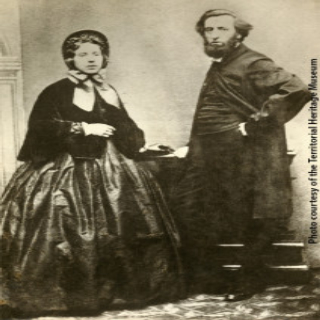 William Booth
The Salvation Army founder, William Booth was born in Nottingham, England, on 10 April 1829.
Salvation Army founder General William BoothFrom his earliest years, William was no stranger to poverty. He was just 14 when his father died and was already working as a pawnbroker’s apprentice to supplement the family’s income.
As a pawnbroker, William saw poverty and suffering on a daily basis. By the time he finished his six-year apprenticeship, he had developed a deep hatred of it.
William, a fiery and impulsive teenager, became a Christian at 15 and began attending the local Wesleyan Chapel. There, he developed the passion that would be the driving force in his life; to reach the down and out of Britain's cities through the Gospel of Christ.
William, a talented preacher from a young age, went on to work as a travelling evangelist with the Methodist church. But it was through preaching in the streets of London's slums that he discovered his life's purpose and The Salvation Army was born.
Catherine Booth
The Salvation Army "mother", Catherine Mumford was born in Ashbourne, Derbyshire, on 17 January 1829.
The Salvation Army founder and Army mother Catherine BoothFrom an early age, she was a serious and sensitive girl with a strong Christian upbringing. By the age of 12, it's said that she had read the Bible through eight times.
At 14, Catherine became ill and spent a great deal of time in bed. She kept herself busy, especially concerned about the problems of alcohol. She wrote articles for a magazine, encouraging people not to drink.
But at 16, she came wholly into her faith. Reading the words, 'My God I am Thine, what a comfort Divine' in her hymn book, she realised the truth of them for herself.
A gentle woman with powerful appeal, Catherine would go on to co-found The Salvation Army and prove an inspiration to women in a harsh time.
Life together
Catherine and William met when he came to preach at her church. They soon fell in love and became engaged. During their three-year engagement, William continued his work as a travelling evangelist. Catherine was a constant support to William, writing him letters of encouragement on his travels.
They married on 16 June 1855.
Together, William and Catherine embarked on a lifelong journey to answer the call of God to bring the Gospel to the people. While William was a natural speaker, Catherine was a quiet woman and not at all accustomed to speaking at gatherings. It took time for her to find her voice, but she was driven by a conviction that woman had the same rights as men to speak. She grew into a courageous speaker, known for her gentle manner but powerful appeal, counselling alcoholics in their homes and holding cottage meetings for new faithfuls.
They were also parents to a growing family of eight children, who were brought up with a firm Christian education and a great love for their God’s mission. Two of their children, Bramwell and Evangeline would go on to be Generals of The Salvation Army.
In 1865, William, by now an independent evangelist, along with Catherine founded The Christian Mission. William preached to the poor while Catherine spoke to the wealthy to gain support for their financially demanding work. In time, she began to hold her own fundraising campaigns.
It was not until 1878 that The Christian Mission became known as The Salvation Army. Modelled after the military with William and his fellow ministers a part of God’s Army, seeking salvation for the masses. William was appointed the first General and his ministers became “officers”.
Catherine became known as “The Army Mother” and remained a strong voice on The Salvation Army’s ideas on social issues and matters of belief.
With its strong focus on the downtrodden and dispossessed, The Salvation Army began to grow beyond Britain’s borders. In William’s lifetime, the Army would be established in 58 countries and colonies. Its mission was and is still guided by William’s book “In Darkest England and the Way Out”, which maps out a revoluntionary approach to social engagement never before undertaken by a church.
Both Catherine and William worked tirelessly to bring the Gospel to all, establishing a movement in the form of The Salvation Army. But, on 4th October 1890, Catherine lost her ongoing battle with ill health. Her son, Bramwell, described her passing as “a warrior laid down her sword to receive her crown”.
William continued on for many years, traveling all over the world to oversee his growing Army. On 20th August 1912, William Booth was, in Salvation Army terms, promoted to glory.
Though passed, both William and Catherine continue to be guiding influences in The Salvation Army and stand as the mightiest examples of how God uses the ordinary to create the extraordinary.
William Booth
The Salvation Army founder, William Booth was born in Nottingham, England, on 10 April 1829.
Salvation Army founder General William BoothFrom his earliest years, William was no stranger to poverty. He was just 14 when his father died and was already working as a pawnbroker’s apprentice to supplement the family’s income.
As a pawnbroker, William saw poverty and suffering on a daily basis. By the time he finished his six-year apprenticeship, he had developed a deep hatred of it.
William, a fiery and impulsive teenager, became a Christian at 15 and began attending the local Wesleyan Chapel. There, he developed the passion that would be the driving force in his life; to reach the down and out of Britain's cities through the Gospel of Christ.
William, a talented preacher from a young age, went on to work as a travelling evangelist with the Methodist church. But it was through preaching in the streets of London's slums that he discovered his life's purpose and The Salvation Army was born.
Catherine Booth
The Salvation Army "mother", Catherine Mumford was born in Ashbourne, Derbyshire, on 17 January 1829.
The Salvation Army founder and Army mother Catherine BoothFrom an early age, she was a serious and sensitive girl with a strong Christian upbringing. By the age of 12, it's said that she had read the Bible through eight times.
At 14, Catherine became ill and spent a great deal of time in bed. She kept herself busy, especially concerned about the problems of alcohol. She wrote articles for a magazine, encouraging people not to drink.
But at 16, she came wholly into her faith. Reading the words, 'My God I am Thine, what a comfort Divine' in her hymn book, she realised the truth of them for herself.
A gentle woman with powerful appeal, Catherine would go on to co-found The Salvation Army and prove an inspiration to women in a harsh time.
Life together
Catherine and William met when he came to preach at her church. They soon fell in love and became engaged. During their three-year engagement, William continued his work as a travelling evangelist. Catherine was a constant support to William, writing him letters of encouragement on his travels.
They married on 16 June 1855.
Together, William and Catherine embarked on a lifelong journey to answer the call of God to bring the Gospel to the people. While William was a natural speaker, Catherine was a quiet woman and not at all accustomed to speaking at gatherings. It took time for her to find her voice, but she was driven by a conviction that woman had the same rights as men to speak. She grew into a courageous speaker, known for her gentle manner but powerful appeal, counselling alcoholics in their homes and holding cottage meetings for new faithfuls.
They were also parents to a growing family of eight children, who were brought up with a firm Christian education and a great love for their God’s mission. Two of their children, Bramwell and Evangeline would go on to be Generals of The Salvation Army.
In 1865, William, by now an independent evangelist, along with Catherine founded The Christian Mission. William preached to the poor while Catherine spoke to the wealthy to gain support for their financially demanding work. In time, she began to hold her own fundraising campaigns.
It was not until 1878 that The Christian Mission became known as The Salvation Army. Modelled after the military with William and his fellow ministers a part of God’s Army, seeking salvation for the masses. William was appointed the first General and his ministers became “officers”.
Catherine became known as “The Army Mother” and remained a strong voice on The Salvation Army’s ideas on social issues and matters of belief.
With its strong focus on the downtrodden and dispossessed, The Salvation Army began to grow beyond Britain’s borders. In William’s lifetime, the Army would be established in 58 countries and colonies. Its mission was and is still guided by William’s book “In Darkest England and the Way Out”, which maps out a revoluntionary approach to social engagement never before undertaken by a church.
Both Catherine and William worked tirelessly to bring the Gospel to all, establishing a movement in the form of The Salvation Army. But, on 4th October 1890, Catherine lost her ongoing battle with ill health. Her son, Bramwell, described her passing as “a warrior laid down her sword to receive her crown”.
William continued on for many years, traveling all over the world to oversee his growing Army. On 20th August 1912, William Booth was, in Salvation Army terms, promoted to glory.
Though passed, both William and Catherine continue to be guiding influences in The Salvation Army and stand as the mightiest examples of how God uses the ordinary to create the extraordinary.
The Secret to Job Satisfaction
Many Christians work in jobs we would not necessarily choose for ourselves. I have before — maybe you are now. We did choose it at some point along the way, but just for less inspiring reasons. I have to pay my rent. I have an engineering degree. I only received one offer. We start jobs for money and a hundred other reasons. After a few years (or months, or even weeks), the satisfying security of the paycheck wears off, and we’re left wondering if we settled too soon and missed “the one.” We start dreaming about something different — different, more comfortable pay; different, more empowering boss; different, more fulfilling responsibilities. Our Vocational Anthems Meanwhile, the culture’s choir sings beautiful harmony to our melancholy melody: Find a job where you get to do what you love to do most. Follow your heart. Don’t settle for any job you’re not passionate about. The songs and slogans are sold by the millions, but for those willing to be honest about our work, at least three realities set in over time: That dream job simply does not exist for many. If it does, it either does not pay enough to cover the rent, or we are not qualified for it. An awful lot of work has to be done that no one dreams about, which means an awful lot of the available jobs are not dream jobs. The hard reality is that we can’t glorify God in the job we want (at least not yet). But we can glorify God in the job we have. Modern Bondservants I wonder how the songs we Millennials hear most about our careers would have landed on Christian slaves in Ephesus? The apostle Paul writes, Bondservants, obey your earthly masters with fear and trembling, with a sincere heart, as you would Christ, not by the way of eye-service, as people-pleasers, but as bondservants of Christ, doing the will of God from the heart, rendering service with a good will as to the Lord and not to man, knowing that whatever good anyone does, this he will receive back from the Lord, whether he is a bondservant or is free. (Ephesians 6:5–8) Paul writes to “bondservants” about their work, not to support the institution of slavery, but to strengthen faith and inspire joy among the enslaved. To be clear, such slavery was not the brutal and dehumanizing chattel slavery in American history, but these men and women were not as free as we are in America today, either (Ephesians 6:8). If Paul could write these self-denying, countercultural, other-worldly words to slaves about their livelihood, could he write them to us about our jobs? If so, here are three ways we can glorify God in our job, whether we are working the dream, or dreading our work. 1. The work is for God, regardless of who we report to. Bondservants, obey your earthly masters with fear and trembling . . . as bondservants of Christ. (Ephesians 6:5–6) Your tax forms may say you work for the government, or a business, or even for yourself, but Paul says you work for God. You are always first and foremost an employee for Christ. Every task you complete comes underneath his lordship. You may never be paid to share or apply the gospel, but it still hangs high over everything else you are paid to do. Work as if Christ were your superior — with holy fear and trembling, and with sincerity. Why? Bosses can cheat us, mistreat us, even fire us, but Christ can do far worse — and far better. He not only sees our every move at work, but knows our every thought — nothing ever gets by him. And he can send us to hell. If your boss monitored you all day every day, would you work differently? Your almighty Savior and Judge sits even closer than that. If we go about our everyday work with greater seriousness and joy, people will ask about our boss. And if there’s nothing remarkable about our boss, they just might ask about our God. 2. The standard is not mere excellence, but heartfelt service. Bondservants, obey your earthly masters . . . with a sincere heart, as you would Christ, not by the way of eye-service, as people-pleasers, but . . . doing the will of God from the heart. (Ephesians 6:5–6) Some will hear “doing the will of God from the heart” and hear “work as much and as hard as you possibly can.” But that is more American than Christian. Men and women chasing the American dream love to be told to work harder and achieve more. They work from the heart — it’s just a heart in love with money, or recognition, or control, or themselves. Christians dream about our jobs differently. When we work from the heart, we work from a passion for Jesus. We don’t spend time counting all the things we can have or achieve here on earth. No, we “count everything as loss” — paychecks, promotions, progress, retirement — “because of the surpassing worth of knowing Christ” (Philippians 3:8). “For his sake [we suffer] the loss of all things and count them as rubbish, in order that [we] may gain Christ and be found in him” (Philippians 3:8–9). We never have to fake joy in our jobs because our joy does not come from our jobs. We work from full hearts, not striving to fill our hearts. That kind of heart — not mere excellence — makes our work distinctly Christian. That does not mean Christians should not do their work excellently. We should, as if we were completing our work for Christ. But excellence can easily be mistaken for Christlikeness, when in and of itself, it says nothing about Christ. Lots of doctors, teachers, engineers, and mothers do their work excellently and hate Jesus. The quality of our work might punctuate what we believe, but no one is saved by commas or periods. Something else must set our excellence apart from every other kind of excellence, and that something else happens in our hearts before it ever reaches our hands. 3. The goal is not another paycheck here, but treasure in heaven. Bondservants, obey your earthly masters . . . knowing that whatever good anyone does, this he will receive back from the Lord, whether he is a bondservant or is free. (Ephesians 6:5, 8) Do you think about your job primarily in terms of what it will reap in this life, or in the next? The work these slaves did each day may have led to many things — favor with their master, financial or circumstantial gain, maybe even precious freedom — but Paul says the most important outcome could not be had or achieved here on earth. No, the work they were doing was mainly about storing up treasure in heaven. As Jesus says, “Do not lay up for yourselves treasures on earth, where moth and rust destroy and where thieves break in and steal, but lay up for yourselves treasures in heaven, where neither moth nor rust destroys and where thieves do not break in and steal. For where your treasure is, there your heart will be also.” (Matthew 6:19–21) Another paycheck may feel like our most immediate need, but it is another grain of sand compared with all God will give us in eternity. Paychecks are so objective and predictable and tradable next to the overwhelming unknowns of “this he will receive back from the Lord.” But the adrenaline high and false security runs out so fast. And every one of those paychecks will bounce in paradise. Instead of settling for a few higher numbers on a tiny piece of paper (that we’ll probably spend before the month runs out), let’s work like those who are waiting and working for more than we could ever imagine for ourselves (1 Corinthians 2:9). Better Than Your Dream Job None of this means we should pass on a job opportunity that would employ more of our gifts, or a job that we would enjoy more, or one that would free us up to do more ministry. But it has everything to do with how we work when God does not open that door, maybe for months, maybe years, maybe decades. Do we know the secret of job satisfaction? Paul says elsewhere, I have learned in whatever [job I have] to be content. I know how to be brought low, and I know how to abound. In any and every circumstance, I have learned the secret of facing plenty and hunger, abundance and need. I can do all things through him who strengthens me. (Philippians 4:11–13) Paul knew the secret. He passed it along to the bondservants in Ephesus. And he wanted you to carry it with you to your job each day. Work for God, from your joy in him, for treasure far greater than money, recognition, or comfort. Bring those dreams to your day job, instead of looking for happiness in your dream job. Article by Marshall Segal