

Others like hebrews for everyone Features >>


%20(Library%20of%20Christian%20Classics)%20by%20John%20Calvin-160.webp)
About the Book
In "Hebrews for Everyone," Tom Wright offers a clear and accessible commentary on the biblical book of Hebrews. Wright provides insights into the themes of the book, such as the superiority of Jesus Christ and the new covenant. Using everyday language and relatable examples, Wright helps readers understand the message and significance of Hebrews for their faith and daily lives.
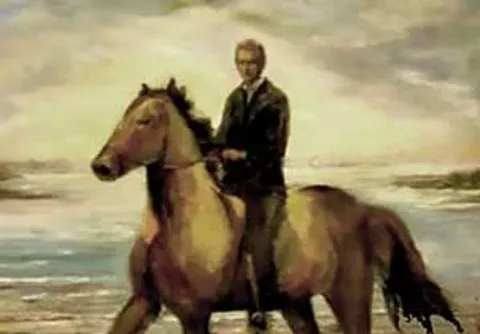
Henry Alline
 Henry Alline’s early years
He was born and received his early education in Newport, Rhode Island and his family moved to Nova Scotia in 1760, when he was 12 years old. When he was nine he began to read theological works and became somewhat mystical, but after years of soul-searching and spiritual conflict he was powerfully converted in 1775, simultaneously receiving a call to the ministry.
Alone and desperate he prayed until…’redeeming love broke into my soul… with such power that my whole soul seemed to be melted down with love…and my will turned of choice after the infinite God. A year later he began to preach.
His preaching career
His preaching career lasted until his death eight years later. He was an itinerant preacher in Nova Scotia and Prince Edward Island in an ever-widening circuit, beginning what became known as the ‘New Light’ movement and which is still the greatest revival that Canada has ever seen. He preached the new birth powerfully and effectively and his admirers compared him to George Whitefield and John the Baptist.
Considered an emotional and dangerous fanatic by some and a ‘ravager of congregations,’ the Congregationalists withdrew his right to preach in their churches, so he spoke in barns, houses and the open air. In all he began eight ‘New Light’ Congregational churches based on his non-Arminian but anti-Calvinist views of free-will and predestination, and his strong rejection of outward religious form.
Ironically, despite his indifference regarding baptism, his major 19th century influence was amongst the Baptists of eastern Canada, many of whom were his converts.
Despite possibly unorthodox views and methods, his ministry was without doubt that of an extraordinary revivalist.
Alline’s sermon style was always simple and extemporary, using a few simple, understandable points to help the unchurched to grasp the simple truths of the gospel. As with other itinerant revivalists, his objective was to lead the hearers to a point of decision – to accept or reject Christ as Saviour and Lord, which opened the door to the “new birth.”
Doubtless, his sermons were repeated over time, but he was never in one place long enough for his listeners to notice.
Alline also employed the ministry of prayer and of singing, writing many hymns which were helpful in communicating the gospel. A collection was gathered after his death and was reprinted at least four times in the United States, and several were included in the standard hymnals of the 19th century.
Henry Alline’s early years
He was born and received his early education in Newport, Rhode Island and his family moved to Nova Scotia in 1760, when he was 12 years old. When he was nine he began to read theological works and became somewhat mystical, but after years of soul-searching and spiritual conflict he was powerfully converted in 1775, simultaneously receiving a call to the ministry.
Alone and desperate he prayed until…’redeeming love broke into my soul… with such power that my whole soul seemed to be melted down with love…and my will turned of choice after the infinite God. A year later he began to preach.
His preaching career
His preaching career lasted until his death eight years later. He was an itinerant preacher in Nova Scotia and Prince Edward Island in an ever-widening circuit, beginning what became known as the ‘New Light’ movement and which is still the greatest revival that Canada has ever seen. He preached the new birth powerfully and effectively and his admirers compared him to George Whitefield and John the Baptist.
Considered an emotional and dangerous fanatic by some and a ‘ravager of congregations,’ the Congregationalists withdrew his right to preach in their churches, so he spoke in barns, houses and the open air. In all he began eight ‘New Light’ Congregational churches based on his non-Arminian but anti-Calvinist views of free-will and predestination, and his strong rejection of outward religious form.
Ironically, despite his indifference regarding baptism, his major 19th century influence was amongst the Baptists of eastern Canada, many of whom were his converts.
Despite possibly unorthodox views and methods, his ministry was without doubt that of an extraordinary revivalist.
Alline’s sermon style was always simple and extemporary, using a few simple, understandable points to help the unchurched to grasp the simple truths of the gospel. As with other itinerant revivalists, his objective was to lead the hearers to a point of decision – to accept or reject Christ as Saviour and Lord, which opened the door to the “new birth.”
Doubtless, his sermons were repeated over time, but he was never in one place long enough for his listeners to notice.
Alline also employed the ministry of prayer and of singing, writing many hymns which were helpful in communicating the gospel. A collection was gathered after his death and was reprinted at least four times in the United States, and several were included in the standard hymnals of the 19th century.
Food Rules
A graduate student sits at a booth with friends, his second drink near empty. “Can I refill you?” the waiter asks. A mother sees the chocolate as she reaches for her youngest’s sippy cup. She tries not to eat sugar in the afternoons, but she’s tired and stressed, and the children aren’t looking. A father comes back to the kitchen after putting the kids down. Dinner is done, but the leftover pizza is still sitting out. The day has drained him, and another few pieces seem harmless. Compared to the battles many fight — against addiction, against pornography, against anger, against pride — scenarios such as these may seem too trivial for discussion. Don’t we have bigger sins to worry about than the gluttony of secret snacks and third helpings? And yet, food is a bigger battleground than many recognize. Do you remember Moses’s terse description of the world’s first sin? She took of its fruit and ate , and she also gave some to her husband who was with her, and he ate . (Genesis 3:6) Murder did not bar Adam and Eve from paradise — nor did adultery, theft, lying, or blasphemy. Eating did. Our first parents ate their way out of Eden. And in our own way, so do we. Garden of Eating Food problems, whether large (buffet binging) or small (hidden, uncontrolled snacking), go back to the beginning. Our own moments before the refrigerator or the cupboard can, in some small measure, reenact that moment by the tree. And apart from well-timed grace from God, we often respond in one of two ungodly ways. “Our first parents ate their way out of Eden. And in our own way, so do we.” Some, like Adam and Eve, choose to indulge . They sense, on some level, that to eat is to quiet the voice of conscience and weaken the walls of self-control (Proverbs 25:28). They would recognize, if they stopped to ponder and pray, that this “eating is not from faith” (Romans 14:23). But they neither stop, nor ponder, nor pray. Instead, they tip their glass for another drink, snatch and swallow the chocolate, grab a few more slices. Wisdom’s protest avails little against the suggestion of “just one more.” “Since Eden,” Derek Kidner writes, “man has wanted the last ounce out of life, as though beyond God’s ‘enough’ lay ecstasy, not nausea” ( Proverbs , 152). And so, the indulgent drink and grab and sip and snack, forgetting that their grasping leads them, not deeper into Eden’s heart, but farther outside Eden’s walls, where, nauseous and bloated, they bow to the god called “belly” (Philippians 3:19; see also Romans 16:18). Meanwhile, others choose to deny . Their motto is not “Eat, drink, be merry” (Luke 12:19), but “Do not handle, do not taste, do not touch” (Colossians 2:21). They frantically count calories, buy scales, and build their lives on the first floor of the food pyramid. Though they may not impose their diets on others, at least for themselves they “require abstinence from foods that God created to be received with thanksgiving” (1 Timothy 4:3) — as if one should see Eden’s lawful fruit and say, “I’m good with grass.” If our God-given appetites are a stallion, some let the horse run unbridled, while others prefer to shut him up in a stable. Still others, of course, alternate (sometimes wildly) between the two. In Christ, however, God teaches us to ride. Appetite Redeemed Paul’s familiar command to “be imitators of me, as I am of Christ” (1 Corinthians 11:1) comes, surprisingly enough, in the context of food (see 1 Corinthians 8–10, especially 8:7–13 and 10:14–33). And the Gospels tell us why: in Jesus, we find appetite redeemed. “The Son of Man came eating and drinking,” Jesus says of himself (Matthew 11:19) — and he wasn’t exaggerating. Have you ever noticed just how often the Gospels mention food? Jesus’s first miracle multiplied wine (John 2:1–11); two of his most famous multiplied bread (Matthew 14:13–21; 15:32–39). He regularly dined as a guest at others’ homes, whether with tax collectors or Pharisees (Mark 2:13–17; Luke 14:1). He told parables about seeds and leaven, feasts and fattened calves (Matthew 13:1–9, 33; Luke 14:7–11; 15:11–32). When he met his disciples after his resurrection, he asked, “Have you anything here to eat?” (Luke 24:41) — another time, he took the initiative and cooked them breakfast himself (John 21:12). No wonder he thought it good for us to remember him over a meal (Matthew 26:26–29). And yet, for all of his freedom with food, he was no glutton or drunkard. Jesus could feast, but he could also fast — even for forty days and forty nights when necessary (Matthew 4:2). At meals, you never get the sense that he was preoccupied with his plate; rather, God and neighbor were his constant concern (Mark 2:13–17; Luke 7:36–50). And so, when the tempter found him in his weakness, and suggested he make bread to break his fast, our second Adam gave a resolute no (Matthew 4:3–4). Here is a man who knows how to ride a stallion. While some indulged, and others denied, our Lord Jesus directed his appetite. Meeting Eden’s Maker If we are going to imitate Jesus in his eating, we will need more than the right food rules. Adam and Eve did not fall, you’ll remember, for lack of a diet. No, we imitate Jesus’s eating only as we enjoy the kind of communion he had with the Father. This touches the root of the failure at the tree, doesn’t it? Before Eve reached for the fruit, she let the serpent cast a shadow over her Father’s face. She let him convince her that the God of paradise, as Sinclair Ferguson writes, “was possessed of a narrow and restrictive spirit bordering on the malign” ( The Whole Christ , 80). The god of the serpent’s beguiling was a misanthrope deity, one who kept his best fruit on forbidden trees. And so, Eve reached. But through Jesus Christ, we meet God again: the real Maker of Eden, and the only one who can break and tame our appetites. Here is the God who made all the earth’s food; who planted trees on a hundred hills and said, “Eat!” (Genesis 2:16); who feeds his people from “the abundance of [his] house,” and gives “them drink of the river of [his] delights” (Psalm 36:8); who does not withhold anything good from his own (Psalm 84:11); and who, in the fullness of time, withheld not even the greatest of all goods: his beloved Son (Romans 8:32). “We eat, drink, and abstain to the glory of God only when we, like Jesus, taste God himself as our choicest food.” Unlike Adam and Eve, Jesus ate (and abstained) in the presence of this unfathomably good God. And so, when he ate, he gave thanks to the Giver (Matthew 14:19; 1 Corinthians 11:24). When he ran up against his Father’s “You shall not eat,” he did not silence conscience or discard self-control, but feasted on something better than bread alone (Matthew 4:4). “My food,” he told his disciples, “is to do the will of him who sent me and to accomplish his work” (John 4:34). He knew there was a time to eat and a time to abstain, and that both times were governed by the goodness of God. We eat, drink, and abstain to the glory of God only when we, like Jesus, taste God himself as our choicest food (1 Corinthians 10:31; Psalm 34:8). Direct Your Appetite Admittedly, the line between just enough and too much is a blurry one, and even the most mature can fail to notice that border until they’ve eaten beyond it. Even still, between the overflowing plate of indulgence and the empty plate of denial is a third plate, one we increasingly discern and choose as the Spirit refines our heart’s palate. Here, we neither indulge nor deny our appetites, but like our Lord Jesus, we direct them. So then, there you are, ready to grab another portion, take another drink, down another handful, though your best spiritual wisdom dictates otherwise. You are ready, in other words, to reach past God’s “enough” once again. What restores your sanity in that moment? Not repeating the rules with greater fervor, but following the rules back to the mouth of an infinitely good God. When you sense that you have reached God’s “enough” — perhaps through briefly stopping, pondering, praying — you have reached the wall keeping you from leaving the Eden of communion with Christ, that Food better than all food (John 4:34). And so, you walk away, perhaps humming a hymn to the God who is good: Thou art giving and forgiving, Ever blessing, ever blest, Wellspring of the joy of living, Ocean depth of happy rest! This is the Maker of Eden, the God and Father of our Lord Jesus Christ. And if the real God is this good, then we need not grasp for what he has not given.