
GIP Library icon

LOG IN TO REVIEW

Inspiring, I was much impacted.

- ugochukwu diala (3 months ago)

About the Book


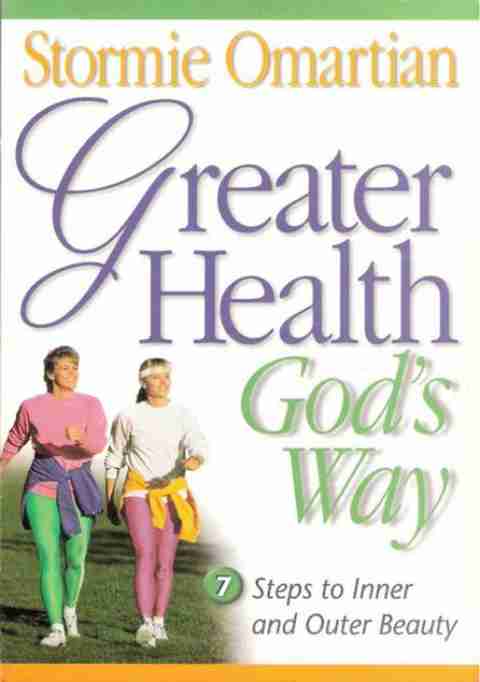
"Greater Health God's Way" by Stormie Omartian is a guide to achieving physical, emotional, and spiritual health through faith and prayer. The book offers practical advice for improving overall well-being, including tips on eating healthy, exercising, managing stress, and developing a deeper connection with God. Omartian emphasizes the importance of trusting in God's plan for our health and seeking His guidance in all aspects of our lives.

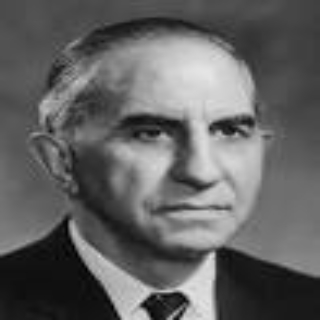
Eric Liddell

Eric Liddell Eric Henry Liddell was born on 16th January 1902 in Tientsin (Tianjin) North China, second son of the Rev. & Mrs. James Dunlop Liddell who were missionaries with the London Mission Society. He was educated from 1908 to 1920 at Eltham College, Blackheath, school for the sons of missionaries. Eric, with his older brother Rob, were left at their boarding school while their parents and sister, Jenny, returned to China. During the boys’ time at Eltham College, their parents, sister and new brother Ernest came home on furlough two or three times and were able to be together as a family – mainly living in Edinburgh. Although born in China and educated in England, Eric Liddell lived in Scotland at various times during his life. In 1920, Eric joined his brother Rob at Edinburgh University to read for a BSc in Pure Science. During this period he played rugby for Scotland and trained to run at the Olympics. Athletics and rugby played a large part in Eric’s University life. He ran in the 100 yards and the 220 yards for Edinburgh University and later for Scotland. He played rugby for Edinburgh University and in 1922 played in seven Scottish Internationals with A.L. Gracie. Eric Liddell was a gifted rugby player and played for the Edinburgh Univerisity 1st XV team. He also played international rugby for Scotland and gained seven international caps as a wing-threequarter, scoring four tries thanks to his searing pace. As a result of having insufficient time for both running and rugby, he chose the former, aiming for the 100 meters in the Paris Olympics. When he learned that the heats were to be run on a Sunday, he switched to the 400 metre competition as he was not prepared to run on a Sunday. He won a gold medal for the 400 metres and a bronze medal for the 200 metres at the Paris Olympics. He also travelled briefly to the USA in 1924 to compete in an athletics tournament. He returned to Edinburgh after the Paris Olympics and he graduated from Edinburgh University. Eric Liddell lived for a short time in Gillespie Crescent before moving to a house in Merchiston Place. Recollections of Eric Liddell By Sir Arthur Marshall The Cambridge University Athletics Club had an invitation from Pennsylvania to take a team of seven to the Pennsylvanian Games in March 1924, and I was one of the seven. Eric Liddell, the Scot from Edinburgh University, the 1923 AAA 100 yards Champion, had been personally invited and travelled with us. We stayed at the very comfortable Pennsylvanian Cricket Club. I am afraid none of, including Eric Liddell, managed to win an event at the Pennsylvanian Games. We travelled back in a small slow ship of the American United Line called ‘The Republic’ – a ten day crossing. Eric Liddell entered in the fun and games on the boat, including the Fancy Dress Dance. Whilst he was very strict about religion. Eric and I became good friends and saw much of two American sisters, Freddie and Edith, who were travelling to ‘do Europe’, including the UK. They said they were going to be in Paris for the Olympic Games, and we said if we were there at the same time we hoped we could meet. Harold Abrahams had set his whole life on winning the Olympic 100 Metres – it had become and obsession with him. Liddell’s achievement in winning the 1923 AAA 100 Yards in the record time of 9 7/10 seconds was a devastating blow to Abrahams and shook him to the core. To date Abrahams had been a consistent 10 seconds 100 yards winner but had only slightly broken 10 seconds on one or two occasions. He knew in the Olympics he would be up against overseas competition, particularly from the Americans, but this new and very serious opposition out of the blue and on his doorstep had come at a time when Harold had established his 100 yards supremacy in the UK. To achieve level pegging with Eric Liddell’s new record time, Harold had to improve his performance by two or three yards with the help of his trainer Sam Mussabini. It must have been a tremendous relief to Harold when it became known early in 1924 that Eric had decided to concentrate on the 400 metres and, because of his religious principles, would not compete in the Olympic 100 metres as first heats were always run on Sunday. Eric had in turn become completely dedicated to winning an Olympic Medal within the restrictions of his faith. He was a famous Scottish international rugger player, and gave up his rugger to enable him to concentrate on his Olympic ambitions, which became very deep-rooted, and his work suffered. Winning an Olympic Gold Medal became a priority, second only to his religion, and the ambition to win this event became part of his religion. Recollections of Eric Liddell By Sir Arthur Marshall The team travelled to Paris days before the Olympics started and had a big send-off at Victoria Station. The silence at the start of the 100 metres and 400 metres was quite electric. Harold Abrahams won the 100 metres in a new Games record time. In spite of all that has been said about Abrahams’ 100 metres, the 400 metres in some way provided the greatest thrill of the meeting with the world record being broken by Eric Liddell three times in two days. It was thought that Liddell had some chance of winning, but nobody thought Liddell capable of the amazing performance he achieved in the final. As far as the crowd were concerned they were well informed about Liddell’s dedication to his religion and his refusal to run in the first round of the 100 metres on the Sunday; they also knew of his determination to win this event. The occasion was enlivened by the support given to Liddell by the pipes and drums of the Cameron Highlanders. The silence and pent-up excitement at the start of the race could be felt. Liddell went ahead at the start and maintained his pace throughout, finishing in what at the time was described as ‘a most lion-hearted manner’ winning by three yards from Fitch, an American. This was probably the greatest achievement of the VIIIth Olympiad, and superlatives were showered on Liddell by the press of the entire world. Liddell was short and not a pretty runner but just pounded along virtually at the same pace all the way, with a finish as if he was making a final dash for a try in a rugger match with an opponent bearing down on him and about to tackle from behind. After Eric had won the 400 metres Gold Medal, Eric and I made contact with Freddie and Edith, the American sisters, and took them to a Tango Tea Dance in the Champs Elysees. Footnote: Along with sacrificing his place in the 1924 Olympics 100m, Eric Liddell also gave up two other races in which Great Britain held high hopes of winning gold that year – the 4 x 100m and 4 x 400m, whose finals also took place on a Sunday. After the Olympics After the Olympics and his graduation, he returned to North China where he served as a missionary from 1925 to 1943 – first in Tientsin (Tainjin) and later in Siaochang. During his first furlough in 1932 he was ordained as a minister. 1930 - 1932 On furlough from China studying at Congregational College. After completing his studies he was ordained as a minister on 22nd June 1932. During this time he lived in a hostel in George Square which belonged to the Edinburgh Medical Missionary Society. During these periods Eric Liddell attended Morningside Congregational Church at the corner of Chamberlain Road and Morningside Road. Morningside Congregational Church The Church building (pictured here on the right) was originally built for North Morningside United Presbyterian Church who used it until 1881 when it became too small. They then built a new, larger, church on the other side of the road (which is now the Eric Liddell Centre). From 1881 the old church was home to the Morningside Athenaeum Club before the Congregational Church purchased it in 1890. In 1928 this church was demolished and a new one erected (which is now Morningside United Church). Eric Liddell would have attended meetings in both buildings during his two extended stays in Edinburgh. The old church from 1920 to 1925 and the current building (Morningside United Church) from 1930 to 1932. He also preached at the church on a number of occasions. On his return to China, he married Florence Mackenzie (of Canadian missionary parentage) in Tientsin in 1934. They had three daughters; Patricia, Heather and Maureen, who now all live in Canada. Living in China in the 1930s was potentially very dangerous and in 1937 Eric was sent to Siaochang where he joined his brother Rob. He was now crossing the Japanese army lines. In 1941 life in China was becoming so dangerous that the British Government advised British nationals to leave. Florence and the children left for Canada. During 1941 – 1943 Eric stayed in Tientsin, then in 1943 he was interned in Weishien camp until his death in 1945. The Eric Liddell Centre The United Presbyterian Church merged with the Free Church of Scotland in 1900 and then, in 1929, this merged with the Church of Scotland. The United Presbyterian Church built in 1879 became known as Morningside North parish Church. By 1980 the building was no longer in use and became the Holy Corner Church Centre. This was an initiative of the three remaining churches at Holy Corner: Morningside United Church (a merger between the Congregational and Church of Scotland congregations and in joint membership of the United Reformed Church and Church of Scotland), Christ Church (Scottish Episcopal Church) and Morningside Baptist Church. As the project developed the centre’s name was changed to The Eric Liddell Centre in recognition of his involvement in the life of one of the founding churches and the local community during his time living here.

Do You Exercise for the Wrong Reasons

“When I run, I feel God’s pleasure.” Such were the memorable words of Olympic sprinter and Christian missionary Eric Liddell (1902–1945), at least through the lens of  Chariots of Fire , the 1981 Oscar-winning film that told his story. Perhaps you’ve heard his inspiring line in terms of life calling. In what  vocation  do you feel God’s pleasure? What role or occupation does it seem he made you to fulfill? However, with the last generation of research in view, it might be interesting to introduce Liddell to the fairly recent discovery of endorphins, and ask how much they played a part in his feeling God’s pleasure as a runner. My experience as a very amateur runner is that you don’t have to be a pro to “feel God’s pleasure” in, and because of, intense bodily exertion. God made endorphins to help us feel his joy. God’s Grace in Exercise God made us to move, and to do so vigorously. And he wired our brains to reward and reinforce it. Regular human movement has been assumed throughout history, but the innovations and seeming progress of modern life have made a sedentary lifestyle more typical than ever before. We’ve never needed to state the obvious about exercise as much as we do today — not just for earthly health, but for the sake of spiritual soundness and strength. “Endorphins are a gift from God, put there by him to lead us to himself.” The word  endorphins  is simply a shortened form of the phrase “endogenous morphine.” In other words, these are morphine-like chemicals that originate within our bodies. They “inhibit the transmission of pain signals; they may also produce a feeling of euphoria.” And they are a gift from God, put there by him to lead us to himself. It wasn’t until as recently as 1974 that two independent groups first discovered and documented this long-undiscovered divine kindness tucked quietly inside the human brain. Endorphins, and their effect of bodily pleasure, subconsciously incline humans toward certain activities, like raucous laughter or spicy foods. But in particular, the most notable and discussed is “vigorous aerobic exercise.” As John Piper cites in  When I Don’t Desire God , Either brief periods of intense training or prolonged aerobic workouts raise levels of chemicals in the brain, such as endorphins, adrenaline, serotonin, and dopamine, that produce feelings of pleasure. (203) And the holy pursuit of pleasure is an unblushing Christian concern throughout the pages of Scripture, and most pointedly so in the words of Christ himself. For Joy in God Have you seriously considered how  physical  exertion can be a means, among others, of your  spiritual  health and joy? God made our bodies with an enigmatic connection to our souls. How God stirs our souls in worship and Bible meditation often has tangible and unpredictable effects in our bodies. And what we eat and drink, and how we sleep, in our physical bodies affects our level of contentment in the soul. According to professor David Murray, “Exercise and proper rest patterns generate about a 20 percent energy increase in an average day, while exercising three to five times a week is about as effective as anti-depressants for mild to moderate depression” ( Reset , 79). “Glorifying God with our bodies is not mainly about what we don’t do.” God not only means for us to enjoy the long-term benefits of regular bodily exertion, but also the immediate effects that bolster and energize our emotions that day. And having our souls happy in God (with whatever little supplement we can get from exercise) is the premier way to fight and defeat the alluring lies of sin. Author and pastor Gary Thomas testifies, “Understanding my body as an instrument of service to God is giving me renewed motivation to take better care of it in the face of my cravings and laziness” ( Every Body Matters , 20). For Love of Others But regular bodily exertion not only can assist our personal pursuit of joy in God, and fight against joy-destroying sin, but also ready us to move beyond self-focus and have our hearts primed to meet the needs of others. The beneficiary of exercise that is truly Christian is not just me, but my family, my neighbors, my church, my coworkers, and anyone else God puts in my life to bless in word and deed. As Piper explains elsewhere, Today, my main motive for exercise is purity and productivity. By purity, I mean being a more loving person (as Jesus said, “love your neighbor,” Matthew 22:39). By productivity, I mean getting a lot done (as Paul said, “abounding in the work of the Lord,” 1 Corinthians 15:58). . . . In short, I have one life to live for Jesus (2 Corinthians 5:15). I don’t want to waste it. My approach is not mainly to lengthen it, but to maximize purity and productivity now. Precisely because “we are his workmanship, created in Christ Jesus for good works, which God prepared beforehand, that we should walk in them” (Ephesians 2:10), we want to cultivate our bodies so that they are a help, rather than a hindrance, in the cause of love. We want our bodies to be an aid, not a net neutral, in readying us to sacrifice our own comforts to do good for others, at home and around the world. For God’s Own Joy Yet exercise not only can contribute to the matrix of our joy, and in doing so help ready us to meet the needs of others, but what goes unsaid far too often is that  glorifying God with our bodies is not mainly about what we don’t do . It’s easy to focus on the many unrighteous acts from which we should abstain, but glorifying him in our bodies is first and foremost a positive pursuit and opportunity. And, as in the parable of the talents, our bodies are gifts from him to grow and develop, not bury and let languish. “The biblical take on exercise is not ‘Life is short; let your body go,’ but, ‘Harness the body God gave you.’” God is not opposed to our bodily existence; neither is he uninterested. He is  for the body.  “The body is . . . for the Lord, and the Lord for the body” (1 Corinthians 6:13). And not only is he  for the body  in this age, but also in the age to come. The very next verse reads, “God raised the Lord and will also raise us up by his power” (1 Corinthians 6:14). The creative brilliance and glory of God’s design in the human body will not be discarded at Christ’s second coming. Our future is embodied. Faithful Christian theology does not diminish the importance of our bodies, but heightens it — from God’s creative design, to his ongoing affirmation, to his promise to raise them, to his calling to use them. Feel His Pleasure The biblical take on exercise is not “Life is short; let your body go.” Rather, with God’s revealed truth ringing in our ears, we say, “Life is too short to not harness the body God gave me.” Our assignment in this age is a vapor. We are “a mist that appears for a little time and then vanishes” (James 4:14). Too much is at stake, and our days are too few, to limp our way through by not leveraging our bodies (as we’re able) as the gifts from God they are. Join me in learning what it’s like to feel the pleasure of God.

Feedback
Suggestionsuggestion box
x